Marrakech Medina, Palaces, Gardens, and Souks
Meet your tour guide at a predecided location.
Wander through the narrow streets of the medina, the city's historic district, colourful and intoxicating, where the sweet scent of spices fills the air, and admire the work of artisans in the lively souks.
Visit the heart of the medina, Jemaa el-Fnaa, the place to go in the city. A space for meeting and sharing ancestral cultures, Marrakchis, Moroccans, and travellers from all over the world flock here to immerse themselves in its unique atmosphere. Day and night, the square is lively with snake charmers, Gnawa dancers recognisable by their headdresses adorned with shells, traditional dancers, storytellers, and other entertainers.
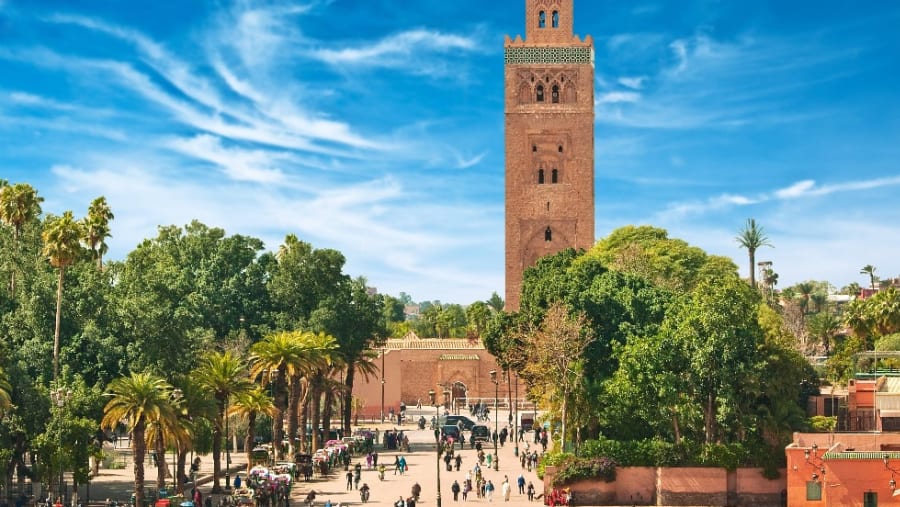
Proceed to the Koutoubia Mosque with its imposing Almohad minaret. Rising to a height of 70 metres and magnificently decorated in Moorish style, it dominates the city like a lighthouse. Open to all, its adjoining gardens offer a refreshing and relaxing stop.
Discover the souks through their endless labyrinth of shaded streets, where you will see a multitude of small shops and craft workshops filled with the scent of spices. It is hard to resist the copper lamps, wicker baskets, leather slippers, embroidered clothing, silver jewellery, musical instruments, and hammered trays, and the list goes on. A glass of tea shared with the merchants offers an opportunity to glimpse Moroccan hospitality.
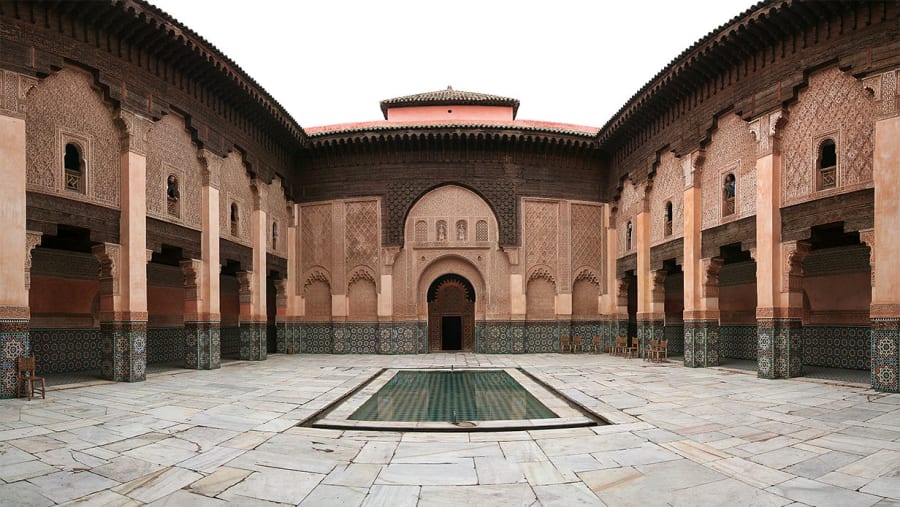
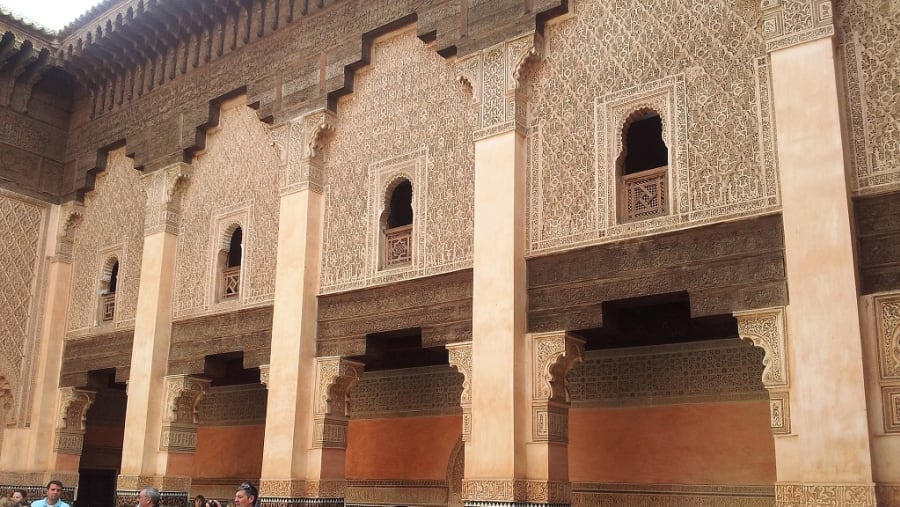
Admire the interior of the houses enclosed within the narrow streets of the medina. One of the most splendid is probably Bahia Palace, located in the Mellah, south of the historic city. A centrepiece of Moroccan architecture, it extends over 8000 sqm and showcases remarkable craftsmanship. Around the central garden planted with orange trees, you will be able to admire wooden and gilded ceilings, marquetry as fine as lace, as well as stucco and zelliges bordering the fountains.
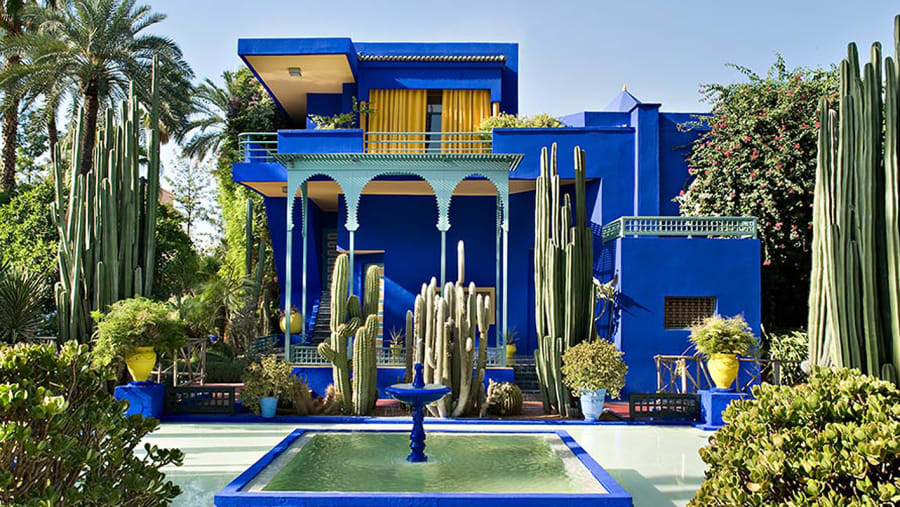
Taste the tranquillity of the gardens that have enriched the city since its very creation. Do not miss Majorelle Garden, where many flower varieties flourish, magnificently enhanced by colourful built elements. The main building, painted in a dynamic blue specially created for it, bears the name of the French painter Jacques Majorelle, who had his workshop here in the 1920s. Acquired in 1980 by Yves Saint-Laurent, the garden emanates a feeling of serenity reinforced by the pools scattered throughout the space. A museum of Berber culture, with remarkable scenography, completes your discovery of Moroccan culture.