- Pick-up is available from your hotel, port, airport, train station, or at the meeting point of your choice.
An excursion in Venice is not complete without Saint Mark's Square, I know, but let us get there through the less touristic routes, those that your travel companions will certainly miss by jumping immediately on the shuttle or blindly following the yellow signs around. You will visit Venice like a local, enjoying every moment of the day without the anxiety of looking at the map or the clock. Time will fly, but the memories of this wonderful experience will accompany you until your return home or to Venice.
This tour of natural, ethnographic, and cultural interest will take us to the edge of the Venetian Lagoon in search of the many, sometimes contradictory, traces of its past and the overwhelming beauty of its nature. An amazing experience to enjoy at leisure for a whole day, slowly discovering one of the most extraordinary environments in the world, listed as a UNESCO World Heritage Site since 1987.
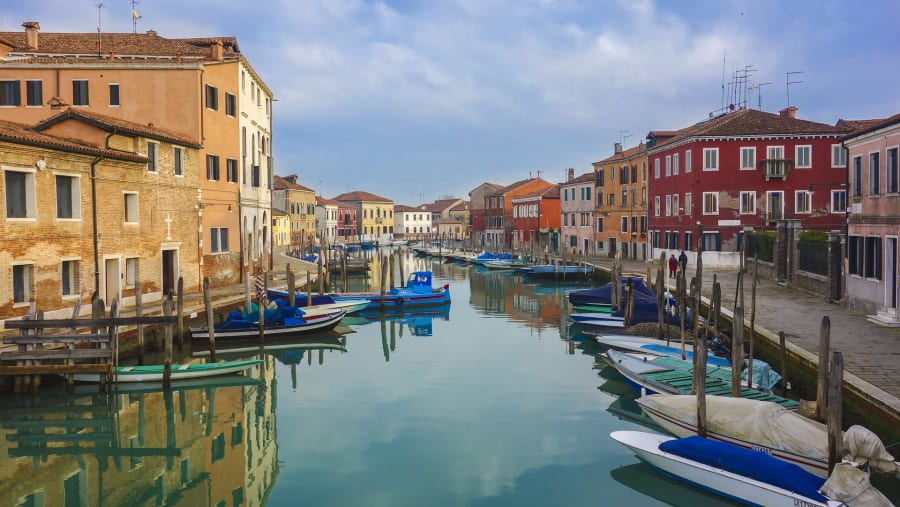
Initially home only to fishers, salt farmers, and ferrymen, Murano began its ascent around the year 1291, when it was chosen to house the glass kilns of the Venetian Lagoon exclusively. Ever since nicknamed "the island of fire", Murano is still home to around 70 active furnaces, where the traditional glass-blowing activity resists the advance of the mechanized world. Up to this day, the glass masters here keep blowing or hand-making beautiful vases, glasses, statues, and chandeliers in classic, rococo style or rigorous contemporary forms by great furniture designers.
Cross the bridge over Murano's Grand Canal and reach another jewel of the island: the Basilica of Santa Maria and Donato, famous for its splendid 11th-century floor mosaics. Animated by figures of animals, birds, mythological beasts, and symbols whose meaning often remains unclear, these mosaics are just one of the many curiosities of the Basilica, considered the best example of Romanesque architecture in the lagoon.
Burano is a miniature-sized Venice, much quieter and more intimate, with tiny houses painted in bright colours and a dramatically leaning bell tower. A lively island prospering thanks to fishing and tourism, Burano still preserves its rhythms, traditions, and, above all, its magical atmosphere, absolutely worth seeing.
With a little luck, we will meet an old lady who, sitting in front of her house door, still weaves typical lace. Yes, the famous Burano lace. It is said that this craft was born from the genius of Burano's women, trying to increase the meagre income of their families. While men were out fishing, or during unlucky hunting seasons, they would support the local economy with their needlework. In the 16th century, thanks to the support of the Doge's wife and queens, lace went from being a simple domestic activity to real art, flourishing for decades until the end of the Serenissima, when it came to the brink of extinction. Burano lace was saved in extremis by salvaging the knowledge of the only lace-maker left on the island. How? Well, find out during this tour!
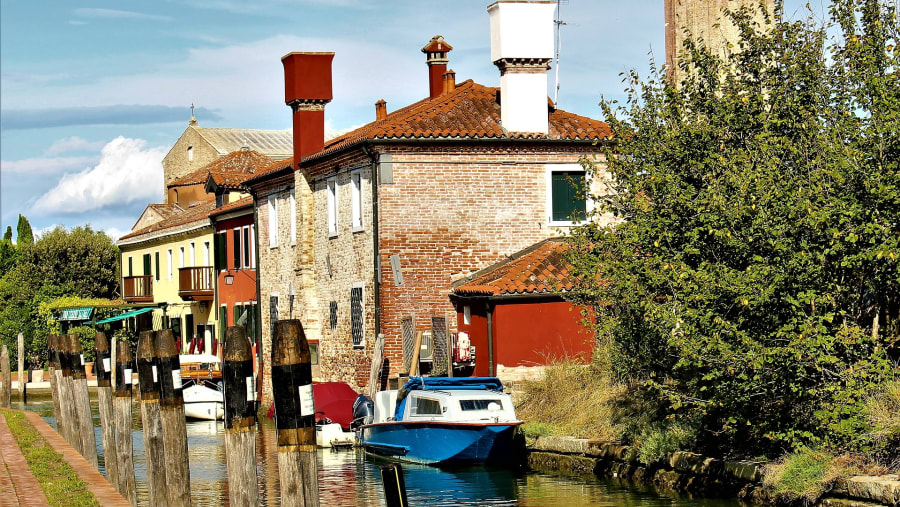
The encounter with the one-time commercial capital of the Lagoon will surprise you. At times, the rustic, almost desolate aspect of Torcello makes it hard to believe that centuries ago this was a busy port city buzzing with thousands of inhabitants, of which nowadays only a handful remain. Isolated houses, bushes, a vegetable garden here and there - these are the only clues left of Torcello's glorious past. This was probably one of the main islands where refugees from the mainland escaped the barbaric invasions at the fall of the Roman Empire. Protected by the lagoon swamps, the exiles of Altino, in particular, found here a new haven. Starting as a poor community of fishermen, ferrymen, and merchants, they slowly took advantage of the island's strategic position, halfway between the Byzantine East and the 'Roman-Barbarian' West, to turn it into a flourishing commercial centre, the most important of the ancient Lagoon. Torcello will amaze you with its silence and surreal atmosphere.
Recognize the rows of ancient cypress and pine trees on this island where, according to tradition, Saint Francis himself stopped on his way back from the Holy Land. At his death, the island, formerly known as "Due Vigne" - Two Vineyards - changed its name, becoming the site of a Franciscan convent still active today, whose history you will discover as you land on this small spiritual oasis.