Ecuador · Mountain Exploration

2-Day Chimborazo Summit Climb from Quito with High Camp Ascent

2 Days Round trip from Quito Hard pace

The journey

Trip highlights
  • 01 Climb Ecuador's highest peak, Chimborazo Summit
  • 02 Experience breathtaking views of Andean landscapes
  • 03 Enjoy the challenge of trekking through snow-capped peaks and glaciers
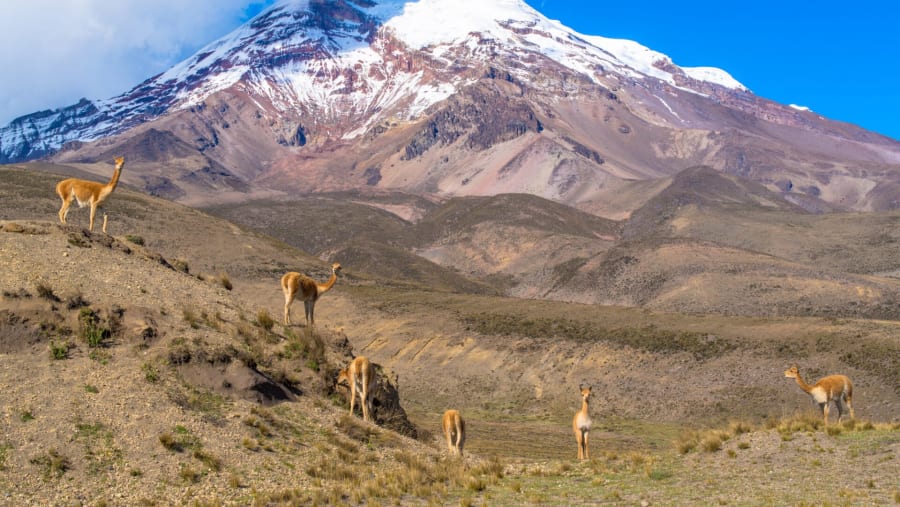
  • 04 Discover the diverse flora and fauna of the region

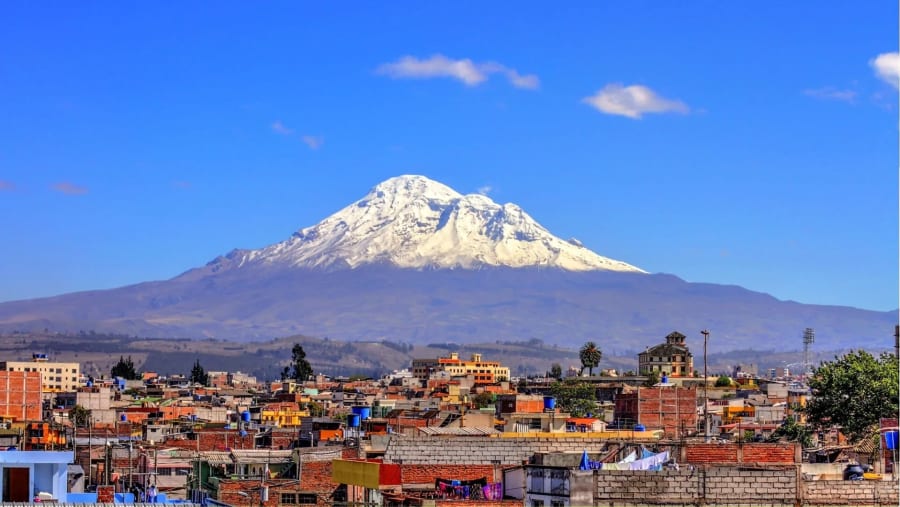
Climb Chimborazo Summit, towering at an impressive height of 6,268 meters above sea level. This majestic mountain is a challenging endeavor, perfect for adventure and nature lovers. Experience stunning views of Andean landscapes, including snow-capped peaks and lush flora and fauna, as you embark on an exciting journey to conquer this iconic peak and create unforgettable memories in Ecuador.

At midnight, we will start our climb to the top of Ecuador's highest mountain, Chimborazo, which will take about 6 to 8 hours.

From the itinerary

At a glance

What this trip includes

Duration 2 Days
Tour type Shared
Activity level Hard
Accommodation Included · Standard
Transport Included
Wheelchair access No
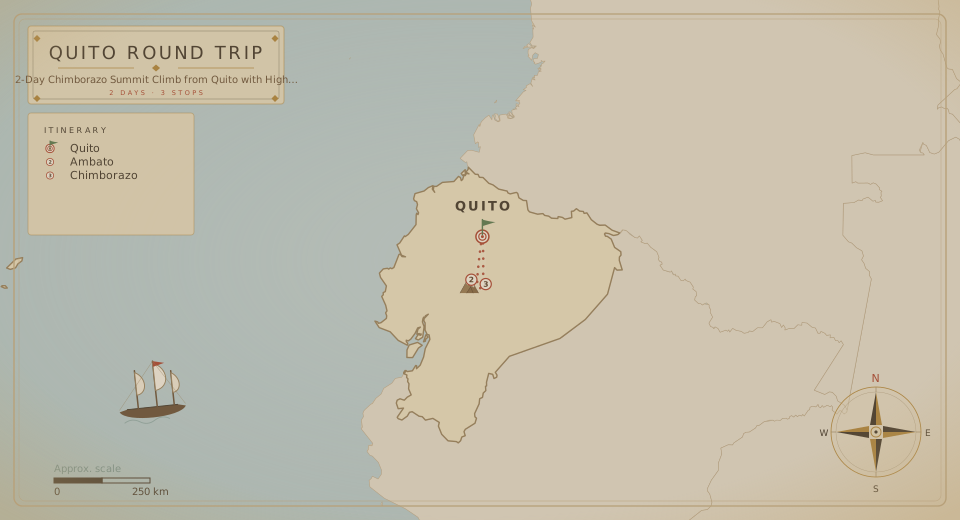
Cities Quito, Ambato, Chimborazo
Languages English, Spanish

Day by day

The itinerary

1
Day 01

Drive Through the Avenue of the Volcanoes to Chimborazo High Camp

Elevation: 5,300 m / 17,388 ft.

  • We will drive south from Quito (9,186 ft / 2,800 m) towards the city of Ambato (8,858 ft / 2,700 m) through the Avenue of the Volcanoes for about 4 hours until we reach the Chimborazo Reserve.
  • There are two options here:
    • Stay at Hermanos Carrel Refuge (15,744 ft / 4,800 m), where we will have dinner and get some rest until 11 pm. A light breakfast will be served just before we get our gear ready and start hiking up.
    • The other option is available at an extra cost: we can hike up to 5,300 m / 17,388 ft and set up a high camp there. We are currently using this high camp because the shelter is closed.
      Meals: - / lunch / dinner
  • Accommodation: Overnight in a 4-season tent.
2
Day 02

Midnight Ascent to the Chimborazo Summit

Elevation: 6,268 m / 20,564 ft.

  • At midnight, we will start our climb to the top of Ecuador's highest mountain, Chimborazo, which will take about 6 to 8 hours.
  • We will reach the top (20,564.3 ft / 6,268 m) early in the morning. It is a perfect place for resting and taking pictures of the beautiful Andean surroundings.
  • After some rest, we will begin our descent back to the high camp, which will take about 3 to 4 hours.
  • Once at the high camp, we will pack our belongings and then continue down for 2 hours to the parking lot, where our transportation will be ready to drive us back to Quito.
    Meals: Light breakfast before the ascent and full breakfast after the ascent
  • Accommodation: (-)
Chimborazo Summit, Avenue of the Volcanoes, Hermanos Carrel Refuge

Where this trip takes you

Chimborazo Summit, Avenue of the Volcanoes, Hermanos Carrel Refuge

The route

Where you'll travel

Tour route map
Round trip from Quito 3 cities · 2 Days

The fine print

Trip details

What's Included

  • Qualified and experienced Ecuadorian local mountain guide (ASEGUIM/UIAGM), ratio 2 climbers to 1 guide
  • Registration in the SIB system (System Information of Biodiversity)
  • Technical mountain equipment (mountaineering boots, crampons, ice axe, harness, helmet)
  • Land transportation and transfers to Chimborazo
  • Accommodation at Chimborazo High Camp
  • All meals during the hikes and climbs (shown above)

What's Not Included

  • Qualified and experienced Ecuadorian local mountain guide (ASEGUIM/UIAGM), ratio 2 climbers to 1 guide
  • Registration in the SIB system (System Information of Biodiversity)
  • Technical mountain equipment (mountaineering boots, crampons, ice axe, harness, helmet)
  • Land transportation and transfers to Chimborazo
  • Accommodation at Chimborazo High Camp
  • All meals during the hikes and climbs (shown above)

What to bring

Here's a list of what to bring for the Chimborazo Volcano climb in Ecuador:

What to Bring for the Chimborazo Climb

Clothing:

  1. Base Layer (Top and Bottom): Moisture-wicking, thermal long-sleeve shirt and pants.
  2. Mid Layer: Fleece or insulated jacket for warmth.
  3. Outer Layer (Shell): Waterproof and windproof jacket and pants (preferably Gore-Tex or similar).
  4. Climbing Pants: Durable, flexible pants designed for mountaineering.
  5. Thermal Gloves: Insulated gloves for cold conditions.
  6. Climbing Gloves: Durable gloves for grip when using ice axes or crampons.
  7. Hat or Beanie: Warm, insulated hat for high-altitude conditions.
  8. Neck Gaiter or Balaclava: To protect your neck and face from wind and cold.
  9. Socks: Several pairs of moisture-wicking, thermal socks (wool or synthetic).
  10. Gaiters: To protect your lower legs from snow, ice, and debris.
  11. Sun Hat or Cap: For sun protection during the approach and descent.

Footwear:

  1. Mountaineering Boots: Stiff, insulated, and waterproof boots suitable for glacier travel.
  2. Climbing Boots: Specifically designed for use with crampons.
  3. Camp Shoes: Comfortable shoes for downtime at the refuge.

Climbing Gear:

  1. Crampons: Essential for walking on the glacier.
  2. Ice Axe: For stability and safety on the ice.
  3. Harness: Comfortable harness for glacier travel and climbing.
  4. Carabiners: Locking and non-locking for climbing and safety.
  5. Helmet: To protect from falling rocks or ice.
  6. Climbing Rope: If required, often provided by the guides.
  7. Avalanche Transceiver: (If applicable, check with your guide if needed).

Personal Items:

  1. Sunscreen: High SPF to protect against the strong equatorial sun.
  2. Lip Balm: With SPF protection to prevent sunburned lips.
  3. Sunglasses: With high UV protection to prevent snow blindness.
  4. Water Bottles: Hydration system or multiple bottles (at least 2 liters).
  5. Snacks: High-energy, lightweight snacks like energy bars, nuts, and dried fruit.
  6. Camera/GoPro: For capturing the stunning views (ensure it is in a waterproof case).
  7. Headlamp: With extra batteries for the pre-dawn start.
  8. Personal Medications: Any prescription medications you need, as well as a small first aid kit.
  9. Toiletries: Toothbrush, toothpaste, and other personal hygiene items (travel-sized).
  10. Passport/ID: For check-in and official purposes.
  11. Hand Warmers: To keep your hands warm at high altitudes.

Optional:

  1. Goggles: For additional protection in case of snow or wind.
  2. Camera Gear: For professional-level photography (with protection against the cold).
  3. Sleeping Bag Liner: For extra warmth at the refuge.

Note: Many of these items may be provided by the tour operator, so check with them to confirm. This list ensures you are prepared for the demanding conditions at Chimborazo's high altitudes and glaciers.

Know before you go

FAQ's

  • IS NECESSARY PREVIOUS GLACIER EXPERIENCE?
  • Having previous glacier experience is not required. We do recommend that you join one of our best acclimatization and ascent programs containing instructions and skills that we teach you, as previous mountaineering training helps you enjoy the overall experience. It is also important that you try out your mountaineering gear prior to joining this adventure. If you don't have gear, we have it for you in our rental equipment shop.
  • WHEN IS THE BEST TIME TO CLIMB COTOPAXI?
  • A). In Ecuador, you can climb all year, but these are the seasons - High Season: June to August / December to January - Low Season: February to May / September to November.
  • B). Likewise, weather forecasts are very unpredictable. Therefore, we recommend being prepared for all types of weather.
  • DO I REALLY NEED RESCUE INSURANCE?
  • We strongly urge you to purchase travel and accident insurance. We recommend Global Rescue for both types of insurance.
  • IS COTOPAXI A DANGEROUS MOUNTAIN?
  • A). Cotopaxi is a relatively safe climb on the routes we climb. The biggest challenges are the high altitude and people not coming physically prepared. Some groups try to ascend too quickly and do not take the time to acclimatize. We do not have this issue because our itinerary has been carefully planned over years of experience working in low-oxygen environments.
  • ACCLIMATIZATION IS IMPORTANT AND HOW DO I PREPARE FOR HIGH ALTITUDE?
  • A). Acclimatization is the most important factor and should be taken seriously. Even if you are fit and practice physical activity, it is important to follow the process for a successful climb.
  • B). Firstly, there is some very specific training you should be doing. Learn more. Let's be clear: always pick the itinerary with more acclimatization built in. After that, you need to focus on mapping out a training plan that emphasizes strength and endurance. We will pace the trip at lower heart rates so we can perform for longer periods of time. You still need to be comfortable hiking for 6+ hours. We know that building up the weight you carry in your backpack for hours at sea level builds endurance, strength, and cardio, which stress-tests your body for high altitude. We can help you learn more about how to prepare for your high-altitude adventure.
  • WHAT KIND OF GEAR, CLOTHING AND EQUIPMENT DO I NEED TO BRING?
  • A). We will provide you with a full detailed itemized kit list.
  • SAFE TO BRING AND LEAVE OUR BAGS IN THE BASE CAMP?
  • A). Yes, you can leave a bag of items not needed in our base camp. You can also leave valuable items in the safe.
  • WHAT ROUTE DO WE CLIMB ON?
  • A). Depending on the glacial conditions, we will follow the safest route to the top. We also leave from the refuge at 4,864 m / 15,958 ft for all our summit attempts.
  • DO YOU HAVE TRAINING ADVICE?
  • A). If you sign up for one of our trips, we can give ongoing advice. We also have training courses in Cotopaxi that you can sign up for.
  • CAN I PAY WITH CREDIT CARD?
  • A). Yes, you can do it.
  • TIPS
  • Develop a personalized training plan. Mountaineering requires multiple types of training, each focusing on a different need:
  • Cardio workouts to improve the overall fitness level of your heart and lungs.
  • Interval sessions to boost your ability to process more oxygen with each breath.
  • Strength and endurance exercises so you can haul a heavy load and sustain physical output for many hours.
  • Balance and flexibility training because you need both for mountaineering.
  • Hiking days to extend your training into real-world situations.

Climb Chimborazo's Highest Summit: Reach the summit of Chimborazo, the highest volcano in Ecuador, standing at 6,263 meters (20,549 feet), and experience unparalleled views of the surrounding Andean mountains.

Unique Position on Earth: Due to its proximity to the equator, Chimborazo's summit is the farthest point from the Earth's center, making it a unique and memorable ascent.

Stunning Andean Landscape: Trek through diverse ecosystems, from high-altitude páramo to glacier-covered slopes, offering dramatic and breathtaking views of the Andes.

Glacier and Ice Climbing: Navigate glaciers and use technical mountaineering equipment such as crampons and ice axes, enhancing your climbing experience.

Physical Challenge: The climb provides an exciting physical challenge that requires determination and fitness, with both technical and endurance aspects.

Cultural Experience: Explore the Andean culture and local communities surrounding Chimborazo, where indigenous traditions and vibrant landscapes converge.

Stunning Sunrises at High Altitude: Witness a mesmerizing sunrise from the summit, with spectacular views of the neighboring snow-capped volcanoes and the vast Ecuadorian highlands.

Professional Guides: Led by certified local mountain guides who offer expertise in mountaineering and safety, ensuring a secure and educational experience.

Climb in a Safe and Supportive Environment: Benefit from pre-climb acclimatization and training, including glacier travel and mountaineering techniques, to maximize your chances of success.

Experience Ecuador's Highest Volcano: Chimborazo offers a unique opportunity to climb Ecuador's highest peak, standing taller than Mount Everest when measured from the Earth's center.

This adventure promises a blend of physical challenge, technical climbing, cultural immersion, and incredible natural beauty!

Logistics

Meeting & route

Meeting point
Quito, Ecuador
Tour start
Quito, Ecuador
Tour ends at the same location as the start point.
End of the journey

Your 2 days finish where they began, in Quito.

Watch the tourHQ film Watch the film

Create your own adventure

Can't find the perfect tour? Tailor your dream trip.

  • Tell us your destination, dates and group size.
  • Our travel experts and local guides design a tailored itinerary, just for you.
  • Enjoy your trip with peace of mind, knowing everything is taken care of.
Plan my holiday

Say goodbye to travel stress.

Starting from

USD 650 /person
Book This Tour

When

Travellers

Total