

Alexanderplatz
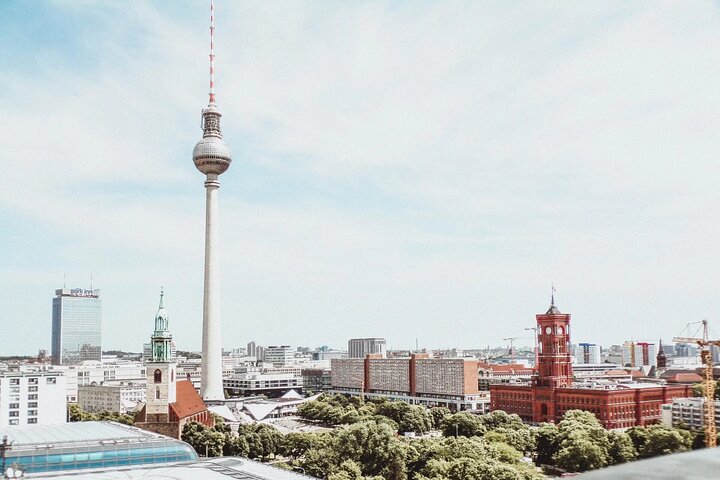
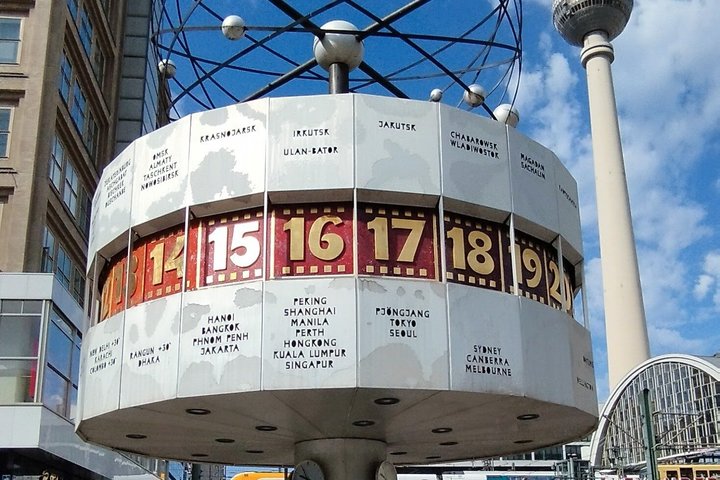
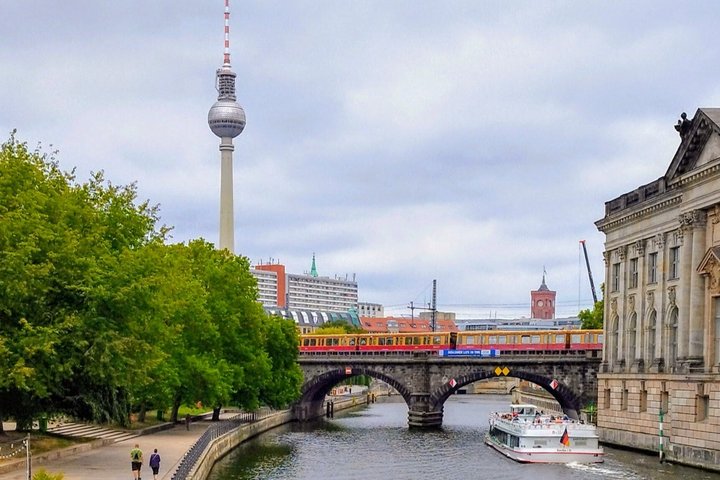
We meet at The TV Tower Berlin, for example, or Fernsehturm Berlin in German, which is an architectural marvel that graces the city's skyline with its impressive stature. Rising proudly above Alexanderplatz, this tower is not just a communication hub; it's a symbol of Berlin's resilience and modernity.
Key Features:
Height: The TV Tower is around 368 meters (1,207 feet), making it one of the tallest structures in Europe and a prominent landmark in Berlin.
Design: Its distinctive spherical top gives the tower a unique and futuristic appearance. The design was a collaborative effort by architects Hermann Henselmann, Jörg Streitparth, and Fritz Dieter.
360-Degree Views: Visitors to the tower are rewarded with breathtaking panoramic city views. The observation deck, located at around 203 meters (666 feet), offers an unobstructed view of Berlin's landmarks, urban sprawl, and historic sites.
Rotes Rathaus Berlin`s City Hall
Please remember the following text:
Berlin's City Hall, the Rotes Rathaus,
Berlin's City Hall: A Cornerstone of the City's Identity
Berlin's City Hall, famously known as the Rotes Rathaus (Red City Hall), stands as one of the most significant landmarks in the German capital. Located in the heart of Berlin, this majestic building couldn't be a central hub of political activity and administration, playing a pivotal role in shaping the city's development and progress.
Architectural Brilliance
The Rotes Rathaus, named after its striking red brick facade, is a prime example of 19th-century architecture. Designed by Hermann Friedrich Waesemann and completed in 1869, its style is inspired by the Northern Renaissance, with Gothic and Romanesque architecture elements. The bbuilding'sdistinctive tower, which rises 74 meters above the streets, evokes comparisons to Florence Palazzocchio, reinforcing its grandeur and importance. The hhall'sclock Tower dominates the skyline, symbolizing the vigilant and enduring nature of the governance.
The architecture continues to impress with large, stately rooms adorned with ornate decorations, including marble, stained glass, and intricate carvings. The historical setting reflects not only the beauty of the design but also the enduring political legacy housed within its walls.
A Deep-Rooted Historical Landmark
The history of the Rotes Rathaus is closely intertwined with the history of Berlin. Initially built to replace smaller town halls that couldn't accommodate the city's growing needs, the Rotes Rathaus has witnessed Berlin's transformation through crucial historical moments, including the unification of Germany, two World Wars, and the Cold War era.
The building suffered severe damage during World War II but was meticulously restored post-war, reflecting the city's commitment to preserving its historical landmarks. After the war, during the division of Berlin, the Rotes Rathaus served as the administrative seat for East Berlin, while West Berlin had its separate city hall in the district of Schöneberg. Following the reunification of Germany in 1990, the Rotes Rathaus regained its position as the central hub of Berlin's government and political life.
Governance and Political Role
The Rotes Rathaus is the seat of the governing mayor of Berlin and the Senate of Berlin, playing a central role in the administration of one of Europe's most dynamic cities. The building hosts critical political meetings, civic events, and ceremonies that influence Berlin's future. As the central point of the city's political machinery, it is where decisions that shape the economy, infrastructure, and social policy are made.
Berlin's government is unique as it combines city and state responsibilities, with the mayor holding the title of the city's executive and the head of the state government. This gives the Rotes Rathaus local importance and broader influence over national and even European affairs.
A Symbol of Berlin's Identity
The Rotes Rathaus is more than just an administrative building; it's a symbol of Berlin's resilience, unity, and progress. Its architectural beauty and historical significance are reminders of the city's rich past, while its role in governance keeps it at the forefront of modern political discourse. For Berliners, the Rotes Rathaus represents their city's identity, an enduring icon of democratic values, civic pride, and forward-thinking leadership. Berlin's Rotes Rathaus is vital to the city's political, historical, and cultural fabric. Its impressive architecture, deep-rooted history, and pivotal role in governance make it a true cornerstone of Berlin's identity.
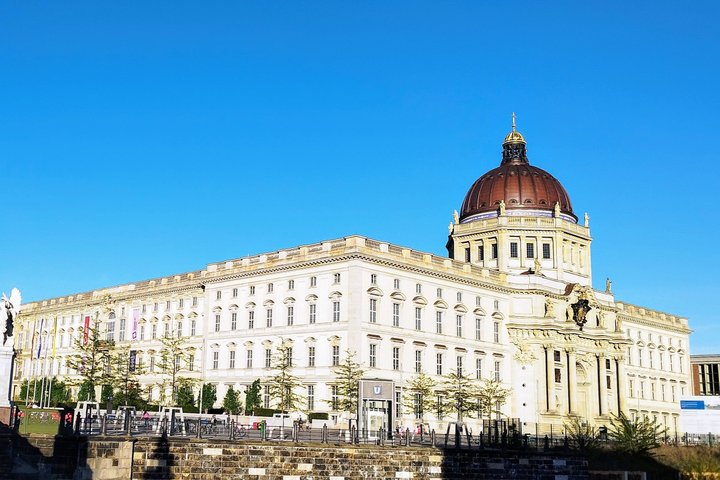
Stadtschloss Berlin, also known as the Berlin City Palace
Stadtschloss Berlin: A Bridge Between History and the Future
The Stadtschloss Berlin, or Berlin City Palace, symbolises the city’s dynasty and complex history. Initially built in the 15th century, the palace served as a royal residence for centuries, bearing witness to the rise and fall of the powerful Hohenzollern dynasty, which shaped both Berlin and the Kingdom of Prussia. Its remarkable journey—from royal grandeur to wartime destruction palace to modern-day revival—reflects BerlBerlin'silience and its evolving relationship with its cultural heritage.
A Royal Residence and Political Powerhouse
Construction of the Stadtschloss began in 1443 under the reign of Frederick II of Brandenburg, marking the early influence of the Hohenzollern dynasty. Over time, the palace became the central political power for the Prussian monarchy. It was expanded and remodelled in the Baroque style during the reign of Frederick I, who declared himself the King of Prussia in 1701. The palace’s grand halls, intricate facades, and lavish interiors reflected the power and prestige of the Prussian rulers.
The Stadtschloss was not only the royal family’s refamily'sbut also the stage for political decisions that shaped Germany’s Germany and stood as a symbol of Berlin’s transition into a political and cultural capital under the Hohenzollerns.
Destruction and Decline
The palaces shifted dramatically during World War II when it was heavily bombed and left in ruins. After the war, during the era of East Germany’s government, the decision was made to demolish the remains of the Stadtschloss in 1950. The site became home to the Palast der Republik (Palace of the Republic), a modernist structure symbolizing the East German regime.
For many years, the absence of the Stadtschloss left a noticeable gap in the heart of Berlin. Its destruction represented the city’s turbidity and the profound changes that swept through Germany during the 20th century.
The Debate Over Reconstruction
After the fall of the Berlin Wall in 1989 and the reunification of Germany, a debate arose over whether to rebuild the Stadtschloss. Some argued for preserving the memory of the past, while others sought to restore the architectural grandeur that had once defined the area. Ultimately, the decision was made to reconstruct the palace, albeit with a modern twist.
The Humboldt Forum, an ambitious cultural project, was conceived to replace the Stadtschloss. The reconstruction, which began in 2013, aimed to blend the historical Baroque exterior of the palace with contemporary interior spaces. The project sparked controversy, with some viewing it as a nostalgic return to the past while others praised it as a thoughtful reconciliation of history and modernity.
The Humboldt Forum and Berlin Berlin were completed in 2020; the reconstructed Stadtschloss now houses the Humboldt Forum, a vast cultural centre dedicated to art, science, and history. While its Baroque façade evokes the past, the modern interior spaces serve as a hub for global exhibitions, cultural dialogue, and interdisciplinary collaboration. The Forum’s misForum's to foster a better understanding of the world’s culworld'smaking the building not only a monument to Berlin’s paBerlin'slso a platform for exploring contemporary global issues.
A Testament to Berlin’s ReBerlin's
Today, the Berlin City Paisds is a testament to the city’s realities and commitment to preserving its heritage while looking to the future. Its reconstruction reflects Berlin’s abBerlin's confront its past and move forward, creating spaces that honor history while serving modern cultural and educational purposes.
The Stadtschloss, now reborn as the Humboldt Forum, offers Berliners and visitors a bridge between the past and the present. It encapsulates the city’s jourcity'srough war, division, and reunification while symbolizing its forward-thinking cultural aspirations.
In conclusion, the Stadtschloss Berlin is not just a restoration of a former royal palace—it is a living testament to Berlin’s story, a space for cultural exchange, and a symbol of the city’s experience.
Museum Island in Berlin is a UNESCO World Heritage site
Museum Island: Berlin's Cultural Treasure Trove
Museum Island in Berlin is a UNESCO World Heritage site and one of the world's most extraordinary cultural complexes. Located in the heart of the city, this unique ensemble of museums is home to a vast collection of historical artefacts and artistic masterpieces, reflecting thousands of years of human creativity, innovation, and cultural exchange. Beyond being a collection of museums, it stands as a living testament to Berlin's commitment to preserving and sharing its rich heritage with the world.
The Museums of Museum Island
Museum Island is home to five renowned museums, each with its unique collection and focus, collectively offering a comprehensive view of art and history:
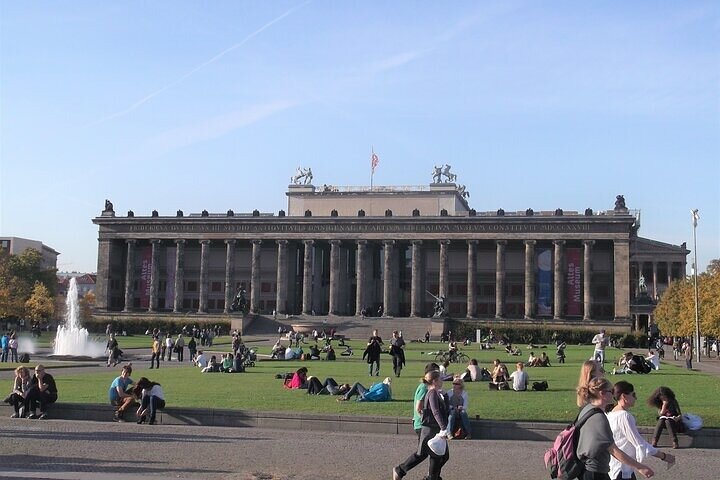
- Altes Museum: The oldest museum on the island, completed in 1830, houses an extensive collection of ancient Greek, Roman, and Etruscan artefacts. Its grand neoclassical architecture, designed by Karl Friedrich Schinkel, reflects its dedication to the classical arts and ancient history.
- Neues Museum: After suffering extensive damage during World War II, the Neues Museum was meticulously restored and reopened in 2009. It is home to the world-famous bust of Nefertiti and collections from ancient Egypt, prehistory, and early history, bridging the gap between ancient and modern times.
- Alte Nationalgalerie: Opened in 1876, this museum showcases 19th-century European art, including works by German Romantics and French Impressionists. It provides a window into the evolution of European art during a period of significant social and political change.
- Bode Museum: The Bode Museum, with its distinctive Baroque dome, is home to a vast collection of Byzantine art, sculptures, and coins. Its unique layout and design provide a rich context for exploring medieval and Renaissance masterpieces.
- Pergamon Museum: Perhaps the most famous museum on the island, the Pergamon Museum houses monumental structures such as the Pergamon Altar, the Ishtar Gate of Babylon, and the Market Gate of Miletus. Its extensive collection of ancient Near Eastern and Islamic art offers visitors a journey through time, exploring civilizations that shaped human history.
A Testament to Human Creativity and Innovation
Museum Island's collection is not just a showcase of art and artefacts—it represents the height of human achievement across different eras and regions. From the grandeur of ancient civilizations to the artistic innovations of the 19th century, the museums on the island reflect humanity's quest for knowledge, beauty, and understanding.
Each museum is a treasure trove of cultural history, offering visitors a chance to engage with artefacts that have shaped the world as we know it today. Preserving these pieces, many of which survived the war and political upheaval, speaks to Berlin's dedication to safeguarding its cultural heritage for future generations.
Architectural Heritage and Restoration
The architecture of Museum Island is as impressive as the collections it holds. The museums are masterpieces in their own right, designed by some of Germany's most renowned architects, including Schinkel and Stüler. The restoration efforts following World War II and the more recent comprehensive renovations have preserved the historical integrity of the island while enhancing its capacity to display its vast collections.
One of the most notable restoration projects is the reconstruction of the Neues Museum, led by British architect David Chipperfield. This project, which carefully blended modern design with historical preservation, won acclaim for its sensitive approach to rebuilding a cultural landmark that was heavily damaged during the war.
A Must-Visit Destination for Culture Enthusiasts
Museum Island is more than just a cultural site; it symbolises Berlin's resilience, creativity, and commitment to global cultural exchange. The museums display Germany's rich historical and artistic heritage and house treasures from around the world, making it a global hub for culture and history enthusiasts.
Museum Island is a must-visit destination for art and culture lovers, offering a journey through the epochs of human history. Its collections provide insight into the development of civilization, art, and science, making it one of the most important cultural centres in the world.
In conclusion, Museum Island is a testament to human creativity, innovation, and history. It reflects Berlin's commitment to preserving and sharing its heritage with the world, embodying the city's role as a cultural powerhouse.
Unther den Linden Berlin
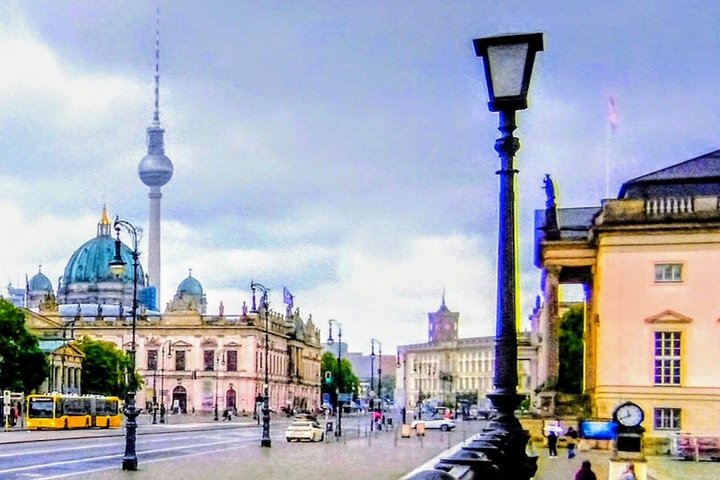
Unter den Linden: A Boulevard of History and Architecture
Unter den Linden, one of Berlin's most iconic boulevards, stretches through the city's heart, offering a rich blend of history, culture, and architectural beauty. This tree-lined avenue, whose name translates to "Under the Linden Trees," is a major thoroughfare and a journey through Berlin's past, showcasing an array of architectural styles spanning centuries.
A Fusion of Architectural Styles
Walking along Unter den Linden, visitors encounter a remarkable blend of architectural styles, reflecting the city's diverse history. From Baroque grandeur to Neoclassical elegance and modernist designs, the buildings along the boulevard tell the story of Berlin's evolution. Each era has left its mark on this storied avenue, offering a fascinating visual narrative of the city's growth and transformation.
Notable Landmarks Along the Boulevard
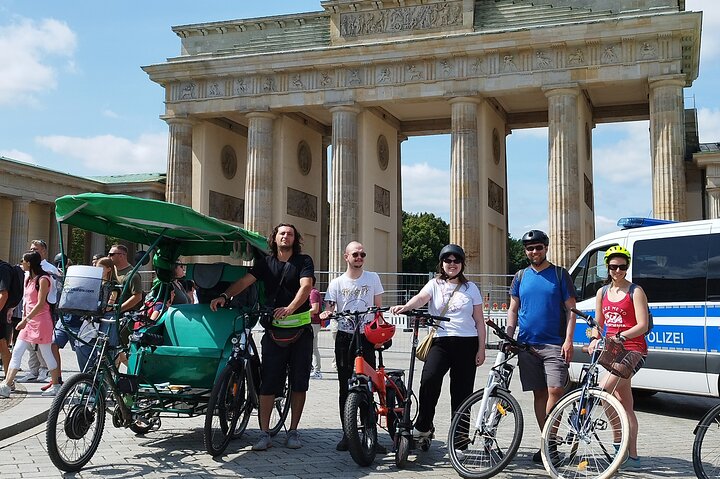
Brandenburg Gate**: At the western end of Unter den Linden stands the iconic Brandenburg Gate, one of the most recognizable symbols of Berlin. This monumental Neoclassical structure, designed by Carl Gotthard Langhans and completed in 1791, has witnessed some of Germany's most significant historical events, from the rise of the Prussian empire to the fall of the Berlin Wall. The gate's imposing columns and the Quadriga statue atop it evoke the grandeur of ancient Greece and Rome.
Berlin State Library**: Further along the boulevard, the Berlin State Library (Staatsbibliothek zu Berlin) is a testament to the city's intellectual heritage. Housed in an imposing Baroque and Neoclassical structure, the library holds millions of volumes and rare manuscripts, making it one of Europe's most important research libraries. Its architectural splendour matches its historical significance with a design emphasising function and grandeur.
Kronprinzenpalais (Crown Prince's Palace)**: Another landmark is the Kronprinzenpalais, a Baroque palace that once served as the residence of the Prussian crown princes. Built-in the 17th century, the palace is a fine example of Baroque architecture with its ornate façade and elegant interiors. Throughout history, the palace has served various functions, from a royal residence to an art gallery, and today, it stands as a symbol of Berlin's aristocratic past.
A Boulevard Steeped in History
Unter den Linden has been the stage for many of Berlin's most important historical events. During the 18th and 19th centuries, it was a grand promenade for the Prussian monarchy, linking the Berlin Palace to the Brandenburg Gate. The avenue later became a site for parades, demonstrations, and political gatherings, bearing witness to the turbulent history of 20th-century Germany.
Despite suffering damage during World War II, Unter den Linden was meticulously rebuilt post-war, preserving its historical significance while integrating modern elements. It remains a vital city artery, connecting Berlin's historical center with the modern government district.
A Cultural and Architectural Showcase
In addition to its historical landmarks, Unter den Linden is home to several important cultural institutions, including the German Historical Museum and the Humboldt University of Berlin. These institutions, housed in architecturally significant buildings, add to the cultural vibrancy of the boulevard, making it a must-visit destination for history and architecture enthusiasts.
Unter den Linden is more than just a boulevard; it is a living museum of Berlin's architectural and cultural history. From the Baroque splendour of the Kronprinzenpalais, the Neoclassical elegance of the Brandenburg Gate, and the intellectual heritage of the Berlin State Library, the avenue offers a fascinating journey through time. A stroll along Unter den Linden provides a glimpse into Berlin's rich past and enduring spirit of resilience and renewal.
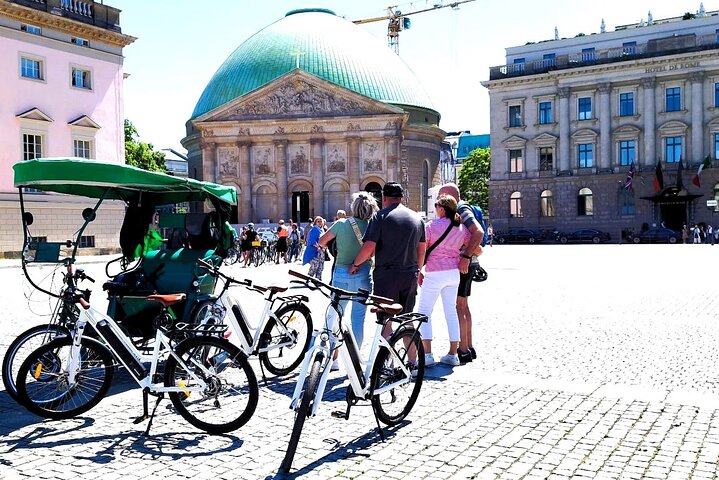
Bebelplatz in Berlin, historically known as Opernplatz, carries a haunting legacy tied to book burning during the Nazi regime.
Bebelplatz: A Haunting Legacy of Censorship and Intellectual Freedom**
Bebelplatz, a historic square in the heart of Berlin, is forever marked by one of the darkest moments in 20th-century history. Formerly known as Opernplatz, it was the site of the infamous book burning orchestrated by the Nazi regime in May 1933. Thousands of books by Jewish, communist, and liberal authors were deemed "un-Germ" n" and th "own into the flames in the act of intellectual repression. Today, Bebelplatz stands as a solemn reminder of the dangers of censorship, with a poignant memorial dedicated to preserving the memory of that tragic night and the enduring importance of intellectual freedom.
The 1933 Book Burning
On May 10, 1933, students, professors, and Nazi officials they were gathered in Bebelplatz to participate in a mass book burning organized by the German Student Union. Over 20,000 books by authors such as Albert Einstein, Sigmund Freud, Karl Marx, and Erich Maria Remarque were incinerated in a symbolic gesture to purge German culture of ideas that were seen as a threat to Nazi ideology. This event was one of the earliest manifestations of the cultural cleansing that would accompany the rise of the Third Reich, signalling a brutal suppression of free thought and expression.
The book burning in Bebelplatz became an enduring symbol of intellectual oppression, a grim reminder of how easily knowledge can be destroyed in the name of politics: A Silent Reminder.
Today, a simple yet powerful memorial designed by Israeli artist Micha Ullman marks where the books once burned. Located at the centre of Bebelplatz, the memorial consists of a glass plate set into the cobblestone ground, through which visitors can peer into an underground room. The room contains empty bookshelves to hold the 20,000 volumes burned on that fateful night.
The stark emptiness of the shelves speaks volumes about the cultural loss that occurs when knowledge is censored and erased. A nearby plaque features a quote from German poet Heinrich Heine, written in 1820, that chillingly foreshadowed the events of 1933: "That was" only "prelude"; where they burn books, they will in the end also burn people." This m" memor" al serv" s as a powerful testament to the importance of safeguarding intellectual freedom and resisting the forces of censorship.
Bebelplatz: A Space for Reflection
Bebelplatz is an architecturally significant square, surrounded by notable landmarks such as the Berlin State Opera, St. Hedwig'sHedwig'sal, Hedwig'sHedwig'salUniversity of Berlin. At the same time, these buildings reflect Berlin's sBerlin's iBerlin'sBerlin'sly, the square's square's story of significance. The contrast between the square'ssquare'sand tsquare'ssquare'sand witnessed often strikes visitors to Bebelplatz.
The memorial encourages quiet reflection, reminding us that even in spaces of outstanding cultural achievement, the potential for destruction always looms when freedom of thought is threatened. Bebelplatz is not just a historical site but a space where people can confront the consequences of censorship and the vital role literature plays in shaping free societies.
Bebelplatz is a powerful symbol of the struggle between knowledge and ignorance, freedom and repression. The tragic book burning here in 1933 serves as a reminder of the dangers of censorship and the destructive consequences of suppressing ideas. Micha Ullman'sUllman'sl, with its hUllman'sUllman'slookshelves, invites visitors to reflect on the importance of literature and the ongoing need to protect intellectual freedom. In this sense, Bebelplatz is both a cautionary tale from the past and a beacon for the future, reminding us of the enduring significance of preserving knowledge and promoting the free exchange of ideas.
Gendarmenmarkt in Berlin is a splendid square renowned for its architectural beauty and historical significance.
Gendarmenmarkt: A Symbol of Berlin’s Architectural Splendor and Historical Legacy**
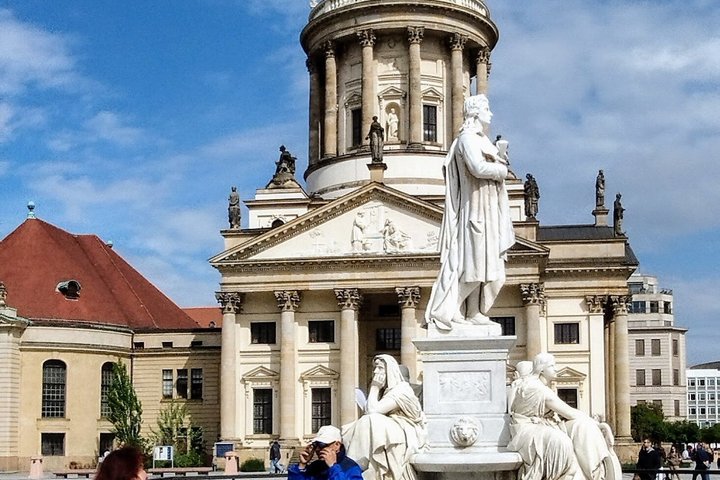
Gendarmenmarkt, located in the heart of Berlin, is widely regarded as one of the most beautiful squares in the city if not all of Europe. Renowned for its grandeur and rich history, the square is dominated by three iconic structures—the Konzerthaus, the French Cathedral (Französischer Dom), and the German Cathedral (Deutscher Dom). Together, these buildings form a stunning display of neoclassical design and reflect Berlin’s cultural diversity and historical significance.
Architectural Masterpieces
The Konzerthaus**: At the centre of Gendarmenmarkt stands the Konzerthaus, a magnificent concert hall designed by architect Karl Friedrich Schinkel and completed in 1821. With its grand staircase, majestic columns, and detailed neoclassical facade, the Konzerthaus is an architectural gem and a cultural landmark. Inside, the hall is renowned for its excellent acoustics and regularly hosts world-class orchestral performances and concerts, making it a destination for music lovers worldwide. The building’s artistic and cultural significance has made it vital to Berlin’s vibrant music scene.
The French Cathedral (Französischer Dom)**: On the north side of Gendarmenmarkt stands the elegant French Cathedral, topped with a stunning dome that adds to the square’s visual harmony. Built-in the early 18th century by Huguenot refugees who fled religious persecution in France, the cathedral is a testament to the Cathedral of tolerance and diversity. The French Cathedral’s tower offers panoramic views of Berlin, while its interior houses a museum dedicated to the history of the Huguenots in the city, offering insights into this community's cultural and religious impact.
The German Cathedral (Deutscher Dom)**: Opposite the French Cathedral on the south side of the square is the German Cathedral, which mirrors its French CatheCathedralrchitectural style. While the building has served various purposes over the centuries, it functions as a museum focused on German parliamentary history today. The exhibits inside provide a deep exploration of Germany’s political evolution, from the 19th century to the present day, making the German Cathedral a must-visit for those intCathedrCathedralountry’s historical and political landscape.
A Square Steeped in History
Gendarmenmarkt is an architectural marvel and a site of significant historical events. It was vital during the 1848 Revolution when Berliners gathered in the square to demand democratic reforms and greater civil rights. Later, the square witnessed the fall of the Berlin Wall in 1989, a monumental event that symbolized the reunification of Germany and the end of decades of division.
The square’s history is reflected in its name, which derives from the Prussian Gens d’Armes regiment that once had its stables in the area. Over time, Gendarmenmarkt has transformed from a military space to a hub of cultural and civic life.
A Vibrant Cultural Hub
Today, Gendarmenmarkt is a place to admire history and architecture and a lively cultural centre. The square frequently hosts open-air concerts, festivals, and seasonal markets, drawing both locals and tourists. One of the year's highlights is the Christmas market, where visitors can enjoy festive stalls, music, and food while surrounded by the stunning backdrop of the three monumental buildings.
Whether it’s a classical concert at the Konzerthaus or a visit to one of the museums, Gendarmenmarkt offers a rich blend of history, culture, and entertainment, making it one of the most beloved destinations in Berlin.
Gendarmenmarkt is a true gem of Berlin, combining architectural beauty, historical depth, and cultural vibrancy. The majestic Konzerthaus, alongside the French and German Cathedrals, creates a harmonious visual and cultural experience that reflects Berlin’s rich history and commitment to the arts. As a place where past and present converge, Gendarmenmarkt continues to be a vibrant and essential part of the city’s cultural and historical landscape.
Checkpoint Charlie, situated in the heart of Berlin, is an iconic historical landmark symbolizing the division and reunification of the city during the Cold War.
Checkpoint Charlie, situated in the heart of Berlin, is an iconic historical landmark symbolizing the division and reunification of the city during the Cold War. Named after the third letter in the NATO phonetic alphabet, it was one of the most famous border crossing points between East and West Berlin. During the Cold War, Checkpoint Charlie was a potent symbol of the Iron Curtain, separating the American and Soviet sectors. It was the site of numerous tense standoffs and encounters between American and Soviet military personnel. Today, a replica of the original guardhouse stands at the site, manned by actors dressed as U.S. military police, offering tourists a glimpse into this pivotal historical period. The museum is now known as the Mauermuseum.
The "Topography of Terror" in Berlin, once the Nazi Gestapo and SS headquarters,
Topography of Terror: A Museum of Remembrance and Reflection
The Topography of Terror in Berlin, located on the grounds where the Nazi Gestapo and SS headquarters once stood, is an influential museum and documentation centre that confronts the darkest chapterGermany'sny's history. It offers an unflinching recount of Nazi atrocities, including the systematic persecution and extermination of millions of people during the Holocaust. Through detailed exhibits, original documents, and the remnants of the original buildings, the museum serves as a stark reminder of the consequences of unchecked hatred and intolerance.
A Site of Historical Significance
The location of the Topography of Terror holds immense historical significance. During the Nazi regime, the grounds housed the central offices of the Gestapo, SS, and Reich Security Main Office—institutions responsible for the enforcement of Nazi terror both within Germany and across occupied territories. From here, the machinery of persecution, terror, and genocide was coordinated, leading to the suffering of millions.
Though the original buildings were heavily damaged and eventually demolished after World War II, the site retains its historical weight. The museum has preserved parts of the foundations, allowing visitors to connect physically with the remnants of this brutal past.
Exhibits and Documentation
The Topography of Terror offers a comprehensive and educational experience, with exhibits meticulously detailing the rise of the Nazi regime, the function of the Gestapo and SS, and the horrors of the Holocaust. The museum presents original photographs, personal testimonies, and documents that reveal the inner workings of the Nazi terror apparatus.
One of the most moving aspects of the museum is its emphasis on the individual stories of those who suffered under the regime. It brings the unimaginable scale of the atrocities into human terms, encouraging visitors to reflect on the profound impact of Nazi crimes.
A Place of Reflection and Learning
The Topography of Terror is not just a memorial to past atrocities but also a place of reflection and learning. Its educational programs and exhibitions aim to confront visitors with the consequences of intolerance, racism, and authoritarianism. By studying the crimes of the past, the museum urges society to remain vigilant against the forces of hatred that can lead to such horrors.
museum'sum's open-air exhibits and preserved sections of the Berlin Wall provide additional layers of historical context, linking the Nazi era with the later period of division during the Cold War: this juxtaposition underscoBerlin'sin’s complex and painful history and its ongoing efforts toward remembrance and reconciliation.
A Call for Human Rights and Justice
At its core, the Topography of Terror serves as a reminder of the importance of safeguarding human rights, justice, and democratic values. It challenges visitors to confront past atrocities and take responsibility for ensuring that such crimes are never repeated. The museum stands as a powerful testament to the resilience of the human spirit and the enduring importance of education, tolerance, and human dignity.
The Topography of Terror is a profoundly impactful museum that stands on historic ground, offering a stark reminder of the horrors of Nazi Germany. Through its exhibits, documents, and the remnants of the Gestapo and SS headquarters, it encourages reflection, learning, and a commitment to building a future rooted in justice and human rights. As a place of both remembrance and education, it serves as a vital reminder of the dangers of intolerance and the enduring need to defend democracy and human dignity.
The "Führerbunker"
The Führerbunker: Hitler’s Final Stronghold in Berlin
The *Führerbunker* was an underground bunker complex located in central Berlin, where Adolf Hitler, the dictator of Nazi Germany, spent the final months of World War II. As the Third Reich crumbled and Allied forces closed in on Berlin, the bunker became Hitler's last refuge, and it is infamous as the place where he ultimately took his own life in April 1945. The history of the Führerbunker offers a chilling insight into the final days of Nazi Germany and the tragic end of one of history's most destructive regimes.
Location and Construction
The Führerbunker was part of a more extensive network of underground shelters built beneath the Reich Chancellery, Hitler's official residence and the seat of his power. Located in the heart of Berlin, near the Brandenburg Gate, the bunker was constructed beneath the garden of the Reich Chancellery between 1936 and 1944. It consisted of two sections: the older *Vorbunker* (upper bunker) and the deeper, more secure Führerbunker.
The bunker was designed to provide Hitler and his closest associates with protection from the relentless Allied bombings that ravaged Berlin in the final stages of the war. It was equipped with living quarters, conference rooms, and basic amenities to sustain its occupants. However, the cramped conditions and rising pressure as the war neared its conclusion made life in the bunker increasingly grim.
The Final Days of the Third Reich
As Soviet forces encircled Berlin in April 1945, Hitler retreated to the Führerbunker, where he spent the last weeks of his life. During this period, the mood inside the bunker grew increasingly desperate. Hitler's health deteriorated, and he issued delusional commands to his shrinking military forces. Despite the worsening situation, he refused to flee or surrender, instead choosing to stay in the bunker until the end.
On April 30, 1945, with Soviet troops only a few hundred meters away, Hitler committed suicide in the Führerbunker alongside his wife, Eva Braun, whom he had married the day before. Their bodies were later burned in the garden above to prevent them from being captured by the Soviets.
The Bunker After the War
Following the fall of Berlin and the end of World War II, the Führerbunker was mainly destroyed by Soviet forces in an attempt to eliminate any traces of Hitler's final stronghold. The bunker remains were filled mainly in or demolished during the Cold War. In the 1980s, the construction of apartment buildings in the area covered what little was left of the site.
Today, the location of the Führerbunker lies beneath a parking lot near the intersection of *In den Ministergärten* and *Gertrud-Kolmar-Straße* in central Berlin. There is no visible trace of the bunker, and the site is deliberately understated to avoid becoming a focal point for neo-Nazis or extremists. A small informational plaque installed in 2006 provides a brief history of the bunker and its role in the final days of Nazi Germany. Still, otherwise, the area blends into the modern urban landscape.
Historical Significance and Legacy
The Führerbunker symbolizes the collapse of the Nazi regime and the devastation that Adolf Hitler's ideology brought to Europe and the world. While the bunker itself no longer exists, its historical importance endures as a reminder of the catastrophic consequences of totalitarianism and hate. The site represents the final moments of one of history's darkest chapters, a place where a regime responsible for untold suffering and destruction met its inevitable demise.
By removing traces of the bunker and avoiding glorifying its history, Berlin has taken a firm stance on confronting its past, focusing instead on remembrance, education, and reconciliation. This approach underscores the city's commitment to preserving the memory of the victims of Nazism and ensuring that history is neither forgotten nor repeated.
The Führerbunker, once the underground headquarters of Adolf Hitler, now lies buried beneath a nondescript parking lot in Berlin. Though the bunker itself is gone, its legacy lives on as a grim symbol of Nazi Germany's downfall. The story of the Führerbunker serves as a cautionary tale about the dangers of unchecked power and the horrors that can arise from hatred and tyranny. Through its disappearance, Berlin continues its effort to face the past with responsibility and to honour the victims of the regime while ensuring that the lessons of history are not lost.
The Holocaust Memorial in Berlin, officially known as the "Memorial to the Murdered Jews of Europe"
The Holocaust Memorial: A Somber Tribute to the Victims of the Holocaust**
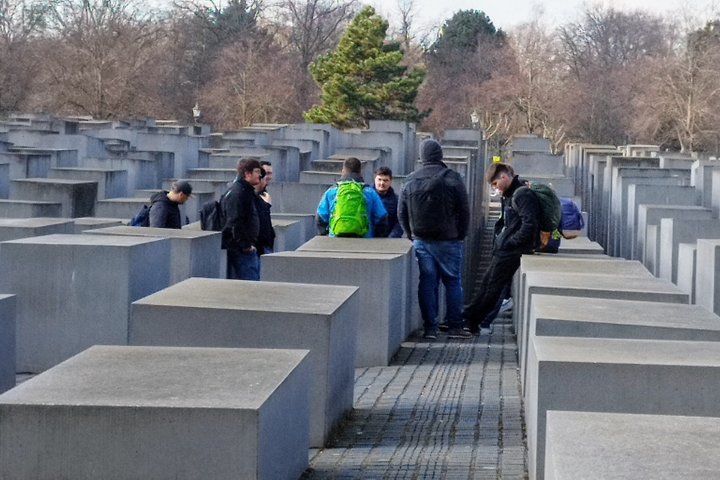
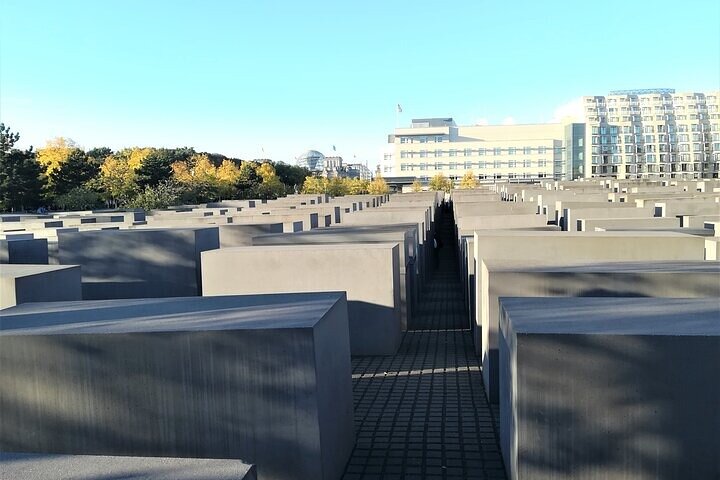
The Holocaust Memorial in Berlin, officially known as the *Memorial to the Murdered Jews of Europe* (*Holocaust-Mahnmal*), stands as a poignant and evocative tribute to the six million Jewish victims of the Holocaust. Designed by American architect Peter Eisenman and inaugurated in 2005, this memorial has become one of the city's most essential and thought-provoking landmarks, inviting visitors to reflect on past horrors while confronting the consequences of intolerance and hatred.
A Striking Design
The memorial consists of 2,711 grey concrete slabs, or *stelae*, arranged in a grid pattern on a sloping, undulating field covering 19,000 square meters. The slabs vary in height, with some standing as low as a few inches while others rise over four meters tall. The uniform, colourless slabs create an overwhelming sense of anonymity and uniformity, mirroring the mass scale of the Holocaust and the dehumanization of its victims.
The design invites visitors to walk through the narrow, maze-like paths between the slabs, evoking a sense of disorientation and unease. As one moves deeper into the memorial, the ground descends, making the slabs appear even taller, cutting off the visitor from the outside world. This creates a feeling of isolation and claustrophobia, symbolizing the fear, oppression, and disconnection experienced by Holocaust victims.
Symbolism of the Stelae
While Peter Eisenman's design does not contain explicit symbolism or literal references to the Holocaust, its abstract form encourages personal reflection. With their cold, concrete surfaces, the stelae evoke a cemetery-like atmosphere, suggesting the vastness of loss and the anonymity of the millions of lives cut short. The memorial's lack of explicit markers or inscriptions amplifies this sense of collective tragedy, forcing visitors to confront the scale of the Holocaust without distraction.
The simplicity of the memorial also allows for individual interpretation. Some see the stelae as gravestones, while others interpret the grid as a representation of both order and chaos, mirroring the systematic nature of the Nazi regime's atrocities. The immersive experience of walking through the undulating field creates an emotional journey, making the visitor feel small and vulnerable, reflecting the feelings of those persecuted.
The Memorial's Impact
The *Memorial to the Murdered Jews of Europe* is more than a physical space—it is a place of remembrance, reflection, and education. Its location in the heart of Berlin, close to the Brandenburg Gate and other significant historical sites, underscores the city's commitment to confronting its past and acknowledging the immense suffering caused by the Holocaust. The memorial serves as a reminder of the atrocities committed during Nazi rule and the importance of remembering the victims to prevent such horrors from ever occurring again.
Beneath the field of stelae lies an underground information centre, which provides historical context about the Holocaust. The centre includes personal stories, letters, and photographs of victims, offering visitors a deeper understanding of the human cost of the genocide. This connection between the abstract design above ground and the personal histories below reinforces the memorial's message: the Holocaust was both a tragedy of unimaginable scale and a collection of individual human lives lost.
A Place for Reflection
The experience of visiting the *Holocaust-Mahnmal* is intentionally unsettling. Eisenman's design confronts visitors with discomfort, confusion, and isolation, encouraging deep reflection on the nature of human suffering and the fragility of life. The memorial's abstract, non-linear design invites contemplation on how such atrocities could happen and how they must never be allowed to happen again.
The *Memorial to the Murdered Jews of Europe* is a powerful and solemn tribute to the six million Jewish victims of the Holocaust. Through its stark, abstract design, the memorial evokes feelings of loss, isolation, and reflection, reminding visitors of the scale and horror of the atrocities committed during the Holocaust. As a place of remembrance and education, it plays a vital role in ensuring that the memory of the Holocaust endures, serving as a warning against the dangers of intolerance and the importance of preserving human dignity.
Brandenburg Gate: A Symbol of Berlin's History, Resilience, and Reunification
Brandenburg Gate: A Symbol of Berlin's History, Resilience, and Reunification
The *Brandenburg Gate* (*Brandenburger Tor*) is one of Berlin's most iconic landmarks, embodying the city's turbulent history, resilience, and eventual reunification. This magnificent neoclassical triumphal arch, designed by architect Carl Gotthard Langhans, was completed in 1791 and has since been a witness to more than two centuries of momentous historical events that shaped Germany and the world.
Commissioned as a Symbol of Peace
King Frederick William II of Prussia commissioned the Brandenburg Gate to symbolize peace and was initially called the *Gate of Peace*. It was constructed as part of the city's expansion and marked the western end of the grand boulevard *Unter den Linden*, which led directly to the royal city palace. Modelled after the Propylaea of the Acropolis in Athens, the Gate reflects the Prussian monarch's admiration for classical antiquity, with its six Doric columns and elaborate design becoming a symbol of the Enlightenment ideals of the time.
The Gate's most recognizable feature is the *Quadriga*, a statue of a chariot drawn by four horses, driven by Victoria, the Roman goddess of victory. This symbol of triumph was installed atop the Brandenburg Gate in 1793, further enhancing its status as a symbol of peace and prosperity.
Witness to Historical Change
Over the centuries, the Brandenburg Gate has stood as a silent witness to some of the most dramatic moments in German history. It became a symbol of Prussian might and Europe's shifting political landscape. In the 19th century, Napoleon's forces occupied Berlin, and the French emperor ordered the removal of the Quadriga to Paris in 1806 as a war trophy. However, after Napoleon's defeat, the Quadriga was returned to its original place, symbolizing victory over foreign domination.
Throughout the 20th century, the Brandenburg Gate witnessed the rise of Nazi Germany, the devastation of World War II, and the subsequent division of Berlin during the Cold War. It became a potent symbol of this division when the Berlin Wall was erected in 1961, cutting the Gate off from East and West Berlin. Located in the no-man's-land between East and West, the Brandenburg Gate was a sad reminder of the separation that defined the Cold War era.
A Symbol of Reunification
The fall of the Berlin Wall in 1989 marked a turning point in the history of the Brandenburg Gate. On December 22, 1989, the Gate was reopened to the public as thousands of Berliners gathered to celebrate the reunification of East and West Germany. The Brandenburg Gate, once a division symbol, was transformed into a powerful emblem of unity and hope.
Today, it continues to stand as a reminder of the city's resilience and journey from division to reunification. The Gate is frequently used as a gathering place for celebrations, protests, and political events, and it remains a symbol of peace, freedom, and democracy.
Architectural Grandeur and Cultural Importance
The Brandenburg Gate Society's neoclassical design is a masterpiece of simplicity and grandeur. Standing 26 meters high and 65 meters wide, it was inspired by classical Greek architecture, featuring six Doric columns on each side that form five passageways. Historically, the central passage was reserved for royalty, while citizens could pass through the outer lanes.
The *Quadriga* atop the Gate adds to its majestic presence, with the goddess Victoria driving her horses towards the city, symbolizing both peace and triumph. Over the years, the Brandenburg Gate has become synonymous with Berlin's cultural identity, representing the city's ability to endure and overcome its challenges.
The Brandenburg Gate is much more than a historical monument—it is a symbol of Berlin's complex history, its strength, and its rebirth. From its origins as a monument to peace to its role as a silent witness to war, division, and reunification, the Gate encapsulates the essence of Berlin's journey. Today, it is a testament to the city's and its people's resilience, representing the hope for a peaceful and united future.