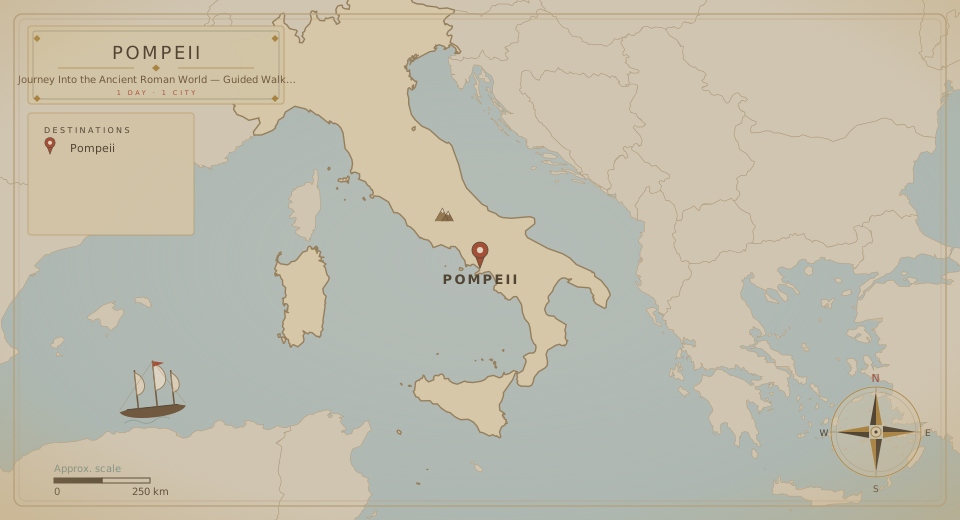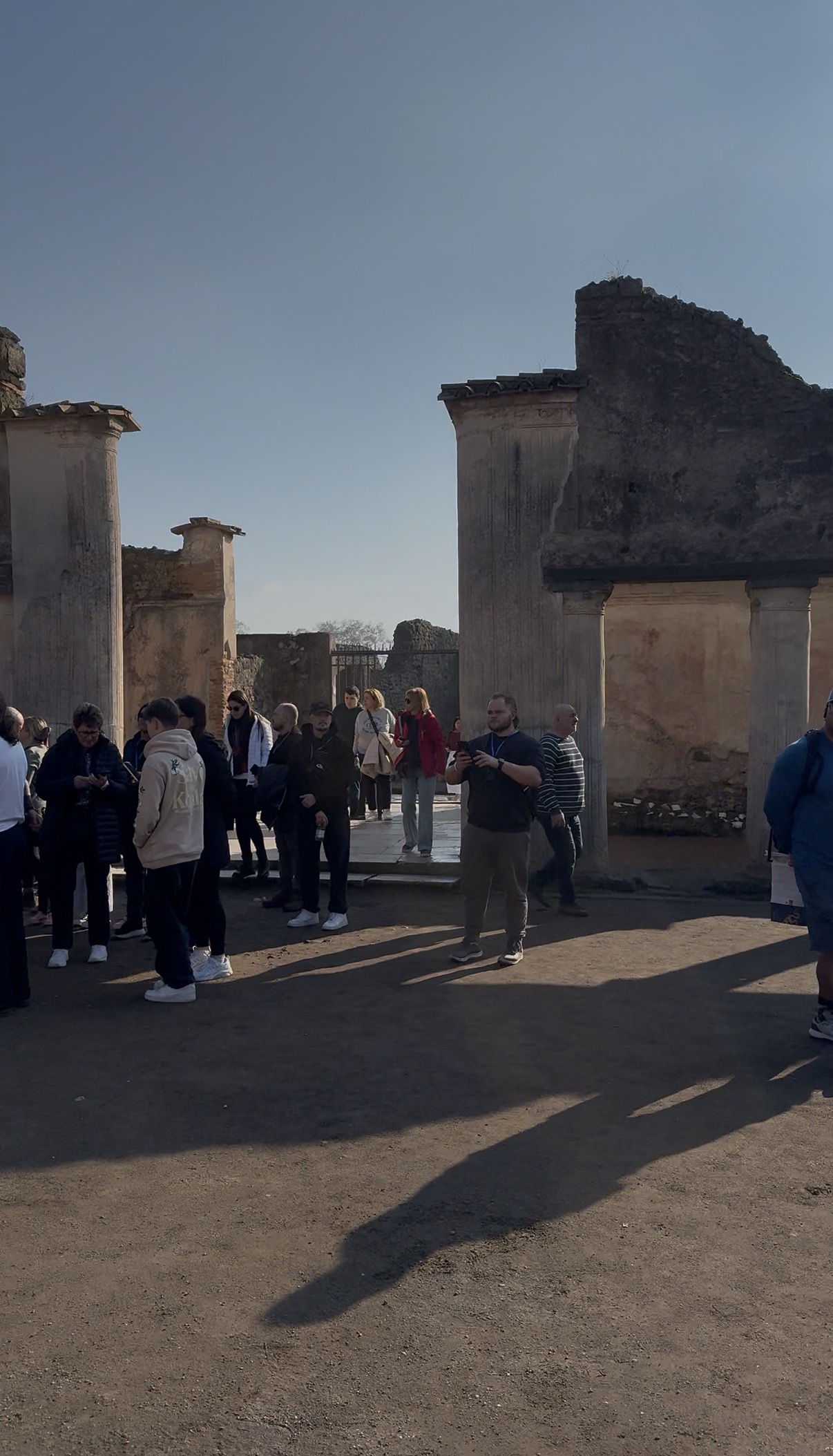
Meeting Point: Piazza Esedra Entrance (Porta Marina Inferiore)
Meet immediately outside the main ticket barrier or at the prominent entrance gates, which are located right next to the Hotel Vittoria.
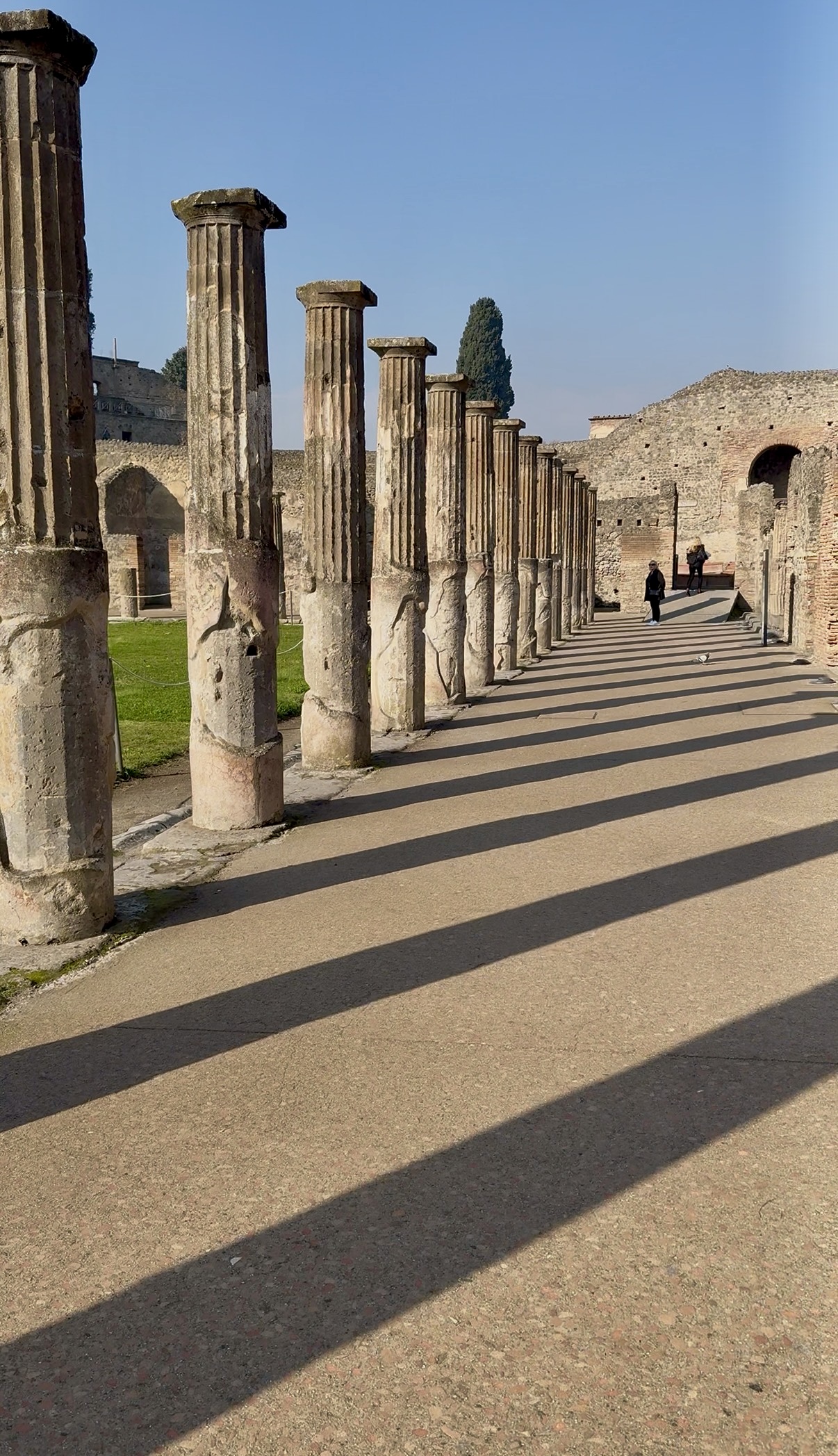
Quadripotico dei Teatri
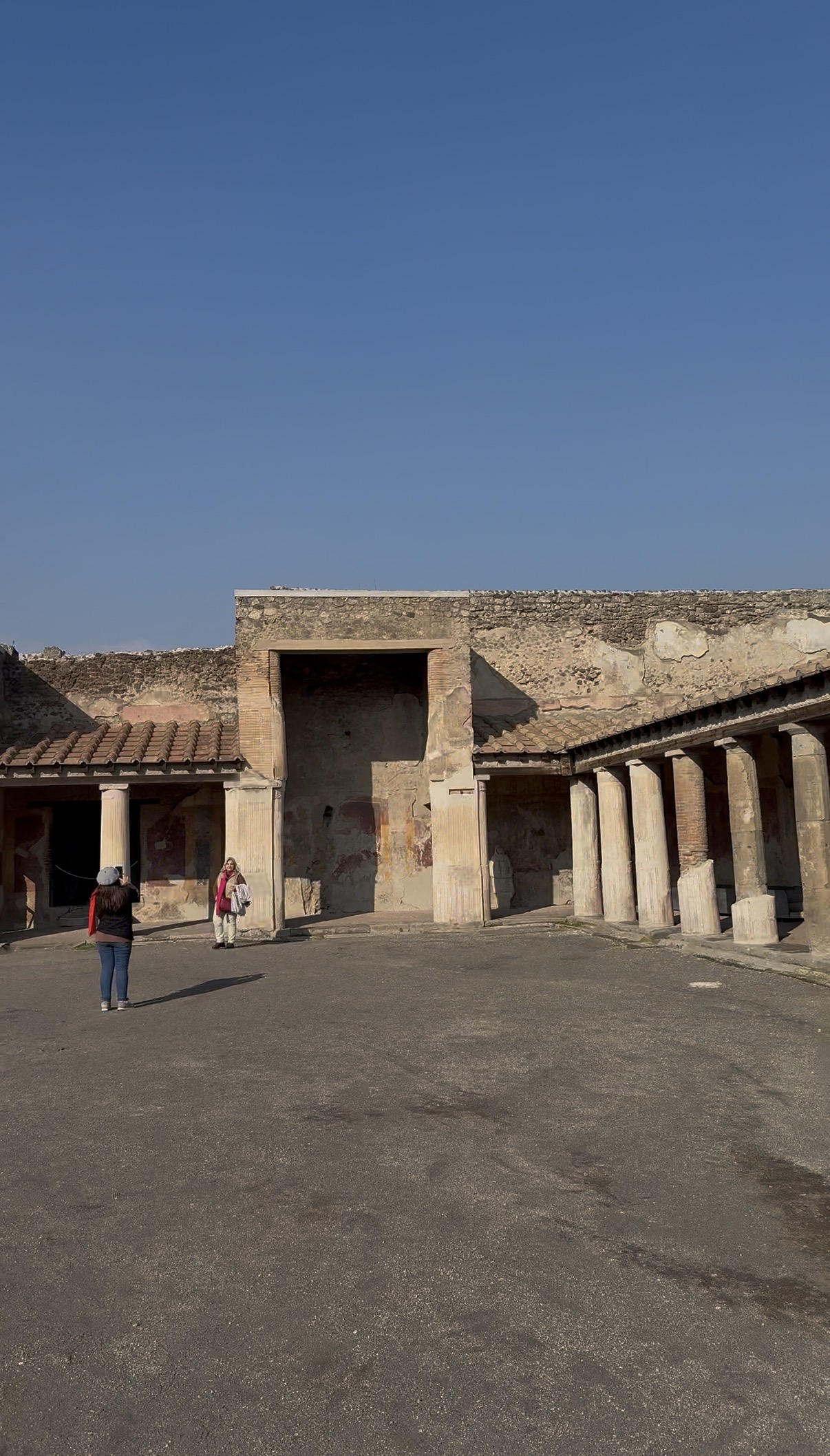
Begin the tour at the Quadriporticus of the Theatres (Gladiators' Barracks): A large colonnaded portico located behind the Great Theatre. Initially, it served as a covered waiting area for spectators during theatre intervals. After the earthquake of 62 AD, it was converted into a barracks for gladiators, as evidenced by the discovery of helmets and weapons.
Teatro piccolo
Walk into the beating heart of ancient Pompeii.
A smaller, covered theatre (capacity of about a thousand people), mainly intended for musical performances and poetry recitals. It retains its elegant flooring with flakes of multi-colored marble..
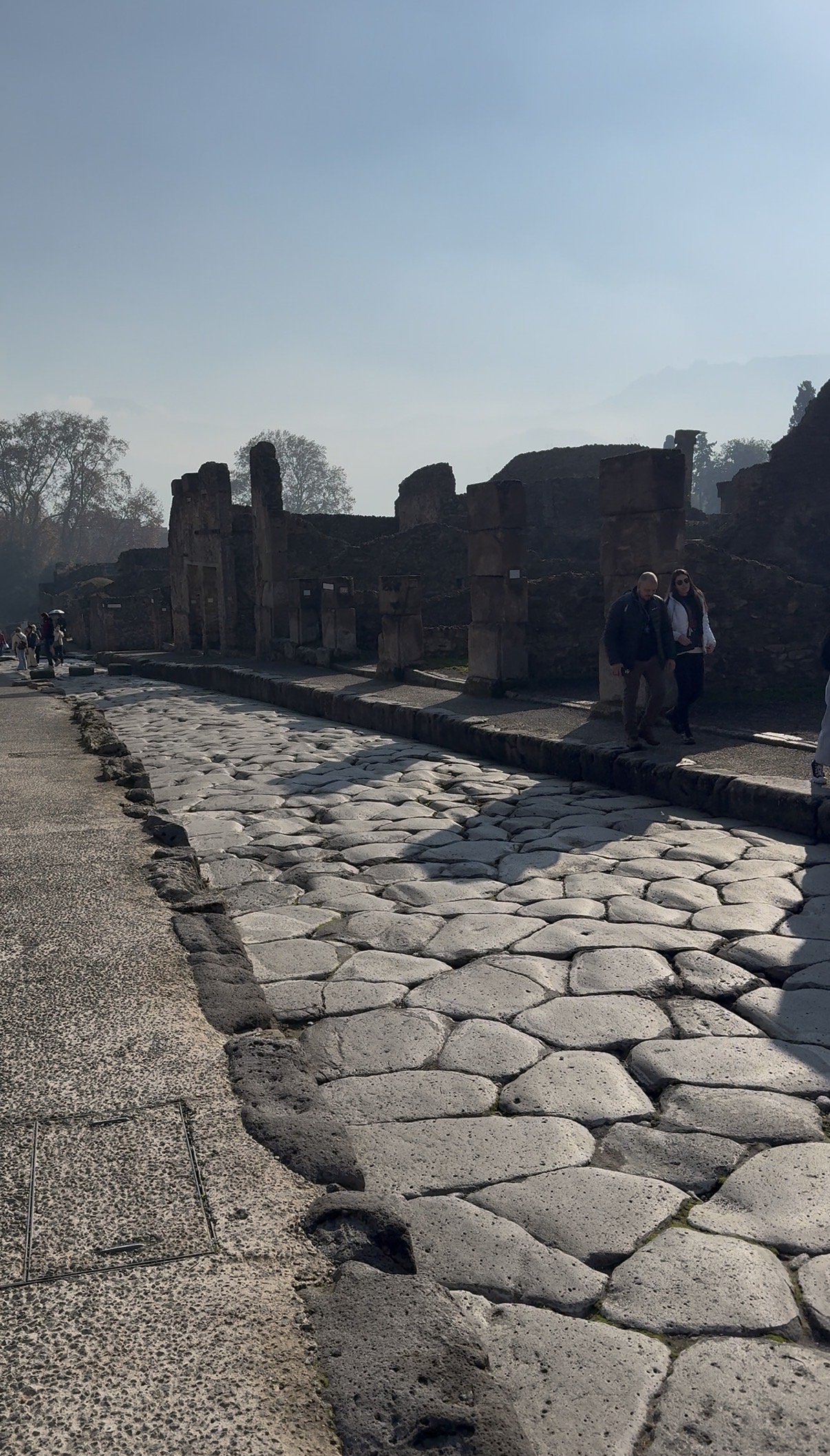
Via dell’Abbondanza
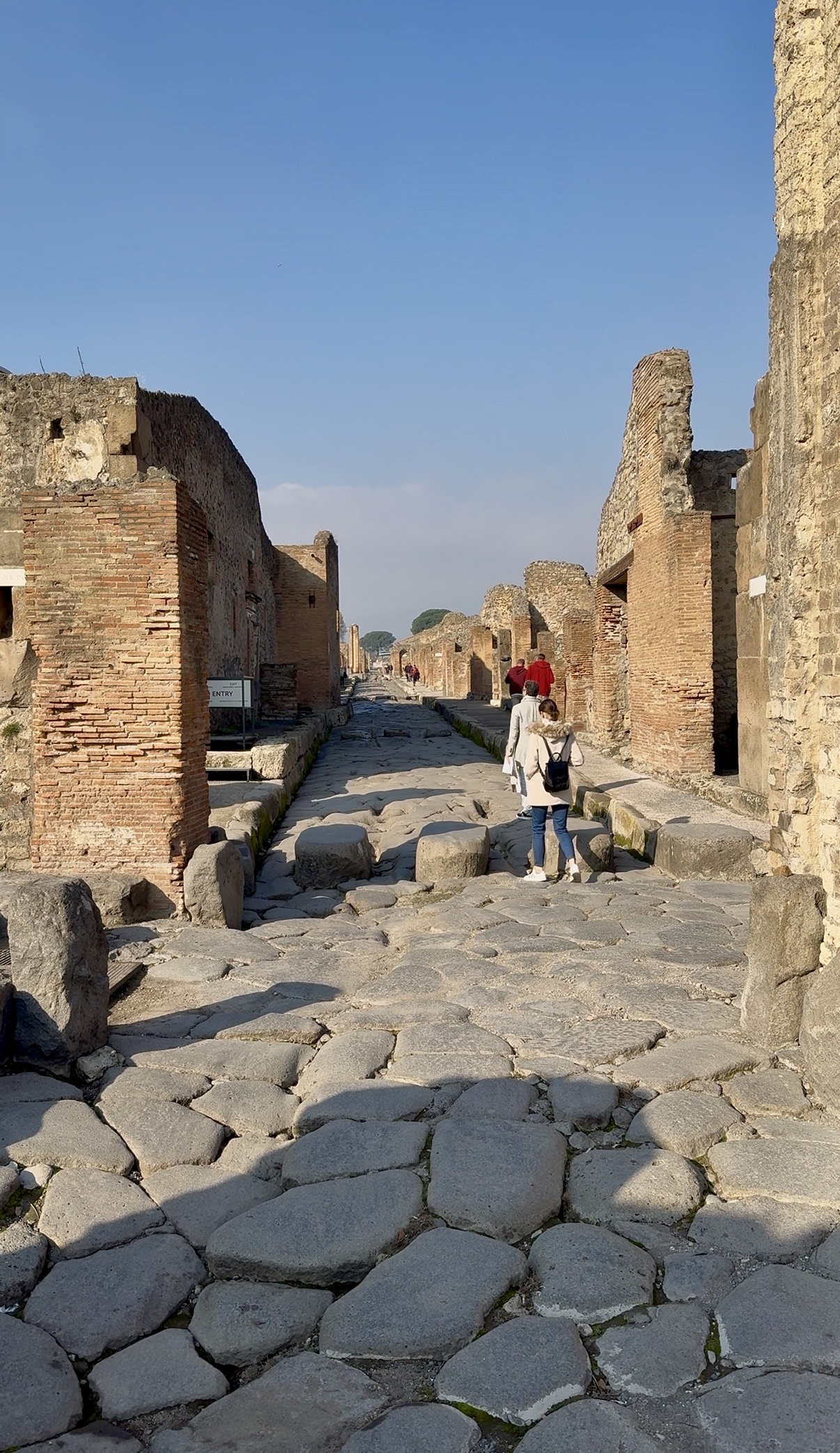
One of the principal and most important streets of the ancient city. It was a thriving commercial artery lined with shops, workshops, bars (thermopolia), private residences, and public fountains, offering a vivid glimpse into daily Roman life.
Stabian Baths (Terme Stabiane)
The oldest and best-preserved public baths in Pompeii. They were separated into sections for men and women and included typical Roman bathing rooms: the cold room (frigidarium), the warm room (tepidarium), and the hot room (calidarium).
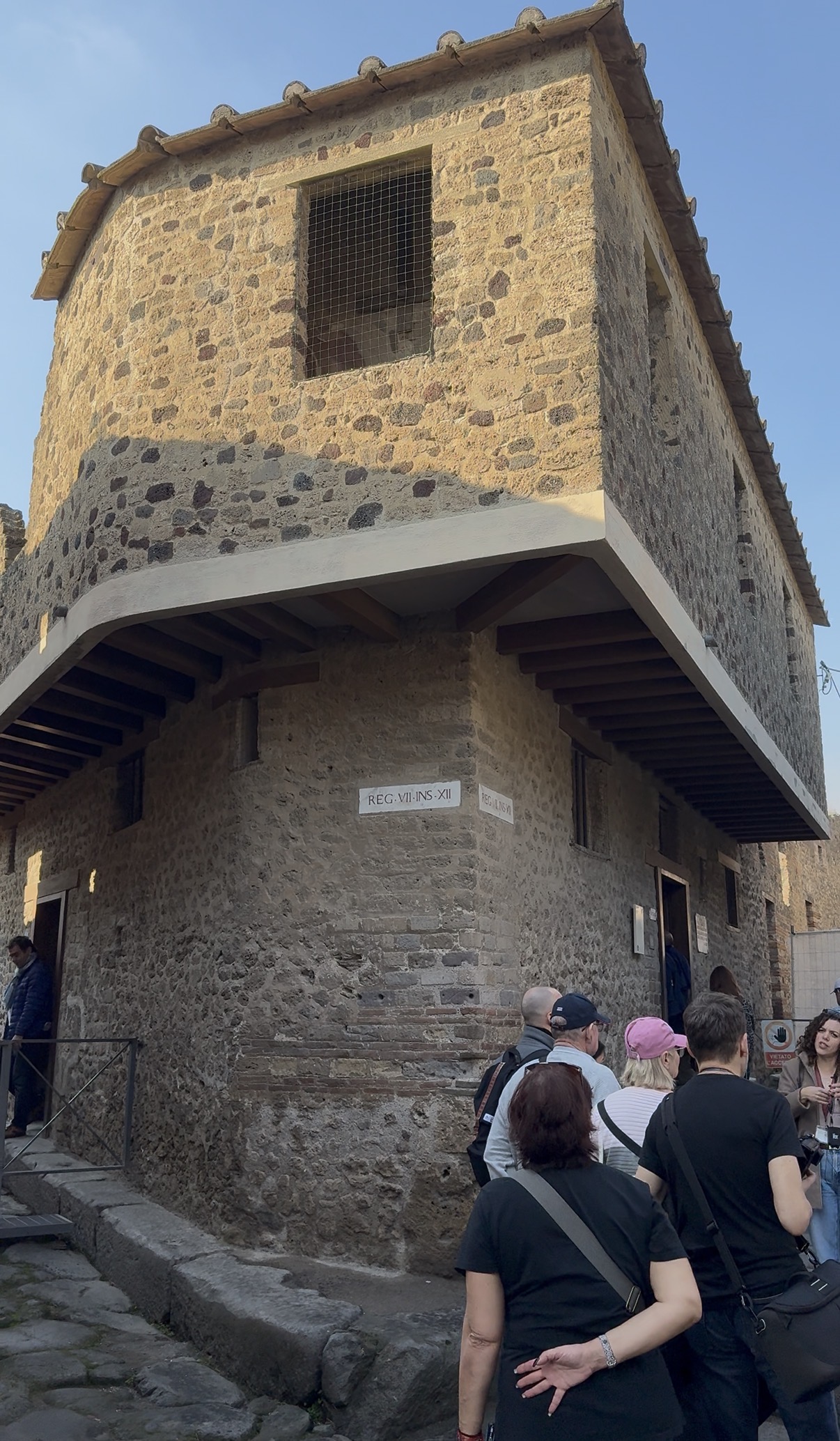
Lupanar (Brothel)
The city's most famous brothel. It is notable for the erotic frescoes painted on the walls above the doorways and its small rooms featuring built-in masonry beds.
Forum of Pompeii
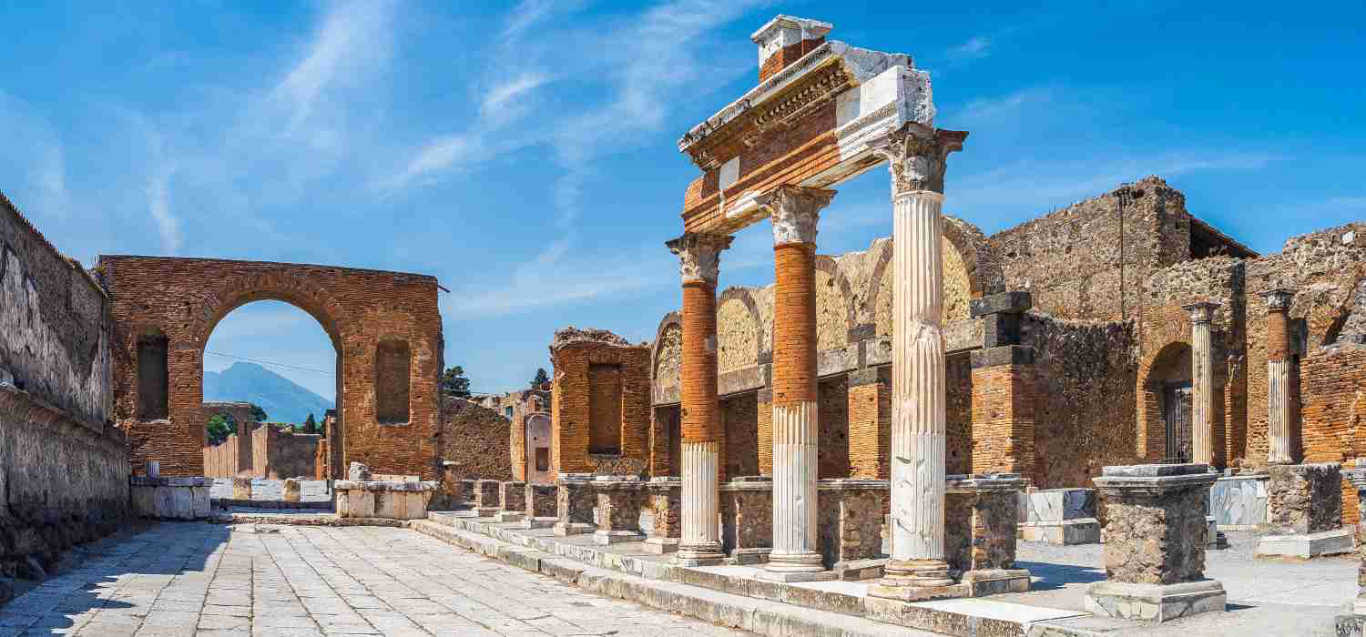
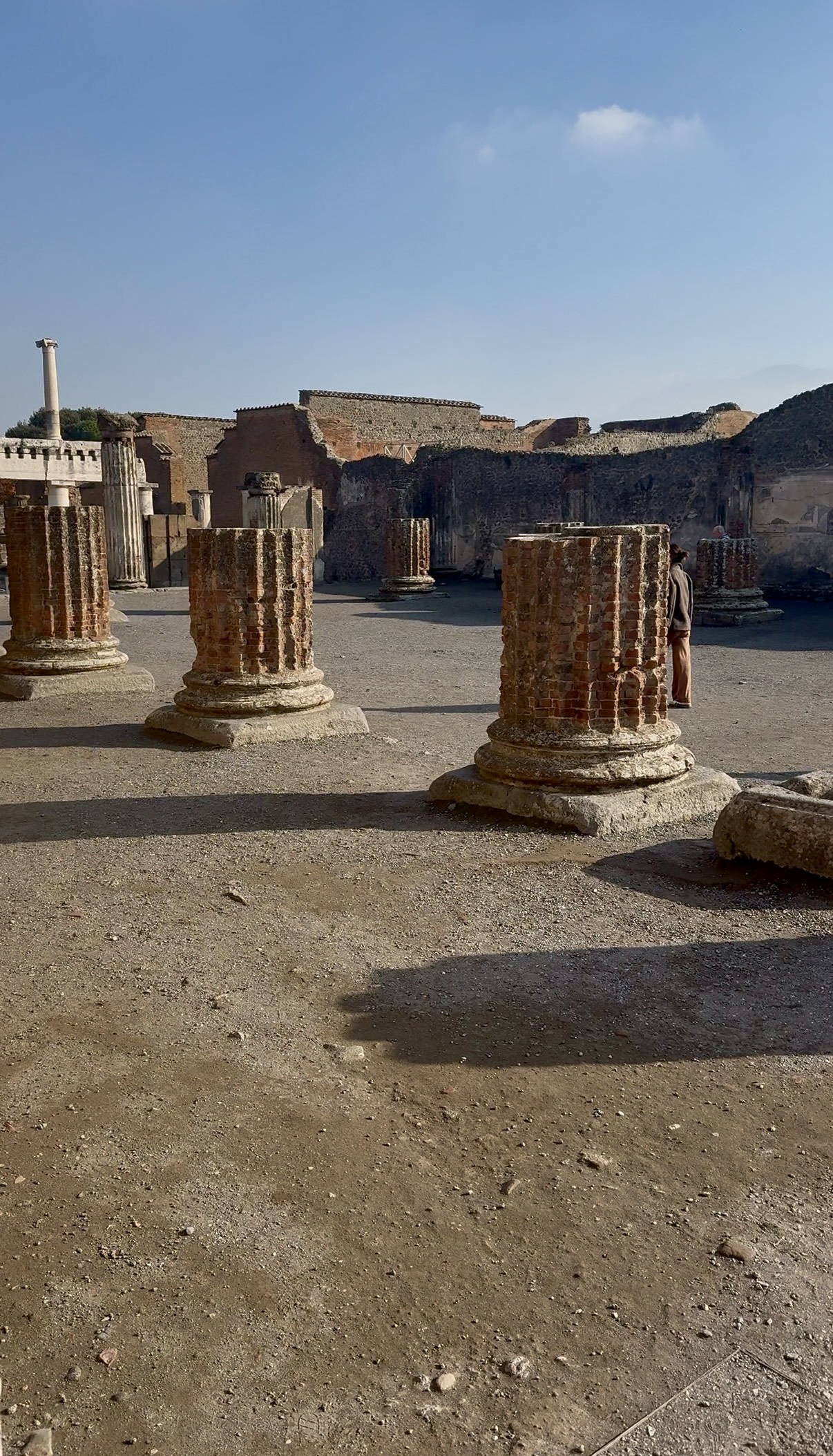
The political, religious, and commercial heart of the city. It was a large rectangular piazza surrounded by the main public buildings, basilicas, and temples, including the Temple of Jupiter.
Museum (Antiquarium or Exhibition Space)
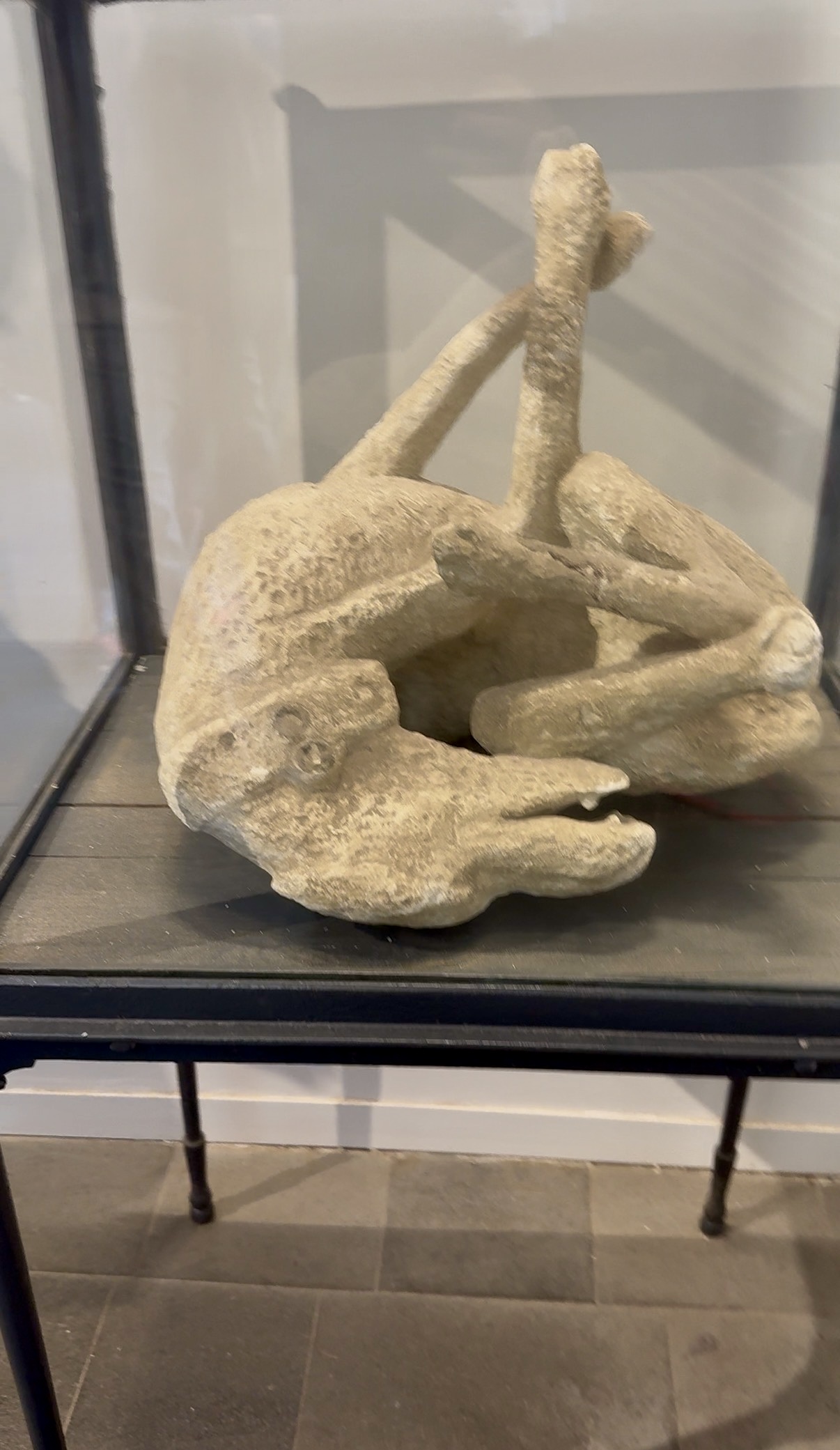
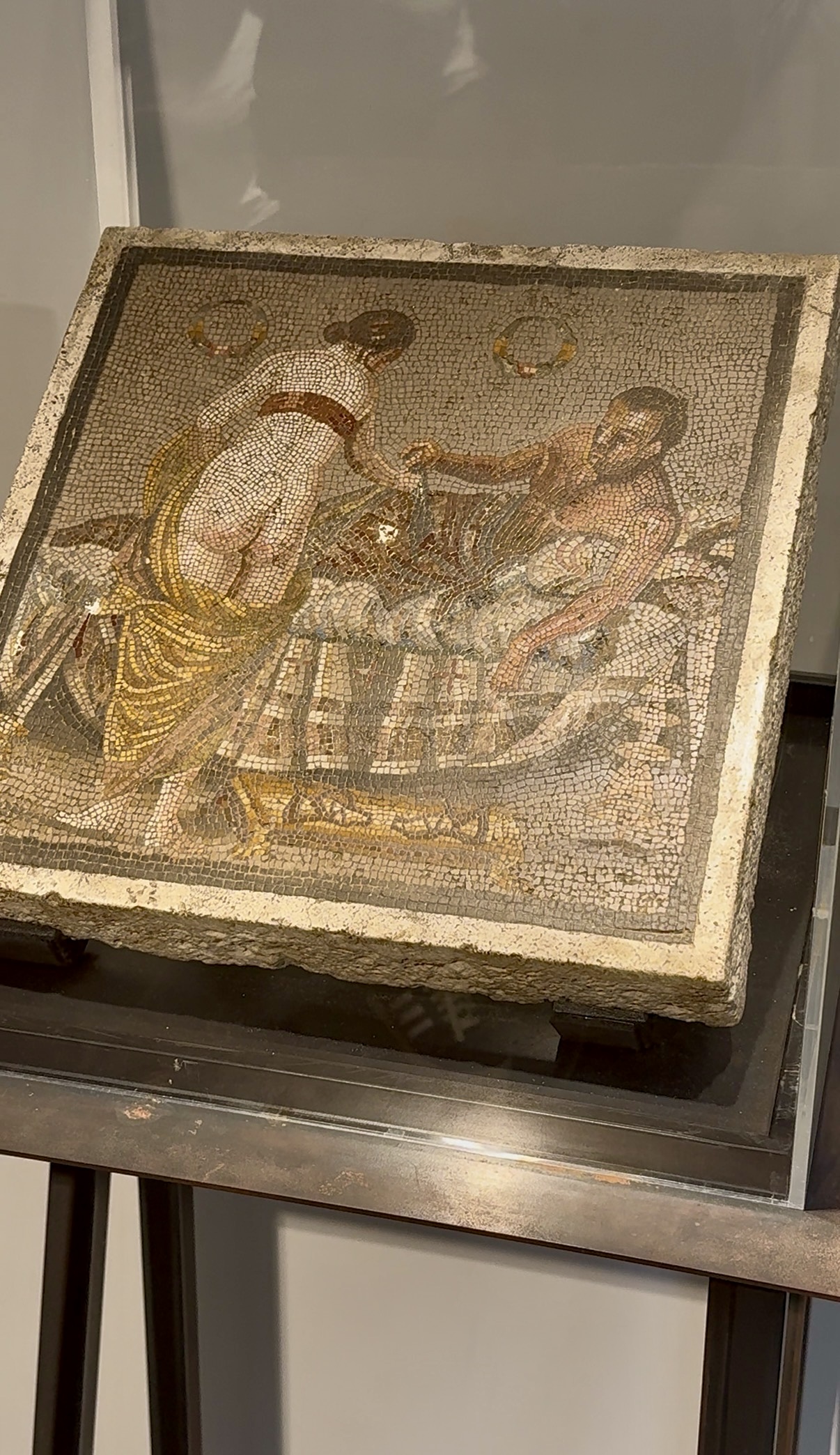
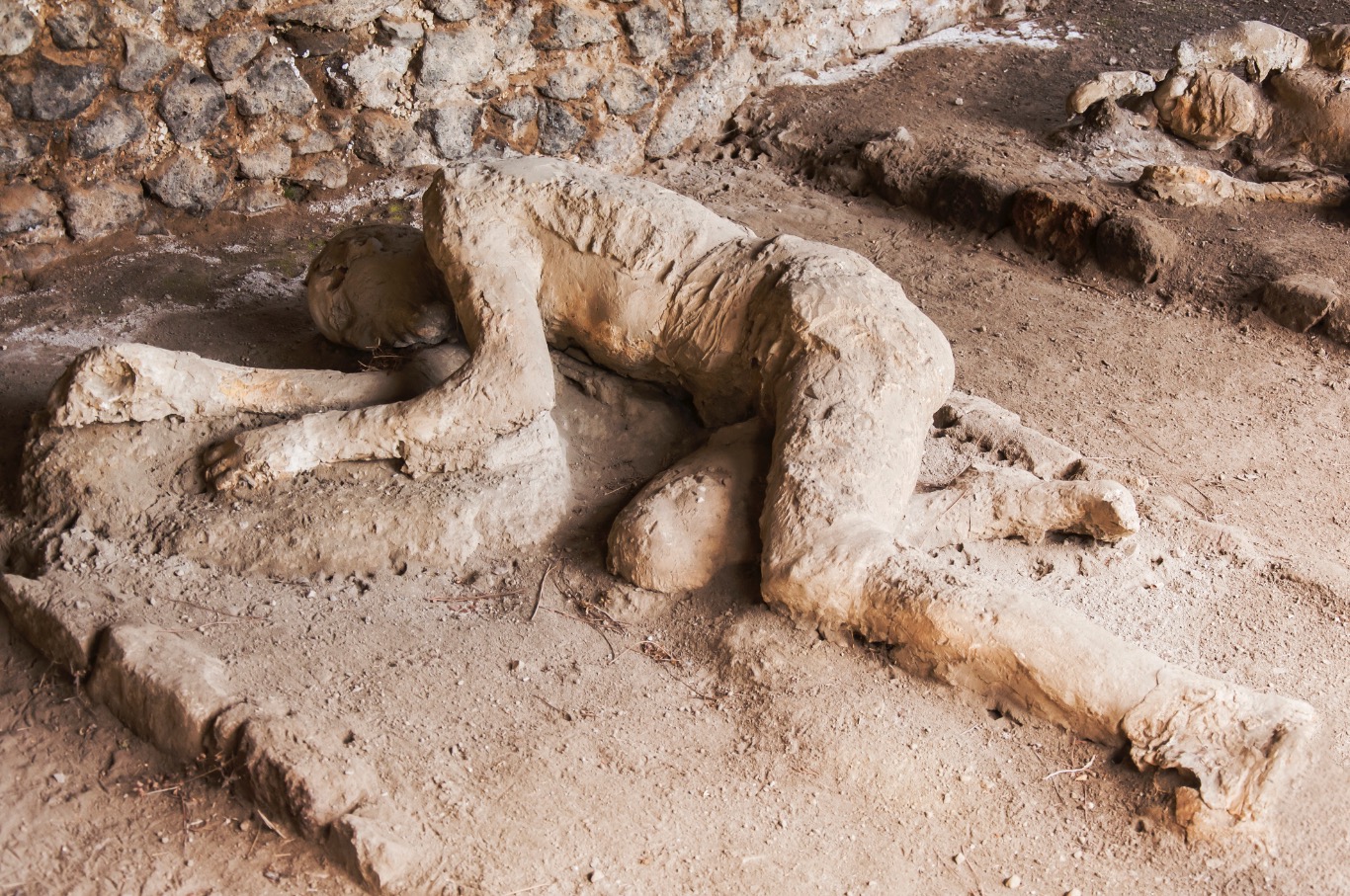
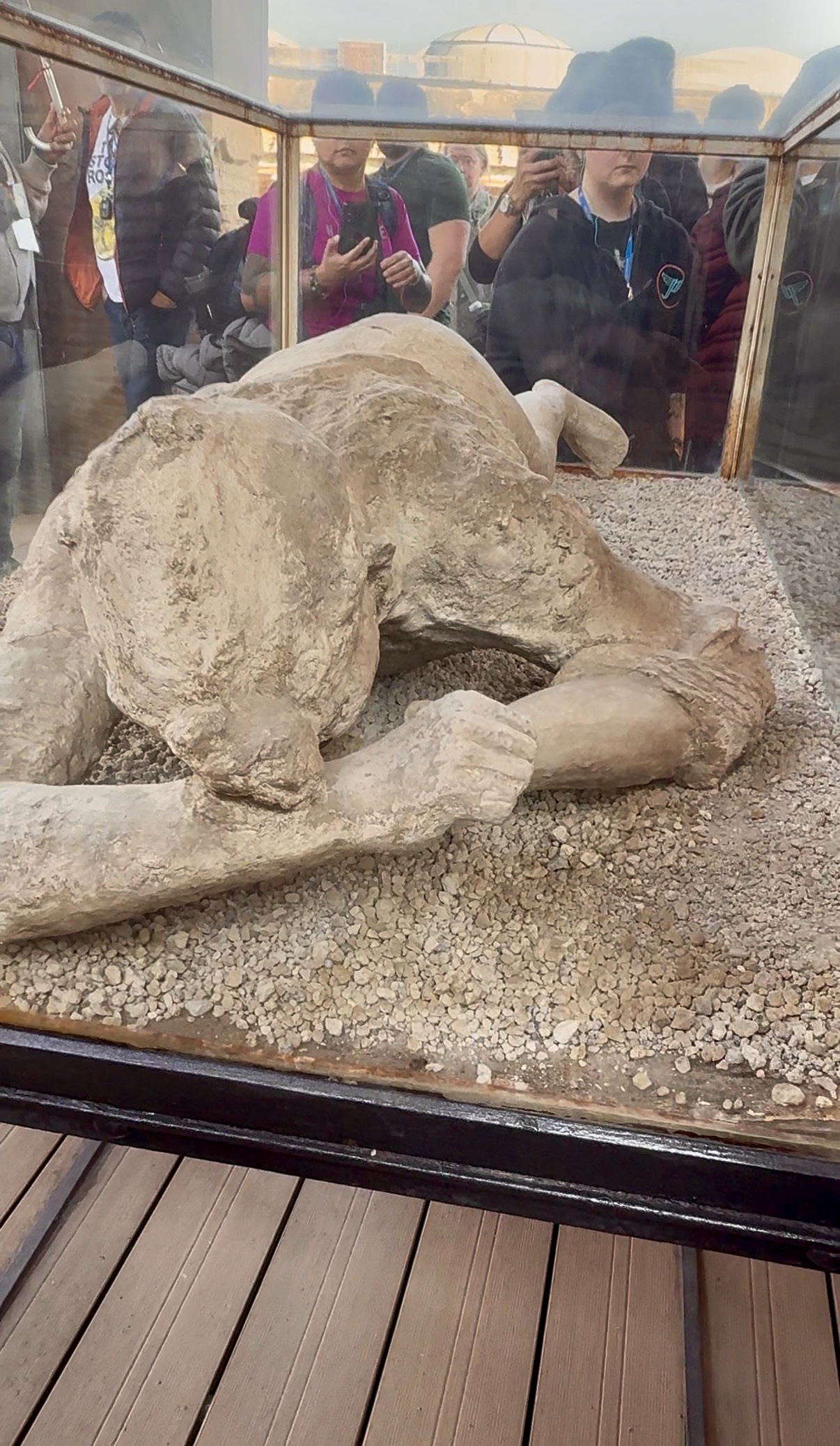
While most major artifacts are housed in the National Archaeological Museum in Naples, Pompeii has an Antiquarium(sometimes called a museum) which displays artifacts found during the excavations, including casts of the victims, providing direct evidence of the final moments of the city.
Large Theater
Conclude the tour at the impressive Large Theater, built using the natural slope of the hill.
Imagine ancient tragedies and comedies performed here as you stand in this grand, open-air auditorium divided into five seating sectors.