Morocco · Desert Adventure

12-Day Morocco Highlights Tour from Tangier to Sahara and Essaouira

12 Days Round trip from Tangier Easy pace

The journey

Trip highlights
  • 01 Wander the quiet, blue-washed streets of Chefchaouen
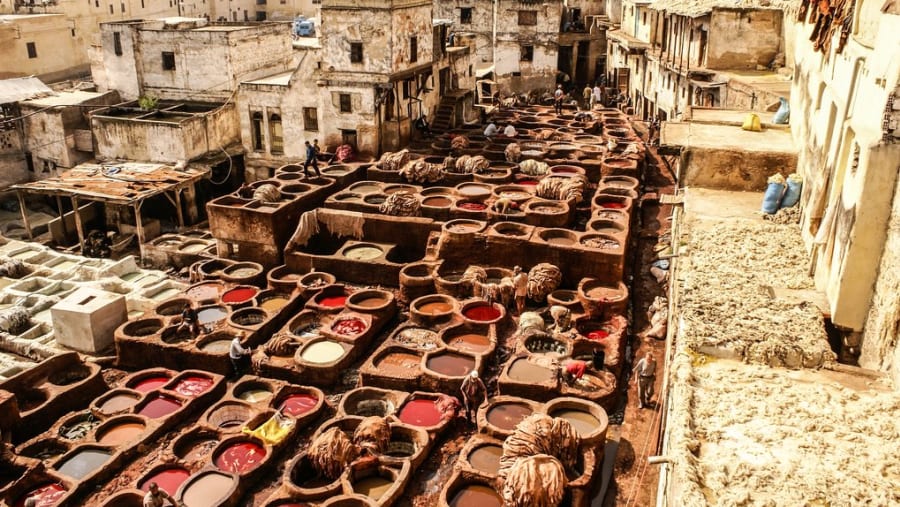
  • 02 Discover souks, tanneries, and artisan workshops in medieval Fes
  • 03 Enjoy classic Berber music beside a desert campfire under the stars in the Sahara
  • 04 Follow old caravan routes through the Valley of a Thousand Kasbahs
  • 05 Experience Marrakesh's lively Jemaa el-Fna - the busiest square in Africa

Discover imperial cities and desert adventures with this 12-day circuit from Tangier in the north to Essaouira in the south. Experience the culture and history of Meknes, Fes, and Marrakesh as you shop artisanal wares in animated souks and admire the intricate tilework of historic mosques. Explore the desert as you ride a camel over shifting sands in the Sahara, delve into mud-brick fortified cities, and cross the high rocky peaks of the Atlas Mountains.

You'll soon see the vast sea of dunes known as Erg Chebbi, which covers 13.5 square miles (35 sq km).

From the itinerary

At a glance

What this trip includes

Duration 12 Days
Tour type Shared
Activity level Easy
Accommodation Included · Standard
Transport Included
Wheelchair access Yes
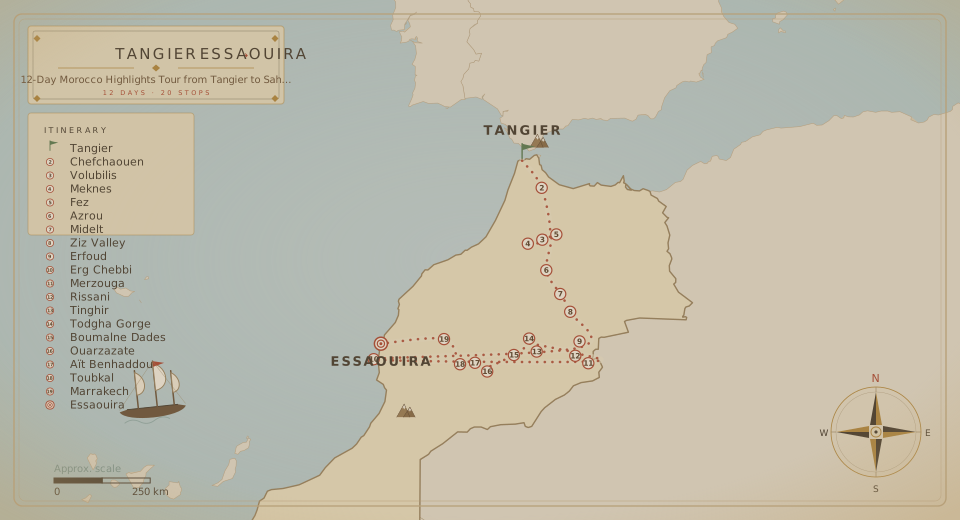
Cities Fez, Marrakech, Essaouira, Meknes, Midelt, Ouarzazate, Tinghir, Tangier, Toubkal, Chefchaouen, Merzouga, Todgha Gorge, Erfoud, Rissani, Aït Benhaddou, Ziz Valley, Erg Chebbi, Azrou, Boumalne Dades, Volubilis
Languages English, French, German, Italian, Spanish

Day by day

The itinerary

1
Day 01

Arrival in Tangier and Medina Discovery

  • Welcome to Tangier, the crossing point between Africa and Europe. Located on the coast of the Maghreb at the western entrance to the Strait of Gibraltar, Tangier offers a distinctive fusion of cultures and influences that have shaped the city for centuries, drawing artists, spies, and eccentric foreigners. The port city has undergone a makeover and now gleams with pride, whereas it was once dismissed as being a not-so-hot place to visit.
  • After checking into your hotel, you'll probably want to head out and explore the area. Depending on when you arrive, go to the medina (old quarter) to explore the maze-like network of streets leading to shops and homes while observing the 15th-century Portuguese fortress.
  • To end the day, go for a late-afternoon paseo along the bustling corniche's seafront promenade to take in the sunset. Find a café in the trendy Zoco Chico square for some food and people-watching.
2
Day 02

Tangier, Caves of Hercules, and Onward to Chefchaouen

  • Start the day early to explore more of Tangier, and consider hiring a guide to show you around the kasbah (old fortification). You can enter the Dar Baroud neighbourhood of the medina through the Bab Haha gate, located at the northeastern corner of Place du Mechouar. Meanwhile, the extraordinary Caves of Hercules - so named for their legendary association with Hercules himself - are located just 20 minutes outside the city along the most northwesterly point of continental Africa.
  • You can enter the cave system through the opening that faces the sea and has the shape of Africa, close to the Cape Spartel lighthouse from the middle of the 19th century.
  • When you're ready, continue on to the Rif Mountains' blue-hued city of Chefchaouen. Enjoy the beautiful scenery and, if time permits, stop along the way for a 2-3 hour hike to the Cascades d'Akchour (Akchour Waterfalls). Chefchaouen is home to countless winding, narrow streets and charming structures.
  • Discover a restaurant or café in Plaza Outa el Hammam and have a meal while people-watching. The Grand Mosque is still worth a visit even though non-Muslims are not allowed inside.
  • Visit the nearby kasbah's garden, museum, and some of the former prison cells after that. A path outside the city walls will lead you to Hotel Atlas, where you can climb to the rooftop for a sweeping view of the Blue City. For those who are a little fitter, follow the road east, cross the Ras el Ma Spring, and then climb the path for 20 to 30 minutes until you reach the deserted white Spanish Mosque. Observe Chefchaouen one last time as the sun sets behind the mountains.
3
Day 03

Chefchaouen to Fes via Volubilis and Meknes

  • Get up early and stroll the streets in peace, taking advantage of the quiet to capture your best photos. Driving from Chefchaouen to Fes, you have the option of visiting the best-preserved Roman ruins in Morocco, Volubilis, which is under UNESCO protection.
  • Wander the expansive complex and discover the many colourful mosaics that are still in place, as well as the large merchant homes with working heating systems. A large portion of the local population was quickly wiped out as exotic animals - lions, bears, and elephants - were captured and sent to the capital for feasts, celebrations, and sacrifices, while wheat was grown and exported to the other provinces of the empire.
  • Continue on to Meknes, a less crowded and smaller version of Fes, for an optional side trip and an introduction to your first historic imperial city. The Ville Impériale (Imperial City) and the medina are the two main attractions. The Royal Stables, the Mausoleum of Moulay Ismail, and the Bab al-Mansour gate are all located in Ville Impériale. You might also want to explore the medina, which is close to the imperial city and is smaller and simpler to navigate than those in Fes and Marrakesh. In addition to the dispersed souks, you might enjoy visiting the Dar Jama Museum, a stunning 19th-century palace turned museum, and the Bou Inania Madrasa, a 14th-century mosque.
  • Travel east until you reach Fes, your second imperial city. Fes is a city worth getting lost in because of its imposingly large - and occasionally perplexing - old medina.
  • Drive up the hill to visit the Merenid Tombs, just north of the city, and take in the panoramic views of old Fes and the surrounding area before going into the medina. As you make your way down the hill to your riad - a traditional Moroccan home with a garden inside - you can enjoy a sumptuous meal and unwind for the evening.
4
Day 04

Exploring Fes and Its Medieval Medina

  • The oldest Moroccan imperial city, Fes, is the focus of your exploration today. Its medina is the most complete of its kind in the Arab world and is protected by UNESCO. For a half-day tour to learn more about this city and get help navigating the medina, a knowledgeable guide is advised, beginning in Fes el Bali ('Old Fes'). Since it was established in the eighth century, the city's roads are much more winding, narrow, and steep than those of other imperial cities, making it nearly impossible to avoid getting lost at least once. Shop the famous souks (markets) for a wide selection of goods such as spices, leather, ceramics, pewter, and more.
  • After that, go to Chouara Tannery, which still uses age-old methods. Find a nearby leather shop with a rooftop view so you can observe the masters at work.
  • Make your way to Al-Qarawiyyin University (859 CE), one of the oldest still-open universities in the world. It is located next to the Al-Qarawiyyin Mosque. There are a few places where you can get a glimpse inside the mosque's elaborate interior, even though it is only accessible to Muslims.
  • From there, proceed to the Al Attarine Madrasa or the Bou Inania Madrasa, two magnificent examples of Moroccan architecture and craftsmanship featuring intricate 14th-century zellij tilework.
  • Enter through the renowned Bab Boujeloud from here. The exterior is painted blue, Fes's traditional colour, and the interior is painted green, the colour of Islam. Leave the gate and proceed down Talâa Kebira's main street, which is lined with stores. Treat yourself to some retail therapy or visit the Musée Batha, which has a stunning central garden and many Moroccan arts, including carved wood and traditional pottery, its highlight. The Batha Museum, located in a 19th-century palace, can then be found in Fes el Jedid ('New Fes'), a 13th-century city.
  • Visit the Andalusian-style gardens before proceeding to the Mellah, the old Jewish quarter and cemetery.
  • Discover the striking difference in architecture by travelling further south to Ville Nouvelle. Visit a ceramics and tile collective to discover the entire manufacturing process, from sculpting the clay to painting the designs on the finished products. Additionally, observe the tile masters at work.
  • Consider watching the sunset from either Borj Sud in the south or the Merenid Tombs in the north for stunning views of this modern city with ancient roots.
5
Day 05

Across the Middle Atlas to Erfoud, Merzouga, and the Sahara

  • Get moving early today because you have a lot of distance to cover. To reach the Sahara dunes for a sunset camel ride, you'll depart from Fes and head south toward Merzouga.
  • As you travel, you'll pass through the town of Azrou, ascend 7,146 feet (2,178 m) over the Col du Zad pass, and traverse the cedar forests of the Middle Atlas Mountains.
  • Before stopping for lunch in Midelt, the 'apple city,' where you can savour the nearby Moulouya River and its surrounding fruit orchards, you may enjoy sightings of the local Barbary monkeys.
  • Enter the Ziz Valley, renowned for its hidden oases and clusters of palm trees, after crossing the Tizi n'Talremt pass. Ksars, or fortified houses, are common along the road. They were constructed by traders to safeguard valuable goods such as gold, salt, and spices.
  • You'll spot the first signs of the constantly shifting Saharan sand dunes just before arriving in Erfoud. Along with nomadic shepherds' settlements, you'll also see an antiquated technique for extracting water from the ground and an inventive way of getting water to farmland before the invention of the modern pump. If time permits, you might be able to have tea with a local Berber family who lives as nomads.
  • Continue on to Erfoud, a thriving market town renowned for its date festival, fossil mining, and artisan factories. Large rocks are extracted from the ground in hillside mines along the route. While in town, visit a local artisan collective to learn about the different kinds of fossils found there and to observe the entire process of turning fossil-rich rock into lovely items.
  • You'll soon see the vast sea of dunes known as Erg Chebbi, which covers 13.5 square miles (35 sq km). The enormous dunes are never still; they constantly move and shift in response to the changing wind.
  • You can take a quick break near Merzouga and change your route to ride a camel through the sand to your already-set-up camp, arriving just before dusk.
  • Before heading back to camp for a delicious dinner and some downtime by the campfire, climb a nearby sand dune to watch the sun go down.
  • After an evening of Berber music, spend the night in a tent modelled after a Bedouin camp under a vast night sky filled with unobstructed twinkling stars. Spend the night in a cosy hotel or auberge in Merzouga if four walls and contemporary comfort are more your style.
6
Day 06

Merzouga Desert, Rissani Market, and Todra Gorge

  • Get up early to witness a magnificent desert sunrise and spend the morning discovering more of the Sahara. You can hire a sandboard and test your skills on the dunes, go on the Erg Chebbi tour, take an ATV tour by quad, or simply unwind by the pool.
  • Visit nearby Khemliya, a typical Saharan village whose inhabitants are originally from Mali, and take a quick stroll through the community after enjoying traditional drumming music and dancing.
  • Stop in the market town of Rissani after leaving the Merzouga region and its dune system. Enter through its grand gate. Finding the 'donkey parking lot' and exploring the town's traditional market are both worthwhile in this livestock auction town.
  • Then proceed to Tinghir. This arid town offers breathtaking views of the surrounding communities hugging the length of the vast river oasis, which is covered in palm trees for 30 miles (48 km). Impressive buttes, mesas, and plateaus can be seen in the area's desert landscape. You'll then arrive at the Todra Gorge, your final stop for the day.
  • You can take a leisurely stroll through and around the gorge, which was carved through red limestone and rises almost 1,000 feet (305 meters) high, and unwind in the cool waters of the shallow river below. You can explore or relax for the remainder of the evening.
7
Day 07

To Aït Benhaddou via Dades Valley and Ouarzazate

  • Today's journey takes you west along the Valley of a Thousand Kasbahs, many now in disrepair because the kasbahs were constructed of pisé mud (rammed earth). As you head toward Aït Benhaddou, you'll pass small towns where you can see traditional farming methods still in use. Be on the lookout for nomads tending to their animals as you make your way through Boumalne Dades, a major town and bridging point over the Dades River, and on to Kelâat M'Gouna, the 'Valley of the Roses.' Here you can admire the cultivated rose bushes and visit a rose collective to see the process of converting rose petals into rose water and rose oil used in the cosmetic industry.
  • Next, you'll enter the growing town of Ouarzazate, a common stopping point along the desert routes, as it is more accessible than some of the nearby smaller towns, such as Aït Benhaddou. The town was made popular by the growing movie industry, and you have the option to tour one of two movie studios, including an up-close look at some props and sets. Some popular film credits include 'Black Hawk Down,' 'Prometheus,' 'American Sniper,' and 'Game of Thrones.' To learn more about the history and filmmaking process in the area, stop at the Musée du Cinema.
  • Next, you'll reach medieval Aït Benhaddou, Morocco's most famous kasbah and a UNESCO World Heritage Site. The old ksour dates from the 11th century, when it held an important position along the trans-Saharan trade route between Marrakesh, Ouarzazate, and the southern desert. Settle into your accommodation in the old town before setting out to wander the empty alleys and passageways in the late afternoon after the day crowds have left. Climb up to the old granary - an excellent vantage point to see the kasbah and surrounding area, including the historic camel caravan routes.
  • Once your exploration is over for the day, enjoy a quiet dinner overlooking the valley.
8
Day 08

Across the High Atlas to Marrakesh via Tizi n'Tichka Pass

  • Leave Aït Benhaddou behind and start the winding ascent through the Tizi n'Tichka pass over the High Atlas Mountains. The mountain range's highest peak, Mount Toubkal, stands at 13,671 feet (4,167 m), and you can see the road ahead winding down the mountainside as you get closer to the top.
  • Visit the argan oil cooperative in Taddert, the first town after the pass, to learn how local women extract the priceless oil from the argan nut for use in the health, food, and cosmetic industries. The climate and landscape dramatically change as you travel down the High Atlas, shifting from rocky terrain to foothills and then to flat plains. You'll soon become part of Marrakesh's vibrant commotion.
  • After a long day of travelling, check into your hotel and spend the remaining time however you wish. Jemaa el-Fna Square comes alive in the early evening with musicians, performers, snake charmers, games, and food stalls, providing a variety of entertainment. Choose one of the many cafés encircling the square and savour a cup of mint tea and a hearty meal while taking in the spectacle from a distance.
9
Day 09

Discover Marrakesh, the Red City

  • Marrakesh, also referred to as the 'Red City,' is the second-largest city in Morocco. You can either hire a calèche horse carriage from the stand at the southwest corner of the square or ask a guide to give you a half-day tour of the medina's history, culture, and hidden attractions. The Koutoubia Mosque can be found to the west of Jemaa el-Fna. Although non-Muslims are not allowed inside, you can admire the 253-foot (77-m) minaret, the oldest tower constructed during the Almohad Dynasty. To access the stunning Koutoubia Gardens, which feature fountains, pools, palm trees, and flowers, turn around and walk around the mosque.
  • As you stroll through the souks and alleys, take in the various sights, sounds, and smells. Souk el-Attarin (spices), Souk Haddadine (blacksmith wares), and Souk Smata (babouches or slippers) are a few markets to check out. Watch people dyeing cloth and yarn and hanging it above the streets in the afternoon to dry by keeping an eye out for the Souk des Teinturiers, or dyers' souk. Additionally, you'll see expansive open areas and courtyards branching off some alleys. These fondouks were once medieval inns that offered lodging for travellers and merchants, as well as for their animals.
  • Visit the 16th-century Ben Youssef Madrasa (Koranic school) while you're nearby to admire the central courtyard's carved cedar, stucco plaster, and zellij tiling, wander the former dorms where up to 800 students once resided, and see the prayer hall. If you have time, explore the Saadian Tombs farther away to appreciate the 500-year-old craftsmanship that went into the intricate construction of the mausoleum. The Bahia Palace, the largest and most opulent palace of its time, was built in the 19th century. You can also take a stroll through Majorelle's lush, vast gardens, covered in subtropical plants, bamboo, lilies, and palms, for a change of scenery.
  • The Almoravid Koubba, the only remaining Almoravid monument, was rediscovered in 1948. You can also visit the El Badi Palace, which has a sunken garden and an ornamental orange orchard. The Marrakesh Museum is another option. Located in the Moorish Dar Mnebbi Palace from the 19th century, the museum has a collection of contemporary and traditional works of art, as well as items from Berber, Moroccan Jewish, and Islamic cultures. Additionally, you can view displays of clothing, antiques, jewellery, and exquisitely carved Hispano-Moorish cedarwood decorations at the Dar Si Said Museum, also known as the Museum of Moroccan Arts.
10
Day 10

Journey to Coastal Essaouira

  • Bid farewell to the Red City and proceed to the west coast of Morocco by way of a route that crosses a vast expanse of rolling plains. You'll pass through an argan tree forest along the way, which is unique to this region of the world. Even goats have been known to eat argan fruit from the branches. Learn about the uses of argan oil in the food and cosmetic industries by visiting an argan cooperative.
  • Arrive in calm Essaouira, a pleasant change from chaotic Marrakesh, and spend the rest of the day as you wish.
  • Stroll along the coast by the Skala de la Kasbah, the seafront ramparts built in the 18th century. Old brass cannons line the interior walls and overlook the Atlantic Ocean, having been installed by European engineers.
  • Before heading to the deserted beach, explore the UNESCO-protected medina. Fans of Jimi Hendrix might want to take a brief taxi ride to Diabat, at the end of Essaouira's beach, where he reportedly spent some time. After returning to Essaouira, enjoy some freshly caught seafood.
11
Day 11

Return to Marrakesh and Departure

  • Essaouira is a well-liked kiteboarding destination and is referred to as the 'Windy City' due to the strong Alizée trade winds that hit its crescent beach. Watch the windsurfers and kiteboarders in the morning, or, for the more daring, sign up for a lesson before bidding the coast farewell and making your way back to Marrakesh.
  • Make any last-minute purchases for gifts and souvenirs once you arrive in Marrakesh. However, depending on the specifics of your departure, you might want to visit Majorelle Gardens or another attraction you haven't seen yet. A visit to these luxuriant and vast gardens, not far from the hubbub of the medina, provides the ideal place to escape the afternoon heat and clamour. As you travel home, leave the peace behind and take your memories with you.
Chefchaouen blue streets, Volubilis Roman ruins, Erg Chebbi dunes, Aït Benhaddou kasbah

Where this trip takes you

Chefchaouen blue streets, Volubilis Roman ruins, Erg Chebbi dunes, Aït Benhaddou kasbah

The route

Where you'll travel

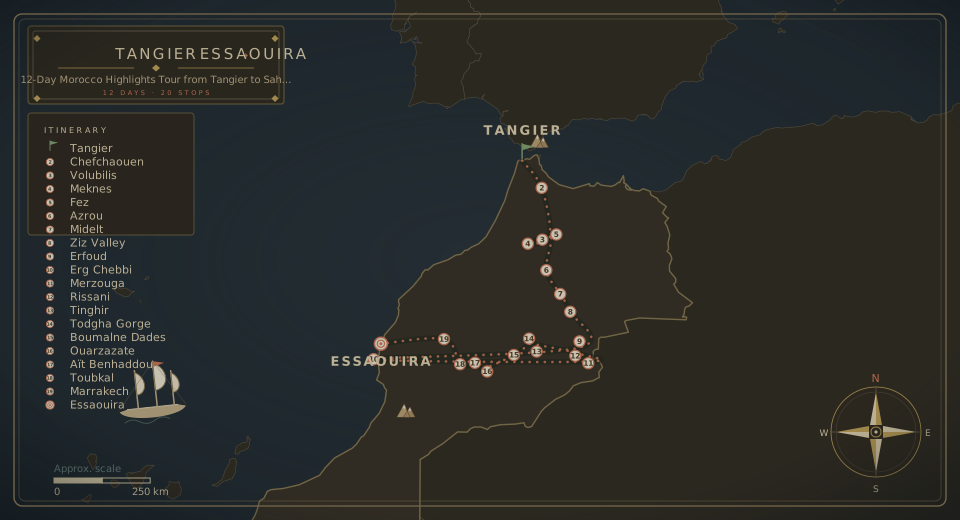
Tour route map
Round trip from Tangier 20 cities · 12 Days

The fine print

Trip details

What's Included

  • Pick-up and drop-off at your hotel or airport
  • Transport in a private 4x4 car or minibus with A/C and fuel
  • English- or Spanish-speaking driver-guide
  • 11 nights' accommodation in hotels, riads, or camp
  • Camel ride in the Sahara Desert (one camel per person)
  • Meals: breakfast and dinners
  • Local guides in Fes and Marrakech

What's Not Included

  • Dinners
  • Tips

Logistics

Meeting & route

Meeting point
Tanger, Morocco
Tour start
Tangier, Morocco
Tour ends at the same location as the start point.
End of the journey

Your 12 days finish where they began, in Tangier.

Watch the tourHQ film Watch the film

Create your own adventure

Can't find the perfect tour? Tailor your dream trip.

  • Tell us your destination, dates and group size.
  • Our travel experts and local guides design a tailored itinerary, just for you.
  • Enjoy your trip with peace of mind, knowing everything is taken care of.
Plan my holiday

Say goodbye to travel stress.

Starting from

EUR 3,000 /person
Book This Tour

When

Travellers

Total