Morocco · City Tours

12-Day Morocco Imperial Cities and Sahara Tour with Atlas Hiking

12 Days Round trip from Rabat Easy pace

The journey

Trip highlights
  • 01 Roam the maze-like streets of the medieval medinas in Fes and Marrakesh
  • 02 Explore desert markets, hidden oases, and kasbahs along old caravan routes
  • 03 Ride a camel into the Sahara dunes of Merzouga
  • 04 Hike through the foothills of the High Atlas Mountains
  • 05 Enjoy a meal and overnight stay with a local Berber family

Embark on this 12-day grand tour, a perfect mix of culture and adventure. Start in Casablanca and explore the imperial cities of Rabat, Fes, and Marrakesh, wandering through their medinas, monuments, and historic landmarks. Travel onward through desert towns, hidden oases, and old kasbahs along ancient caravan routes, including the Sahara dunes at Merzouga. The journey ends with two days of hiking in the foothills of the Atlas Mountains and an evening spent with a local family.

Once you arrive in Merzouga, mount your camel and ride through the sand to your camp, which has already been set up for you.

From the itinerary

At a glance

What this trip includes

Duration 12 Days
Tour type Shared
Activity level Easy
Accommodation Included · Standard
Transport Included
Wheelchair access Yes
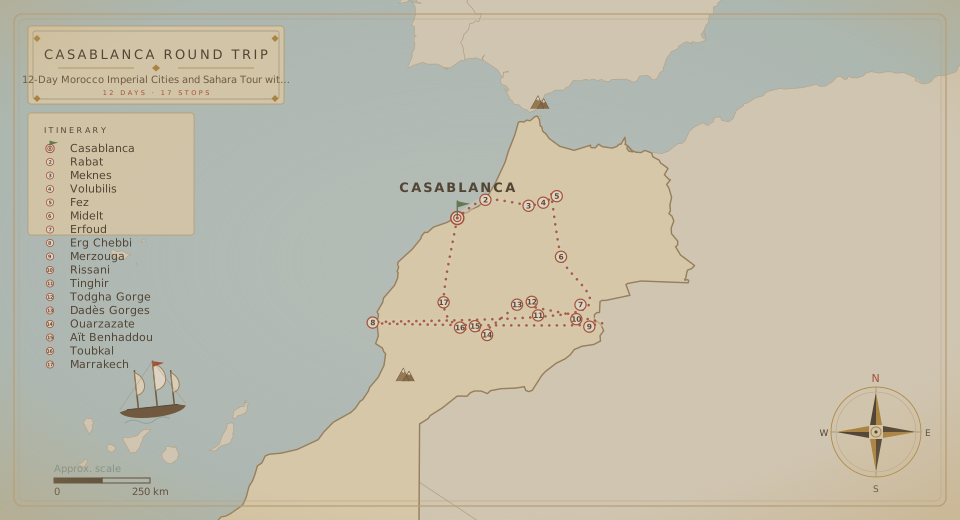
Cities Casablanca, Fez, Marrakech, Meknes, Midelt, Rabat, Ouarzazate, Tinghir, Toubkal, Merzouga, Todgha Gorge, Erfoud, Rissani, Aït Benhaddou, Erg Chebbi, Dadès Gorges, Volubilis
Languages English

Day by day

The itinerary

1
Day 01

Casablanca's Hassan II Mosque and Rabat's Historic Landmarks

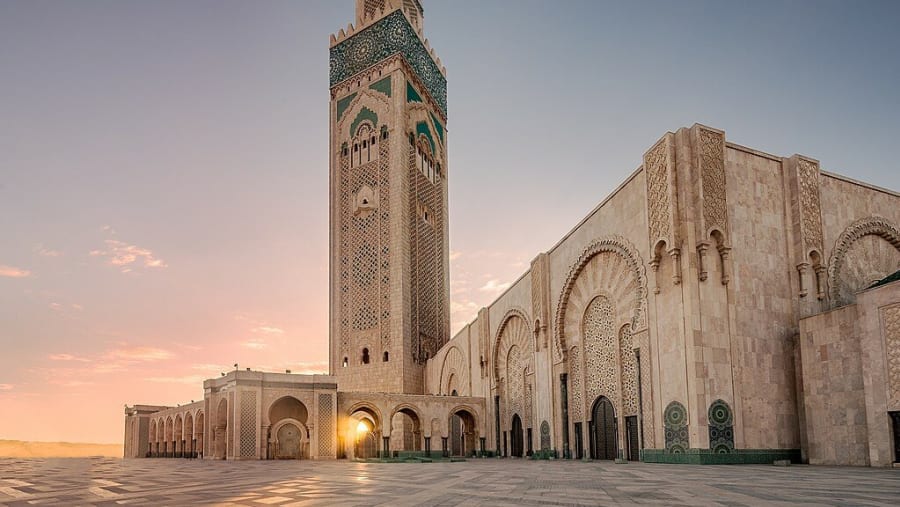
  • Greetings from Casablanca! The Hassan II Mosque should be your only stop while in Casablanca, Morocco's commercial hub. Its 690-foot (210 m) minaret, the tallest minaret in the world, stands in a picturesque location on the ocean. Even though the mosque's exterior and surroundings are impressive, it stands out because it is one of the few mosques in the nation that non-Muslims are allowed to enter.
  • Join a mosque tour in the morning and be amazed by the exquisite craftsmanship, including the hand-carved stone and wood, the elaborate marble floor details, and the gilded ceilings.
  • Travel north to Rabat, which served as the capital during the imperial era. Wander among Roman and Islamic ruins while exploring the medieval fortifications of the Chellah Necropolis.
  • Enter the old city of Rabat through the majestic gate of the Kasbah des Oudaias. From there, visit the 20th-century Andalusian Gardens and enjoy the tranquil setting away from the crowds.
  • Learn about the Hassan Tower, the minaret of an unfinished mosque, and the Mohamed V Mausoleum. All that remains of this abandoned 12th-century project are the mosque's support structures, including 200 columns and the minaret.
2
Day 02

Meknes, Volubilis, and Arrival in Fes

  • Head east toward Fes after meeting your driver. Along the way, visit Meknes, your second imperial city. A more compact version of Fes, Meknes offers a more tranquil medina and less pushy shopkeepers. In the Ville Impériale, see the magnificent Bab al-Mansour gate and the Mausoleum of Moulay Ismail.
  • Before visiting Dar Jama, a palace turned museum, stop by the Madrasa Bou Inania, a stunning example of Islamic architecture.
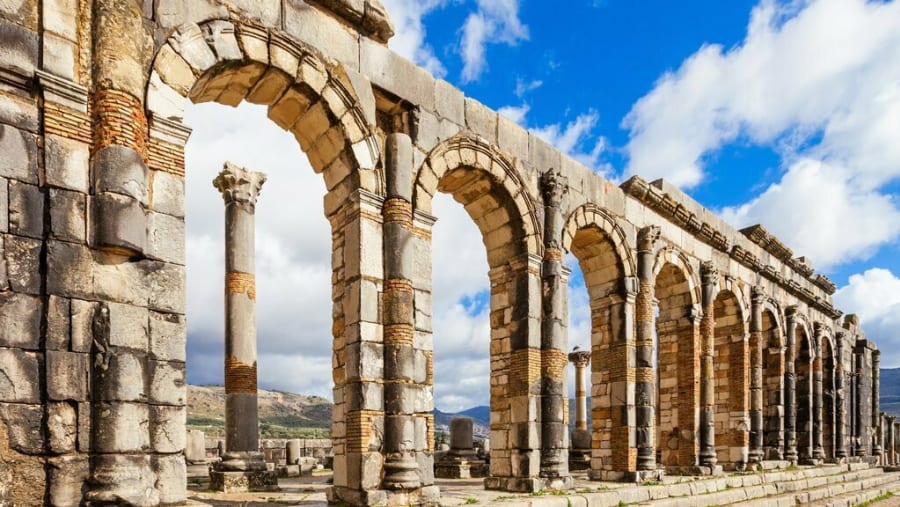
  • Next, visit Volubilis, the Roman Empire's furthest outpost in Africa, a vast complex of admirably preserved Roman ruins and mosaics.
  • Continue east until you reach Fes, the third imperial city. Drive uphill to the Merenid Tombs ruins for a comprehensive view of the medieval city before exploring the medina on foot, the largest urban car-free zone in the world. Around dusk is the ideal time to visit the tombs. As the city lights begin to shine, the muezzin's calls to prayer can be heard throughout the valley, adding to the ambience.
  • After a hearty meal, head back to your traditional riad to unwind for the evening.
3
Day 03

Discovering Fes el Bali and the Medieval Medina

  • The limited colonial development has added to Fes' appeal as the oldest of Morocco's imperial cities and perhaps the most interesting and exciting to explore. Fes is made up of three main points of interest: Fes el Bali (old Fes, the medina, where you will spend most of your time), Fes el Jdid ('new' Fes), and the French-inspired Ville Nouvelle. It is the most comprehensive medina in the Arab world. Meet your guide to learn more about Fes' past and present, and to get assistance navigating the medina.
  • Start your tour in Fes el Bali at Bab Boujeloud, the gate that welcomes you onto Talâa Kebira. As you walk past architecture influenced by Spain and Tunisia, discover the goods offered for sale in the souks and shops. The tanneries in the old medina are among the most distinctive sights, and Chouara Tannery is no exception.
  • Then ascend to the roof of a nearby leather store for a better view of the men at work and the stone pots filled with dye, a tradition dating back to the 11th century. Follow your guide to the Al-Qarawiyyin Library and Mosque, founded in 859 CE. If you're lucky, you might even be able to sneak a peek inside.
4
Day 04

Fes Museums, Tile Workshops, and Garden Retreats

  • Visit the Batha Museum today. Housed in a 19th-century palace, the museum features a collection of traditional Moroccan arts and crafts, including carved wood, zellij (mosaic tilework), and regional pottery. Its highlight is the palace itself. Visit the Andalusian-style gardens before continuing to the mellah, the old Jewish quarter and cemetery. Make the most of its location to capture a breathtaking panoramic image of the city.
  • Discover the striking difference in architecture by travelling further south to Ville Nouvelle.
  • Visit a ceramics and tile collective to discover the entire manufacturing process, from sculpting the clay to painting the designs on the finished products.
  • You can also observe tile craftsmen as they create intricate mosaics by assembling tiny pieces of tile. As you head back toward Fes el Bali, pause at Jnan Sbil (Bou Jeloud Gardens), located midway between the mellah and Bab Boujeloud.
  • Spend some time unwinding in the splendour of the gardens, then cool off by the main fountains or the lake.
5
Day 05

Across the Middle Atlas to Merzouga and the Sahara

  • Depart early in the morning for Merzouga in the south. You will pass through the cedar forests of the Middle Atlas Mountains as you make your way up and over the Col du Zad pass, which stands at 7,146 feet (2,178 m) above sea level. Before stopping for lunch in Midelt, the 'apple city,' and taking in the nearby Moulouya River, enjoy spotting the local Barbary macaque monkeys.
  • Continue over the Tizi n'Talremt pass and enter the Ziz Valley, renowned for its hidden oases and clusters of palm trees. Ksars, or fortified houses, are common along the road and were built to safeguard valuables such as gold, salt, and spices.
  • Continue to Erfoud, a city famous for fossil mining and its date festival. Here, you can meet local artisans and learn more about the production process by visiting a local collective. Then continue to Erg Chebbi, a vast sea of sand dunes covering 13.5 square miles (35 square km). These enormous dunes are never still; they constantly move and shift with the wind.
  • Once you arrive in Merzouga, mount your camel and ride through the sand to your camp, which has already been set up for you.
  • Before heading back to camp for a sumptuous dinner and some downtime by the campfire, hike up a nearby sand dune to watch the sun go down.
6
Day 06

Sunrise in the Sahara, Rissani Market, and Todra Gorge

  • Get up early to see the desert sunrise, then explore the nearby desert villages or take part in adventurous desert activities such as sandboarding or an ATV tour. Experience traditional drumming, music, and dancing in the nearby Saharan village of Khemliya before taking a short stroll through the community.
  • After leaving the dunes, stop in the market town of Rissani and enter through its grand gate. It is worth taking the time to locate the 'donkey parking lot,' known for its livestock auction, which will astonish your senses. Continue on to Tinghir. This desert town offers breathtaking views of nearby settlements stretching along the vast river oasis and its 48 km/30 mi of palm trees.
  • Stop at Todra Gorge, your final destination for the day. You can take a leisurely stroll through and around the gorge, carved through red limestone and rising almost 1,000 feet (305 meters) high, and unwind in the cool waters of the shallow river below.
7
Day 07

Dades Valley, Ouarzazate, and Aït Benhaddou

  • Follow the Valley of a Thousand Kasbahs to reach the most well-known kasbah in Morocco, Aït Benhaddou. Travel through the Dades Valley and pause to admire the manicured rose bushes of Kela'a M'gouna.
  • Visit a rose cooperative to observe how rose petals are transformed into rose water and oil. Before continuing west, you may want to stop in Ouarzazate, the movie capital of North Africa, to see how the surrounding landscapes were featured in films such as Lawrence of Arabia, Gladiator, and Black Hawk Down. To learn more about the region's history and the filmmaking process, take a tour of a movie studio or visit the Musée du Cinema.
  • Spend the afternoon at the UNESCO World Heritage Site of Aït Benhaddou. Established in the 11th century, this old ksour played a significant role along the trans-Saharan trade route. Settle into the historic district and explore its lanes and passageways in the late afternoon, after the day's crowds have dispersed.
  • Climb to the top of the old granary for a great view of the kasbah and its surroundings. Fans of the hit HBO series Game of Thrones may also want to make the journey down to the river to see the gates. Enjoy a peaceful dinner overlooking the valley long after the daytime crowds have gone.
8
Day 08

Crossing the High Atlas via Tizi n'Tichka to Marrakesh

  • Leave Aït Benhaddou behind and begin climbing into the High Atlas Mountains. The range's highest peak, Mount Toubkal, rises to 13,671 feet (4,167 m). Visit an argan oil cooperative in Taddert to discover how the argan nut and fruit are prepared for use, and sample some products. As you leave the High Atlas behind, the climate and landscape change dramatically, from rocky slopes to foothills and then flat plains. Soon, you will find yourself in the bustle of Marrakesh.
  • After a long day of travel, check into your hotel and spend the remaining time as you wish. You may want to take a leisurely stroll through the gardens behind the Koutoubia Mosque. In the early evening, Jemaa el-Fna Square comes alive with musicians, performers, snake charmers, games, and food stalls, offering a wide variety of entertainment. Choose one of the many cafés surrounding the square and enjoy a meal and a cup of mint tea if you prefer to take in the spectacle from a distance.
9
Day 09

Exploring Marrakesh's Medina, Souks, and Monuments

  • Marrakesh, also known as the 'Red City' because of its red sandstone walls and buildings, was once a major trading centre for the tribes of the Atlas Mountains and remains a fascinating former imperial city. Begin your exploration of Marrakesh's historic medina at the Koutoubia Mosque and Gardens. Non-Muslims are not permitted inside the mosque, but it is still worth visiting to admire the 253-foot (77-meter) minaret, which inspired the Hassan II minaret in Rabat. To escape the morning heat, spend some time by the fountains and pools in the adjacent garden.
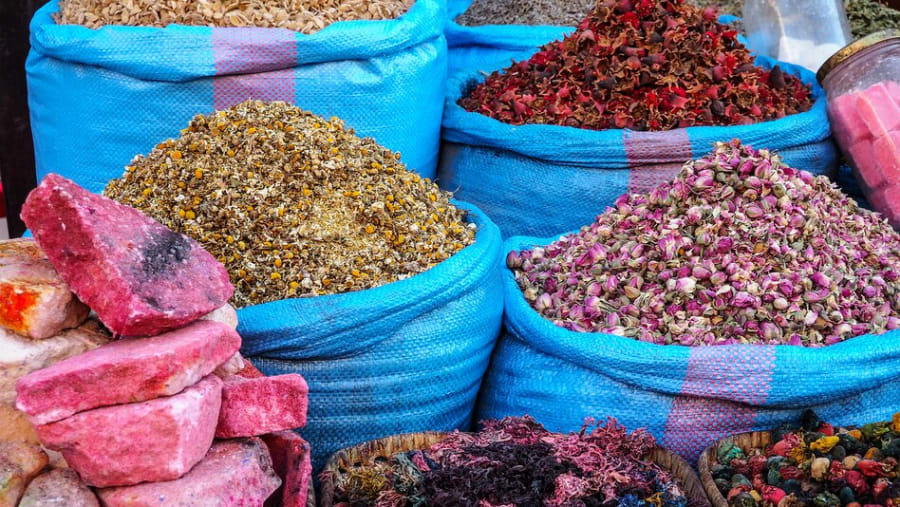
  • Explore the intricate maze of souks hidden behind ordinary restaurants and shops, and indulge your senses. You can find a variety of spices, woodwork, and babouche at Souk el Attarin, Souk Chouari, and Souk Smata, known for traditional Moroccan slippers. For a look at how cloth and yarn are dyed using conventional techniques, visit Souk des Teinturiers, the dyers' souk. The Ben Youssef Madrasa, a 16th-century Koranic school, is a fine example of Moroccan Islamic architecture. Pay close attention to the elaborate interior decoration, including carved cedar ceilings, plaster sculptures, and zellij tiling.
10
Day 10

High Atlas Hike Around Amizmiz and Berber Villages

  • Today, you will travel south of Marrakesh to the tiny town of Amizmiz in the foothills of the High Atlas Mountains, about one hour away. Before joining your mountain guide for a trek along the winding roads and mule paths in the nearby hills, spend some time exploring the small market in the old town.
  • As you hike between small Berber villages, observe local farmers and shepherds tending to their flocks and taking in the surrounding landscape.
  • You may even see children on their way to or from school, which is typically shared by a few nearby villages.
  • Stop for lunch with a local family, where you will learn how to make homemade bread and gain insight into their way of life.
  • Continue your hike into the afternoon, then return to a different Berber home in the area, where you will be welcomed for dinner and given a room to rest for the evening.
11
Day 11

From Amizmiz to Marrakesh's Palaces and Tombs

  • Explore the courtyard of Marrakesh's Bahia Palace. Before bidding your hosts farewell and setting out on the trail, enjoy breakfast with them. Continue discovering the local landscape and neighbouring towns before returning to Marrakesh.
  • Once you arrive in Marrakesh, visit the Saadian Tombs and the area around the kasbah south of Jemaa el-Fna to learn about the 500-year-old craftsmanship behind their construction.
  • As you make your way through the mellah toward the 19th-century Bahia Palace, stop by the sunken gardens of the 17th-century El Badi Palace. If time allows, you may also want to visit the Dar Di Said Museum, also known as the Museum of Moroccan Arts, to see collections of clothing, jewellery, and Hispano-Moorish decorations made from exquisitely carved cedar wood.
12
Day 12

Last Moments in Marrakesh and Return to Casablanca

  • Get up early and finish any last-minute gift and souvenir shopping before seeking out the 12th-century Almoravid Koubba. The Koubba, the only remaining Almoravid monument, was rediscovered in 1948.
  • Transfer to Casablanca to catch your flight home. Depending on your departure schedule, you may want to take a stroll along Boulevard de la Corniche to Rick's Café, a bar, restaurant, and café inspired by the classic film Casablanca, and grab a bite to eat.
Hassan II Mosque, Erg Chebbi dunes, Aït Benhaddou, High Atlas Mountains

Where this trip takes you

Hassan II Mosque, Erg Chebbi dunes, Aït Benhaddou, High Atlas Mountains

The route

Where you'll travel

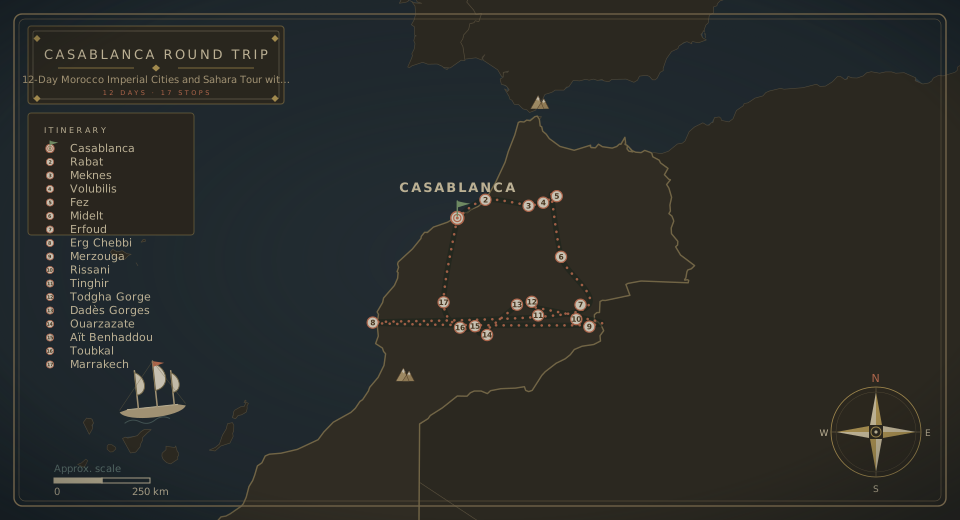
Tour route map
Round trip from Rabat 17 cities · 12 Days

The fine print

Trip details

What's Included

  • Pick-up and drop-off at your hotel or airport
  • Transport in a private 4x4 car or minibus with A/C and fuel
  • English- or Spanish-speaking driver-guide
  • 11 nights' accommodation in hotels, riads, and camp
  • Camel ride in the Sahara Desert (one camel per person)
  • Meals: breakfasts and dinners
  • Local guides in Fes and Marrakech

What's Not Included

  • Dinners
  • Tips

Logistics

Meeting & route

Meeting point
Rabat, Morocco
Tour start
Rabat, Morocco
Tour ends at the same location as the start point.
End of the journey

Your 12 days finish where they began, in Rabat.

Watch the tourHQ film Watch the film

Create your own adventure

Can't find the perfect tour? Tailor your dream trip.

  • Tell us your destination, dates and group size.
  • Our travel experts and local guides design a tailored itinerary, just for you.
  • Enjoy your trip with peace of mind, knowing everything is taken care of.
Plan my holiday

Say goodbye to travel stress.

Starting from

EUR 2,500 /person
Book This Tour

When

Travellers

Total