Palazzo Barberini and National Gallery of Ancient Art Tour
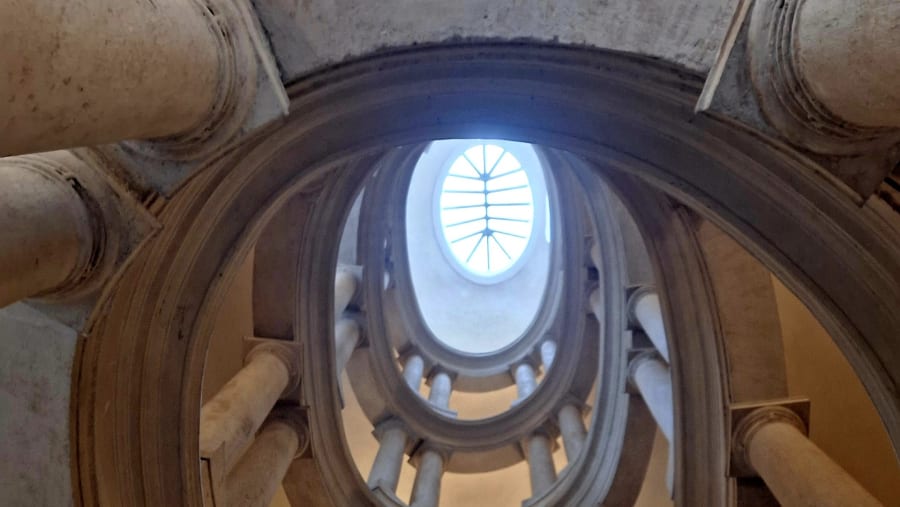
Begin the tour at Palazzo Barberini and visit the enclosed loggia supported by the deep porch. Observe the large frescoed vault painted between 1632 and 1639 by Pietro da Cortona, depicting the Triumph of Divine Providence, a temporal and spiritual glorification of the Pope and the Barberini family.
Examine the facade of Palazzo Barberini along Via delle Quattro Fontane. View the two entrances positioned on the right and left of the portico, with the south wing intended for the clergy and the north wing occupied by the secular branch of the Barberini family, originally by Taddeo, the nephew of Pope Urban VIII, and his wife Anna Colonna.
Continue the visit in the palace garden, designed as an integral part of the building and directly connected to the monumental rooms of the main floor. Observe the seventeenth-century Italian-style garden composed of regular and geometrical box hedges and secret gardens toward the Sforza wing. Learn about the exotic animals such as deer, ostriches, and camels that were once bred in the park.
Proceed to the National Gallery of Rome, also known as the National Gallery of Ancient Art, located within Palazzo Barberini. Discover the origins of the collection formed through donations by Prince Corsini, Torlonia, and Chigi.
Observe early works of the collection, including the twelfth-century image of the Virgin and Christ from Santa Maria in Campo Marzio and several crosses from the thirteenth century. View paintings connected to the school of Giotto.
Explore the central section of the gallery dedicated to sixteenth-century painting. Admire the Fornarina, the portrait created by Raphael of his beloved. View works by Andrea del Sarto, Beccafumi, Sodoma, Bronzino, Lotto, Tintoretto, and Titian. Conclude this section with the powerful Judith Beheading Holofernes by Caravaggio.
Continue through the seventeenth-century section featuring masterpieces by Reni, Domenichino, Guercino, Lanfranco, Bernini, Poussin, Pietro da Cortona, and Gaulli.