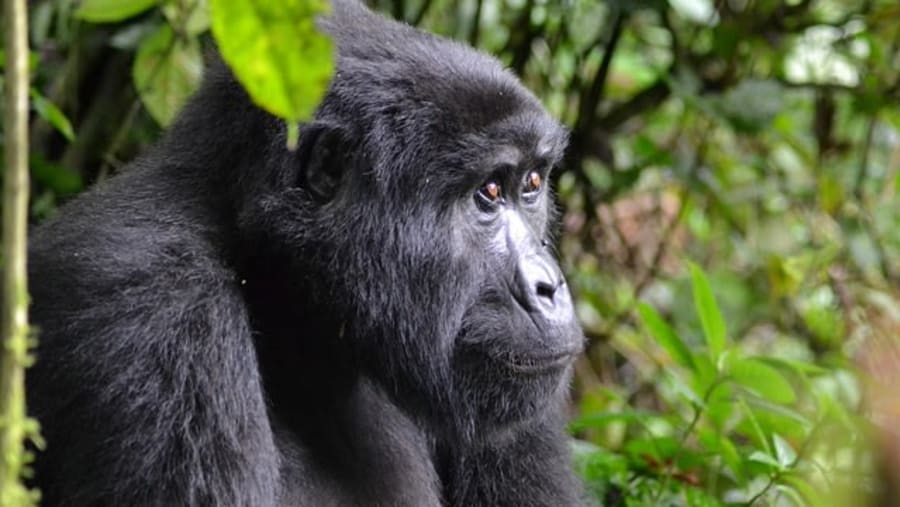
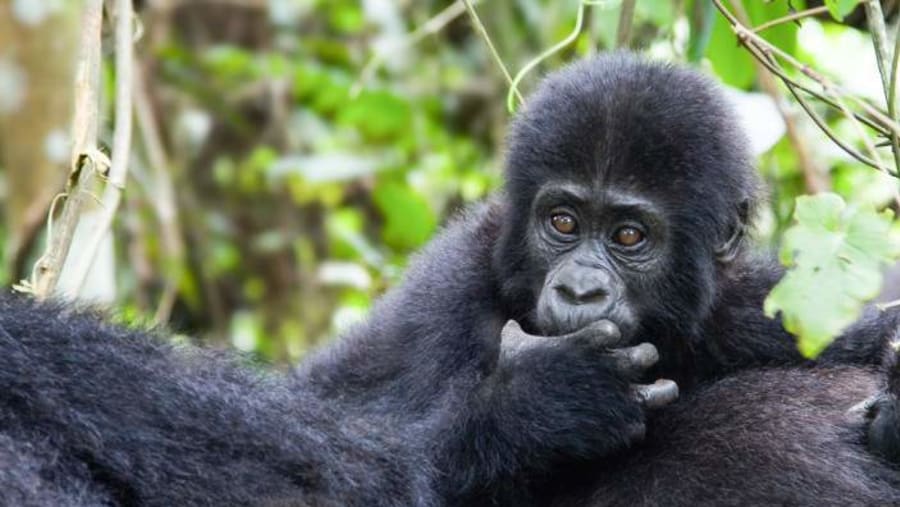
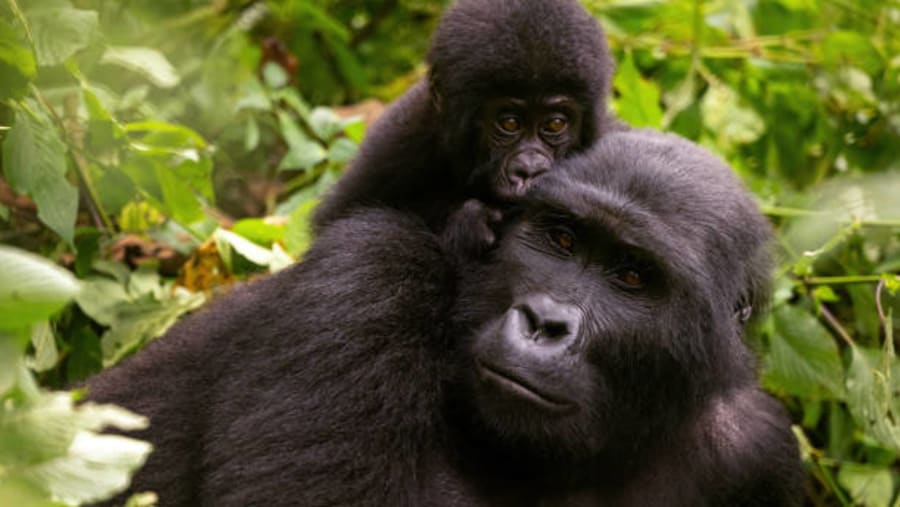
- Trekking in Bwindi can last between 2 to 8 hours through steep, muddy, humid terrain.
Engage in regular hiking practice beforehand to improve physical readiness.
Secure gorilla trekking permits well in advance through the Uganda Wildlife Authority or trusted tour operators.
Refrain from trekking if you are feeling unwell to avoid transmitting diseases to gorillas.
Always maintain a distance of at least 7 meters from the gorillas.
Wear sturdy waterproof hiking boots with strong ankle support.
Dress in long-sleeved shirts and trousers in neutral tones like olive or khaki.
Carry a rain jacket and wear layered clothing for sudden weather changes.
Use insect repellent and sunscreen to protect against bugs and sunburn.
Wear gloves to protect your hands from nettles and rough vegetation.
Use a trekking pole or walking stick, usually provided by your lodge.
Store electronics in waterproof bags for protection against moisture.
Avoid making direct eye contact with gorillas.
Never use flash when taking photographs.
Always follow your guide's instructions and signals.
Visit the Ishasha Sector to view the rare tree-climbing lions resting in fig and acacia trees.
Plan your visit during the dry seasons from June to September or December to February for optimal sightings.
Wear neutral earth-tone clothing to blend into the bush.
Bring binoculars and a zoom lens camera for better wildlife observation.
Schedule game drives in the early morning or late afternoon for the best chances of spotting lions.
Enjoy a boat cruise along the Kazinga Channel to view hippos, crocodiles, elephants, buffaloes, and hundreds of bird species.
Cruises typically last 2 to 3 hours and operate at 10 am, 1 pm, and 3 pm.
Fees are around USD 30 for foreign non-residents and UGX 30,000 for East African residents.
Stay seated during the cruise until the guide confirms it is safe to move.
Be cautious when boarding or disembarking to prevent slipping.
Get vaccinated before travel and carry a basic first aid kit with medications.
Consider hiring local porters to support the community and ease your trek.
Inform someone of your travel itinerary, as network coverage may be limited.
Carry adequate cash, since ATMs are rarely found in remote locations.