

Day 01
Karbala, Babylon, and Birs Nimrud
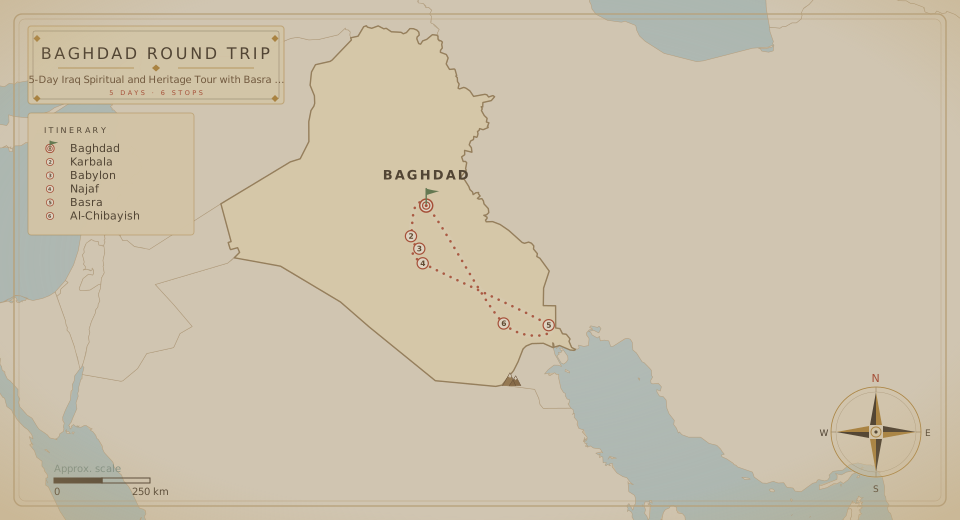
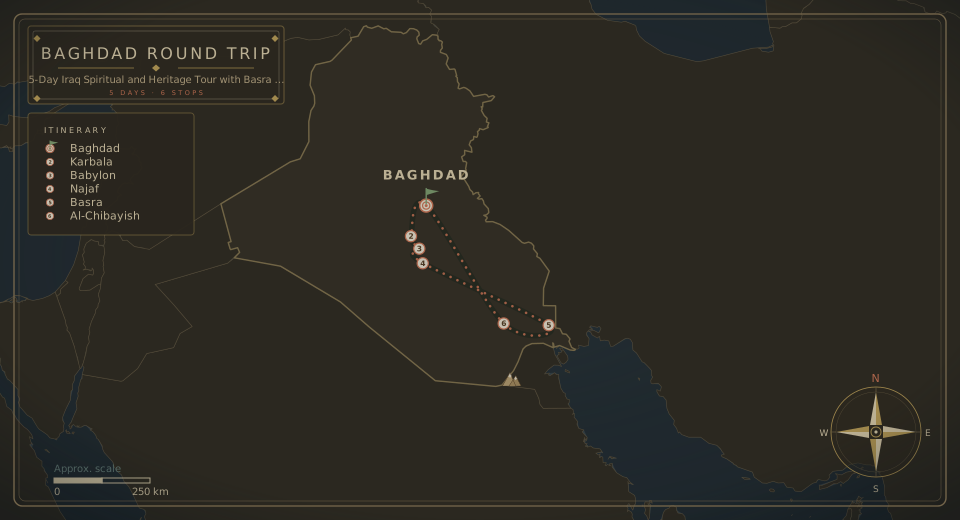
- Depart Baghdad early in the morning at 7:30 and proceed to Karbala, one of the holiest sites in the world for Shi'a Muslims, as it is home to the shrine of Imam Hussein ibn Ali, who was defeated and killed here in 680. He was the grandson of the Prophet Muhammad and the son of Fatima, the Prophet's daughter.
- Although Muhammad made statements before his death that appeared to name Ali as his successor, three others were chosen in turn before Ali became caliph in 656. His rule was marked by rebellions, and he was assassinated four years after taking office. Today, millions of Shi'ites visit the shrine each year.
- Visit the sacred shrines of Imam Hussein and Al-Abbas.
- Depart for the city of Babylon, which was a key kingdom in ancient Mesopotamia from the 18th century, when the Amorite king Hammurabi built Babylon into a major city. It is estimated to have been the largest city in the world at various times and came under the rule of different civilizations.
- The Babylon of today was significantly rebuilt under Saddam. The entire central palace of Babylon is made of 20th-century fired bricks, but it is fascinating to reflect that Alexander the Great died in the throne room, surrounded by his mourning generals.
- The colorful outer part of the famed Ishtar Gate is displayed at the Pergamon Museum in Berlin, but here you can see the inner molded brick walls as well as the processional way.
- One of Saddam's most impressive palaces is situated just above Babylon, with beautiful views over the ruins and the Euphrates, and may be visited if the authorities allow it. It was looted down to the last light bulb and is filled with graffiti.
- The sheer size and cost of this palace, and the fact that he most likely was never there, symbolize the extent of his madness and waste.
Then continue the drive to Birs Nimrud, an important ancient city of Sumer, built on both sides of a lake about 11 miles southwest of Babylon.