Tanzania · Safari

8-Day Great Wildebeest Migration Safari in Tanzania via Lake Natron

8 Days Round trip from Tanzania Easy pace

The journey

Trip highlights
  • 01 Explore Tarangire National Park, renowned for its large elephant population and diverse bird species
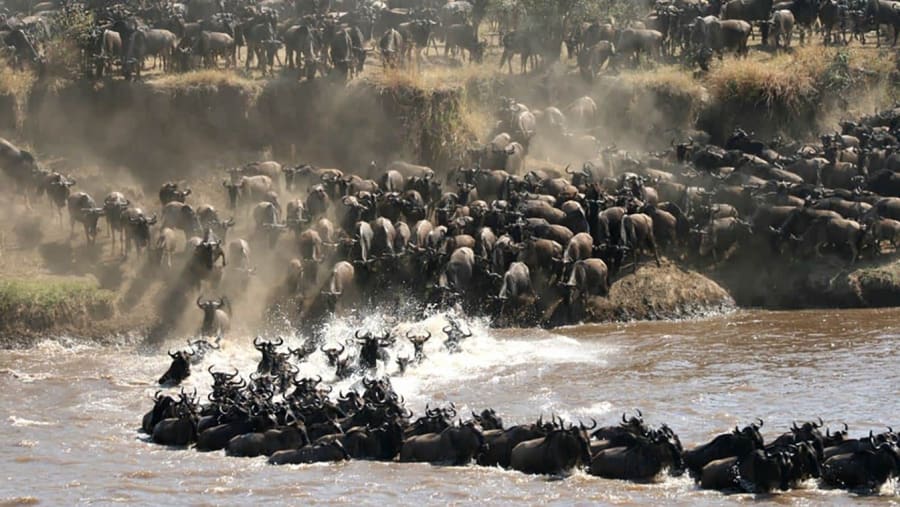
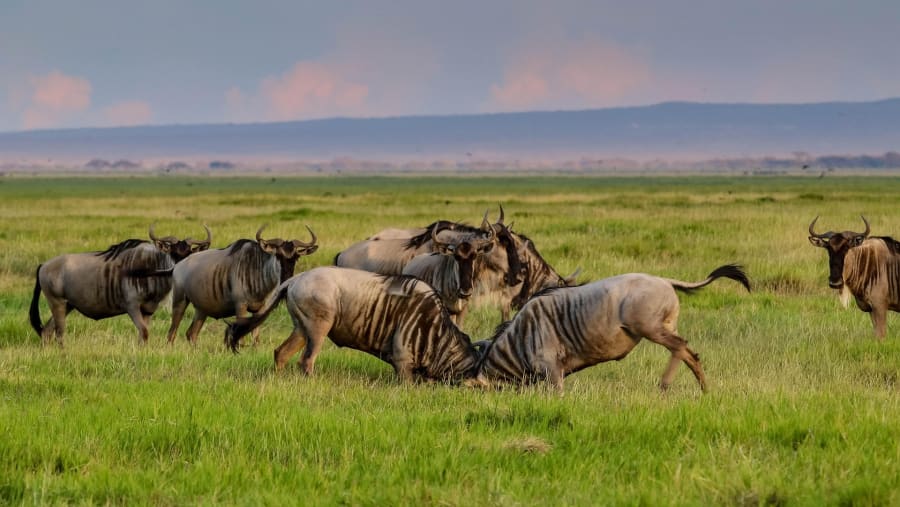
  • 02 Witness the breathtaking Great Migration in the Serengeti, involving millions of wildebeests, zebras, and gazelles
  • 03 Experience the unique landscape of Lake Natron, one of the largest breeding sites for lesser flamingos
  • 04 Enjoy a game drive in the Ngorongoro Crater, a unique ecosystem with a remarkable diversity of species

The time has come for the dream to come true as Tanzania awaits you on an 8-day safari through Tarangire National Park, Lake Natron, Serengeti National Park, and the Ngorongoro Conservation Area. Experience the taste of the wild as you explore elephant-rich landscapes, the hauntingly beautiful shores of Lake Natron, and the endless Serengeti plains during the Great Wildebeest Migration. Along the way, discover the culture of the local people and the beauty of Tanzania's natural resources for a truly unforgettable journey.

The Great Migration is the most significant movement of herbivores on the planet.

From the itinerary

At a glance

What this trip includes

Duration 8 Days
Tour type Private
Activity level Easy
Accommodation Included · Standard
Transport Included
Wheelchair access Yes
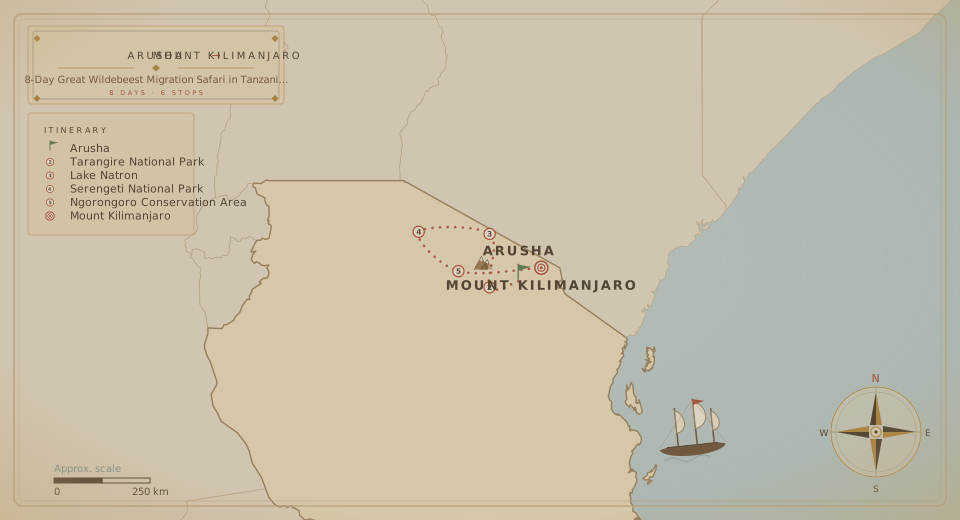
Cities Arusha, Mount Kilimanjaro, Serengeti National Park, Ngorongoro Conservation Area, Tarangire National Park, Lake Natron
Languages Dutch, French, German, Greek, Russian, Swahili

Day by day

The itinerary

1
Day 01

Arrival in Tanzania and Transfer to Arusha

  • Upon arrival, you will be met by a team member for pick-up and driven to your hotel in Arusha City.
  • You will have time to rest, spend the remainder of the day at the lodge, and enjoy dinner and an overnight stay.
2
Day 02

Full-Day Game Drive in Tarangire National Park

  • After breakfast, you will drive from Arusha City for a full-day game drive in Tarangire National Park.
  • You will have lunch in the wild, and in the evening, you will drive to the lodge for an overnight stay.

Tarangire National Park is known as the "ELEPHANT PARADISE" because it has a massive population of large elephant herds across much of the park. This park has vast open spaces with a variety of vegetation and the largest diversity of bird species compared to any other park in Tanzania.

3
Day 03

Lake Natron Cultural Experience and Scenic Drive

  • Today, you will drive from Mto WA Mbu to Lake Natron. The lake is highly known as one of the largest breeding sites for lesser flamingos, which are attracted by the lake's saltiness. Wild and remote Lake Natron lies in the northeast of Tanzania between the Ngorongoro Highlands and the Serengeti plains. Here, the landscape rather than the animals is the main attraction. The area around the lake, inhabited by the Maasai, is dry, desolate, and hauntingly beautiful.
4
Day 04

Drive to North Serengeti and Great Migration Game Drive

  • Immediately after breakfast, the drive from Lake Natron to Serengeti National Park will begin.
  • You will pass through Klein's Gate into North Serengeti for a game drive.

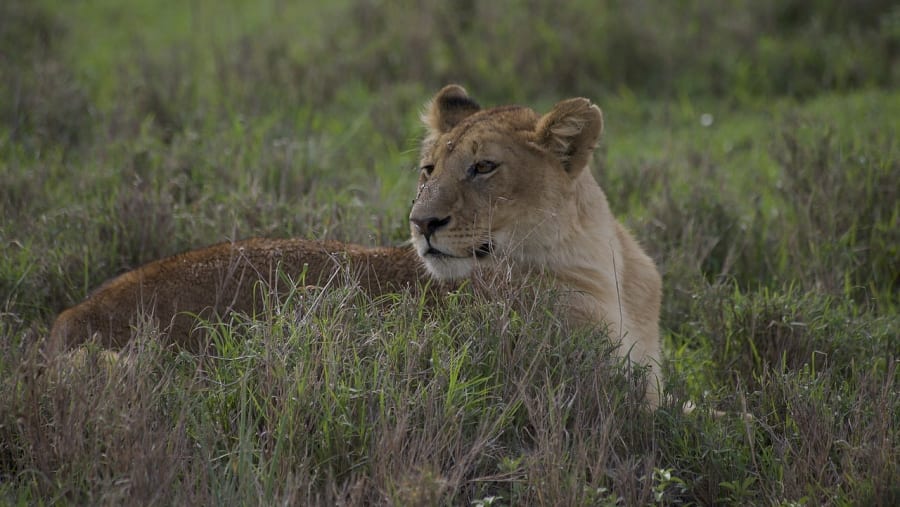
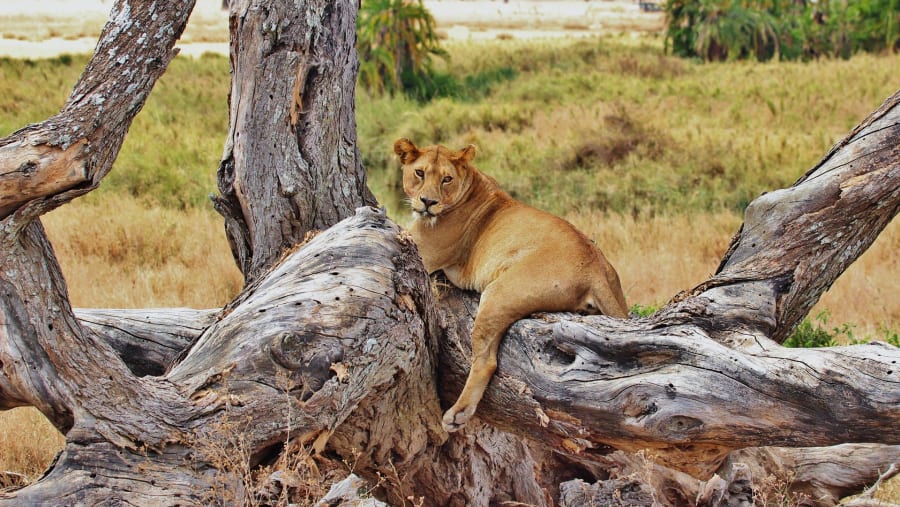
The Great Migration is the most significant movement of herbivores on the planet. It includes over 1.5 million wildebeests, zebras, and gazelles moving in a continuous circle through the Serengeti-Maasai Mara ecosystem in search of green pasture. This movement is always accompanied by hungry predators, including lions, leopards, hyenas, cheetahs, and crocodiles, making survival a test for the strongest.

5
Day 05

Full-Day Game Drive in North Serengeti

  • Today, you will enjoy a full-day game drive in the plains of the Serengeti.
  • The morning game drive will start as early as possible, as this is when the Serengeti plains are most active and offer a great opportunity to spot many animals and birds. At this time, animals and birds are awakening, predators are hunting for prey, and herbivores are feeding on grass. This makes it an excellent time to observe dramatic wildlife action and take the best pictures for lasting memories.
6
Day 06

Game Drive from North to Central Serengeti

  • A full-day game drive will take place in the endless plains of the Serengeti as you continue searching for different species during both the morning and afternoon drives.
  • You will stop for lunch at picnic sites located in the bush areas.
  • The game drive will continue until evening before you return to the lodge for dinner and an overnight stay.
7
Day 07

Ngorongoro Crater Game Drive

  • Breakfast at 6:30 am will allow you to have a smooth drive from the Serengeti to the Ngorongoro Conservation Area for a game drive in the crater. The Ngorongoro Crater was formed over a million years ago and is famous for having an independent ecosystem that offers a diversity of species to see as you drive inside the crater.
  • Lunch will be taken at the picnic site in the crater, and then you will drive to Karatu for an overnight stay.
8
Day 08

Departure from Karatu to Arusha

  • This is the final day of the safari. You will drive from Karatu to Arusha Airport to catch a flight to Kilimanjaro International Airport for your journey home.
  • Make the end of this safari the beginning of the next safari. Thank you for booking the safari with us, and you are welcome again next time.
Lake Natron shoreline, Tarangire National Park elephant herds, Serengeti National Park plains

Where this trip takes you

Lake Natron shoreline, Tarangire National Park elephant herds, Serengeti National Park plains

The route

Where you'll travel

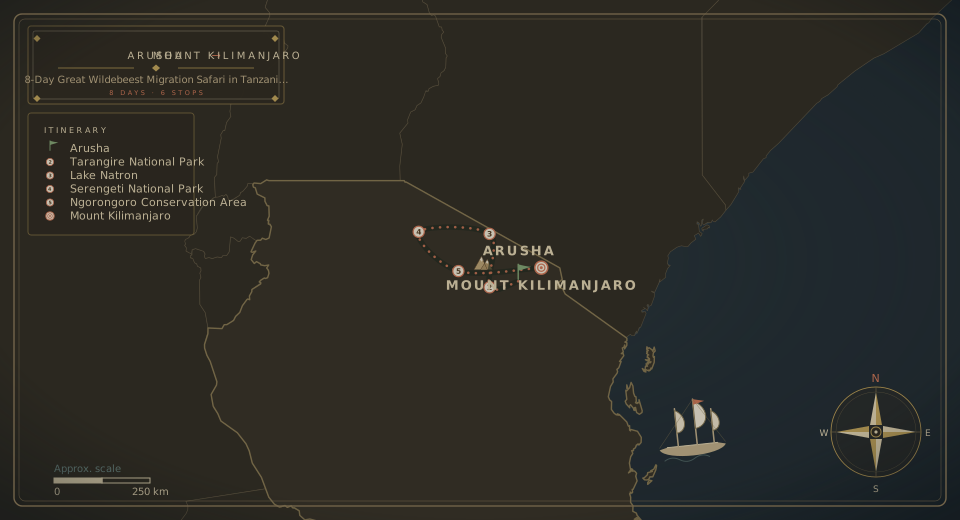
Tour route map
Round trip from Tanzania 6 cities · 8 Days

The fine print

Trip details

What's Included

  • Accommodations throughout your safari
  • All transfers and pick-ups
  • A 4x4 safari jeep
  • All tours and excursions
  • Meals as described in your itinerary
  • Professional safari guide
  • Drinking water
  • Park fees and all government taxes
  • Flying Doctors Insurance (AMREF)

What's Not Included

  • International flights
  • Visa charges
  • Tips
  • Additional activities that you wish to do are not included in the safari package.
  • Extra meals not included in the itinerary
  • Extra requirements are not included in the package

What to bring

Clothing

  1. Light, breathable clothing (preferably neutral colors like beige, khaki, or olive green) to blend in with the environment.
    • Long-sleeve shirts for protection against sun and mosquitoes.
    • Lightweight pants (avoid shorts to protect from sun and insects).
    • A hat or cap to protect from the sun.
    • Socks (preferably moisture-wicking).
    • A light jacket or fleece, as it can get chilly in the evenings and mornings.
    • A scarf or bandana for dust protection when traveling.
  2. Sturdy walking shoes or boots, comfortable for walks or hikes.
  3. Flip-flops or sandals for relaxing around camp.
  4. Swimwear if your lodge or camp has a pool.

Gear

  1. Binoculars for spotting wildlife.
  2. Camera and extra batteries - you'll want to capture all the action.
  3. A power bank to keep your electronics charged, as electricity may not always be available.
  4. A flashlight or headlamp with extra batteries.
  5. A daypack or backpack for excursions.

Health & Safety

  1. Insect repellent (preferably DEET-based) to protect against mosquitoes and other bugs.
  2. Sunscreen (high SPF recommended) for sun protection.
  3. Personal medications and a small first-aid kit (band-aids, antiseptic wipes, pain relievers, etc.).
  4. Malaria prophylaxis (consult your doctor for advice before travel).
  5. Hand sanitizer and wet wipes for cleaning your hands on the go.

Essentials

  1. Passport and copies of your travel documents.
  2. Travel insurance details, in case of emergencies.
  3. Cash (USD is widely accepted in many safari areas).
  4. Chargers for all your devices.
  5. Ziploc bags or waterproof bags to protect electronics and valuables from dust and moisture.

Food & Water

  1. A reusable water bottle - hydration is key in hot climates.
  2. Snacks, especially if you're spending long hours in the vehicle.

Miscellaneous

  1. A notebook or journal for documenting your experiences.
  2. A guidebook or wildlife identification book to help you learn about the animals you're seeing.
  3. Ziplock bags or waterproof bags for dirty or wet clothing.
  4. A travel pillow for comfort during long drives or flights.

Know before you go

1. Safari Timing

  • The best time to witness the Great Wildebeest Migration is typically between July and October, but it depends on when the herds are moving. Check with your operator to ensure your trip aligns with the migration's expected movements.
  • Early mornings and late afternoons are the best times for game viewing, as animals are more active during these times.

2. Health & Safety

  • Vaccinations: Make sure you're up to date on routine vaccines and get recommended vaccines like yellow fever, hepatitis A and B, typhoid, and tetanus. Check with a travel clinic for any required or recommended vaccinations.
  • Malaria: Many safari areas are malaria zones, so malaria prophylaxis (medication) is highly recommended. Your doctor can prescribe the right treatment.
  • Travel insurance: Make sure your travel insurance covers medical emergencies, evacuation, and trip cancellations.

3. Packing Tips

  • Luggage: Many safari camps and lodges have limited luggage space, so pack lightly in soft-sided bags, not hard cases.
  • Camouflage clothing is not permitted in some African countries, so avoid military-style outfits.
  • Photography: If you're bringing a camera with a large lens, ensure you can safely store and transport it. Don't forget extra memory cards, batteries, and a lens cleaning kit.
  • Power adapters: Check the electrical outlets used in your safari destination. Most African countries use Type G (UK-style) or Type C sockets.

4. Safari Etiquette

  • Respect wildlife: While it's tempting to get close for photos, always maintain a safe distance from animals.
  • No sudden movements or loud noises: Animals may be startled, and loud sounds can make them feel threatened.
  • Follow guide instructions: Your safari guide is highly knowledgeable, so always listen to them, especially regarding safety when on foot or around wildlife.

5. Cultural Awareness

  • Be respectful of local customs and communities. Many safari regions are near local villages, so it's important to be culturally sensitive.
  • Tipping: Tipping is customary in many safari camps, usually for your guide, driver, and camp staff. Be sure to bring small bills for tipping.

6. Game Drives & Vehicle Rules

  • Safari vehicles can get dusty, so be prepared for some mess (bring a scarf or bandana to cover your face).
  • The vehicles are open-sided, so you'll be exposed to the elements, including sun, dust, and sometimes rain. Dress in layers, and be prepared for changing weather.
  • Patience: Wildlife sightings may require waiting, so be patient and stay calm, as the animals might come out when least expected.

7. Respect Nature & the Environment

  • Leave no trace: Ensure you clean up after yourself and avoid leaving any waste behind in the wild.
  • Stay on designated paths: For both your safety and the protection of wildlife, stay on marked roads or trails.

8. Weather & Climate

  • The weather can vary significantly depending on the time of year. Be prepared for hot, dry conditions, especially during the day, and cooler temperatures in the mornings and evenings.
  • If you're traveling during the rainy season (November to April), some areas may be muddy and have limited access. Check with your tour operator about weather conditions during your trip.

9. Photography & Wildlife Observation

  • Wildlife is unpredictable: While the Great Migration is an amazing spectacle, the herds don't follow a fixed schedule, so be ready for other incredible wildlife encounters as well.
  • Don't rush the moment: Enjoy the experience of observing the migration and the animals. Sometimes, the most magical moments happen when you least expect them.
  • If you're looking to capture a particular moment, like the dramatic river crossings, know the best times, early mornings or late afternoons, for these action-packed moments.

10. Local Currency & Money

  • Many safari lodges and camps accept credit cards, but it's a good idea to have some local currency (usually in the form of Tanzanian Shillings or Kenyan Shillings, depending on where you're going) for tips and small purchases.
  • ATMs may not be readily available in remote safari areas, so plan to carry sufficient funds for your trip.

11. Accommodation & Comfort

  • Accommodations can range from luxury lodges to more rustic tent camps. Be prepared for varying levels of comfort-while you'll have a fantastic experience, some accommodations may not have the amenities you're used to at home.
  • Wi-Fi and phone signals might be limited in more remote areas, so it's a great chance to disconnect and immerse yourself in nature.

12. Sustainability

  • Support eco-friendly and sustainable tour operators that prioritize wildlife conservation and local community welfare.
  • Be mindful of water usage-water conservation is important in safari regions, so use water sparingly.

Logistics

Meeting & route

Meeting point
Arusha Region, Tanzania
Tour start
Tanzania
Tour ends at the same location as the start point.
End of the journey

Your 8 days finish where they began, in Tanzania.

Watch the tourHQ film Watch the film

Create your own adventure

Can't find the perfect tour? Tailor your dream trip.

  • Tell us your destination, dates and group size.
  • Our travel experts and local guides design a tailored itinerary, just for you.
  • Enjoy your trip with peace of mind, knowing everything is taken care of.
Plan my holiday

Say goodbye to travel stress.

Starting from

USD 3,365 /person
Book This Tour

When

Travellers

Total