India · Culture

8-Day Golden Triangle and Varanasi Tour with Taj Sunrise and Ganges Aarti

8 Days Round trip from New Delhi Easy pace

The journey

Trip highlights
  • 01 Explore Delhi, Agra, Jaipur, and Varanasi, showcasing India's rich cultural and historical heritage
  • 02 Visit iconic landmarks including Jama Masjid, India Gate, Taj Mahal, and Hawa Mahal
  • 03 Experience the spiritual ambiance of Varanasi with a Ganges River boat ride and evening Aarti
  • 04 Discover Fatehpur Sikri and Chand Baoli en route to Jaipur
  • 05 Witness the Taj Mahal at sunrise with a professional tour guide

The Golden Triangle tour with Varanasi is one of India's most iconic and culturally rich itineraries, covering Delhi, Agra, Jaipur, and Varanasi. Over 8 days, you'll explore historical monuments, learn their fascinating histories, and immerse yourself in India's vibrant culture, from Delhi's Jama Masjid and India Gate to Agra's Taj Mahal and Jaipur's Hawa Mahal and Amber Fort. The journey also includes Varanasi, the oldest living city in the world, where spirituality, architecture, and tradition come together in a deeply memorable way. This route offers a condensed yet immersive showcase of India's rich heritage and captivating historical wonders.

The evening Aarti at Dashashwamedh Ghat, Varanasi, unfolds as a spiritual spectacle along the sacred Ganges.

From the itinerary

At a glance

What this trip includes

Duration 8 Days
Tour type Private
Activity level Easy
Accommodation Included · Luxury
Transport Included
Wheelchair access Yes
Cities Delhi, Jaipur, Agra, Varanasi, Noida, Gurgaon, Fatehpur Sikri, Sarnath
Languages English, French, Japanese, Spanish

Day by day

The itinerary

1
Day 01

Arrival and Delhi Heritage Tour

  • This tour starts with pickup from the airport or any hotel in and around Delhi, Noida, and Gurugram. Our representative will be there to receive you by private car. Your guided city tour will begin with visits to some of Delhi's most important monuments.
  • Delhi, the capital city of India, is a vibrant metropolis that seamlessly blends a rich historical heritage with the fast-paced dynamics of modern life. With a history dating back to ancient times, Delhi has witnessed the rise and fall of numerous empires, leaving behind a tapestry of diverse cultures and architectural marvels.
  • The city is home to iconic landmarks such as the Jama Masjid, India Gate, and Qutub Minar, each narrating a chapter from India's past. The bustling streets of Old Delhi exude old-world charm, with narrow lanes, busy markets, and the aromatic waft of street food. In contrast, New Delhi, with its wide avenues and colonial-era architecture, serves as the seat of the Indian government.
  • Jama Masjid: It is one of the most iconic sites of Old Delhi. This grand mosque was erected in the 17th century by the 5th Mughal Emperor Shah Jahan when the Mughal capital was moved from Agra to Delhi. Up to 25,000 believers can offer prayers here at one time. It is a beautiful example of Indo-Islamic architecture.
  • Spice Market: Old Delhi's spice market, located in the Chandni Chowk area, is believed to be one of the oldest and biggest spice markets in Asia. A visit to this market is a must to experience the busy streets and smell the essence of different spices. Enjoy a rickshaw ride through the busy and narrow lanes of Old Delhi.
  • Raj Ghat: It is the cremation site of one of the most respected and renowned people in the world, Mahatma Gandhi (the Great Soul Gandhi). He is a national hero and led many movements against the unlawful practices of the British Raj in India before independence.
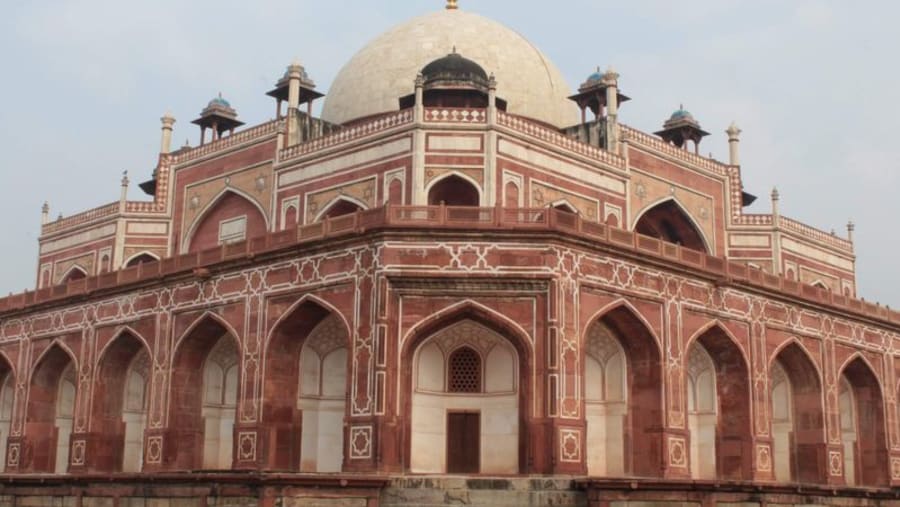
  • Humayun's Tomb: It is believed to be the first garden mausoleum in India and is the final resting place of the 2nd Mughal Emperor Humayun. It was erected in the 16th century by his widow Haji Bano Begam. The mausoleum is a beautiful example of the fusion of Indo-Islamic architecture. This grand monument stands in the middle of a char bagh Persian-style garden with water channels and fountains. The complex is also known as the 'Dormitory of Mughals' because it contains around 150 tombs of Mughal family members.
  • India Gate: It is a war memorial erected in the 20th century before independence to honour the martyrdom of 13,000 soldiers who lost their lives in the First World War. This huge gateway, with a height of 52 metres, is built of sandstone and stands as a symbol of India.
  • Bangla Sahib Gurudwara: This prominent Sikh house of worship in Delhi is known for its serene sarovar (pool) and golden dome. Built in the 18th century, it commemorates Guru Har Krishan's stay. The gurudwara serves langar (free community meals) and embodies Sikh principles of selfless service and equality.
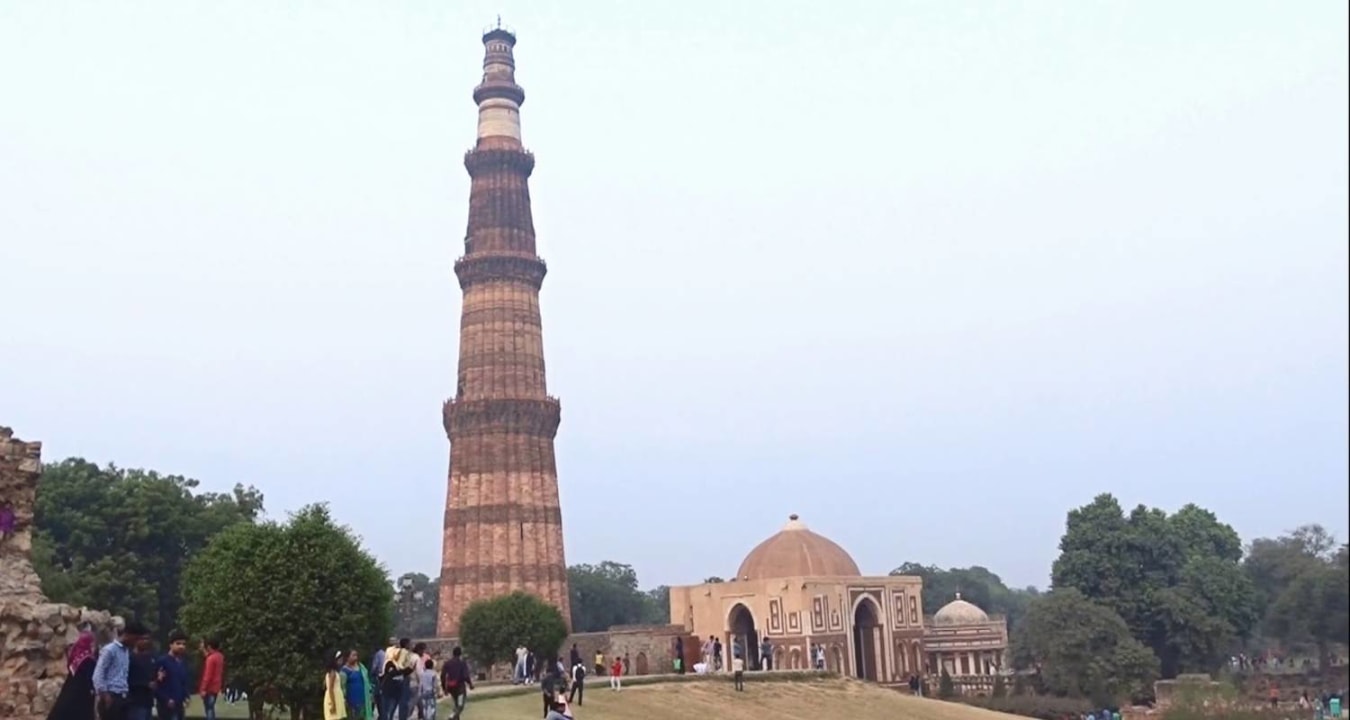
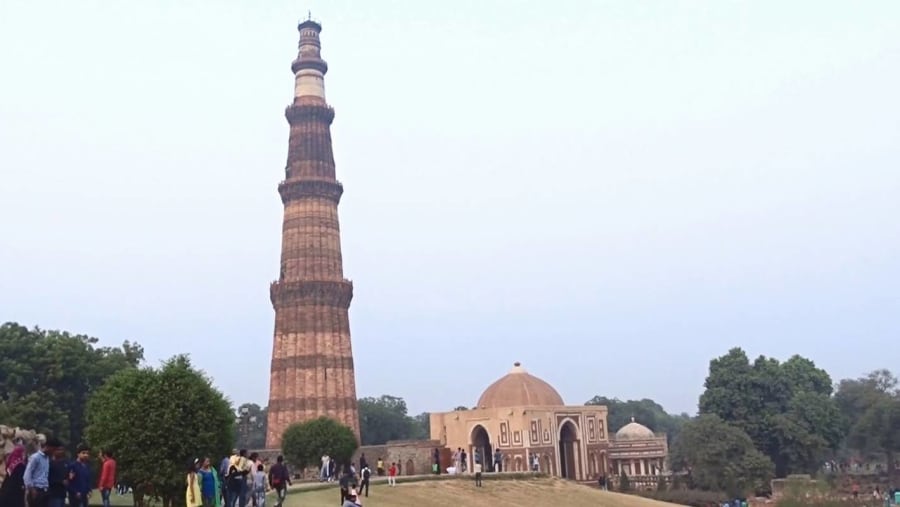
  • Qutub Minar: This iconic landmark in Delhi stands as a testament to the capital's rich history. Constructed in the early 13th century by Qutub-ud-din Aibak and later expanded by his successors, this UNESCO World Heritage Site represents Indo-Islamic architecture. The towering minaret, reaching a height of 73 metres, features intricate Arabic inscriptions and ornate carvings. Surrounding it are historic structures such as the Quwwat-ul-Islam Mosque and the Iron Pillar. Qutub Minar narrates tales of Delhi's diverse cultural influences, from the Qutub complex's inception as a victory tower to its later repurposing under different dynasties.
  • Lotus Temple: It is an architectural marvel shaped like a blooming lotus flower. Completed in 1986, it serves as the Bahá'í House of Worship, welcoming people of all faiths. The serene white marble structure stands as a symbol of unity and attracts visitors for its unique design and peaceful ambiance.
  • After the city tour, you will be dropped off at your pre-booked accommodation to relax.
  • You are staying this night in Delhi.
2
Day 02

Drive to Agra and Explore the City of the Taj Mahal

  • Agra, a city in northern India, boasts a rich history dating back to ancient times. Renowned for the iconic Taj Mahal, commissioned by Mughal Emperor Shah Jahan in the 17th century as a mausoleum for his wife Mumtaz Mahal, Agra served as the Mughal capital until 1648. The city thrived as a cultural and architectural hub during this period, with notable structures like Agra Fort and Fatehpur Sikri. Agra's history also encompasses the medieval era, when it was a prominent centre for trade and craftsmanship. Today, the city stands as a testament to its multifaceted historical legacy and architectural marvels.
  • After lunch, start your Agra city tour and visit monuments such as Agra Fort, Baby Taj, and the Taj Mahal at sunset from the other side of the Yamuna River.
  • Agra Fort: This majestic fort is believed to be the first fort erected by the Mughal emperors in the 16th and 17th centuries in their first capital city, Agra, which was known as Akbarabad. It has huge ramparts, beautiful palaces in red sandstone and white marble, large halls for public and private audiences, and Persian-style gardens with water channels and fountains. This fort is not to be missed when you are in Agra.
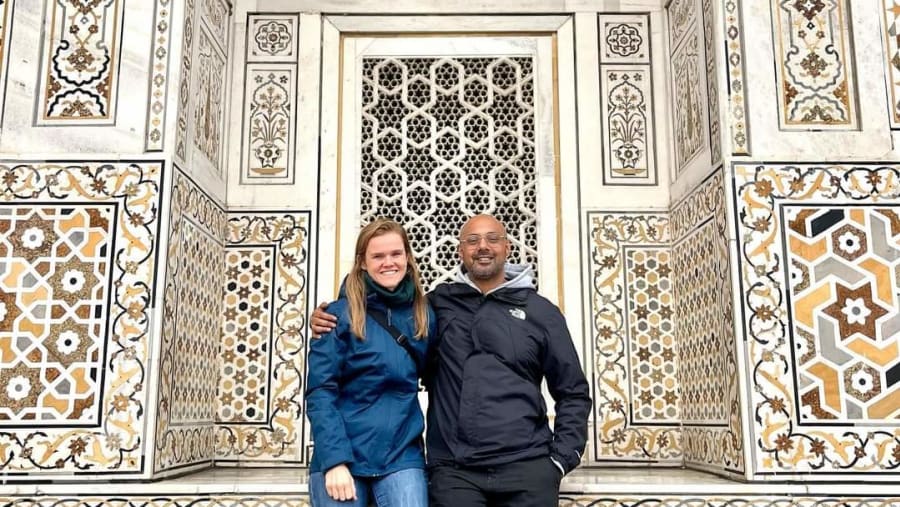
  • Etimad ud Daulah or the Baby Taj: Often called the 'Baby Taj,' the Itimad-ud-Daulah's Tomb in Agra is a masterpiece of Mughal architecture. Built in the 17th century by Nur Jahan for her father, it features intricate marble inlay work and serene gardens. This smaller-scale gem is considered a precursor to the grandeur of the Taj Mahal.
  • Mehtab Bagh or the Moonlight Garden: This beautiful garden, located across the Yamuna River from the Taj Mahal in Agra, offers breathtaking views of the iconic monument. Built during the Mughal era, it is a charbagh (four-part garden) with lush greenery. The garden is an ideal spot to admire the Taj Mahal's beauty and capture stunning reflections at sunset.
  • After visiting the sites of Agra, drive back to your pre-booked accommodation and relax.
  • You are staying in Agra.
3
Day 03

Sunrise at the Taj Mahal and Drive to Jaipur

  • Start your day early at sunrise to visit the Taj Mahal with a professional tour guide. After visiting the Taj Mahal, return to the hotel for breakfast.
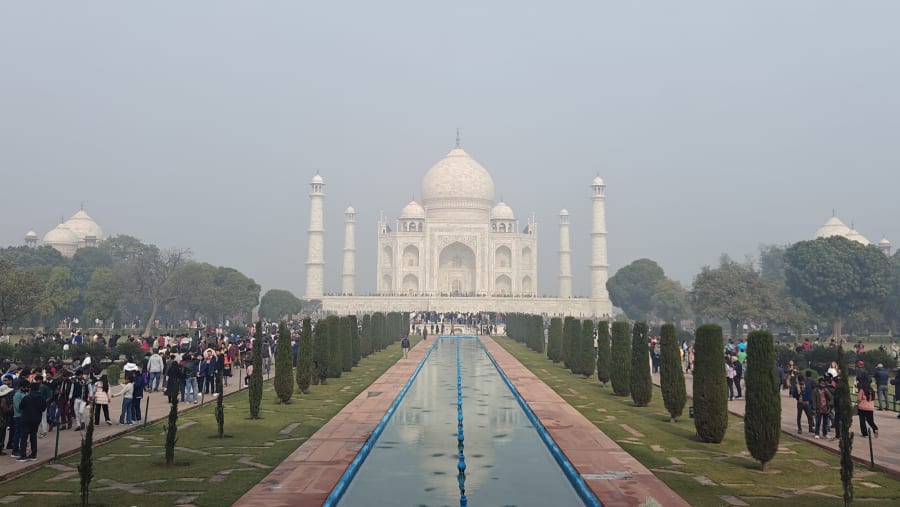
  • Taj Mahal at Sunrise: It is believed to be one of the most beautiful expressions of love for a woman. This marble mausoleum was erected in the 17th century by the 5th Mughal Emperor Shah Jahan for his beloved wife Mumtaz Mahal, who died after childbirth. It took 22 years to build. It is something that you must see once in your life.
  • After breakfast, you will be driven to Jaipur. En route, stop at Fatehpur Sikri and Chand Baoli. This journey takes 04-05 hours, with a stop halfway for refreshments.
  • Fatehpur Sikri: It is a UNESCO World Heritage Site renowned for its exquisite Mughal architecture. Commissioned by Emperor Akbar in the late 16th century, the city served as the Mughal capital from 1571 to 1585. It is also known as a ghost town and has been abandoned for many centuries. This is also the place where the Sufi mystic foretold the birth of a worldly heir, Prince Salim. The site reflects a unique blend of Hindu and Islamic architectural styles, showcasing Akbar's vision of religious tolerance. Despite its short-lived prominence, Fatehpur Sikri remains a poignant symbol of Mughal splendour and cultural synthesis.
  • Chand Baoli stepwell: This stepwell, located in Abhaneri village near Jaipur, is an ancient structure dating back to the 9th century. With 3,500 symmetrical steps leading to the water level, it exemplifies intricate architecture. The well, surrounded by arched corridors, served as a water reservoir and a respite from the desert heat.
  • Continue driving to Jaipur. Upon arrival, check in to your pre-booked accommodation and relax.
  • You are staying this night in Jaipur.
4
Day 04

Jaipur Sightseeing in the Pink City

  • Jaipur, known as the 'Pink City,' is one of the most famous tourist destinations in Rajasthan, India, and a vibrant metropolis steeped in history and culture. Founded in 1727 by Maharaja Sawai Jai Singh II, its distinct pink-hued buildings were painted to welcome the Prince of Wales in 1876. The city is a treasure trove of palaces, including the opulent City Palace, Hawa Mahal (Palace of Winds), and the hilltop Amber Fort. Jaipur's bustling markets, like Johari Bazaar and Bapu Bazaar, offer a kaleidoscope of textiles, jewellery, and handicrafts. It remains a testament to Rajput grandeur, architectural marvels, and a vibrant tapestry of traditions, attracting visitors from across the globe.
  • After breakfast, start your city tour with a professional tour guide and visit the beautiful sites of Jaipur.
  • Amber Fort: This majestic fort, located in Amer town and surrounded by the Aravalli Hills near Jaipur, is a grand fortification that echoes the opulence of Rajputana architecture. Built in the 16th century, it showcases a fusion of Hindu and Mughal styles. With ornate palaces, intricate carvings, and panoramic views, Amber Fort stands as a testament to India's regal heritage.
  • Panna Meena Kund: It is a historic stepwell near Amer Fort in Jaipur and a symphony of ancient engineering and aesthetics. Built in the 16th century, its geometrically patterned steps and vibrant hues make it both functional and visually striking. The stepwell served as a communal gathering place and a source of water in the arid region.
  • Hawa Mahal or Palace of Winds: It stands as a mesmerizing architectural marvel in Jaipur. Built in 1799 by Maharaja Sawai Pratap Singh, its unique facade with 953 intricately designed windows allowed royal ladies to observe street festivities while maintaining privacy. This five-storey honeycomb-like structure is a cultural gem.
  • Jal Mahal or the Water Palace: This palace is an enchanting architectural gem in the midst of Man Sagar Lake in Jaipur. Built in the 18th century, the palace appears to float on the lake's surface. With its red sandstone and intricate details, Jal Mahal is a captivating testament to Rajput style.
  • Jantar Mantar or the Observatory: It is an astronomical observatory in Jaipur and a UNESCO World Heritage Site. Constructed in the early 18th century by Maharaja Sawai Jai Singh II, it houses a collection of architectural instruments for celestial observations. The site showcases the ingenuity of Indian astronomers and stands as a historic testament to scientific achievement.
  • City Palace: This is believed to be one of the 03 biggest palaces of any royal family in Jaipur. It is a splendid royal complex reflecting a fusion of Rajput, Mughal, and European architectural styles. Constructed by Maharaja Sawai Jai Singh II in the 18th century, it houses museums, courtyards, and palatial structures. The palace stands as a living testament to Jaipur's regal history and cultural richness.
  • There will be a stop for lunch and shopping during the sightseeing tour of Jaipur.
  • Birla Temple or Laxmi Narayan Temple: This beautiful temple, constructed in 1988 by the Birla family, is dedicated to Lord Vishnu and Goddess Laxmi. It graces the skyline of Jaipur and, adorned with intricate carvings, stands as a serene oasis of spirituality amidst the bustling city. Witness the evening aarti ceremony at the temple.
  • After sightseeing in Jaipur, you will be dropped off at your hotel to relax.
  • You are staying this night in Jaipur.
5
Day 05

Visit Galtaji Temple and Return to Delhi

  • After breakfast, you will be picked up from your hotel and driven to the Monkey Temple, located around 10 km on the outskirts of Jaipur.
  • Galta Ji Temple: This temple, located amid the Aravalli Hills near Jaipur, is a sacred Hindu pilgrimage site also known as the Monkey Temple. It features ancient shrines, kunds (water tanks), and natural springs. The temple complex exudes a tranquil atmosphere, and its natural surroundings attract pilgrims and tourists seeking spiritual solace. In this temple complex, you will see humans and monkeys bathing in the same water reservoirs.
  • After sightseeing, you will be driven back to Delhi. This journey takes 04-05 hours, with a stop halfway for refreshments. Upon arrival in Delhi, you will be dropped off at your pre-booked accommodation.
  • You are staying this night in Delhi.

6
Day 06

Fly to Varanasi and Attend the Ganges Aarti

  • After having a luscious breakfast and collecting your luggage from the hotel, our chauffeur will drop you at the airport to board your flight to Varanasi.
  • Upon your arrival in Varanasi, our representative will be there to receive you and transfer you to your pre-booked accommodation. Later in the evening, you will be driven to Dashashwamedh Ghat to witness the evening Aarti of the River Ganges.
  • Evening Aarti of the River Ganges: The evening Aarti at Dashashwamedh Ghat, Varanasi, unfolds as a spiritual spectacle along the sacred Ganges. Skilled priests clad in traditional attire perform a mesmerizing ceremony with synchronized chants, rhythmic bell ringing, and the waving of oil lamps against the dusk sky. Devotees seek blessings, and onlookers marvel at the cultural richness. The Ganges, symbolizing purity, adds depth to the ritual. In this profound atmosphere, the Aarti at Dashashwamedh Ghat becomes a captivating blend of devotion and tradition, leaving an indelible impression on all who witness this harmonious convergence of spirituality and spectacle.
  • After the ceremony, you will be dropped off at your hotel to relax.
  • You are staying this night in Varanasi.
7
Day 07

Sunrise Boat Ride and Sacred Sites of Varanasi

  • 'It is said that you have not seen the soul of India until you have explored Varanasi.'
  • Varanasi, India's spiritual heart, teems with ancient mystique along the sacred Ganges River. Its labyrinthine alleys host vibrant markets bustling with silk, spices, and devotion. The ghats, stone steps descending to the river, witness rituals, prayers, and cleansing dips in the holy waters. The city echoes with the resonance of temples, showcasing intricate architecture and devout worship. Varanasi's soul thrives in its diverse tapestry of culture, art, and timeless traditions. From the enchanting Ganga Aarti to tranquil boat rides at sunrise, every moment in Varanasi tells a story, weaving a timeless connection between spirituality, life, and the eternal river.
  • Start your day early with a boat ride to witness the different activities taking place at the several ghats of the River Ganges.
  • Boat Ride at Sunrise: Embarking on a sunrise boat ride in Varanasi is a magical journey into the spiritual heart of India. Drifting along the Ganges River, the golden hues of dawn paint the ancient ghats and temples, casting a serene glow on the sacred waters. As the city awakens, witness devotees performing morning rituals, meditating, and bathing in the holy river. The soft lapping of oars against the current harmonizes with the distant sounds of temple bells and prayer chants. This tranquil spectacle unveils Varanasi's timeless beauty, capturing the essence of a city where spirituality meets the sublime and creating an indelible memory of serenity at sunrise.
  • Kashi Vishwanath Temple: It is a revered Hindu shrine dedicated to Lord Shiva. It stands as a spiritual beacon on the western bank of the Ganges. The temple, known for its ornate architecture and religious significance, attracts devotees seeking blessings and a profound connection with the divine.
  • Manikarnika Ghat: Manikarnika Ghat is a renowned cremation site on the sacred Ganges in Varanasi. Hindus believe that cremation here ensures moksha, liberation from the cycle of reincarnation. The ghat bustles with funeral pyres, embodying the cycle of life and death. Pilgrims consider it a gateway to spiritual transcendence and eternal peace.
  • Assi Ghat: Assi Ghat, nestled along the Ganges in Varanasi, India, is a serene riverfront embankment. Renowned for its peaceful ambiance and cultural significance, Assi Ghat is frequented by pilgrims and seekers. It offers a tranquil retreat for meditation, yoga, and spiritual contemplation, embodying Varanasi's timeless charm and spiritual allure.
  • Sarnath: Sarnath Stupa is a sacred Buddhist site where Lord Buddha first taught the Dharma, located near Varanasi. The stupa, constructed by Emperor Ashoka in the 3rd century BCE, stands as a symbol of Buddhism's origin. Its Dhamek Stupa is an imposing structure, marking the spot where Buddha gave his first sermon. The intricately carved structure houses relics and serves as a pilgrimage site for Buddhists worldwide. Surrounded by archaeological ruins and serene gardens, Sarnath radiates historical significance and spiritual tranquility, inviting visitors to reflect on the profound teachings that emanated from this hallowed ground.
  • After sightseeing, you will be driven back to the hotel to relax.
  • You are staying this night in Varanasi.
8
Day 08

Fly from Varanasi to Delhi for Departure

  • After breakfast, pack your luggage because you will be driven to the airport to catch your flight to Delhi.
  • Upon arrival in Delhi, our representative will be there to receive you and drop you off at your preferred location in and around Delhi for your onward journey.
Taj Mahal at Sunrise, Dashashwamedh Ghat on the Ganges, Amber Fort ramparts

Where this trip takes you

Taj Mahal at Sunrise, Dashashwamedh Ghat on the Ganges, Amber Fort ramparts

The route

Where you'll travel

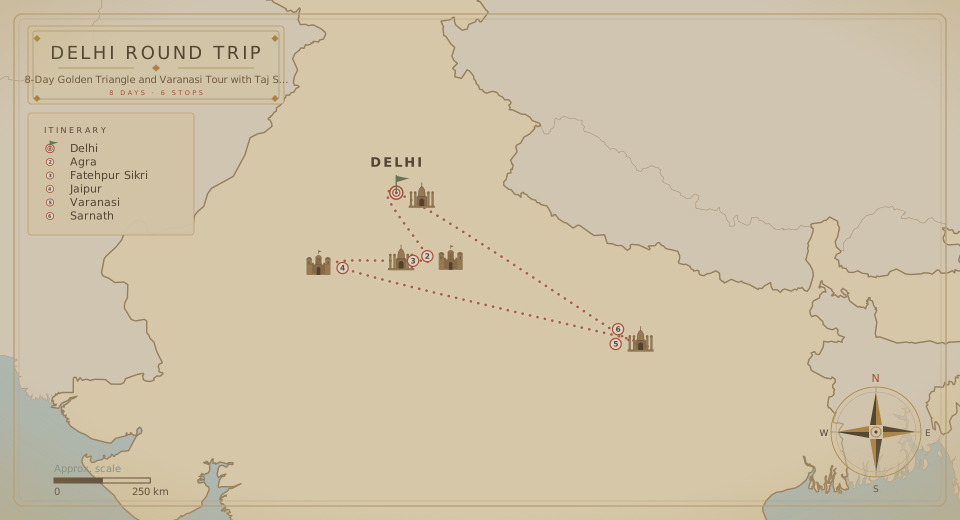
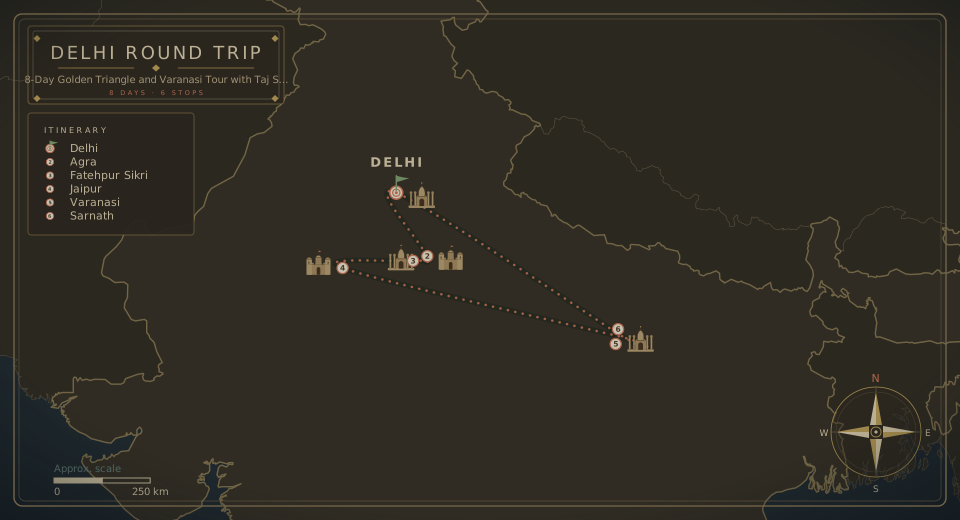
Tour route map
Round trip from New Delhi 8 cities · 8 Days

The fine print

Trip details

What's Included

  • AC private SUV/Sedan car for transfers and sightseeing
  • Pickup and drop back to hotel/airport in New Delhi
  • Accompanying professional tour guide in your language
  • All taxes - express highway toll, airport parking, monument parking charges, fuel, and state taxes
  • 02 flights Delhi to Varanasi - Varanasi to Delhi

What's Not Included

  • Tip to tour guide and chauffeur
  • Lunch and dinner at a restaurant or hotel

What to bring

  • Carry your passport or valid ID for flights and monument visits.
  • Wear comfortable walking shoes for sightseeing.
  • Bring modest clothing suitable for visits to temples, gurudwaras, and other religious sites.
  • Carry sun protection such as sunglasses, a hat, and sunscreen.
  • Bring any personal medications you may need during the tour.

Know before you go

  • Transportation is provided by 3 different vehicles: Sedan, Toyota Innova SUV, and Tempo Traveler.
  • Option 1: 3 and 4 Star Accommodation (all transfers and sightseeing for 1 to 3 persons in a Sedan vehicle, 4 to 6 persons by Toyota Innova, and 6 to 10 persons by Tempo Traveler).
  • Option 2: 5 Star Accommodation (all transfers and sightseeing for 1 to 2 persons in a Sedan vehicle, 3 to 5 persons by Toyota Innova, and 6 to 10 persons by Tempo Traveler).
  • Accommodation is on a double/twin-sharing basis, and an extra person will be provided with an extra bed in the same room (example: 3 persons in one triple-sharing room and 5 persons in 2 double rooms with 1 extra bed in the same room).
  • All transfers and sightseeing are by AC vehicles on a sharing basis (except for the hilly drives).
  • Elephant ride in Jaipur is available if the option is chosen.
  • Boat ride in Varanasi is available if the option is chosen.
  • 07 nights 03 or 05 star accommodation, single/double occupancy, bed, breakfast, and taxes are available if the option is chosen.
  • All entrance and monument ticket fees are available if the option is chosen.
  • Rickshaw ride in Delhi is available if the option is chosen.

Logistics

Meeting & route

Meeting point
New Delhi, Delhi, India
Tour start
New Delhi, Delhi, India
Tour ends at the same location as the start point.
End of the journey

Your 8 days finish where they began, in New Delhi.

Watch the tourHQ film Watch the film

Create your own adventure

Can't find the perfect tour? Tailor your dream trip.

  • Tell us your destination, dates and group size.
  • Our travel experts and local guides design a tailored itinerary, just for you.
  • Enjoy your trip with peace of mind, knowing everything is taken care of.
Plan my holiday

Say goodbye to travel stress.

Starting from

USD 1,450 /person
Book This Tour

Estimated room rates

Single Room $1,450.00 — $1,719.00
Double Sharing $1,450.00 — $1,650.00

When

Travellers

Total