Tanzania · Trekking

5-Day Kilimanjaro Marangu Route Trek with Hut Stay to Uhuru Peak

5 Days Round trip from Marangu Gate Moderate pace

The journey

Trip highlights
  • 01 Experience comfortable hut accommodations on the only Kilimanjaro route offering this feature
  • 02 Ascend the scenic 'Coca-Cola Route' through lush rainforest, moorland, and alpine desert
  • 03 Summit Uhuru Peak and witness breathtaking views of glaciers, the African plains, and sunrise
  • 04 Encounter diverse landscapes, unique plant species, and wildlife along the trail

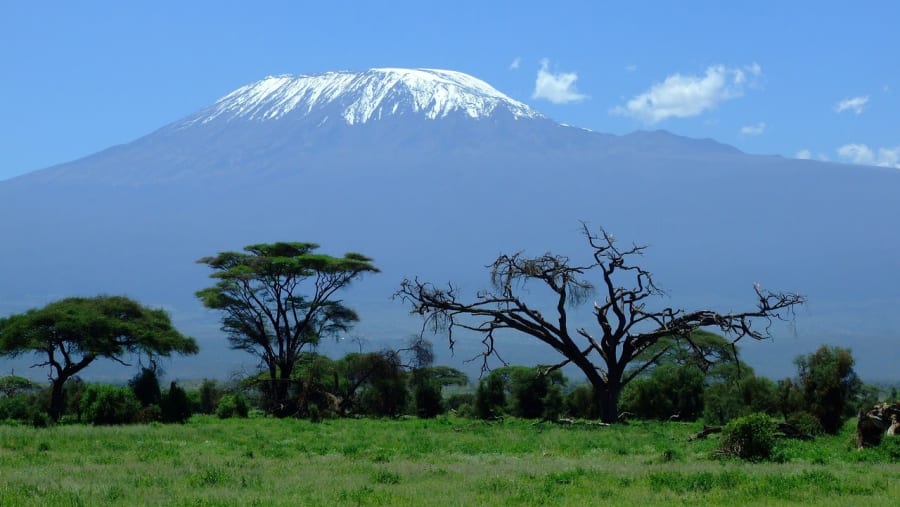
Embark on the 5-day Marangu Route, the most popular and only Kilimanjaro route with hut accommodations, making it a comfortable option for trekkers. Known as the 'Coca-Cola Route,' it offers a gradual ascent through lush rainforest, moorland, and alpine desert to breathtaking Uhuru Peak (5,895m). Along the way, you'll witness Mawenzi and Kibo Peaks, diverse landscapes, unique plant life, and incredible sunrises. Although the route is shorter and allows less time for acclimatization, proper pacing makes success achievable.

Summit day starts just after midnight, as you trek in the bitter cold toward Gilman's Point (5,685m) on the crater rim.

From the itinerary

At a glance

What this trip includes

Duration 5 Days
Tour type Private
Activity level Moderate
Accommodation Included · Budget
Transport Included
Wheelchair access Not applicable
Cities Arusha, Moshi, Mount Kilimanjaro, Marangu
Languages English, French, German, Italian, Spanish

Day by day

The itinerary

1
Day 01

Marangu Gate to Mandara Hut Through the Rainforest

  • Your Kilimanjaro adventure begins at Marangu Gate, where you'll complete registration before starting the trek through lush rainforest. The trail is rich in wildlife, with blue monkeys and exotic birds accompanying your journey. The gradual ascent makes for a comfortable start, allowing you to adjust to the altitude.
  • After 4-5 hours of hiking, you'll reach Mandara Hut, a cozy accommodation surrounded by giant heather. If time allows, a short hike to Maundi Crater offers stunning views of Mawenzi Peak and northern Tanzania. Dinner is served at the hut before you rest for the night.
2
Day 02

Mandara Hut to Horombo Hut Across the Moorland

  • After an early breakfast, you'll continue the ascent, leaving the rainforest behind as you enter the moorland zone. The landscape opens up to rolling hills, giant lobelias, and Senecio plants, giving you breathtaking panoramic views.
  • The trek takes about 6-7 hours, with a steady pace to help with acclimatization.
  • As you approach Horombo Hut, you'll see both Kibo and Mawenzi Peaks, offering a glimpse of what lies ahead. This hut is livelier, often filled with trekkers from different routes. You'll enjoy a hearty meal and a well-earned rest before the next day's challenge.
3
Day 03

Horombo Hut to Kibo Hut Across the Saddle

  • Today's trek leads you into the alpine desert zone, where the landscape becomes barren and rugged.
  • You'll pass the Last Water Point and trek across the Saddle, a vast stretch between Mawenzi and Kibo Peaks. The air gets thinner, so walking slowly (pole pole) is key to preventing altitude sickness.
  • After 5-6 hours, you'll reach Kibo Hut, your base camp for the final summit push. An early dinner is served before you rest for a few hours. By midnight, you'll begin the challenging ascent to Uhuru Peak, facing freezing temperatures and steep inclines.
4
Day 04

Summit Uhuru Peak and Descend to Horombo Hut

  • Summit day starts just after midnight, as you trek in the bitter cold toward Gilman's Point (5,685m) on the crater rim. The final ascent to Uhuru Peak (5,895m) is demanding but incredibly rewarding, with breathtaking views of glaciers, the African plains, and sunrise over the horizon.
  • After celebrating your achievement, you'll begin the long descent back to Horombo Hut, stopping at Kibo Hut for a short rest.
  • The day's trek takes 10-14 hours, making it the most challenging yet unforgettable part of the journey. You'll spend the night at Horombo Hut, recovering from the climb.
5
Day 05

Descend to Marangu Gate and Return to Arusha or Moshi

  • The final stretch takes you back through the moorland and rainforest, offering a chance to reflect on your incredible journey. The descent takes about 5-6 hours, with scenic stops along the way.
  • Upon reaching Marangu Gate, you'll receive your summit certificate, a testament to your achievement.
  • Your driver will then transfer you back to Arusha or Moshi, where a hot shower and a comfortable bed await.
  • This marks the end of your 5-day Kilimanjaro trek, a once-in-a-lifetime adventure filled with breathtaking landscapes, personal triumphs, and unforgettable memories.
Marangu Gate rainforest, Maundi Crater and Mandara Hut, Kibo Hut and Uhuru Peak

Where this trip takes you

Marangu Gate rainforest, Maundi Crater and Mandara Hut, Kibo Hut and Uhuru Peak

The route

Where you'll travel

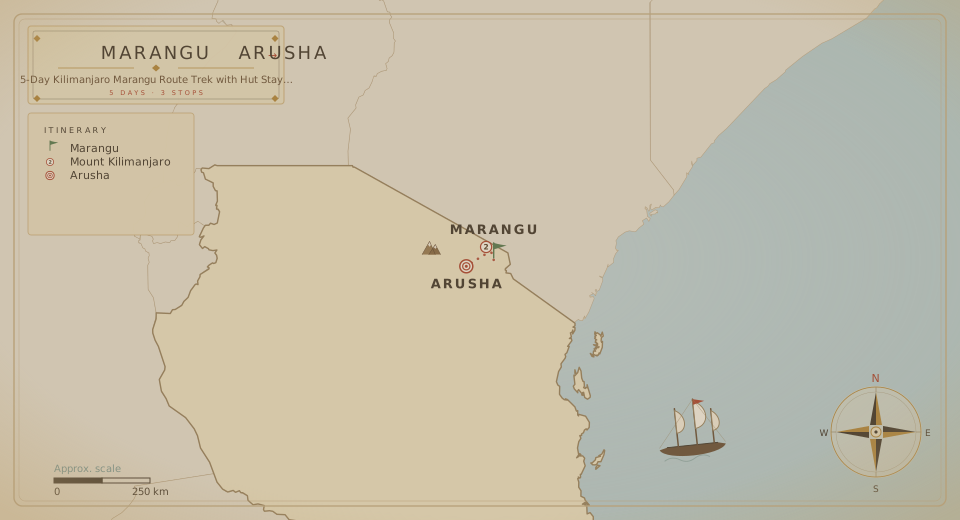
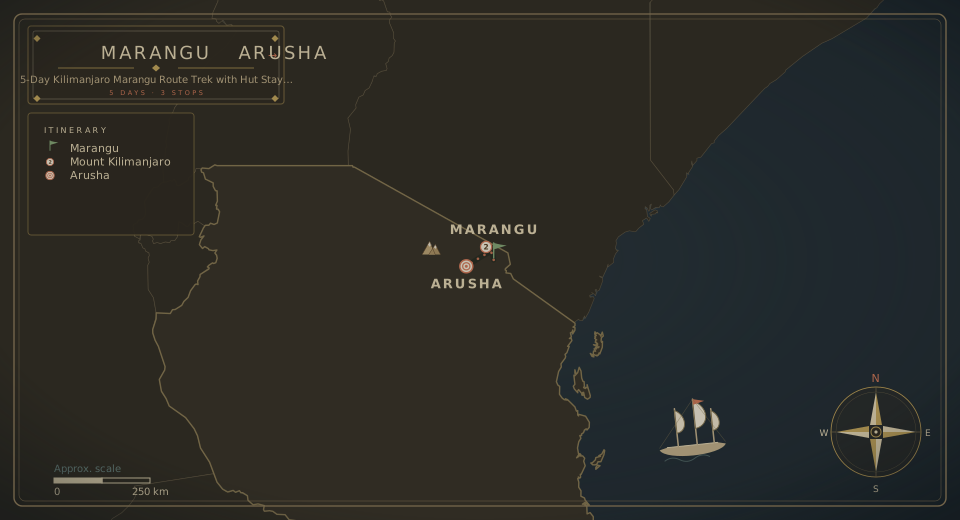
Tour route map
Round trip from Marangu Gate 4 cities · 5 Days

The fine print

Trip details

What's Included

  • Professional, English-speaking mountain guides, cooks, and porters
  • Park fees, camping/hut fees, and rescue fees
  • All meals on the mountain (breakfast, lunch, and dinner)
  • Drinking water throughout the trek
  • Accommodation in Mandara, Horombo, and Kibo huts
  • Transfers to and from Kilimanjaro National Park
  • Emergency first aid kit and oxygen cylinder
  • Kilimanjaro trekking certificate upon completion

What's Not Included

  • International and domestic flights
  • Tanzania visa fees
  • Personal trekking gear (e.g. sleeping bags, hiking boots, warm clothing)
  • Travel and medical insurance
  • Tips for guides, porters, and cooks (recommended)
  • Personal expenses (laundry, drinks, snacks, etc.)

What to bring

Clothing

  • Base layers (thermal): Moisture-wicking, quick-dry fabrics to keep sweat away.
  • Insulating layers: Fleece or down jackets to provide warmth.
  • Outer layers: Waterproof and windproof jacket and pants to protect against rain and wind.
  • Hats: A warm hat for cold weather and a wide-brimmed hat for sun protection.
  • Gloves: Warm gloves for cold temperatures, and lighter gloves for daytime use.
  • Socks: Moisture-wicking, warm socks, and a few spare pairs.
  • Trekking trousers and shorts: Quick-dry and comfortable for the trek.

Footwear

  • Trekking boots: Sturdy, waterproof boots with good ankle support.
  • Camp shoes: Comfortable sandals or shoes for relaxing at camp.

Sleeping Gear

  • Sleeping bag: Rated for cold temperatures (ideally down to -10°C / 14°F or lower).
  • Sleeping mat: For added insulation and comfort.
  • Pillow: Lightweight and compressible.

Personal Gear

  • Backpack: A medium-sized daypack (25-35L) for carrying essentials like water, snacks, and extra layers.
  • Duffel bag: For the porters to carry your gear (usually up to 15kg or 33lbs).
  • Water bottles or hydration system: At least 3L capacity to stay hydrated.
  • Water purification tablets: In case the water sources are not reliable.
  • Trekking poles: To help with balance and reduce strain on your joints.
  • Headlamp/torch: With spare batteries for early starts and nighttime use.
  • Sunglasses: UV-protective glasses for high altitudes.

Health and Hygiene

  • Personal medications: Carry a sufficient supply, including altitude sickness medication.
  • First aid kit: With essentials like plasters, antiseptic, pain relief, blister treatment, etc.
  • Hand sanitiser and wet wipes: For cleanliness when water is scarce.
  • Toiletries: Toothbrush, toothpaste, biodegradable soap, and other essentials.
  • Sun protection: High SPF sunscreen and lip balm with SPF.
  • Insect repellent: To protect against mosquitoes and other insects.

Food and Snacks

  • Energy snacks: High-energy bars, nuts, dried fruit, or trail mix.
  • Electrolyte powder: To replenish lost minerals while trekking.

Miscellaneous

  • Camera or smartphone: For capturing memories, with a waterproof case if possible.
  • Travel insurance: Ensure it covers mountaineering and emergency evacuation.
  • Documents: Passport, visa, and Kilimanjaro permit.
  • Cash: For tips or purchases at the base camp.

Optional

  • Gaiters: For extra protection against dust, mud, or snow.
  • Binoculars: For wildlife viewing (though not essential).

Know before you go

1. Physical Preparation

Climbing Kilimanjaro doesn't require technical climbing skills, but it does demand physical fitness. Prepare with regular cardiovascular exercise, such as hiking, walking, or running, to build endurance. Strengthen your legs and core, as the trek involves long hours of walking on varied terrain. It's also important to train with a backpack, as this will simulate the conditions of the climb.

2. Altitude Sickness

The higher you go, the less oxygen there is, and altitude sickness is a real concern. Symptoms can include headaches, nausea, dizziness, and shortness of breath. To reduce the risk, consider taking it slow and allowing your body to acclimatize. The longer your trek, the better your chances of adjusting. Drinking plenty of water, staying hydrated, and eating well can also help.

3. Best Time to Go

The best time to climb Mount Kilimanjaro is during the dry seasons, from late June to October and from December to February. These months offer clear skies and stable weather, which are ideal for trekking. The rainy season, from March to May, should be avoided due to heavy rainfall, slippery trails, and limited visibility.

4. Routes

Kilimanjaro has several trekking routes, each offering different levels of difficulty and scenic views. The most popular routes include:

  • Machame Route: Known as the 'Whiskey Route,' it's scenic but challenging.
  • Marangu Route: Often called the 'Coca-Cola Route,' it's the only route with hut accommodations.
  • Lemosho Route: Ideal for acclimatization, it's a more remote and scenic option.
  • Rongai Route: A quieter route starting from the northern side of the mountain.

Choose a route that suits your fitness level and preferences. Routes like Lemosho and Machame are recommended for a better chance of summiting, as they allow for more gradual acclimatization.

5. Packing Essentials

Be sure to pack appropriately for varying weather conditions. Kilimanjaro's climate ranges from tropical at the base to Arctic at the summit. Bring layered clothing, sturdy boots, a sleeping bag rated for cold temperatures, and a good-quality backpack. Don't forget sunscreen, sunglasses, and a headlamp for early morning starts.

6. Permits and Guides

Climbing Kilimanjaro requires a permit, which is included in your trekking package. You'll also need to hike with a licensed guide, as self-guided treks are not allowed. Guides ensure safety, assist with navigation, and provide helpful insights during the trek. Make sure to book your trip through a reputable company that complies with all local regulations.

7. Safety

The climb can be physically demanding, so it's crucial to listen to your body and follow the advice of your guide. Your guide will monitor your health throughout the trek, and it's important to be prepared for any medical emergencies. Having comprehensive travel insurance that covers mountaineering and evacuation is highly recommended.

8. Tips for Summit Day

The summit trek is the most challenging, taking place at night to reach the summit before sunrise. It's a cold, exhausting ascent, and the air becomes thinner as you climb. Bring extra warm clothing, snacks, and water, and be mentally prepared for the long, slow push to the top. Make sure you maintain a steady pace and keep your focus on the goal.

9. Cultural Considerations

Kilimanjaro is surrounded by local communities, and it's essential to respect their culture. Always be polite to porters, guides, and fellow trekkers. Tipping is customary at the end of your trek, and it's an important part of the livelihoods of those who assist you.

10. Post-Climb

Once you reach the summit and descend, be sure to allow time for rest and recovery. Many climbers feel fatigued after the descent, so take a day or two to relax. There are several nearby attractions, such as safari trips or visiting local villages, which can make for a rewarding post-climb experience.

11. Environmental Responsibility

Kilimanjaro is a protected national park, and it's essential to leave no trace. Avoid littering, stay on marked paths, and respect wildlife. Use eco-friendly products and follow the principles of sustainable travel to help preserve the mountain's beauty for future generations.

By being well prepared physically, mentally, and with the right equipment, you'll be ready to tackle one of the most incredible mountain climbs in the world. Enjoy the adventure and take in the awe-inspiring views that Kilimanjaro has to offer!

Logistics

Meeting & route

Meeting point
Kilimanjaro International Airport, Kilimanjaro Airport Road, Tanzania
Tour start
Marangu Gate, Marangu, Tanzania
Tour ends at the same location as the start point.
End of the journey

Your 5 days finish where they began, in Marangu Gate.

Watch the tourHQ film Watch the film

Create your own adventure

Can't find the perfect tour? Tailor your dream trip.

  • Tell us your destination, dates and group size.
  • Our travel experts and local guides design a tailored itinerary, just for you.
  • Enjoy your trip with peace of mind, knowing everything is taken care of.
Plan my holiday

Say goodbye to travel stress.

Starting from

USD 1,971 /person
Book This Tour

When

Travellers

Total