Tanzania · Trekking

10-Day Kilimanjaro Lemosho Route Climb to Uhuru Peak at Sunrise

10 Days Round trip from Kilimanjaro Airport Rd Challenging pace

The journey

Trip highlights
  • 01 Trek through diverse habitats from rainforest to alpine desert
  • 02 Enjoy wildlife sightings such as black and white colobus monkeys
  • 03 Experience high altitude and panoramic views on the Shira Plateau
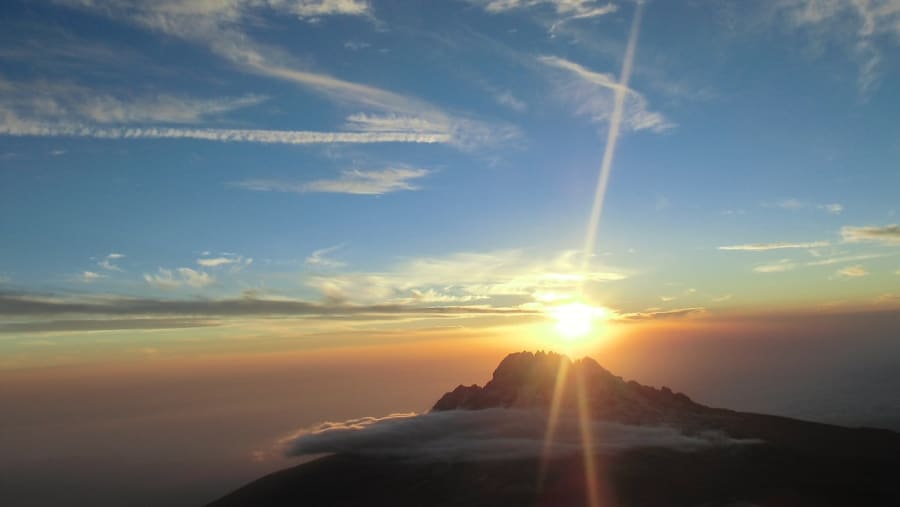
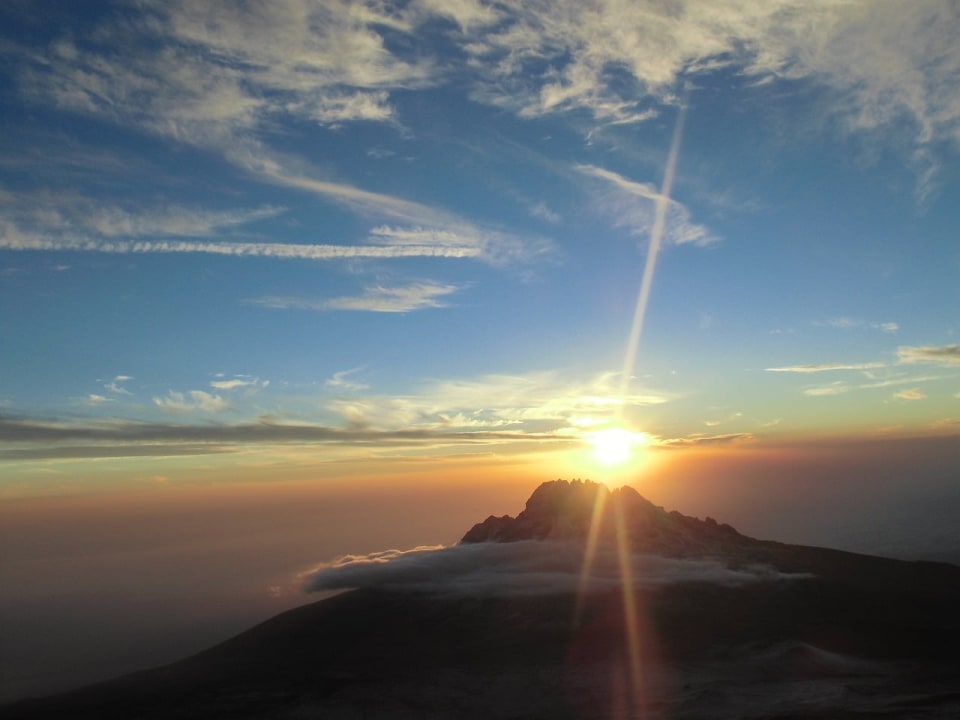
  • 04 Witness a breathtaking sunrise at Uhuru Peak on summit day

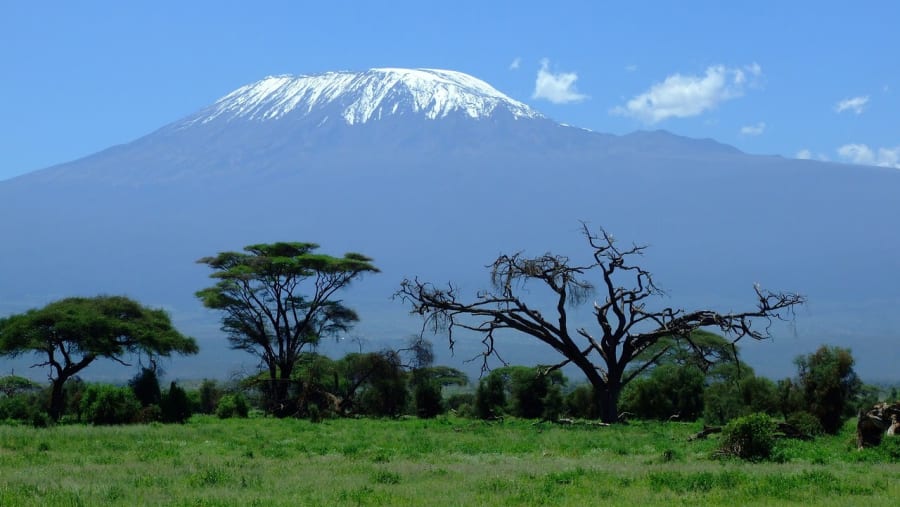
Embark on a 10-day adventure to conquer Mount Kilimanjaro via the breathtaking Lemosho Route. Begin in Arusha with a pre-climb briefing before trekking through lush rainforests, vast moorlands, and rugged alpine deserts. Experience the thrill of summiting Uhuru Peak (5,895m) at sunrise, taking in unparalleled views from Africa's highest point. After your triumphant ascent, descend through scenic trails and return to Arusha for a well-earned rest.

Experience the thrill of summiting Uhuru Peak (5,895m) at sunrise, taking in unparalleled views from Africa's highest point.

From the itinerary

At a glance

What this trip includes

Duration 10 Days
Tour type Private
Activity level Challenging
Accommodation Included · Standard
Transport Included
Wheelchair access No
Cities Arusha, Mount Kilimanjaro
Languages English, French, German, Italian, Spanish

Day by day

The itinerary

1
Day 01

Arrival and Pre-Climb Briefing in Arusha

  • Arrive in Arusha, where you will meet your trekking team for a pre-climb briefing. Equipment checks and last-minute preparations will be completed before you spend the night in a comfortable lodge or hotel.
2
Day 02

Londorossi Gate to Big Tree Camp

  • Trek Distance: 6 km
  • Trek Time: 3-4 hours
  • Habitat: Rainforest
  • Drive to Londorossi Gate for registration, then continue to the Lemosho trailhead. The trek begins in the dense rainforest, where you might spot black and white colobus monkeys. Overnight at Big Tree Camp (Mti Mkubwa).
3
Day 03

Big Tree Camp to Shira 1 Camp

  • Trek Distance: 8 km
  • Trek Time: 5-6 hours
  • Habitat: Moorland
  • The trail ascends through the forest zone, gradually transitioning into moorland. Arrive at Shira 1 Camp on the western side of the Shira Plateau, with stunning views of Kibo Peak.
4
Day 04

Across the Shira Plateau to Shira 2 Camp

  • Trek Distance: 7 km
  • Trek Time: 3-4 hours
  • Habitat: Moorland
  • A gentle trek across the Shira Plateau offers spectacular panoramic views of Kilimanjaro. Arrive at Shira 2 Camp, where you will spend the night and continue acclimatizing.
5
Day 05

Lava Tower Acclimatization and Descent to Barranco Camp

  • Trek Distance: 10 km
  • Trek Time: 6-7 hours
  • Habitat: Alpine Desert & Moorland
  • This is a key acclimatization day. The trail leads to Lava Tower (4,630m), where you will experience high altitude before descending to Barranco Camp, helping your body adjust.
6
Day 06

Barranco Wall Climb to Karanga Camp

  • Trek Distance: 5 km
  • Trek Time: 4-5 hours
  • Habitat: Alpine Desert
  • Start the day with the exciting climb up the Barranco Wall, which offers breathtaking views. The route then descends slightly before reaching Karanga Camp, an important acclimatization stop.
7
Day 07

Final Ascent to Barafu Base Camp

  • Trek Distance: 4 km
  • Trek Time: 3-4 hours
  • Habitat: Alpine Desert
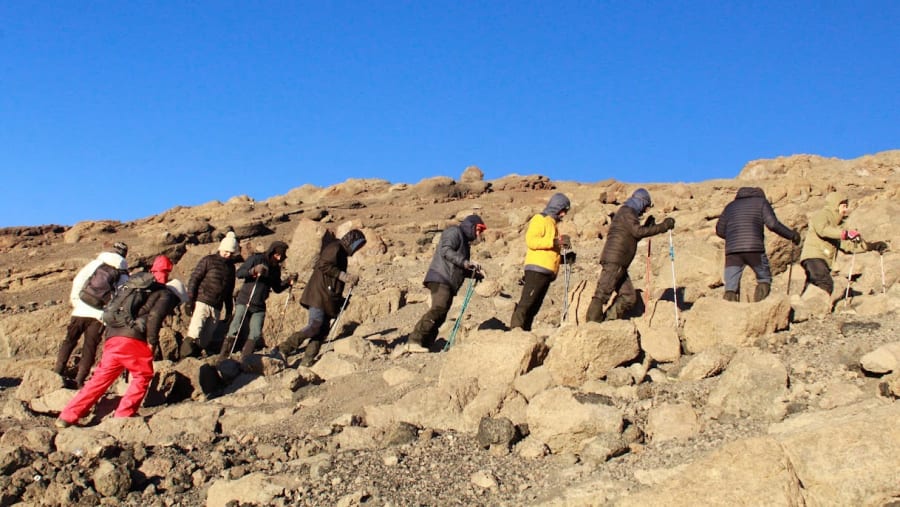
  • A short but steep trek leads to Barafu Camp, the base camp for the summit attempt. Rest, eat, and prepare for the final climb, which begins at midnight.
8
Day 08

Midnight Summit Push to Uhuru Peak and Descent

  • Trek Distance: 16 km (ascent & descent)
  • Trek Time: 10-14 hours
  • Habitat: Arctic & Moorland
  • Begin the summit attempt at midnight, trekking through the freezing Arctic zone to Stella Point (5,756m). Continue to Uhuru Peak (5,895m) for a once-in-a-lifetime sunrise view. After celebrating your achievement, descend to Millennium Camp for a well-earned rest.
9
Day 09

Descent to Mweka Gate and Return to Arusha

  • Trek Distance: 10 km
  • Trek Time: 4-5 hours
  • Habitat: Rainforest
  • A final descent through the rainforest leads to Mweka Gate, where you will receive your summit certificate. Transfer back to Arusha for a hot shower and a relaxing evening.
10
Day 10

Departure from Arusha

  • After breakfast, you can explore Arusha or transfer to Kilimanjaro International Airport (JRO) for your departure.
Shira Plateau, Lava Tower and Barranco Wall, Uhuru Peak at sunrise

Where this trip takes you

Shira Plateau, Lava Tower and Barranco Wall, Uhuru Peak at sunrise

The route

Where you'll travel

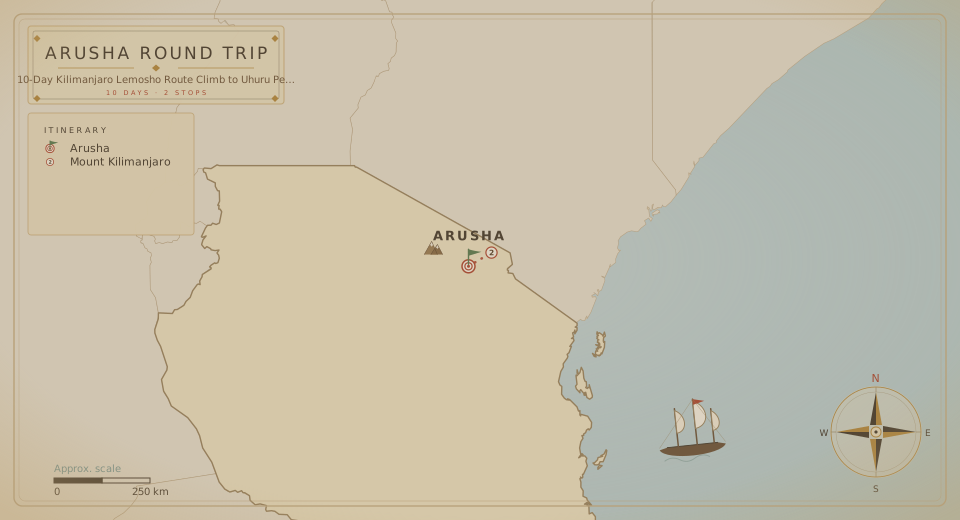
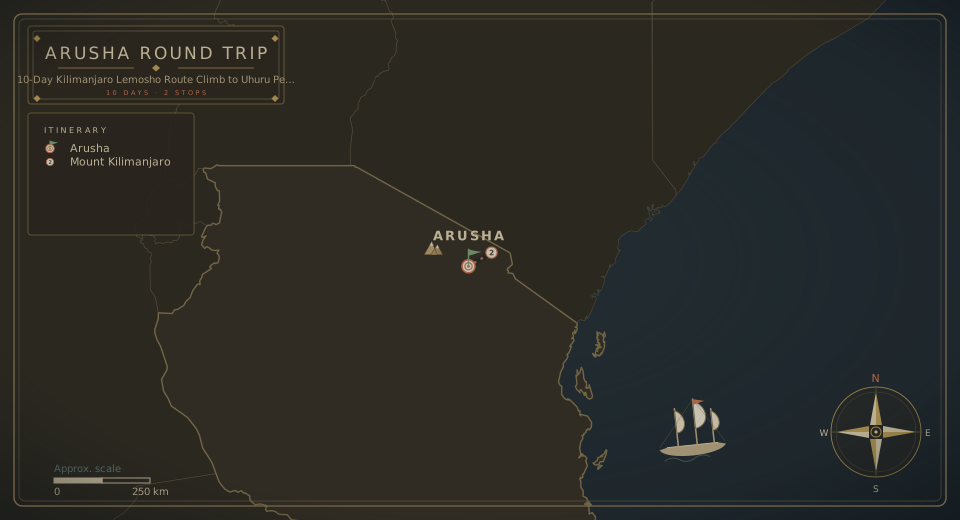
Tour route map
Round trip from Kilimanjaro Airport Rd 2 cities · 10 Days

The fine print

Trip details

What's Included

  • Pre & Post Trek Accommodation - Two nights in a hotel/lodge in Arusha (1 night before and 1 night after the trek) with breakfast
  • Transfers - Private airport pick-up and drop-off, and all transport to and from Kilimanjaro National Park
  • Park Fees & Permits - Kilimanjaro National Park entry fees, camping fees, and rescue fees
  • Professional Mountain Crew - Experienced English-speaking guides licensed by Kilimanjaro National Park, porters, and a cook
  • Meals & Drinks - Daily freshly prepared meals (breakfast, lunch, and dinner), including hot drinks (tea, coffee, hot chocolate) and purified drinking water
  • Camping Equipment - High-quality 4-season mountain tents, sleeping mats, and mess tents with chairs and tables
  • Safety Equipment - Oximeter, first aid kit, oxygen cylinders, and emergency evacuation coordination
  • Summit Certificate - A Kilimanjaro climbing certificate awarded upon successful completion

What's Not Included

  • International & Domestic Flights - Flights to and from Tanzania
  • Visa Fees - Tanzania tourist visa (typically $50-$100, depending on nationality)
  • Travel & Medical Insurance - Mandatory travel insurance covering high-altitude trekking and emergency evacuation
  • Personal Trekking Gear - Items such as sleeping bags, trekking poles, boots, and clothing (can be rented in Arusha)
  • Tips for Guides & Porters - Recommended $200-$300 per climber for the trekking team
  • Additional Accommodation & Activities - Extra nights in Arusha, safari tours, or other excursions
  • Personal Expenses - Souvenirs, snacks, soft drinks, and alcoholic beverages

This comprehensive package ensures a safe, comfortable, and well-supported trek to Uhuru Peak, giving you the best possible chance of a successful Kilimanjaro summit experience.

What to bring

1. Essential Trekking Gear

? Backpack (30-40L) - For carrying daily essentials like water, snacks, and extra layers.
? Duffel Bag (80-100L) - Carried by porters; should be waterproof or have a rain cover.
? Trekking Poles - Adjustable and lightweight poles for stability, especially on the Barranco Wall and descent.
? Sleeping Bag (4-Season, -10°C to -20°C) - A high-quality, warm sleeping bag for cold nights.
? Headlamp & Extra Batteries - Required for the midnight summit push and campsite use.

2. Clothing (Layering System)Base Layers (Moisture-Wicking)

? Thermal Tops & Bottoms - Essential for insulation.
? Trekking Shirts (3-5 pairs) - Moisture-wicking fabric (avoid cotton).

Insulating Layers (For Warmth)

? Fleece Jacket / Softshell - Lightweight and warm.
? Down Jacket (Heavyweight) - Essential for cold summit nights.

Outer Shell (Wind & Waterproof)

? Hard Shell Jacket & Pants - Waterproof, windproof, and breathable.
? Gaiters - Protect boots from mud, snow, and dust.

Trekking Pants & Shorts

? Hiking Pants (2-3 pairs) - Comfortable and quick-drying.
? Convertible Pants/Shorts - Useful for lower altitude warm climates.

Gloves & Headwear

? Gloves (Thin Inner & Thick Outer) - Waterproof and insulated.
? Balaclava / Neck Gaiter - Protects against wind and cold.
? Warm Beanie & Sun Hat - Beanie for warmth; sun hat for UV protection.
? UV-Blocking Sunglasses - Essential for glare and snow reflection.

3. Footwear

? Hiking Boots (Waterproof & Broken-In) - Strong ankle support and good grip.
? Camp Shoes / Sandals - For wearing at camp after trekking.
? Trekking Socks (4-5 pairs) - Wool or synthetic, moisture-wicking.
? Thermal Socks (1-2 pairs) - For summit night.

4. Personal Items & Accessories

? Water Bottles (2-3L Capacity) - Insulated bottles or hydration bladder for drinking water.
? Water Purification Tablets / Filter - Optional but useful.
? Trekking Snacks - Energy bars, dried fruits, nuts, and electrolyte powders.
? Sunscreen & Lip Balm (SPF 30+) - High UV protection.
? Personal First Aid Kit - Pain relievers, altitude sickness medication, blister plasters.
? Wet Wipes & Hand Sanitiser - No showers on the mountain!
? Toiletries & Small Towel - Travel-size soap, toothbrush, toothpaste.

5. Documents & Money

? Passport & Visa - Valid for Tanzania.
? Travel Insurance - Must cover high-altitude trekking and emergency evacuation.
? Cash (USD) - For tips, souvenirs, and extra expenses.

6. Optional but Recommended

? Camera / GoPro - Capture breathtaking moments.
? Notebook & Pen - For journaling your experience.
? Portable Power Bank - Keep devices charged (cold drains battery life quickly).

Final Tips:

  • Layering is key - temperatures change drastically from rainforest to Arctic summit zones.
  • Break in your boots before the trek to avoid blisters.
  • Stay hydrated - drink at least 3-4 litres of water daily.
  • Pack light but efficiently - porters carry up to 15kg per person.

Know before you go

Climbing Mount Kilimanjaro is a challenging yet rewarding adventure, and proper preparation is essential for a successful and enjoyable experience. Here's everything you need to know before you go.

1. Best Time to Climb Kilimanjaro

✅ Dry Seasons (Best Time):

  • January to mid-March - Warm temperatures and clear skies.
  • June to October - Peak climbing season with stable weather.

❌ Rainy Seasons (More Challenging):

  • April to May - Heavy rain and muddy trails.
  • November to mid-December - Short rains but still climbable.

2. Physical Fitness & Training

  • Cardio Training - Regular hiking, running, or cycling improves endurance.
  • Strength Training - Focus on legs, core, and back for carrying a backpack.
  • Hiking Practice - Train on steep inclines with a loaded backpack to simulate trekking conditions.
  • Altitude Training - If possible, practice hiking at high altitudes or use altitude masks.

3. Altitude Sickness & Acclimatization

  • Symptoms: headache, nausea, dizziness, fatigue, and shortness of breath.
  • Prevention:
    ✅ Follow the 'climb high, sleep low' principle.
    ✅ Drink 3-4 litres of water daily to stay hydrated.
    ✅ Go slowly (Pole Pole) - walk at a steady pace to adjust to the altitude.
    ✅ Consider Diamox (consult your doctor for altitude medication).

4. Travel Documents & Vaccinations

✅ Passport - Must be valid for at least 6 months beyond travel dates.
✅ Tanzania Visa - Can be obtained on arrival ($50-$100) or online before travel.
✅ Yellow Fever Vaccination - Required if traveling from a country with yellow fever risk.
✅ Recommended Vaccines: Hepatitis A & B, Typhoid, Tetanus, and Malaria prophylaxis.

5. Packing Essentials

  • Layered clothing for varying climates.
  • Waterproof hiking boots (broken in before the trek).
  • Headlamp with extra batteries for the midnight summit attempt.
  • Snacks and energy bars for extra stamina.
  • Travel insurance covering high-altitude trekking.

Check the full packing list to ensure you're well-equipped.

6. Accommodation & Food on the Mountain

Logistics

Meeting & route

Meeting point
Kilimanjaro Airport Rd, Tanzania
Tour start
Kilimanjaro Airport Rd, Tanzania
Tour ends at the same location as the start point.
End of the journey

Your 10 days finish where they began, in Kilimanjaro Airport Rd.

Watch the tourHQ film Watch the film

Create your own adventure

Can't find the perfect tour? Tailor your dream trip.

  • Tell us your destination, dates and group size.
  • Our travel experts and local guides design a tailored itinerary, just for you.
  • Enjoy your trip with peace of mind, knowing everything is taken care of.
Plan my holiday

Say goodbye to travel stress.

Starting from

USD 2,685 /person
Book This Tour

When

Travellers

Total