Peru · Mountain Exploration

4-Day Nevado Chopicalqui Climb from Huaraz via Quebrada Llanganuco

4 Days Round trip from Huaraz Hard pace

The journey

Trip highlights
  • 01 Expedition to Nevado Chopicalqui (6,354 m) in the Cordillera Blanca
  • 02 Trekking and technical climbing in the Andes, the world's highest tropical mountain range
  • 03 Panoramic summit views of the Cordillera Blanca
  • 04 Suitable for experienced climbers with alpine skills

Embark on a thrilling 4-day mountaineering expedition to Nevado Chopicalqui in the breathtaking Cordillera Blanca of the Andes. This climb combines trekking and technical mountaineering along glacial terrain, rewarding experienced climbers with panoramic summit views. Designed for those with solid alpine skills, the expedition includes beautifully situated camps at increasing altitude and a demanding ascent on one of the most challenging peaks in the range.

Summit Day: Start early for the ascent to the summit of Chopicalqui (6,345 m), crossing seracs, crevasses, and challenging technical sections.

From the itinerary

At a glance

What this trip includes

Duration 4 Days
Tour type Shared
Activity level Hard
Accommodation Included · Budget
Transport Included
Wheelchair access No
City Huaraz
Languages English, Spanish

Day by day

The itinerary

1
Day 01

Huaraz to Chopicalqui Moraine Camp via Quebrada Llanganuco

  • Morning: Depart from Huaraz (3,100 m) after breakfast. We begin by preparing the mountaineering equipment.
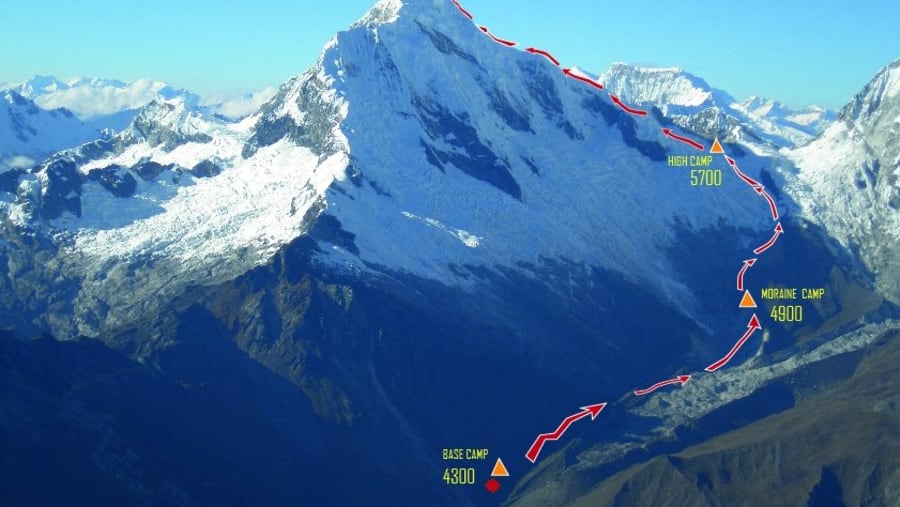
  • Transfer: Travel by private transport for 3-3.5 hours, passing through Quebrada Llanganuco and heading toward Chopicalqui Base Camp (4,350 m).
  • Trekking: Upon arrival at Base Camp, begin the ascent to Moraine Camp (4,900 m), which takes approximately 5 hours.
  • Overnight: Stay at Moraine Camp. Meals included: Lunch and Dinner.
2
Day 02

Ascent from Moraine Camp to Chopicalqui High Camp

  • Morning: Begin the day with an ascent over the rocky moraine, then continue onto the glacier, crossing crevasses and navigating the slopes.
  • Climb: Reach High Camp (5,350 m) after approximately 5-6 hours of glacier travel.
  • Overnight: Stay at High Camp. Meals included: Breakfast, Lunch, and Dinner.
3
Day 03

Summit Chopicalqui and descend to Base Camp

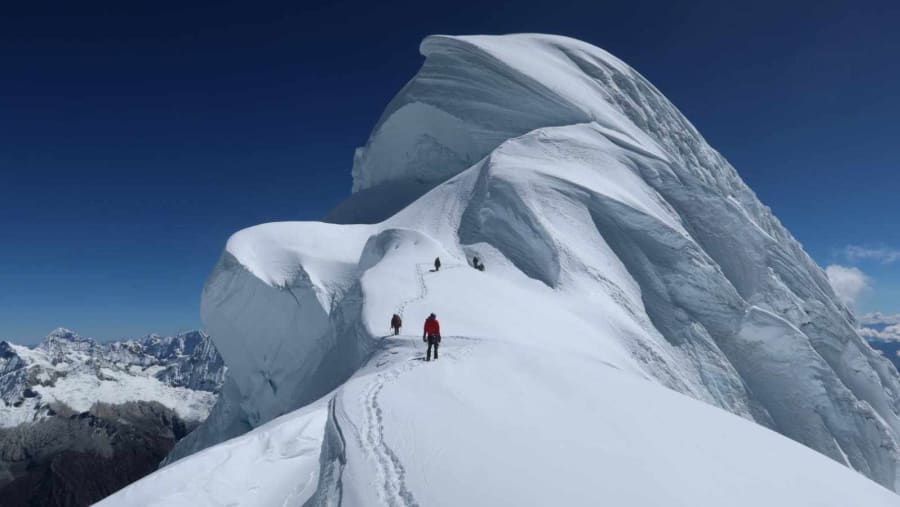
  • Summit Day: Start early for the ascent to the summit of Chopicalqui (6,345 m), crossing seracs, crevasses, and challenging technical sections. The final stretch involves a 75º-80º slope that may require climbing for 8-10 meters.
  • Summit: Reach the summit for panoramic views of the Cordillera Blanca before beginning the descent.
  • Descent: Return to High Camp or Moraine Camp, then continue down to Base Camp (4,350 m). This descent takes 10-13 hours.
  • Overnight: Stay at Base Camp. Meals included: Breakfast, Lunch, and Dinner.
4
Day 04

Return from Chopicalqui Base Camp to Huaraz

  • Morning: After breakfast, prepare for the return journey. Trek from Base Camp (or Moraine Camp) to the highway.
  • Transfer: Board the private bus and head back to Huaraz, saying goodbye to the beautiful Llanganuco Valley.
  • Afternoon: Arrive in Huaraz and check into the hotel for overnight accommodation. Meals included: Breakfast and Lunch.

This itinerary provides a detailed schedule for the ascent of Chopicalqui, with overnight stays at Moraine Camp, High Camp, and Base Camp, as well as stunning views from the summit of one of the most challenging peaks in the Cordillera Blanca.

Quebrada Llanganuco, Chopicalqui summit, Moraine Camp, Huaraz

Where this trip takes you

Quebrada Llanganuco, Chopicalqui summit, Moraine Camp, Huaraz

The route

Where you'll travel

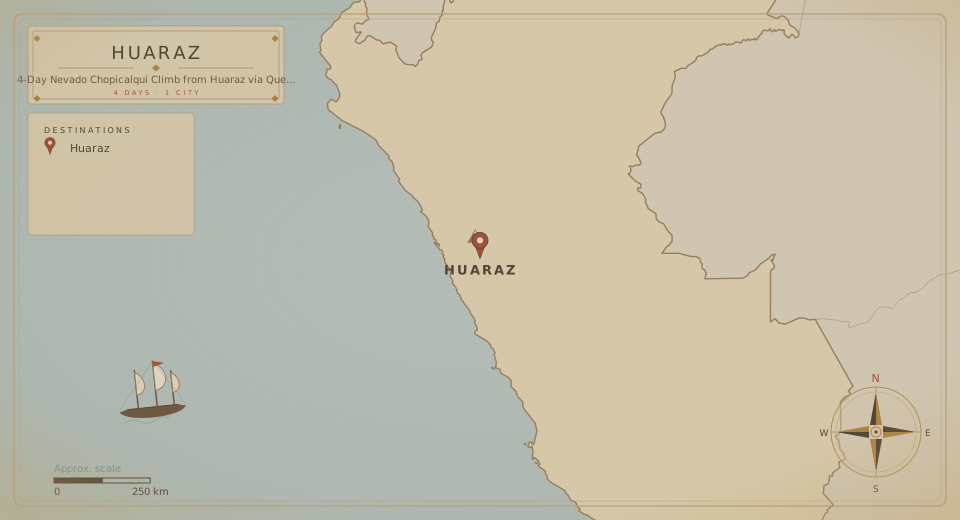
Tour route map
Round trip from Huaraz 1 city · 4 Days

The fine print

Trip details

What's Included

  • Peruvian qualified and experienced local guide(s)
  • All meals during the tour
  • Camping tents (2 persons)
  • Porters for Chopicalqui (1 porter for every 2 pax)
  • 1 cook and helper (from 6 pax)
  • Kitchen equipment
  • Transportation as per the tour schedule / Huaraz

What's Not Included

  • International round-trip flights to Lima, Peru
  • Transfer from the airport for bookings of individual flights with different arrival/departure times
  • Exit tax at the airport in Lima
  • Travel accident and health insurance
  • Luggage insurance and trip cancellation
  • Meals in restaurants in Lima and Huaraz
  • Personal expenses
  • Acclimatization tour
  • Entrance fees to Huascarán National Park
  • Transfer from the hotel to the airport and bus station
  • Domestic flight airline ticket LC-Peru
  • Hotel Casa Andina - 2 nights in Lima
  • Hotel San Sebastián - 4 nights in Huaraz
  • Pick-up at the airport in Lima to the hotel
  • Personal equipment (such as boots, ice axe, crampons, harness, sleeping bag, mat, Gore-Tex, etc.)
  • Tips

What to bring

For a successful and safe expedition to Chopicalqui, it is essential to bring the right gear and equipment. Here is a comprehensive list to ensure you are fully prepared for the 4-day climb:

  • Clothing
    • Base Layer: Thermal underwear (top and bottom)
    • Base Layer: Moisture-wicking socks (several pairs)
    • Mid Layer: Fleece or insulated jacket
    • Mid Layer: Light down jacket
    • Outer Layer: Waterproof and windproof jacket (Gore-Tex or similar)
    • Outer Layer: Waterproof and windproof pants
    • Outer Layer: Hard-shell pants for glacier travel
    • Climbing Gear: Climbing harness
    • Climbing Gear: Helmet
    • Climbing Gear: Ice axe
    • Climbing Gear: Crampons (compatible with your boots)
    • Climbing Gear: Carabiners (locking)
    • Climbing Gear: Rappel device (e.g., ATC)
    • Footwear: Mountaineering boots (rigid, waterproof, and insulated)
    • Footwear: Lightweight trekking shoes (for the approach and descent)
    • Footwear: Gaiters (to protect against snow and rocks)
    • Headwear: Warm hat (for camp and summit)
    • Headwear: Balaclava or face mask (for summit day)
    • Headwear: Sun hat/cap (for lower elevations)
    • Gloves: 1 pair of lightweight gloves (for trekking)
    • Gloves: 1 pair of medium-weight gloves (for glacier travel)
    • Gloves: 1 pair of insulated gloves (for summit day)
    • Socks: Wool or synthetic socks (several pairs)
  • Camping Gear
    • Sleeping Bag: Sleeping bag rated for -10°C (14°F) or lower
    • Sleeping Bag: Sleeping bag liner (optional, for added warmth)
    • Sleeping Pad: Inflatable or foam pad for insulation from the cold ground
    • Tent: Lightweight, 2-person mountaineering tent (provided by the guide company)
    • Camping Stove and Fuel: Small, lightweight stove (usually provided by the guide company)
    • Camping Stove and Fuel: Fuel canisters or liquid fuel (check with the guide)
    • Cooking and Eating Utensils: Small cooking pot
    • Cooking and Eating Utensils: Eating utensils (spork, bowl, cup)
    • Cooking and Eating Utensils: Water bottle or hydration system (at least 2 liters capacity)
    • Headlamp: With extra batteries (important for early morning starts)
  • Personal Equipment
    • Backpack: A 30-40 liter daypack for summit day
    • Backpack: A larger backpack (50-60 liters) for your overnight gear
    • Waterproof bags: To keep gear dry, especially in the glacier camp
    • Sunscreen: High-SPF (SPF 50 or higher) for face and lips
    • Sunglasses: High UV protection (Category 4 recommended for glacier glare)
    • Toiletries: Toothbrush, toothpaste, small towel, etc.
    • Personal Medications: Bring any necessary prescription medications
    • Personal Medications: Basic first-aid items (band-aids, blister treatment, pain relievers)
    • Camera (optional): Small, durable camera to capture the stunning views
  • Technical Gear (usually provided by the guide, but check)
    • Rope (for glacier travel)
    • Ice screws (for belaying)
    • Snow pickets and other technical climbing tools
    • Fixed ropes (for certain sections of the climb)
  • Miscellaneous
    • Snacks: High-energy food like granola bars, nuts, chocolate, etc.
    • Cash: For tips or any unforeseen expenses

Important Notes:

  • Altitude Sickness: Ensure you have taken necessary precautions to avoid altitude sickness, such as acclimatization days and medications.
  • Communication: Carry a satellite phone or personal locator beacon if not provided by the guide company.
  • Weather: Be prepared for cold, windy, and sometimes wet conditions. The weather can change quickly at high altitudes.

By bringing the right gear and equipment, you can enjoy a successful and safe ascent of Chopicalqui. Ensure all gear is tested and in good condition before departure!

Know before you go

Before embarking on the 4-day Chopicalqui climb, it is essential to be well prepared, not only in terms of physical fitness but also with regard to logistics, safety, and the environment. Here are important things to know before you go:

  1. Physical Preparation
    • Chopicalqui (6,345 meters / 20,814 feet) is a challenging climb suitable for experienced climbers who are physically fit and accustomed to high-altitude environments.
    • Acclimatization: Prior to the climb, it is essential to acclimatize properly in Huaraz (3,100 meters) and other areas at higher altitudes (4,000-5,000 meters). This will help prevent altitude sickness.
    • Fitness: Prepare for strenuous physical activity, including glacier travel, ice climbing, and long summit days. Regular cardio, strength training, and hiking at altitude are recommended.
  2. Altitude Considerations
    • Altitude Sickness: The altitude of Chopicalqui presents a risk of altitude sickness, even for experienced mountaineers. Symptoms can include headache, nausea, dizziness, and fatigue. Be prepared to recognize and manage altitude sickness, and inform your guides immediately if you experience symptoms.
    • Hydration and Rest: Drink plenty of water and take regular breaks to allow your body to adjust to the thinning air.
  3. Gear and Equipment
    • Essential Gear: Ensure you have all required mountaineering gear, including crampons, ice axe, helmet, and a high-quality sleeping bag rated for -10°C (14°F) or colder temperatures. Many items may be available for rent, but confirm with the guide company.
    • Personal Safety: The technical sections of the climb require expertise in ice climbing and glacier travel. If you are unsure about your experience, consider additional training before the trip.
  4. Weather and Climate
    • Variable Conditions: Weather in the Cordillera Blanca is highly variable and can change rapidly. Be prepared for cold temperatures, strong winds, and the possibility of snow. It is important to follow the guidance of your guides on when and how to manage different weather conditions.
    • Summit Day: Summit day typically involves early starts and extended hours of climbing. Be prepared for challenging conditions at the summit, including a steep section with 75°-80° slopes.
  5. The Itinerary
    • Day 1: Travel from Huaraz to Chopicalqui Base Camp. It includes trekking through the scenic Quebrada Llanganuco and a 5-hour climb to Moraine Camp.
    • Day 2: Climb to High Camp on the glacier, crossing crevasses and technical sections.
    • Day 3: Summit day, requiring a full day of strenuous climbing, ice climbing, and glacier navigation. Descend to Base Camp after summiting.
    • Day 4: Return to Huaraz after breakfast and a descent to the highway via Quebrada Llanganuco.
  6. Food and Hydration
    • Meals: Meals are provided during the climb (Breakfast, Lunch, and Dinner), with a focus on high-energy food. You will need to bring additional snacks like energy bars, nuts, and chocolate.
    • Water: It is crucial to stay hydrated during the climb. Carry a hydration system or water bottles, and treat water if needed.
  7. Risk and Safety
    • Guides and Support: This is a technical climb, and it is essential to have an experienced guide. All guides are typically certified in high-altitude mountaineering and rescue techniques.
    • Rescue Plans: Your guides will have an emergency plan in case of any issues, including altitude sickness, injury, or severe weather. Communication devices, such as satellite phones, may be available for emergencies.
  8. Travel and Logistics
    • Getting to Huaraz: You can fly into Lima and take a bus or private transport to Huaraz (approximately 7-8 hours).
    • Accommodation: You will stay in a hotel in Huaraz before and after the climb. During the climb, you will camp in mountain base camps at progressively higher altitudes.
    • Transportation: Private transport is provided from Huaraz to the base of the mountain and back.
  9. Environmental Responsibility
    • Leave No Trace: The Cordillera Blanca is a delicate and protected environment. Always follow Leave No Trace principles to minimize your environmental impact.
    • Waste Management: Carry all waste out of the mountains, including toilet paper and used hygiene products. Your guide will provide instructions on how to manage waste at high altitudes.
  10. Cultural Considerations
    • Respect Local Culture: Huaraz is home to indigenous communities with rich traditions. Always show respect for local customs and people, particularly when traveling through small villages or interacting with local guides.
  11. Insurance
    • Travel Insurance: Ensure you have travel insurance that covers mountain climbing, including rescue and evacuation costs at high altitudes.
    • Rescue Insurance: It is highly recommended to purchase rescue insurance, especially for high-altitude expeditions like Chopicalqui. This insurance can cover any potential evacuation from the mountain.

By knowing these essential details, you can better prepare for your Chopicalqui 4-day climb, ensuring a safe, enjoyable, and successful experience. Always communicate closely with your guides, and never hesitate to ask for advice or assistance.

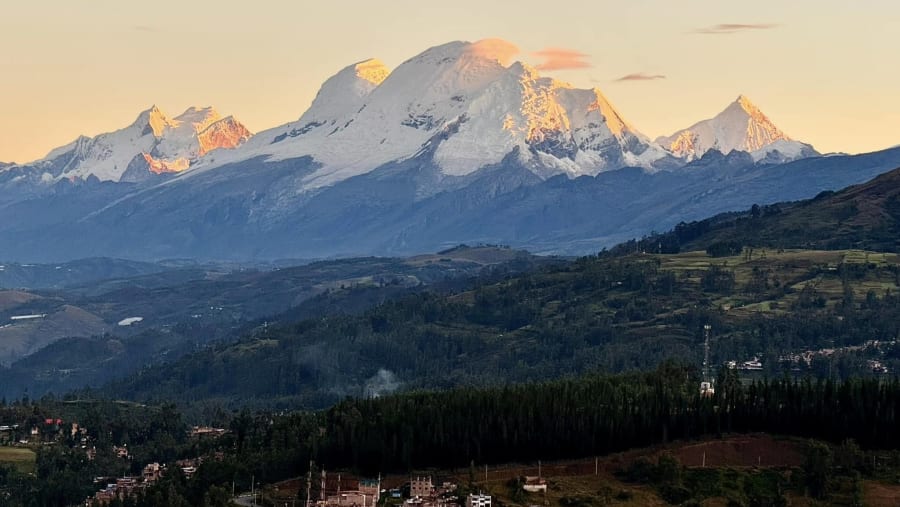
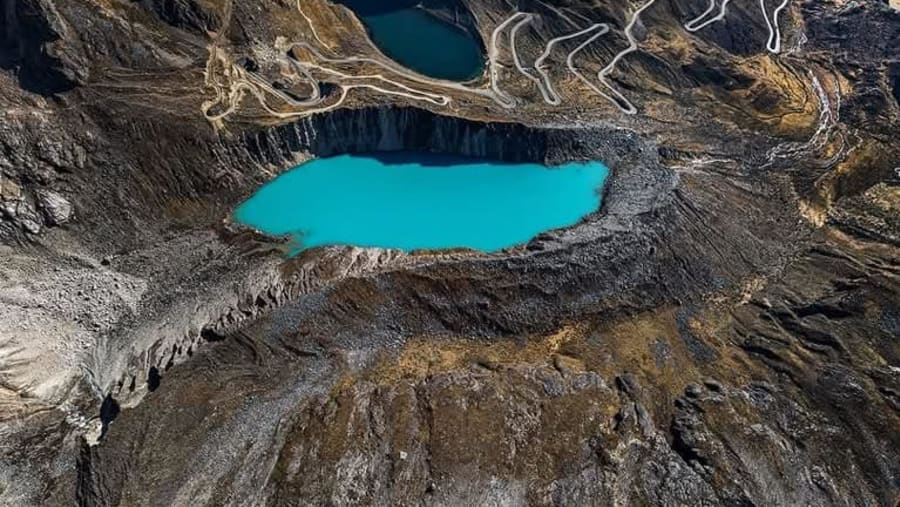
Highlights of the Cordillera Blanca. The highest tropical mountain range in the world, the Cordillera Blanca is part of the spectacular Andes that form the spine of South America. A mecca for hikers and outdoor enthusiasts, the region boasts over 50 peaks that exceed 15,000 feet, 700 glaciers, and 300 lakes.

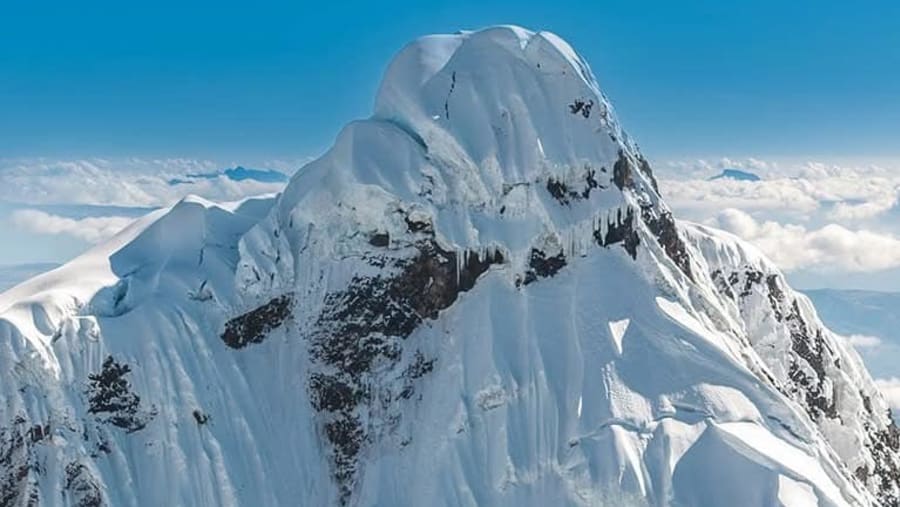
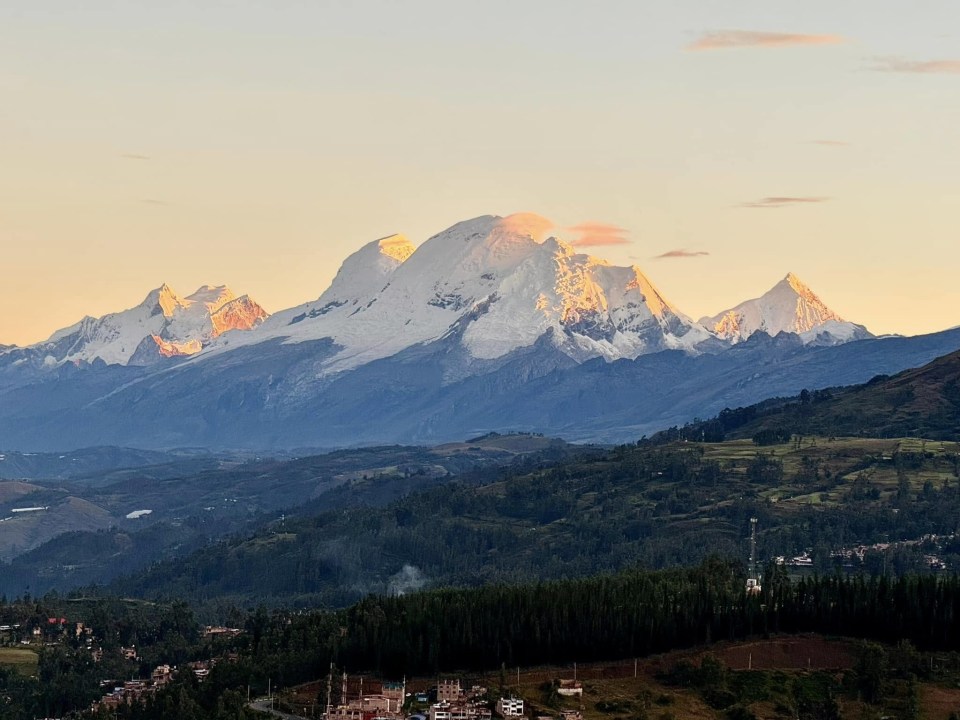
About Chopicalqui Peak: Chopicalqui is the third peak of the Huascarán Massif, also located in the Cordillera Blanca, between the two peaks of Huascarán and Contrahierbas. With an elevation of 6,345 meters, it is the fifth-highest mountain in the department (administrative region) of Ancash and the fourth-highest in the Cordillera Blanca. It is a demanding mountain with some technical climbing, and this requires previous climbing experience.

Ascent of Chopicalqui (20,847 ft.)/(6354 m) via the classic Southwest Ridge. On the summit of Chopicalqui, many consider this to be the best view in the Cordillera Blanca.

Chopicalqui is appropriate for people with significant experience and alpine skills - managing rope and crampons on snow and ice walls and using good safety technique. In some years, there can be steep sections of ice climbing that require the use of two ice axes, and previous experience in their use is recommended.

Logistics

Meeting & route

Meeting point
Huaraz, Perú
Tour start
Huaraz, Perú
Tour ends at the same location as the start point.
End of the journey

Your 4 days finish where they began, in Huaraz.

Watch the tourHQ film Watch the film

Create your own adventure

Can't find the perfect tour? Tailor your dream trip.

  • Tell us your destination, dates and group size.
  • Our travel experts and local guides design a tailored itinerary, just for you.
  • Enjoy your trip with peace of mind, knowing everything is taken care of.
Plan my holiday

Say goodbye to travel stress.

Starting from

USD 1,550 /person
Book This Tour

When

Travellers

Total