Know Before You Go: Ojos del Salado Climb
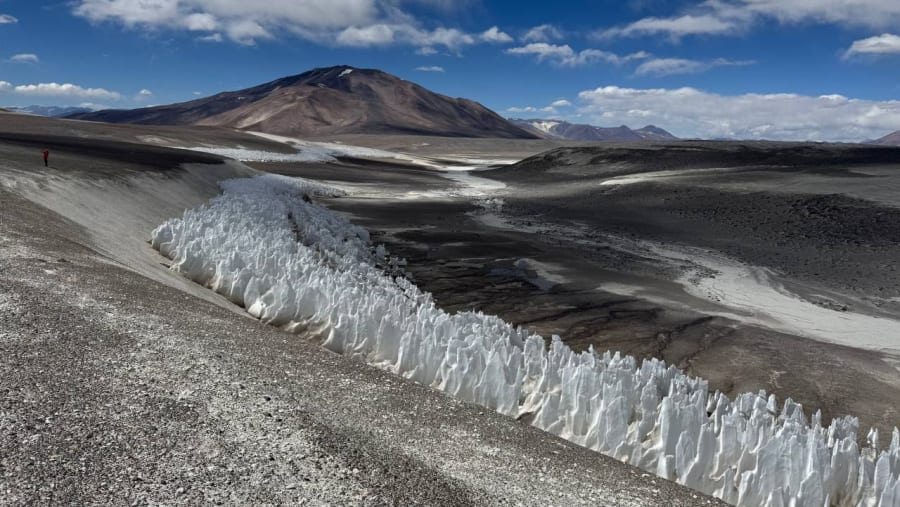
Ojos del Salado, located in the Atacama Desert in Chile, is the highest active volcano on Earth and a challenging climb for experienced mountaineers. Here's what you need to know before embarking on this high-altitude adventure:
- Weather and Climate:
- High desert climate: Expect significant temperature variations, with daytime temperatures reaching above 25°C (77°F) and nighttime temperatures dropping well below freezing, as low as -25°C / -13°F.
- Extreme conditions: The desert environment presents harsh conditions, including strong winds, cold temperatures, and intense sun exposure. Proper gear is essential to handle these extreme conditions.
- Altitude: The summit reaches 6,893 meters (22,615 feet). Be prepared for altitude sickness and proper acclimatization.
- Climbing Season:
- Official season: The official climbing season for Ojos del Salado runs from November 1st to March 31st.
- Off-season: For expeditions outside this period, special permits are required. If you're planning a climb outside these dates, contact local authorities or the expedition team to arrange the necessary permits.
- Permits Required:
- DIFROL permit: A climbing permit granted by the State Borders and Limits Directorate (DIFROL), free of charge. It is recommended to begin the paperwork at least 20 business days in advance.
- Local permit: A second permit must be obtained in Copiapó. This permit is valid for 12 days inside the park and costs around USD 200.
- Accommodation and Camps:
- Valle Chico: A starting point at 3040 meters for acclimatization, located in the Atacama Desert.
- Laguna Santa Rosa: Situated at 3170 meters, this location is ideal for acclimatization and offers the chance to see desert wildlife like foxes, flamingos, guanacos, and vicuñas.
- Laguna del Negro Francisco: A remote camp at a higher altitude, featuring a mountain refuge with basic amenities.
- Laguna Verde: Set at 4340 meters, this area includes hot springs and ample space for base camp setup.
- Atacama Refuge: At 5260 meters, accessible by vehicle with a 2-hour walk to reach the site.
- Tejos Refuge: Positioned at 5837 meters, it provides basic shelter and beds for an overnight stay before the summit push.
- Summit Information:
- Summit access: Reaching the summit requires crossing a 100-meter snowfield with a 35º slope, as well as a 30-meter rock climb at an altitude of 6860 meters. It's not overly technical, but it requires some climbing skills and good acclimatization.
- Altitude and Acclimatization:
- Important consideration: Due to the extreme altitude, proper acclimatization is essential. It is strongly recommended that climbers have prior experience with high-altitude peaks such as Aconcagua, Llullaillaco, or Tupungato.
- Acclimatization locations: The program is designed for individuals who have already been acclimatized to altitudes above 6,500 meters within the past week.
- Equipment and Clothing:
- Clothing: The climb demands specific clothing suited for high-altitude desert conditions. Be prepared for extreme cold and high winds. Check your gear thoroughly before the expedition.
- Climbing gear: You'll need a range of technical gear, including ice axes, crampons, mountain boots, and a sleeping bag rated for -20°C or lower.
- Weather protection: Don't forget to bring sunscreen, lip balm with SPF, and sunglasses to protect against the harsh UV rays at high altitudes.
- Health and Fitness:
- Physical condition: This is a physically demanding expedition, requiring solid fitness and stamina. If you are not properly acclimatized or physically prepared, the climb could be dangerous.
- Altitude sickness: Be prepared for potential altitude sickness symptoms, such as headaches, nausea, and dizziness. Stay hydrated, and ensure you have a proper acclimatization plan.
- Emergency and Safety:
- Risks: Climbing at such high altitudes involves risks like altitude sickness, severe weather, and technical terrain. Always follow the advice of your guides and keep emergency equipment on hand.
- Rescue services: In the event of an emergency, it is crucial to have rescue insurance and be aware of evacuation procedures. Make sure you have reliable contact with your expedition team.
- Travel and Logistics:
- Flights: International and national flights are not included. Be sure to arrange your flights to Chile and any internal transportation to Copiapó.
- Transfers: Transfers from the airport to the starting point will be arranged by your guide or expedition company.
- Insurance: It is strongly recommended to have travel and rescue insurance to cover potential incidents during the expedition.
By understanding these essential factors, you'll be well prepared to face the challenges and enjoy the incredible experience of summiting Ojos del Salado. Safe climbing!
Significant information for climbing to Ojos del Salado
Weather
High desert is the prevailing climate in the sector. There are very large temperature variations between day and night, reaching temperatures below -20ºC. If you want to climb to the Ojos del Salado summit or Aconcagua, it is fundamental to have very good technical clothing and equipment that meets these climatic requirements.
Climbing permit
For the expedition to Ojos del Salado, it is necessary to obtain two climbing permits. One is granted by the State Borders and Limits Directorate (DIFROL), which has no cost; it is only advisable to start the paperwork 20 business days in advance. The second permit to climb Ojos del Salado must be obtained in Copiapó, is valid for 12 days inside the park, and has a very reasonable cost (USD 200).
Climbing season
The official climbing season for Ojos del Salado starts on November 1st and runs to March 31st of the following year. If you want to do an expedition outside those dates, you have to ask for a special permit. We could help you obtain it.
Areas and camps in Ojos del Salado
Valle Chico: An interesting oasis in the Atacama Desert. It is located at 3040 meters, making it the perfect place to start the expedition and the acclimatization process.
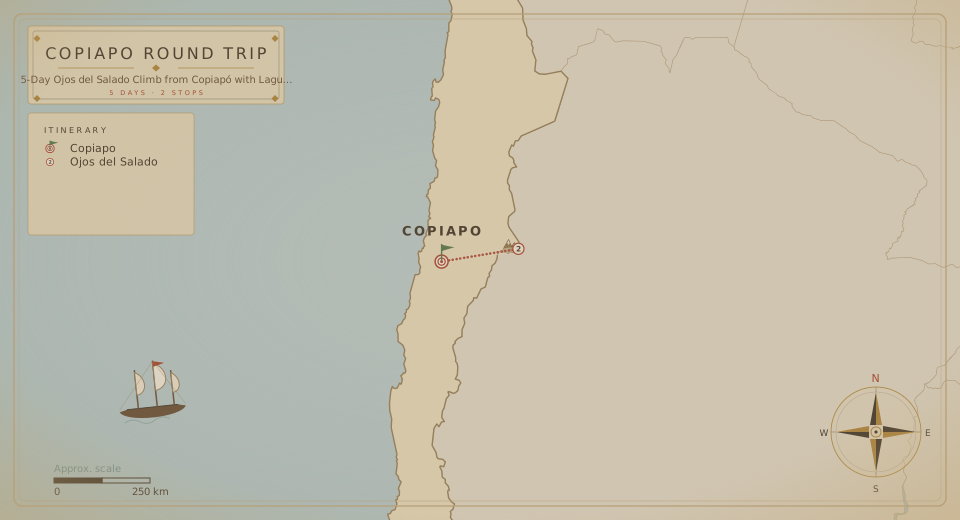
Laguna Santa Rosa: It is located at an altitude of 3170 masl and 154 km away from Copiapó. The ground is hard and muddy near the lagoon. It is an important part of the Nevado de Tres Cruces National Park, where it is possible to see foxes, flamingos, guanacos, and vicuñas.
Laguna del Negro Francisco: It is also located inside the Nevado de Tres Cruces National Park. It is farther away than other camps, but it is worth visiting for acclimatization trekking. It has a mountain refuge with basic amenities.
Laguna Verde: It is located at 4340 masl. It has a hot springs sector. It is a very appropriate place to set up base camp because it has ample land and also stone shelters (pircas), which help windstorm tents withstand these hard conditions.
Atacama Refuge: Located at 5260 masl, it is very convenient to arrive there by vehicle. You only have to walk the last two hours.
Tejos Refuge: At a height of 5837 masl, this refuge is provided with beds where you could spend a comfortable night.
Summit: To access the small summit of Ojos del Salado, you have to cross several characteristic and important sectors, such as a 100-meter-long snowfield with a 35º slope. It is also necessary to carry out a rock climb of approximately 30 meters without much technical difficulty and at a height of 6860 masl.
Additional Information:
- 1 guide every 3 passengers
- U$ 100 per person if you want a single room; please let us know.
- U$ 100 per person if you want a single tent; please let us know.
- U$ 100 if you have any dietary restriction such as celiac, vegan, vegetarian, etc.
- Hotel lodging includes breakfast (see itinerary).
- DIFROL permit is free of charge.
- We recommend you travel with small bills.
- Weather can get as low as -25oC / -13oF in the area.
High Mountain is NOT responsible for:
- Personal services (laundry, snacks, drinks, meals in restaurants, etc.)
- Personal mountain equipment
- Expenses incurred in rescues or early abandonment of the expedition
- Delays due to flights or any form of transportation, which are your responsibility
- Meteorological changes that may affect the expedition
Clothing and proper equipment
In order to avoid any injury, we strongly recommend that all expedition members have the mountain equipment described below. Each piece of equipment will help on summit day, which may be terribly cold, even -35ºC / -33ºF. Proper equipment is crucial to achieve our goal.
Upper body parts
- Sun hat
- Wool hat
- Balaclava / ski mask
- 2 or 3 long sleeve polypropylene shirts or similar
- Polar windstopper, soft-shell, or similar
- Waterproof jacket (Gore Tex, Triple Point, or similar)
- Down feather parka with hood
- Polypropylene gloves
- Waterproof gloves
- Down feather mittens (-25 ºC / -13ºF)
Down body parts
- 1 polypropylene long underwear (or similar)
- 2 trekking pants
- Windproof pants (Gore Tex, Triple Point, or similar)
- 2 or 3 pairs of thin socks (liners)
- 2 or 3 pairs of thermal socks
- Gaiters
- Trekking boots (approach)
- Mountain boots (double plastic or leather boots)
Personal equipment
- Trekking stick (telescopic)
- 2 carabiners
- 2 prusik cords
- Helmet
- Harness
- Ice axe 70 cm or more
- Crampons
- Sleeping bag (Tº lower than -20ºC)
- Inflatable and foam mattress
- Expedition duffel or backpack (approximately 100 liters)
- Daypack (40 liters)
- Headlamp and extra batteries
- Sunglasses (category 3 or 4)
- Goggles
- 2 bottles of water (1 liter each)
- Thermos flask (1 liter)
- Sunscreen (SPF 40)
- Lip sunscreen (SPF 30) (Blistex)
- Whistle, emergency mirror, and pocket knife
- Toiletries
- Digital camera, book, MP3, binoculars [optional]
- Personal repair kit