Lo que debes saber antes de ir: Ascenso al Alpamayo en 6 días
Escalar el Alpamayo, una de las montañas más hermosas del mundo, requiere una planificación cuidadosa, preparación y conocimiento. Aquí encontrará todo lo que necesita saber antes de embarcarse en esta increíble aventura de escalada de 6 días.
Descripción general de la escalada
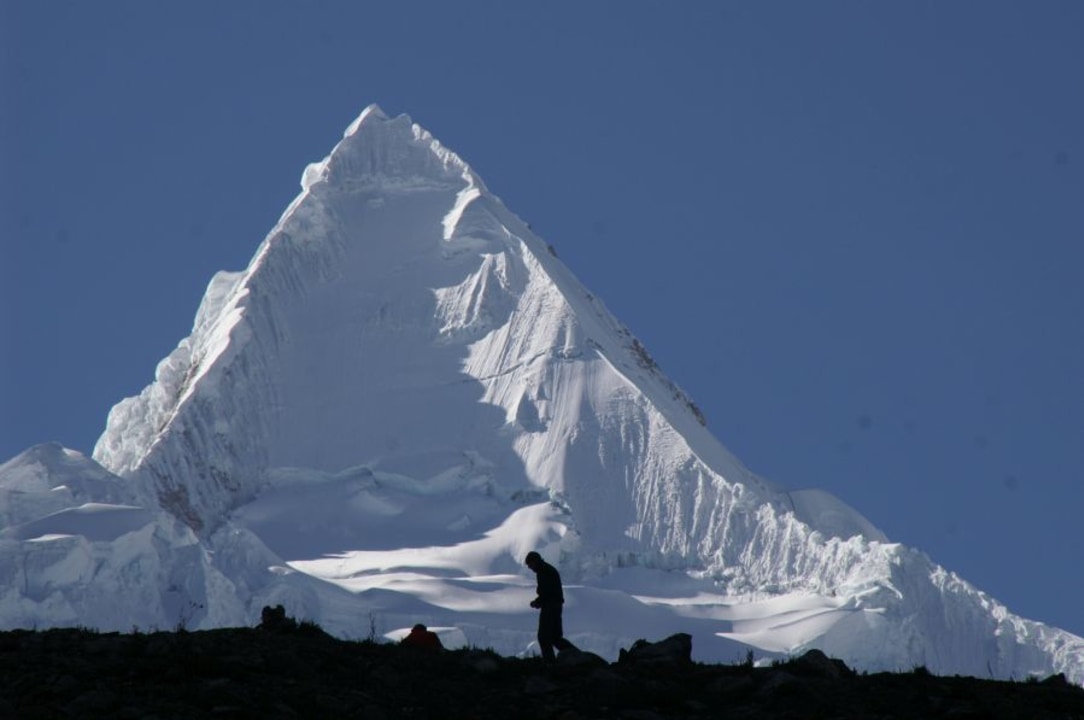
El Alpamayo (5.947 m/19.511 pies) se encuentra en la Cordillera Blanca de Perú. Conocido por su icónica forma piramidal, se considera uno de los picos más hermosos del mundo. Aunque es un desafío, el Alpamayo ofrece a los escaladores una experiencia inolvidable con sus aspectos técnicos, ascensos empinados y vistas gratificantes desde la cumbre.
El itinerario
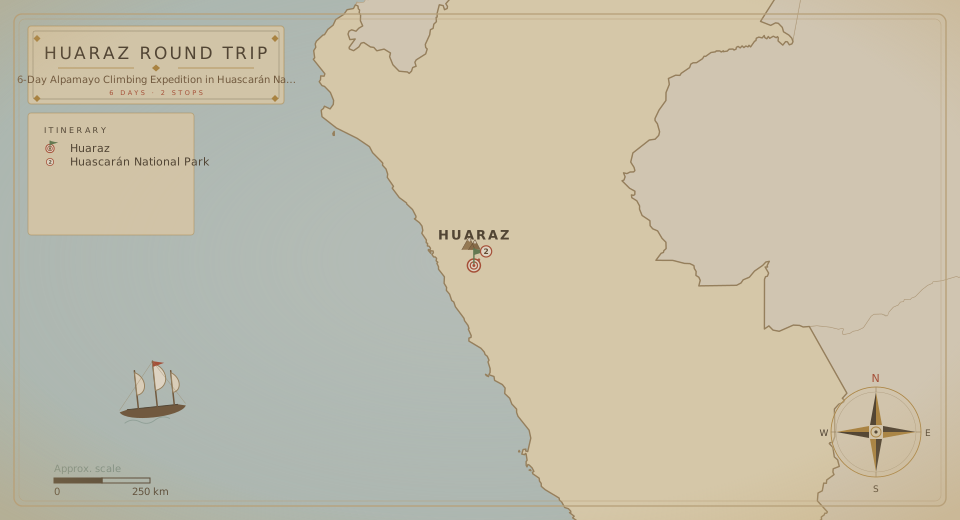
Día 1: Llegada a Huaraz
- Llegada a Huaraz (ciudad de entrada para la escalada en la Cordillera Blanca).
- Conozca a su guía y equipo.
- Reunión informativa sobre la expedición de escalada y revisión del equipo.
Día 2: Caminata de aclimatación
- Caminata de aclimatación en el Parque Nacional Huascarán (generalmente a una mayor altitud para ayudar a prepararse para la escalada).
- Pasaremos la noche en el campamento base o en un albergue cercano.
Día 3: Del campamento base al campamento alto (4.700 m/15.419 pies)
- Caminata hasta el campamento alto, ubicado a unos 4.700 metros (15.419 pies).
- Montar campamento y descansar para el ascenso.
Día 4: Día de la cumbre
- Salida temprana (alrededor de las 2:00 AM).
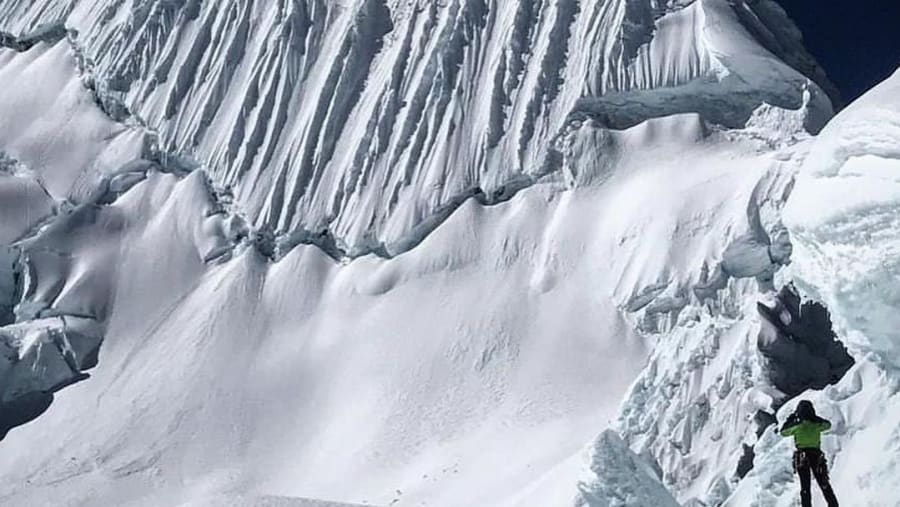
- Escala la famosa cara norte del Alpamayo, que requiere habilidades técnicas como escalada en hielo y navegación en grietas.
- Reach the summit (5,947m / 19,511 ft) and enjoy breathtaking views of the Cordillera Blanca and the surrounding peaks.
- Descend back to base camp or high camp.
Day 5: Return to Base Camp
- Descend safely back to the base camp for rest and recovery.
- Celebrate the summit achievement with your team.
Day 6: Return to Huaraz
- Trek back to the trailhead and transfer back to Huaraz.
- End of the expedition and departure.
Fitness and Experience Level
Climbing Alpamayo is for experienced mountaineers with solid technical climbing skills, including experience with ice climbing, crevasse rescue, and high-altitude mountaineering. You should be comfortable with:
- Steep ice and snow ascents.
- Altitude over 5,000 meters (16,400 feet).
- Long days (up to 12+ hours on summit day).
If you are unsure about your level of preparation, consider doing other climbs in the region, such as Pisco or Vallunaraju, before attempting Alpamayo.
Acclimatization
High-altitude mountaineering requires proper acclimatization to avoid altitude sickness. It is highly recommended to arrive in Huaraz 2-3 days before your climb to acclimate to the altitude. If you are not acclimatized properly, it can be dangerous to attempt the climb.
Weather and Conditions
The weather on Alpamayo can be highly variable. In general:
- Dry season (May to September) is the best time to climb, with stable weather and clear skies.
- Temperature range: Daytime temperatures can be warm (10-15°C / 50-59°F) in the lower camps, but at night it can drop significantly (-10°C / 14°F or lower at higher elevations).
- Expect snow, ice, and cold winds at higher altitudes, and the potential for storms during summit attempts.
Permits and Regulations
To climb Alpamayo, you will need a special permit from the Peruvian government. Your guide will assist with the process, but it's important to confirm that all required permits are in place before you arrive. The Cordillera Blanca is a protected national park, so respecting the rules and guidelines is essential.
What's Included in the Expedition
- Guide: A certified mountain guide with extensive experience in the Cordillera Blanca and Alpamayo.
- Porters: Porters will assist in carrying heavy equipment to base camp.
- Climbing Gear: Most guided tours will provide climbing gear, but you may need to bring personal items such as your harness, helmet, ice axe, crampons, and gloves.
- Camping Gear: Tents, sleeping pads, and stoves will typically be provided at base camp and high camp.
- Transportation: Round-trip transportation from Huaraz to the base of Alpamayo.
What to Bring
See the full packing list above, but key items to bring include:
- Technical climbing equipment: Crampons, ice axes, climbing rope (if not provided).
- Clothing: High-altitude mountaineering clothing suitable for cold temperatures, including a down jacket, waterproof gear, and insulated gloves.
- Hydration: Ensure you have two liters of water daily.
- Personal items: Sunscreen, sunglasses, headlamp, and snacks for summit day.
Health and Safety
- Mal de altura: los síntomas pueden incluir dolores de cabeza, mareos, náuseas y fatiga. Si experimenta síntomas, descienda inmediatamente a una altitud menor y consulte con su guía.
- Primeros auxilios: El guía dispondrá de un botiquín de primeros auxilios, pero deberás llevar medicamentos personales en caso de requerirlos.
- Seguro: Asegúrese de tener un seguro de viaje y montañismo que cubra la escalada a gran altitud y la evacuación en caso de emergencia.
Cultura y costumbres locales
La región de la Cordillera Blanca es el hogar de la población indígena quechua. Respete las tradiciones y costumbres locales. Su guía lo ayudará a comprender la cultura local y se asegurará de que respete las prácticas de viaje responsables, como respetar los lugares sagrados y minimizar el impacto ambiental.
Consejos finales
- Prepárese para los desafíos técnicos: la cara norte del Alpamayo es técnica y requiere técnicas adecuadas de escalada en hielo. Entrenar antes de su viaje le ayudará a garantizar el éxito.
- Sea flexible con su horario: las condiciones climáticas pueden cambiar rápidamente y los intentos de llegar a la cumbre pueden tener que retrasarse por razones de seguridad.
- Hidratación y nutrición: asegúrese de mantenerse hidratado y comer alimentos con alto contenido energético durante la subida para mantener los niveles de energía.
Con la preparación adecuada, Alpamayo ofrece una experiencia única en la vida, que combina un desafío técnico con una belleza impresionante. ¡Avísame si quieres más detalles!
Highlights of the Cordillera Blanca. The highest tropical mountain range in the world, the Cordillera Blanca is part of the spectacular Andes that form the spine of South America. A mecca for hikers and outdoor enthusiasts, the region boasts over 50 peaks that exceed 15,000 feet, 700 glaciers and 300 lakes.
About Alpamayo Peak: The pyramid shaped Alpamayo is considered one of the most beautiful mountains in the world. The ascent toward the peak is very steep and the majority of it is a technical climb. This mountain should only be attempted by those who are well acclimatized and who have summited other high peaks. From one side, Alpamayo is an almost perfect pyramid, covered with enormous ice shelves. The other face, the trapezoidal southwest wall, is even more beautiful. All of the Cordillera Blanca mountain range is protected by Huascarán National Park, a paradise of snowcapped peaks. The park also includes the peaks of Huandoy and Huascarán, the highest mountain in Peru, as well as 663 glaciers, 269 lakes, some 42 rivers, and 33 archaeological sites.
About Nevado Alpamayo Routes: Alpamayo should not be underestimated. Less than half of the climbers coming to the BC make it to the top.
NB: After the July-2003 icefall, the conditions on the Alpamayo SW face seem to have changed.
- Ferrari: AD+, 10 m 70°, 8 pitches 45°, 1 pitch 55°. 5-7 h.
- French Direct: D+ 50°-65°, 10 pitches. 6-8 h. Start near the lowermost part of the bergschrund (1½ h). After 1/3 of the ascent, follow the runnel leading to the top.
- North Ridge: D. The route of the first ascent. Nowadays unusual due to the higher objective risks. The ridge can be gained from Laguna Jancarurish or by traversing from the col.
- Descent: Rappel down the way you came, respectively the Ferrari Route, with snow stakes most times in situ.