


Bruges and Ghent by Train from Brussels or Antwerp
Bruges
Beguinage (Begijnhof) "Ten Wijngaerde"
- A historic convent in Bruges, Belgium, dating from the mid-13th century, which once housed religious-minded women who had renounced formal vows.
St. Janskaai
- This quay in the historic part of town is one of the most popular tourist spots in the city, known for its unique architecture, cobblestones, collection of typical Flemish buildings, and riverside courtyards. With plenty of cafes and galleries, it is a great place to relax and enjoy some free time.
Old St. John's Hospital Museum
- One of Europe's oldest surviving hospital and asylum buildings for pilgrims, sick people, and travellers, dating back to the 12th century.
House Brewery Halve Maan
- An authentic brewery dating from 1856, managed by the sixth generation of the Maes family, although beer has been brewed on this site for the last 500 years.
St. Salvator's Cathedral
- Bruges' official cathedral and main church, serving as the seat of the Diocese of Bruges since the 10th century.
Church of Our Lady (Onze Lieve Vrouw Kerk)
- An architectural masterpiece of stonemasons' art in medieval Bruges, hosting Michelangelo's sculpture Madonna and Child and the ceremonial tombs of Charles the Bold, the last Duke of Burgundy, and his daughter Mary of Burgundy.
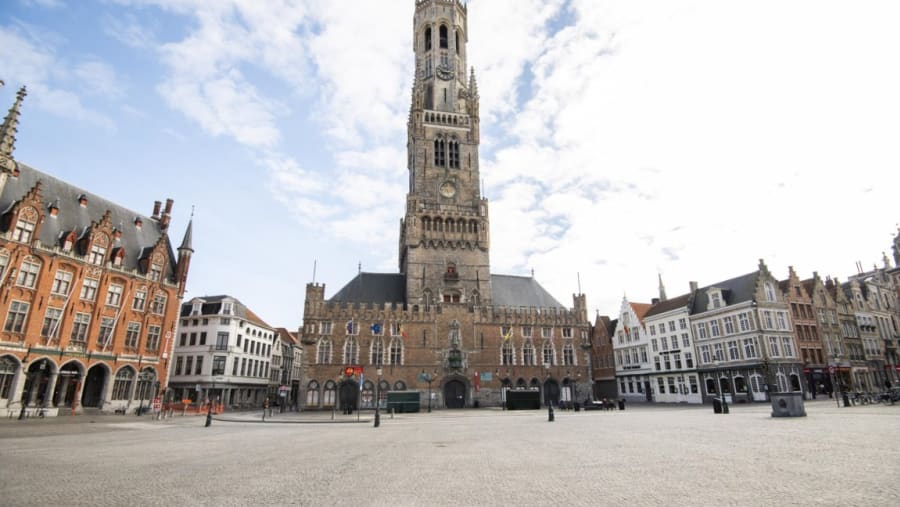
Markt (Belfort, Jan Breydel and Pieter de Coninck Monument, Provincial Court, Maison du Bouchoute, Craenenburg House, Guild Houses...)
- The central, largest, and main square in Bruges, surrounded by several striking landmark buildings and monuments.
Belfort
- Probably the city's most famous landmark, even a "movie star" among Bruges' sights.
- It once served as the city's watchtower, treasury, and archive, dating from the first half of the 13th century and the time of the city's greatest economic prosperity.
Jan Breydel and Pieter de Coninck Monument
- A monument dedicated to two local heroes of the 1302 resistance movement.
Provincial Court
- A 13th-century building that never served as a real court, but had a multipurpose role, mostly hosting various regional and state institutions.
Maison du Bouchoute
- The oldest and most atypical building on Market Square, dating from 1477. Pearls of its architecture include the weather vane clock and several other interesting devices.
Craenenburg House
- A building from the beginning of the 14th century that once served as a short-term prison for the "voluntarily" captured Maximilian I, the great ruler of the Holy Roman Empire, who was detained by Bruges' citizens because of his decision to ban traditional summer city festivals.
Guild Houses
- Characteristic Flemish-style buildings with stepped gable roofs on the northern side of the market, representing the headquarters of certain guilds.
The Devil's Pants Building
- A famous spot depicting the darker side of the city and the legend of a frightening encounter between some local citizens and Lucifer himself.
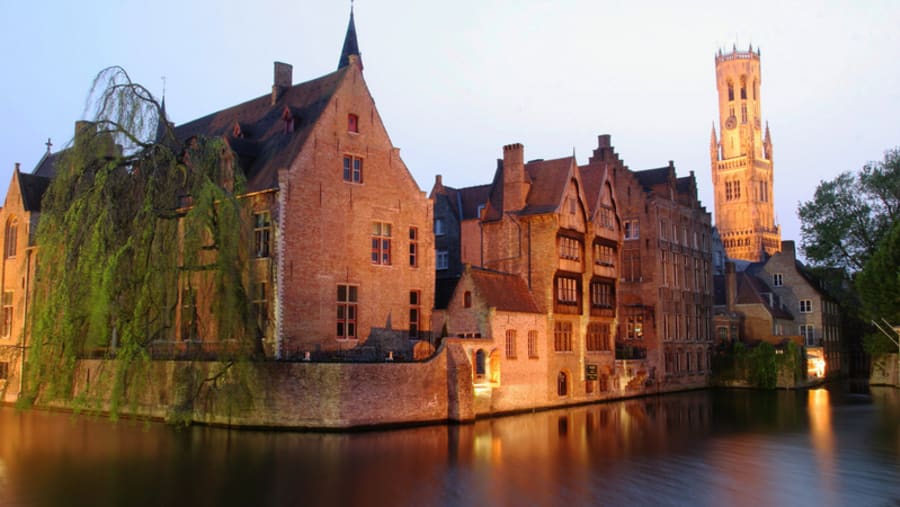
Rozenhoedkaai (Rosary Quay)
- The city's most popular photography spot - in other words, a centuries-old and perhaps the most "Instagrammable" hotspot. Today, it offers one of the loveliest views in Bruges and remains the most photographed point in the city.
Burg Square (Basilica of the Holy Blood, Provostry of Saint Donatian (Deanery), The Liberty of Bruges (Brugse Vrij), Old Civil Registry Building, Old City Hall of Bruges)
- This grand and majestic square is lined with monumental landmark buildings and was once surrounded by city walls. While Market Square is considered the heart of the city, Burg Square is regarded as Bruges' soul.
Basilica of the Holy Blood
- A Romanesque and Gothic Revival-style church from the 12th century, holding a treasured relic of Christ - the blood of Jesus. Legend says that Christ's blood was collected in a cloth by Joseph of Arimathea following the Crucifixion.
Provostry of Saint Donatian (Deanery)
- The former deanery, serving as the seat of ecclesiastical authority since the 17th century.
The Liberty of Bruges (Brugse Vrij)
- The administrative, civil, and ecclesiastical centre of Bruges between the 11th and 19th centuries, now hosting the city archive and its interior highlight: the fireplace of Charles V, great ruler of the Holy Roman Empire, made of oak wood, alabaster, and marble.
Old Civil Registry Building
- The oldest Renaissance building in Flanders, dating from 1537, which played a key role in local administration and city governance.
Old City Hall of Bruges
- A late Gothic building dating back to 1421 and the seat of local government for over 600 years.
Ghent
St. Jacob's Church
- One of the five most famous churches in Ghent and the oldest among them, dating from 1093 and dedicated to St. Jacob, patron and protector of sailors.
Cathedral of St. Bavon and Ghent Altarpiece
- A superb cathedral showing the transition between Romanesque and Gothic architectural styles, world-famous for housing the most stolen painting in the history of art - the Ghent Altarpiece.
St. Nicholas' Church
- A sacred building from 1270, somewhat atypical and architecturally distinct from nearby churches such as St. Bavo's Cathedral and the Church of St. Michael and St. James. It is considered one of Ghent's "three towers".
Belfry of Ghent
- The 91-metre-high Belfry of Ghent is one of the town's most popular panoramic points and a symbol of the city's independence, dating from the 14th century.
City Hall of Ghent
- To put it mildly, this "confused building" on the corner of Botermarkt and Hoogpoort is unique in its architecture. It is the town hall still in use today, built in two architectural styles that followed one another.
Masons' Guild House
- A Renaissance and late Gothic-style building from 1526 that served as the seat of the masons' guild, with a unique stepped gable and a weather vane featuring six merrily dancing figures.
Cloth Hall
- The Cloth Hall once served as a meeting place for wool and cloth traders and as a central point for city events and public gatherings through the centuries.
St. Michael's Church and St. Michael's Bridge
- A church whose construction lasted more than 400 years, with a surprisingly low tower - only 46 metres tall instead of the originally planned 134 metres. It houses Anthony Van Dyck's famous masterpiece Golgotha and stands beside one of the city's most popular photo spots, St. Michael's Bridge, dating from 1903.
Korenlei and Graslei
- Different architectural styles from across the centuries are represented on these two oldest streets in Ghent, on opposite sides of the River Leie.
- Unique edifices in Romanesque, Flemish Renaissance, Brabant Gothic, and Baroque styles can be seen here, some dating back to the 11th century.
Gravensteen
- The Castle of the Counts of Flanders on the River Leie dates from the 12th century and remains one of the best-preserved examples of medieval military architecture in Western Europe.