


Day 01
Drive from Hunza to Shimshal
- Breakfast and pickup from the desired location.
Drive to Shimshal Valley.
Dinner and overnight stay at the guest house.


Explore the world with tourHQ
Pakistan · Trekking
The journey
Embark on a 20-day adventure through the breathtaking Shimshal Valley, combining challenging treks, stunning mountain landscapes, and deep cultural immersion. This journey includes hikes to Shimshal Pass and Minglik Peak, along with community training, eco-lodge construction, and the promotion of sustainable tourism. Experience the rich cultural heritage of the region, document traditional practices, and help launch the "Nomad Life Shepherd" program to preserve local heritage and support eco-friendly tourism development.
Embark on a 20-day adventure through the breathtaking Shimshal Valley, combining challenging treks, stunning mountain landscapes, and deep cultural immersion.
From the itinerary
At a glance
Day by day
Drive to Shimshal Valley.
Dinner and overnight stay at the guest house.
Lunch at Korband.
Arrive at Gharsar, rest, dinner, and overnight stay in tents.
Stop for lunch at Vuch Furzin.
Continue on the final 3-hour trek to Peryan Sar, followed by dinner and an overnight stay in tents with breathtaking views.
Lunch at Volyo Dasht.
Arrive at Shujerab, rest, dinner, and overnight stay in tents.
Arrive at Shimshal Pass after 3 hours.
Enjoy free time for lunch and visit the lakes of Shimshal Pass.
Dinner and overnight stay in tents.
Dinner at the base camp, then trek to Minglik Peak High Camp.
Arrive at the high camp after a 2-hour trek, have a light dinner, and sleep early in tents.
Begin the climb, aiming to summit by 9 AM.
Trek back to base camp and enjoy summit celebrations.
Dinner and overnight stay in tents.
Lunch en route.
Arrive at Peryan Sar, followed by dinner and an overnight stay in tents.
Lunch at Past Furzin.
Arrive at Gharsar, followed by dinner and an overnight stay in tents.
Arrive at Shimshal, have lunch, and enjoy free time.
Dinner and overnight stay at the guest house.
Drop off at the desired location.
Focus on capacity building for local community members.
Discuss sustainable practices for eco-tourism.
Begin construction of eco-lodges with local labor.
Provide training on eco-friendly construction techniques.
Conduct interviews with local elders and community leaders.
Capture photos and video footage of traditional practices.
Build necessary roads and trails for eco-lodges and tourism.
Ensure eco-friendly materials are used in all construction.
Design brochures, websites, and promotional materials.
Start creating an online presence on social media.
Reach out to potential tourists through online platforms and travel agencies.
Conduct promotional activities, including presentations and exhibitions.
Host workshops on how to attract tourists and engage in cultural exchanges.
Encourage local businesses to participate in the program.
Assess the effectiveness of the marketing strategy and make adjustments.
Gather feedback from the community and tourists for improvements.
Continue program management and provide ongoing support to the community.
Celebrate the successful completion of the project.

Where this trip takes you
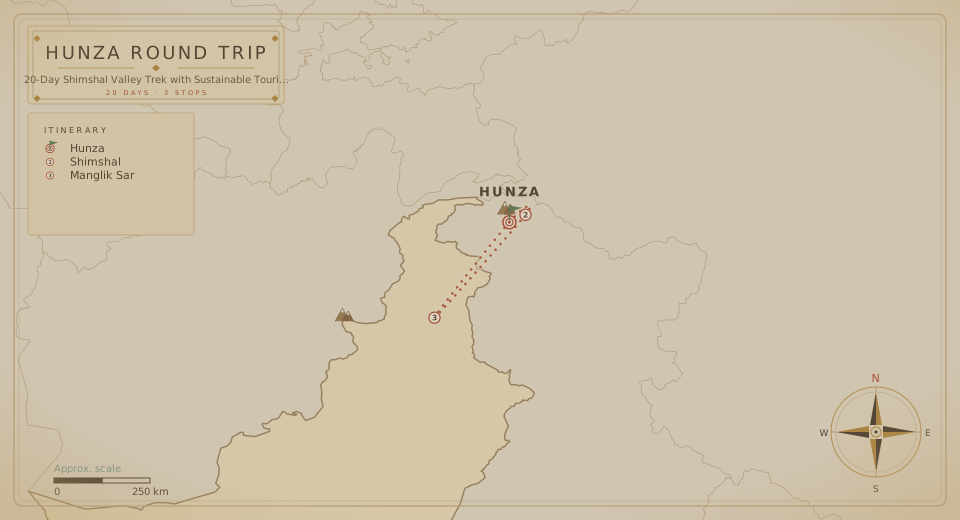
Shimshal Pass lakes, Minglik High Camp, Hunza Valley, Garelt
The route
The fine print
Nomadic shepherds typically live in traditional local huts, tents, or stone huts.
Accommodation is basic and may not have modern amenities such as electricity or plumbing.
Accommodation is usually provided by the community or as part of the nomadic lifestyle.
Shepherds rely on locally sourced food, including dairy products and grains.
Access to clean drinking water may be limited, and shepherds often rely on natural sources.
Food expenses are minimal, and self-sufficiency is a key aspect of nomadic life.
Accommodation in cities and villages typically includes hotels and guest houses.
Airfare for international and domestic flights is required.
Traditional clothing suitable for the harsh mountain environment is essential.
Woolen garments, heavy jackets, and sturdy footwear are typical.
Clothing costs can vary, but durable items are preferred for the challenging conditions.
Shepherds are responsible for tending to and herding livestock, such as yaks, sheep, and goats.
The acquisition and maintenance of livestock are integral to the nomadic lifestyle.
Essential tools include knives, ropes, and shearing equipment.
Traditional equipment may be used for activities like wool processing.
Minimal cost for tools, as many are passed down through generations.
Access to healthcare can be limited in remote areas.
It is important to have basic first aid knowledge and supplies.
Medical expenses may vary, so it is wise to have savings for emergencies.
Take proper care of your livestock, which may include goats, sheep, yaks, or other animals commonly found in the region. This includes providing them with food, water, and shelter.
Be mindful of the fragile ecosystem in the valley. Avoid overgrazing, and follow sustainable grazing practices to prevent environmental degradation.
Embrace the nomadic lifestyle, which typically involves moving your livestock from one grazing area to another based on the seasons. This can be physically demanding and may require you to live in temporary shelters or tents.
Logistics
Your 20 days finish where they began, in Hunza Valley.
 Watch the film
Create your own adventure
Say goodbye to travel stress.
Starting from
When
Travellers
Total
—