Tanzania · Trekking

7-Day Mount Kilimanjaro Machame Route Trek to Uhuru Peak

7 Days Round trip from Barangata Moderate pace

The journey

Trip highlights
  • 01 Trek to Uhuru Peak on Mount Kilimanjaro via the scenic Machame Route
  • 02 Cross diverse landscapes from montane forest and moorland to alpine desert
  • 03 Acclimatize on the mountain with key stops at Lava Tower and Barranco Camp
  • 04 Climb the Barranco Wall and complete the South Circuit with summit views
  • 05 Receive your summit certificate at Mweka Gate after the descent

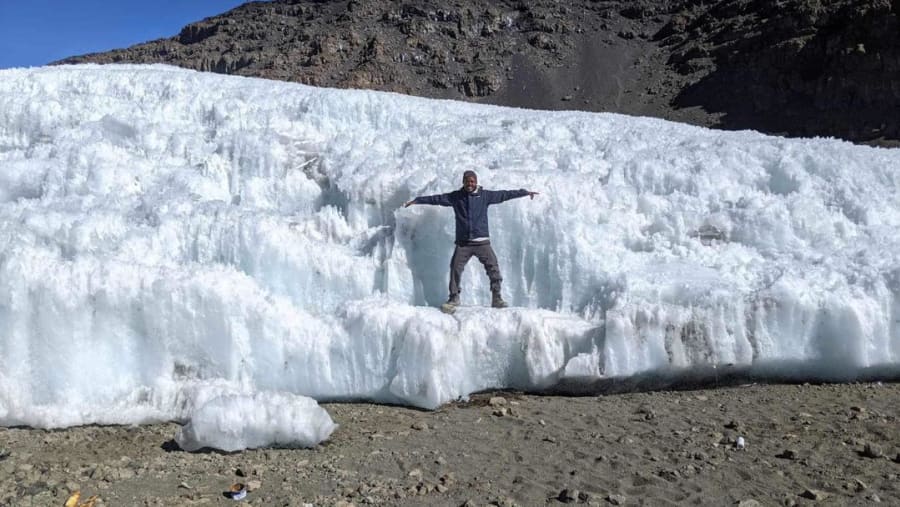
Embark on an exhilarating 7-day trekking adventure to conquer Africa's highest peak via the stunning and challenging Machame Route on Mount Kilimanjaro. Cross breathtaking landscapes ranging from lush rainforest and moorland to alpine desert and the ice-capped summit, while following a carefully paced route designed to support acclimatization. Highlights include Lava Tower, Barranco Wall, and the final push to Uhuru Peak, the highest point in Africa. With hotel stays in Moshi before and after the trek, this journey combines mountain challenge, dramatic scenery, and a truly unforgettable summit experience.

Once at Uhuru Peak, you have reached the highest point on Mount Kilimanjaro and on the continent of Africa.

From the itinerary

At a glance

What this trip includes

Duration 7 Days
Tour type Shared
Activity level Moderate
Accommodation Included · Standard
Transport Included
Wheelchair access No
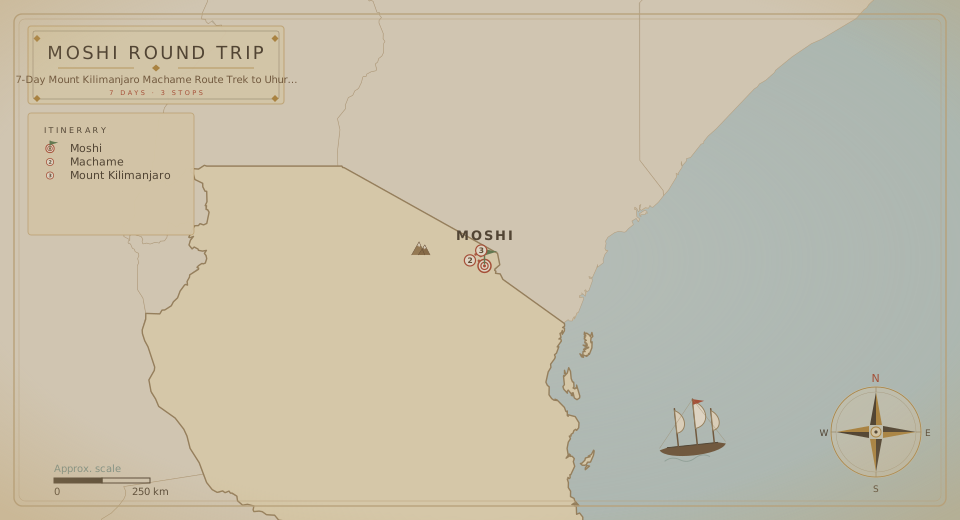
Cities Moshi, Mount Kilimanjaro, Machame
Languages English, French, German, Spanish

Day by day

The itinerary

1
Day 01

Machame Gate to Machame Camp Through the Rainforest

  • Drive from Moshi to Mount Kilimanjaro National Park's Machame Gate, a journey of about 45 minutes. The route passes through Machame village, located on the lower slopes of the mountain.
  • From the park gate, begin walking through the rainforest on a winding trail that climbs up a ridge.
  • At lower elevations, the trail can be muddy and slippery, so gaiters and trekking poles are a good idea here.
  • Continue a short distance farther until you reach Machame Camp.

Elevation: 1830m/6000ft to 3050m/9950ft

Distance: 11km/7mi

Hiking time: 5-6 hours

Habitat: Montane Forest
2
Day 02

Machame Camp to Shira Camp Across Moorland

  • After breakfast, leave the glades of the rainforest and continue on an ascending path, crossing the valley along a steep rocky ridge.
  • The route then turns west into a river gorge until you arrive at Shira Camp.

Elevation: 3050m/9950ft to 3850m/12,600ft

Distance: 5km/3mi

Hiking time: 4-5 hours

Habitat: Moorland

3
Day 03

Shira Plateau, Lava Tower, and Barranco Camp

  • From the Shira Plateau, continue east up a ridge, passing the junction that leads toward the peak of Kibo.
  • As the trek continues, the direction changes to the southeast toward Lava Tower, known as the "Shark's Tooth" (elev. 4650m/15,250ft).
  • Shortly after the tower, reach the second junction that leads to Arrow Glacier.
  • From here, continue descending to Barranco Camp.
  • Although you end the day at nearly the same elevation as where you began, this is a very important acclimatization day and helps prepare your body for summit day.

Elevation: 3850m/12,600ft to 4000m/13,000ft

Distance: 10km/6mi

Walking time: 5-6 hours

Habitat: Semi-desert

4
Day 04

Barranco Wall to Karanga Camp

  • After breakfast, leave Barranco and continue along a steep ridge up the Barranco Wall to the Karanga Valley.
  • Proceed to the junction that connects with the Mweka Trail before reaching Karanga Camp.

Elevation: 4000m/13,000ft to 4050m/13,250ft

Distance: 5km/3mi

Hiking time: 3-4 hours

Habitat: Alpine Desert

5
Day 05

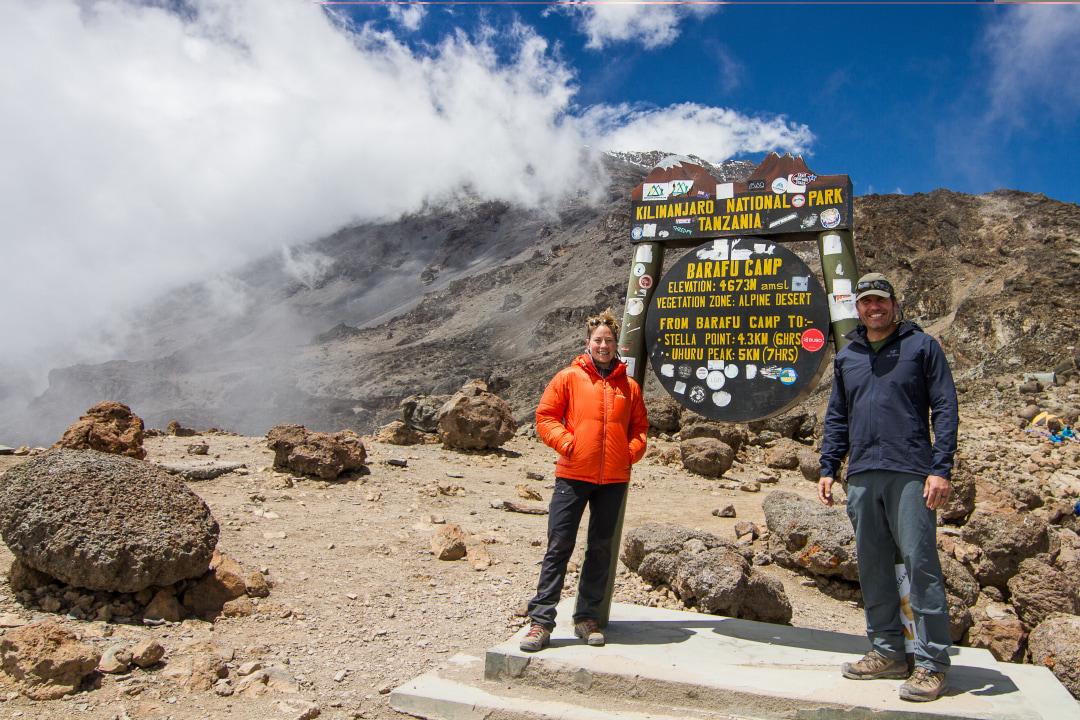
Karanga Camp to Barafu Camp on the South Circuit

  • Continue climbing up to Barafu Camp.
  • By this stage, you will have completed the South Circuit, which offers views of the summit from many different angles.
  • At camp, rest, enjoy dinner, and prepare for summit day.

Elevation: 4050m/13,250ft to 4700m/15,350ft

Distance: 4km/2mi

Hiking time: 3-4 hours

Habitat: Alpine Desert

6
Day 06

Summit Attempt to Uhuru Peak and Descent to Mweka Camp

  • Very early in the morning, between midnight and 2 am, continue toward the summit between the Rebmann and Ratzel glaciers.
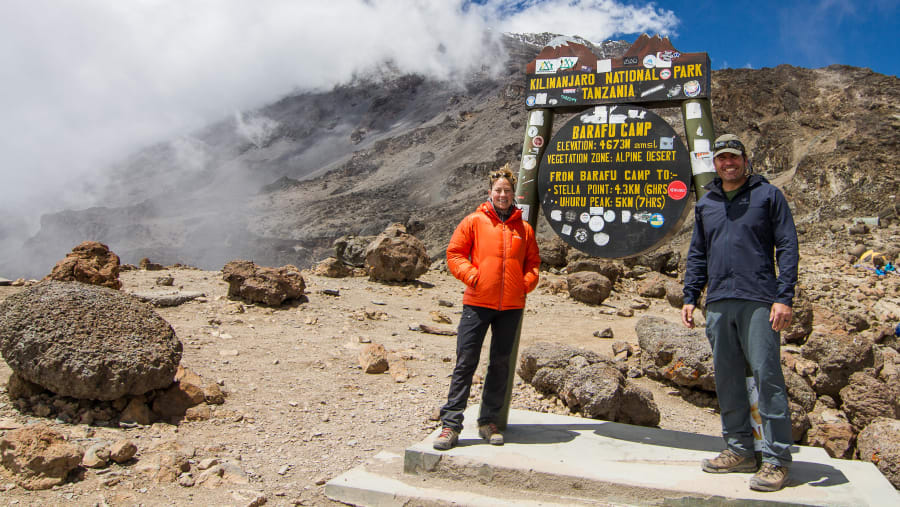
  • Head in a northwesterly direction and ascend through heavy scree toward Stella Point on the crater rim. This is the most mentally and physically challenging part of the trek.
  • At Stella Point, stop for a short rest and enjoy what may be the most magnificent sunrise you are ever likely to see. Faster hikers may catch the sunrise from the summit.
  • From Stella Point, you may encounter snow all the way during the final 1-hour ascent to the summit.
  • Once at Uhuru Peak, you have reached the highest point on Mount Kilimanjaro and on the continent of Africa.
  • From the summit, begin the descent by continuing straight down to Mweka Camp, stopping at Barafu for lunch.
  • Gaiters and trekking poles may be helpful for the loose gravel on the way down.
  • Arrive at Mweka Camp and enjoy your last evening on the mountain.

Elevation: 4700m/15,350ft to 5895m/19,340ft

Down to: 3090m/10,150ft

Distance: 5km/3mi up / 13km/8mi down

Hiking time: 5-7 hours up / 5-6 hours down

Vegetation: Stone scree and ice-capped summit

7
Day 07

Mweka Camp to Mweka Gate and Return to Moshi

  • After breakfast, continue descending to Mweka Park Gate to receive your summit certificates.
  • At lower elevations, the trail can be wet and muddy, so gaiters and trekking poles will help. Shorts and T-shirts will probably be enough to wear, but keep rain gear and warmer clothing handy.
  • At Mweka Gate, meet your transfer and drive back to your hotel in Moshi, about 30 minutes away.

Elevation: 3090m/10,150ft to 1680m/5500ft

Down to: 3090m/10,150ft

Distance: 10km/6mi

Hiking time: 3-4 hours

Habitat: Forest

Shira Plateau, Lava Tower, Barranco Wall, Uhuru Peak

Where this trip takes you

Shira Plateau, Lava Tower, Barranco Wall, Uhuru Peak

The route

Where you'll travel

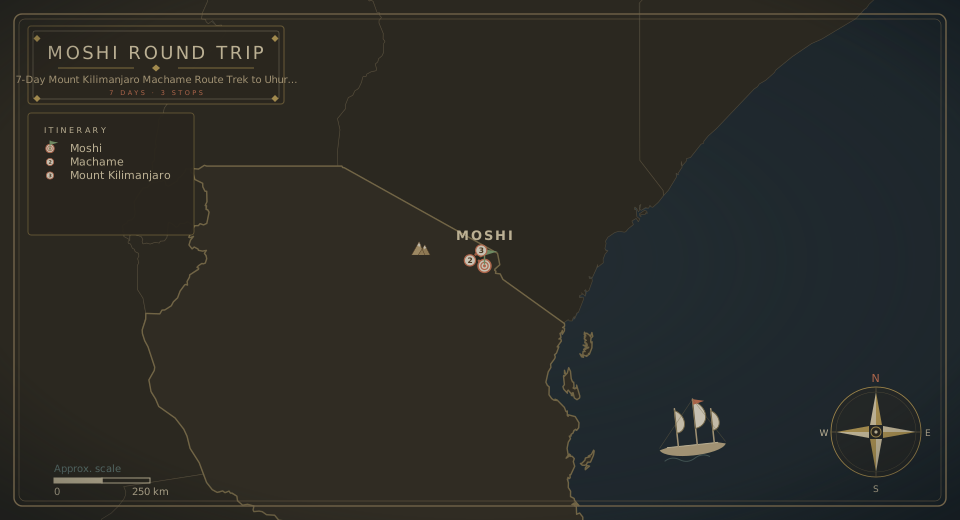
Tour route map
Round trip from Barangata 3 cities · 7 Days

The fine print

Trip details

What's Included

  • All transfers to the mountain and back to your Moshi hotel
  • Professional, experienced, and friendly mountain guides
  • Medical evacuation with Kilimedair Flying Doctors
  • 2 nights of accommodation before and after the trek in good hotels
  • Guides, porters, cook salaries, and park fees
  • Pulse-oximeter - to measure the oxygen level of each climber daily
  • Portable emergency oxygen tanks
  • Quality, waterproof, four-season private mountain sleeping tents
  • Sleeping mattress
  • All meals while on the mountain
  • Quality mess tents with tables and chairs
  • Large portions of fresh, healthy, nutritious food
  • Clean, purified drinking water
  • Crisis management and safety procedures
  • Fair and ethical treatment of porters
  • Conservation fees (part of park fees)
  • Camping or hut fees (part of park fees)
  • Rescue fees (part of park fees)
  • Arrival and departure transfers
  • All government tax and park entrance fees
  • VAT (18% charged by the government)

What's Not Included

  • Tips for guides, cooks, and porters
  • Track your trek by satellite device services
  • Personal trekking equipment such as sleeping bags, hiking boots, and clothes (available for rent)
  • Tips and gratuities
  • Travel insurance
  • Tanzania visa on arrival
  • Personal expenses (e.g. laundry, telephone, beverages, etc.)
  • Optional tours (short safari after your climb, etc.)

What to bring

Plan your perfect Kilimanjaro climb.

The very best way to prepare for climbing to high altitude is to climb to high altitude. Although this is difficult for most people, remember that the higher the altitude and the longer the hikes, the better. Whether it is hiking 2,000 feet to the top of a local hill or climbing larger mountains farther afield, simply being out hiking uphill is the best preparation. This also allows you to get used to your backpack and boots.

Running and biking are also very good and at least get you outdoors so you can test your equipment. Stair masters and climbing machines at the gym will work if outdoor hiking is not an option. Try not to do short, hard bursts of exercise, but long sustained workouts instead. An adequate training regime is to maintain 80% of your max heart rate (220 minus your age) for an hour, three to four days a week. Remember that high-altitude mountain climbing requires acclimatization, and a strong mind is as important as a strong body. If you are fairly fit and choose a climbing itinerary that allows plenty of time to acclimatize, you have the formula for success.

So we recommend that you:

  • Do aerobic exercises so the body can function with less oxygen, as there is less oxygen on summit day.
  • Hike on hills and mountains or use a gym trail machine to practice hiking.
  • Increase your hiking distance and hiking time to improve your stability, as you will have long hiking days on the mountain.
  • Wear your boots and day pack while hiking, as you will use them daily on the mountain.
  • Eat more fruit and vegetables. Reduce red meat, smoking, and alcohol.
  • Get your body in shape through physical training.
  • Rest and sleep well.

Our Guides

  • There are many types of guides, but our guides are people's people and extraordinary guides. They have great personalities and are among the best guides in Africa. They have a true love for a broad range of subjects. They are funny all the time, and you will be happy and laughing throughout the journey. They will go the extra mile and spend extra time with you to make sure your holiday goes beyond your expectations. On the mountain, we call them mountain doctors because of their techniques and unique knowledge of dealing with high-altitude sickness.
  • Our Porters
  • These are very strong and hard-working men with many years of experience climbing Kilimanjaro. They are very funny and friendly, and they often walk faster than you and reach camp before you so they can prepare a place for you to rest and enjoy your delicious natural food from our cook. When we see you tired and exhausted, we shall speak a few encouraging words in Swahili: "pole pole hakuna matata," which means "slowly, slowly, don't worry." On the way to the summit, our guides will comfort and encourage you every single minute by singing a rhythmic melody of Africa, which will help you regain strength and conquer the roof of Africa.

Know before you go

  • Is it safe to travel to Africa? Is it safe to travel to Tanzania?
  • Africa is currently safe. Tanzania is very safe, and we are ready to organize your African epic holiday. Despite how safe we are, especially from COVID-19, Tanzania still has standard operating procedures in place to contain COVID-19 and ensure maximum safety. Some airlines have already resumed international flights, and we can plan the entire trip for you. Tanzania welcomes you again!
  • Requirements to get into the country:
  • Visa
  • Visas are compulsory for all visitors and cost from $50. Visas are obtainable at the airport when you arrive, but it is better to have one before you land, as officials tend to "not have change". Visas are obtainable from the Tanzanian Embassy. You will need 2 passport photos and 2 completed forms. If you do not have time to organize a visa, we will gladly assist you for a small fee.
  • Yellow Fever inoculation certificate
  • The inoculation is obtainable from your nearest travel clinic or local physician. Staple it into the front of your passport if you are afraid of losing it. Most African countries require this certificate, so do not travel in Africa without it.
  • Malaria tablets
  • Zanzibar is situated in a malaria zone, so it is recommended that you consult your physician about the prescription that is right for you. Pregnant women are not allowed to take malaria prevention drugs and should be cautious before entering any malaria area. To set your mind at rest, we stayed in Zanzibar for 2 years and fortunately never contracted malaria. This is not to say you will not get it...
    JUST BE CAREFUL.
  • Insect/mosquito repellent
  • Mosquitoes, like little vampires, favor night conditions. Be sure to take a repellent and cover all exposed areas of your body, such as your neck and arms. We recommend wearing trousers at night and long-sleeved shirts if you are outdoors. If the heat is too much and you wear a short-sleeved shirt, make sure you smear or spray your arms with repellent. Before bed, make sure your mosquito net is either touching the ground or tucked in, and that exposed areas, especially your ankles, are protected with repellent.
  • Anti-histamine cream
  • For those irritating bites.
  • Currency
  • Traveler's cheques and cash are accepted at hotels and bureau de change offices. US$ are the preferred currency. If you plan on taking cash, make sure you take large bills, such as $50 or $100, as these always seem to get a better rate. Do not go to the first bureau you see at the airport, as these, along with hotels and resorts, normally have the worst exchange rate. If you are planning on taking a taxi into town, rather pay the fare in US$ and go to a bureau in town. There are many all over town. Try to negotiate a better rate - you never know.
  • Try to pay for as much as possible in the local currency, Tanzanian shillings, always bearing in mind the exchange rate. If locals see you have foreign currency, they will try to relieve you of it. Always haggle or bargain and try to pretend you know what you are doing. Remember to keep some of your home currency for your return, just in case. You will also have to pay a departure tax of $30 when you leave.
  • Embassies
  • There are a few consulates on the island, but all embassies are situated in Dar Es Salaam.
  • Do I need vaccinations to travel to Tanzania and Zanzibar?
  • The vaccination should be acquired a minimum of 10 days before travel to Tanzania and Zanzibar. A certificate of vaccination for Yellow Fever will be necessary for arrival from Kenya or other neighboring East African countries, and if you have traveled recently in any other areas at risk of Yellow Fever, including South America and parts of Asia.
  • Travel insurance
  • It is imperative that you have travel insurance. Even though they do not check any certificates when you enter the airports, for your own peace of mind, make sure that you are adequately covered.
  • What to pack
  • Light sandals or rubber flip-flops. Some places require you to remove your shoes before entering. Good walking shoes if you plan on doing a lot of sightseeing.
  • Raincoat or umbrella if you are traveling in the rainy season. Monsoon rains are heavy.
  • Flashlight, for those irritating power cuts. Many hotels do have generator backup systems, though.
  • Clothes should be light, as it is very hot and humid. A jersey or windbreaker is recommended for winter nights, just in case. Women are frowned upon for wearing revealing clothes. Mini-skirts are a definite no. Try to wear shorts, not hot pants, or a long skirt, and try to keep the shoulders covered.
  • Communications
  • There are many internet cafes in major towns and at some hotels and resorts, so in a non-emergency this is the best form of communication. Charges range from Tsh1,000 to Tsh5,000, about $1 to $5, for an hour's connection. The local telephone company TTCL is inadequate, so if you need to phone internationally, it is best to ask at the internet café. They usually have facilities, or they will be able to direct you to someone who has. Be careful, as it may be expensive.
  • Electricity
  • This is the same as in the UK and South Africa, being 220/230 V. Do not leave appliances plugged in all day, as there are many power fluctuations that might destroy them. US citizens will need an adapter and a transformer for Zanzibar power. If your plug does not match, enquire at a local shop and they should be able to assist.
  • Driving
  • If you are planning on renting a car or motorbike, make sure you have a valid international driver's license. You may be stopped at one of the many roadblocks, and often police are just looking for a bribe. Bribery has become a culture among the police, so make sure you have the correct documentation to avoid having to pay one.
  • If you plan on driving in Stone Town, make sure you know the roads, as there are many one-way streets and the drivers are reckless. If a police car approaches with a siren, you have to pull over to the side of the road and stop, no matter which way it is going. Once it has passed, you may pull out and continue.
  • Crime
  • As with all cities, Zanzibar is not free of crime. Unfortunately, it has been on the increase, so make sure you do not take valuables on holiday with you. If you do take expensive jewelry, make sure it is either locked up when you go out or hidden from sight.
  • Be careful not to walk the streets alone at night, as this invites trouble. If you are confronted, do not resist, and try to report the matter to the police as soon as possible. The police are sometimes rude and arrogant, but an attempt will be made to recover your property.
  • The shorter rainy period of October to December often has thunderstorms that pass over the mountain, dropping rain as they go. Typically, the clouds disappear in the evening, leaving the nights and mornings very clear with excellent visibility.
  • January and February are usually dry, warm, and clear, with brief rain showers that make for good climbing conditions.
  • Even though one can climb throughout the year, January, February, and September are the best months, with July, August, November, and December also being good.
  • HIGHLIGHTS: Trekking to the highest mountain in Africa
  • Two-night hotel accommodation in Moshi at Mountain Inn, Lindrin Lodge, or similar
  • LOCATIONS: Tanzania/Kilimanjaro
  • ACTIVITIES: Mountain trekking
  • Please confirm your trip in advance to secure your special offer.
  • Please note: we provide tents and mattresses free for our clients.
  • Climbing gear is available for hire.
  • Hiking boots are available from $30. We also have -18 and -20 degree season sleeping bags, and the price is only USD 30. The price for each piece of equipment covers the trip.
  • Our Kilimanjaro local guides will be very happy to help organize your tour.
  • The minimum duration for this route is 6 days.

Logistics

Meeting & route

Meeting point
Kilimanjaro International Airport, Kilimanjaro Airport Road, Tanzania
Tour start
Barangata, Tanzania
Tour ends at the same location as the start point.
End of the journey

Your 7 days finish where they began, in Barangata.

Watch the tourHQ film Watch the film

Create your own adventure

Can't find the perfect tour? Tailor your dream trip.

  • Tell us your destination, dates and group size.
  • Our travel experts and local guides design a tailored itinerary, just for you.
  • Enjoy your trip with peace of mind, knowing everything is taken care of.
Plan my holiday

Say goodbye to travel stress.

Starting from

USD 3,000 /person
Book This Tour

When

Travellers

Total