
Kathmandu Heritage Sites and Sacred Stupas
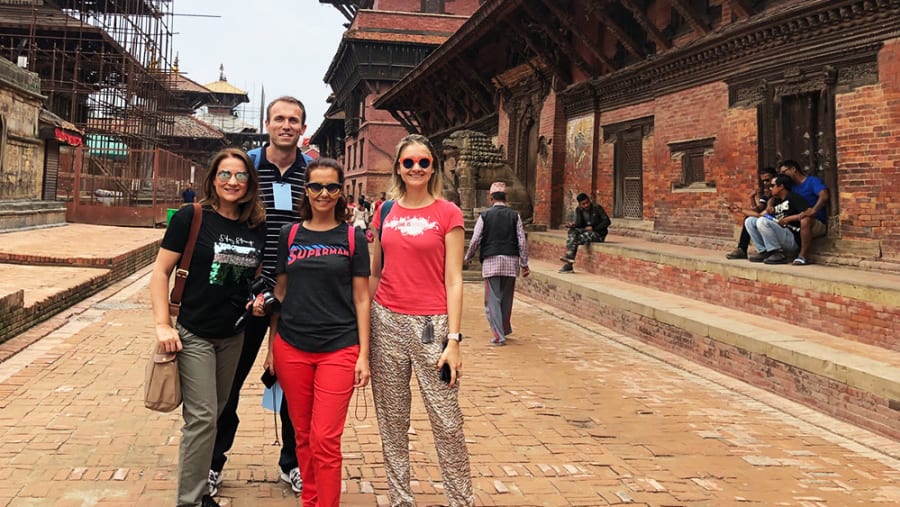
- Morning: After breakfast, take a short drive or walk to the main areas of Kathmandu Durbar Square to witness the daily routines of the Nepalese people and their rich culture. This fascinating area is home to the old palaces of the Malla regime and the Shah Dynasty, along with many other places of great interest.
- Visit Kasthamandap, a temple built from a single large tree, near Hanuman Dhoka Palace. Discover more about Kathmandu's history and its creation by Gunakama Dev in 724 A.D.
- Hanuman Dhoka (Durbar Square): This large historic square was once the seat of Nepalese royalty, where old temples and palaces still stand as symbols of the people's religious and cultural life. It is also the place where the Kings of Nepal were crowned. Interesting places to visit within the square include:
- Taleju Temple, built by King Mahendra Malla in 1549 A.D.
- The gigantic figure of Kal Bhairav, the God of Destruction.
- Basantpur Durbar, or Nautalle Durbar, built by King Prithivi Narayan Shah.
- The Coronation Platform (Nasal Chok).
- The Hall of Public Audience (Gaddi Baithak).
- The statue of King Pratap Malla, the Big Bell, the Big Drums, and Jaganath Temple.
- Temple of Kumari (The Living Goddess): This temple and residential quarter of the "Living Goddess," known as Kumari, is located in the centre of Hanuman Dhoka Palace. The building features many carved wooden balconies and window screens. It was built by Jaya Prakash Malla, the last Malla King of Kathmandu.
The Kumari is a virgin goddess, and when she reaches puberty, she is replaced by another Kumari, who acts as the living form of the Goddess. She has been worshipped by the Newari tribe, the native people of the Kathmandu Valley, since the days of the Malla regime.
- Tour of Swayambhunath: After visiting Durbar Square and its important sites, take a short drive west from the city area to reach Swayambhunath, one of Nepal's most famous and oldest landmarks, with its ancient stupa.
Swayambhunath is one of the world's most glorious Buddhist stupas and is more than 2,000 years old. Visitors often call it the "Monkey Temple." The stupa forms the main structure, supported by a lofty conical spire capped by a copper-gilt pinnacle. Painted on all four sides are the all-seeing eyes of Lord Buddha.
The hill, a mosaic of small stupas and pagoda temples, offers grand views of Kathmandu city and the snow-capped mountains to the north. From here, drive to the eastern area of the city to visit the holy Hindu temple of Pashupatinath.
Situated 5 km east of Kathmandu on the banks of the sacred Baghmati River, this temple is dedicated to Lord Shiva. With its two-tiered golden roof and silver doors, it is a superb example of architecture and an important centre of annual pilgrimage during Maha Shivaratri, which falls in February.
- From here, take a short drive northeast to Bouddhanath, also called Little Tibet. Bouddhanath Stupa, located 8 km from Kathmandu city, is an ancient stupa and one of the largest in the world, with the all-seeing eyes of Lord Buddha. It is said to have been built by the Lichchhavi King Mana Dev in the 5th century A.D. The stupa has an octagonal base inset with prayer wheels. The area is surrounded by markets, nice shops, and restaurants, making it an interesting place to experience Buddhist culture and customs similar to traditional Tibetan life, which is why the area is also called Little Tibet.
This wonderful visit concludes at Bouddhanath, after which you will head back to your hotel, completing a wonderful day on the Kathmandu City Tour.