Tanzania · Trekking

8-Day Kilimanjaro Lemosho Route Trek with Uhuru Peak Summit

8 Days Round trip from Mt Kilimanjaro Easy pace

The journey

Trip highlights
  • 01 Diverse landscapes from rainforest to alpine desert and glacier-lined summit slopes
  • 02 Gradual acclimatization on the longer Lemosho Route for a higher summit success rate
  • 03 Cross the Shira Plateau, one of the highest plateaus on earth
  • 04 Conquer the dramatic and challenging Barranco Wall
  • 05 Enjoy fewer crowds and well-spaced campsites for a more peaceful trek
  • 06 Take in breathtaking summit views from Stella Point and Uhuru Peak
  • 07 See ice and glacier views along the summit's crater rim
  • 08 Follow the Southern Circuit for varied views of the summit from different angles

Embark on an 8-day adventure hike on Mount Kilimanjaro via the scenic Lemosho Route, crossing diverse landscapes from rainforest and moorland to alpine desert and glacier-lined summit slopes. This longer route offers gradual acclimatization, fewer crowds, and well-spaced campsites for a more peaceful trekking experience. Hike across the Shira Plateau, conquer the dramatic Barranco Wall, and follow the Southern Circuit for breathtaking views from multiple angles. Your journey culminates at Uhuru Peak, the highest point in Africa, with magnificent sunrise and ice views from the crater rim.

Congratulations - one step at a time, you have now reached Uhuru Peak, the highest point on Mount Kilimanjaro and the entire continent of Africa!

From the itinerary

At a glance

What this trip includes

Duration 8 Days
Tour type Shared
Activity level Easy
Accommodation Included · Budget
Transport Included
Wheelchair access Not applicable
Cities Moshi, Mount Kilimanjaro
Languages English, French, German

Day by day

The itinerary

1
Day 01

Londorossi Gate to Mti Mkubwa Camp Through Rainforest

  • Elevation: 2389m/7838ft to 2785m/9137ft
  • Altitude gained: 396m
  • Departing from Moshi, a 45-minute drive takes you through welcoming mountainside villages to the Kilimanjaro National Park Gate. We patiently wait for permits to be issued while watching the bustle of operations as many crews prepare for the journey ahead.
  • Enjoy the beautiful rainforest scenery and winding trails while your guide shares information about the local flora, fauna, and natural wildlife.
  • At these lower elevations, the trail can be muddy and quite slippery. We highly recommend gaiters and trekking poles here.
2
Day 02

Mti Mkubwa Camp to Shira I Camp Across the Moorland

  • Elevation: 2785m/9137ft to 3895m/12,779ft
  • Altitude gained: 1110m
  • After a good night's sleep and a hearty breakfast, we emerge from the rainforest and continue on an ascending path. Leaving the forest behind, the trail climbs steadily with wide views until reaching the rim of the Shira Plateau.
  • Temperatures begin to drop.
3
Day 03

Shira I Camp to Shira Hut via the Shira Plateau

  • Elevation: 3504m/11,496ft to 3895m/12,779ft
  • Altitude gained: 391m
  • We explore the Shira Plateau for a full day. It is a gentle walk east toward Kibo's glaciered peak, across the plateau, leading to Shira 2 Camp on moorland meadows by a stream.
  • Then we continue to Moir Hut, a little-used site at the base of Lent Hills.
  • A variety of walks are available on Lent Hills, making this an excellent acclimatization opportunity.
  • Shira is one of the highest plateaus on earth.
4
Day 04

Shira Hut to Barranco Camp via Lava Tower

  • Elevation: 3895m/12,779ft to 3986m/13,077ft
  • Altitude gained: 91m
  • Although you end the day around the same elevation as when you began, this day is very important for acclimatization.
  • From Shira Plateau, we continue east up a ridge, passing the junction toward Kibo Peak before continuing southeast toward the Lava Tower, called the "Shark's Tooth" (elev. 4650m/15,250ft).
  • Shortly after the tower, we come to a second junction, which leads to the Arrow Glacier.
  • We then continue descending to overnight at Barranco Camp.
5
Day 05

Barranco Camp to Karanga Camp via Barranco Wall

  • Elevation: 3986m/13,077ft to 4034m/13,235ft
  • Altitude gained: 48m
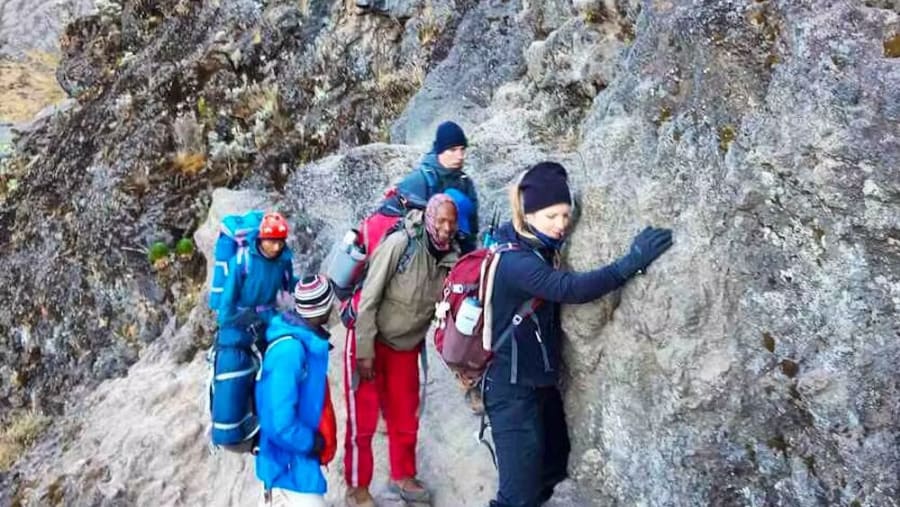
  • After breakfast, we continue on a steep ridge up the adventurous Barranco Wall to the Karanga Valley and the junction that connects with the Mweka Trail.
  • This is one of the most impressive days to witness the power, agility, and strength of your crew as they move over this wall with what appears to be such ease.
  • Overnight at Karanga Camp.
6
Day 06

Karanga Camp to Barafu Camp on the South Circuit

  • Elevation: 4034m/13,235ft to 4662m/15,295ft
  • Altitude gained: 628m
  • We continue up toward Barafu Camp, and once there, you will have completed the South Circuit, which offers a variety of breathtaking views of the summit from many different angles.
  • An early dinner and rest follow as we prepare for summit night.
  • Overnight at Barafu Camp.
7
Day 07

Summit Day to Uhuru Peak and Descent to Mweka Camp

Barafu Camp - Summit: 4.86km /3mi Up | 5-7hrs | - Mweka Camp: 13km /8mi Down | 5-6hrs | Glaciers, Snow Capped Summit

  • Elevation: 4662m/15,295ft to 5895m/19,341ft
  • Altitude gained: 1233m
  • Descent to 3106m/10,190ft
  • Altitude lost: 2789m
  • Excitement builds as morning comes with an early start between midnight and 2 a.m.
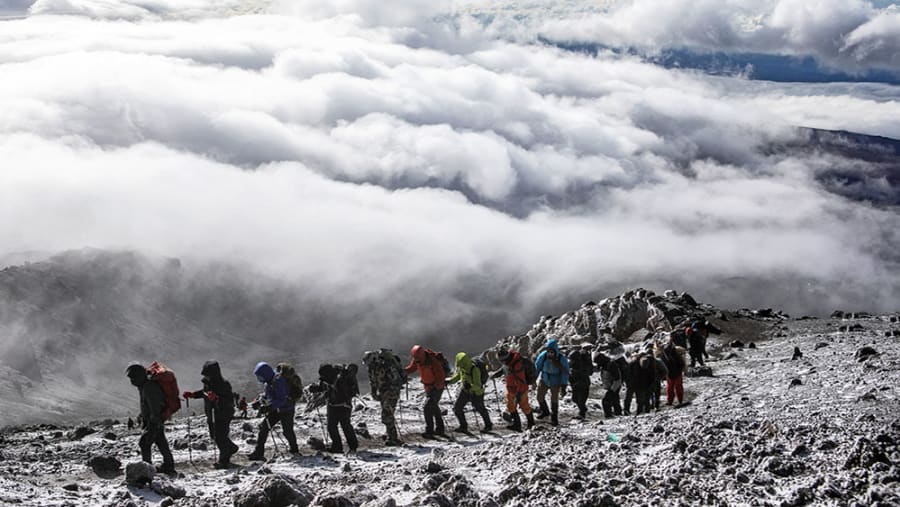
  • This is the most mentally and physically challenging portion of the trek. We continue our way to the summit between the Rebmann and Ratzel glaciers, trying to stay warm and focused on the amazing sense of accomplishment that lies ahead.
  • With a switchback motion in a northwesterly direction, we ascend through heavy scree toward Stella Point on the crater rim.
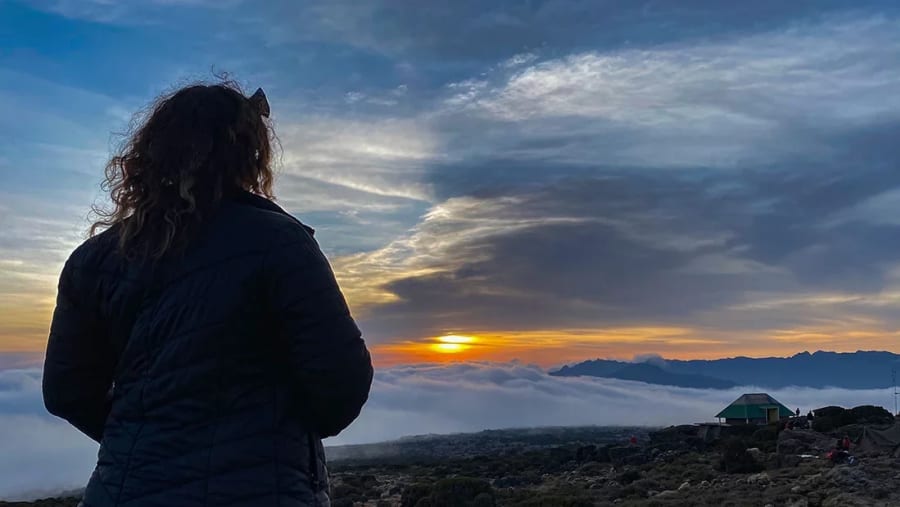
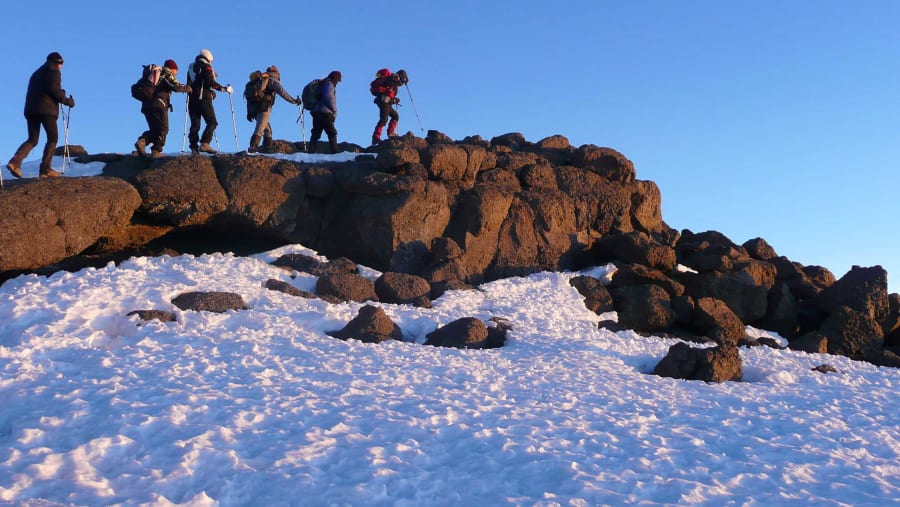
  • You will be rewarded with a magnificent sunrise during your short rest here. Faster hikers may view the sunrise from the summit. From here, on your remaining 1-hour ascent to Uhuru Peak, you are likely to encounter snow all the way.
  • Congratulations - one step at a time, you have now reached Uhuru Peak, the highest point on Mount Kilimanjaro and the entire continent of Africa!
  • After photos, celebrations, and maybe a few tears of joy, we take a few moments to enjoy this incredible accomplishment.
  • We begin our steep descent down to Mweka Camp, stopping at Barafu for lunch and a very brief rest.
  • We strongly recommend gaiters and trekking poles for the uncooperative loose gravel and volcanic ash terrain.
  • Well-deserved rest awaits you to enjoy your last evening on the mountain.
  • Overnight at Mweka Camp.
8
Day 08

Mweka Camp to Mweka Gate and Return to Moshi

  • Elevation: 3106m/10,190ft to 1633m/5358ft
  • Altitude lost: 1473m
  • After breakfast and a heartfelt ceremony of appreciation and team bonding with your crew, it is time to say goodbye.
  • We continue the descent down to the Mweka Park Gate to receive your summit certificates.
  • As the weather is drastically warmer, the terrain is wet, muddy, and steep, and we highly recommend gaiters and trekking poles.
  • From the gate, a vehicle will meet you at Mweka village to drive you back to your hotel in Moshi, about 30 minutes away.
Shira Plateau, Barranco Wall, Stella Point, Uhuru Peak

Where this trip takes you

Shira Plateau, Barranco Wall, Stella Point, Uhuru Peak

The route

Where you'll travel

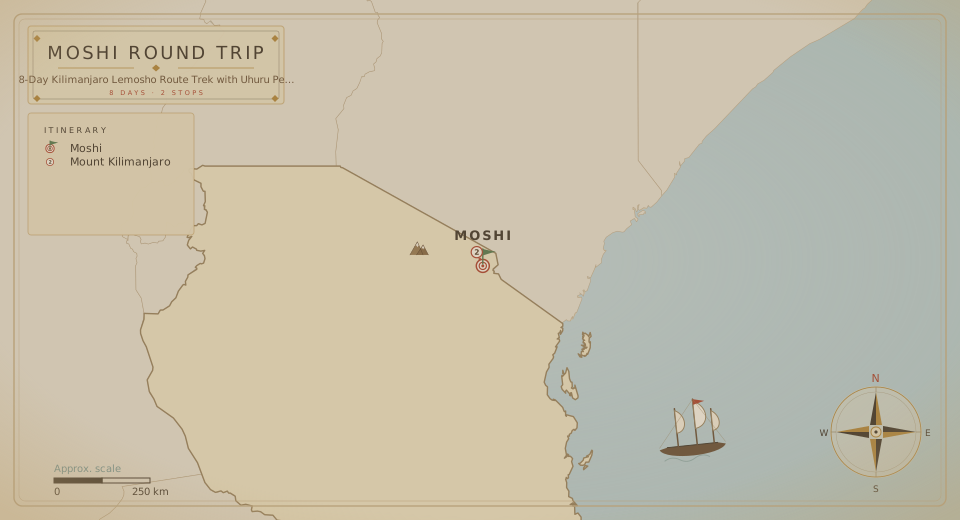
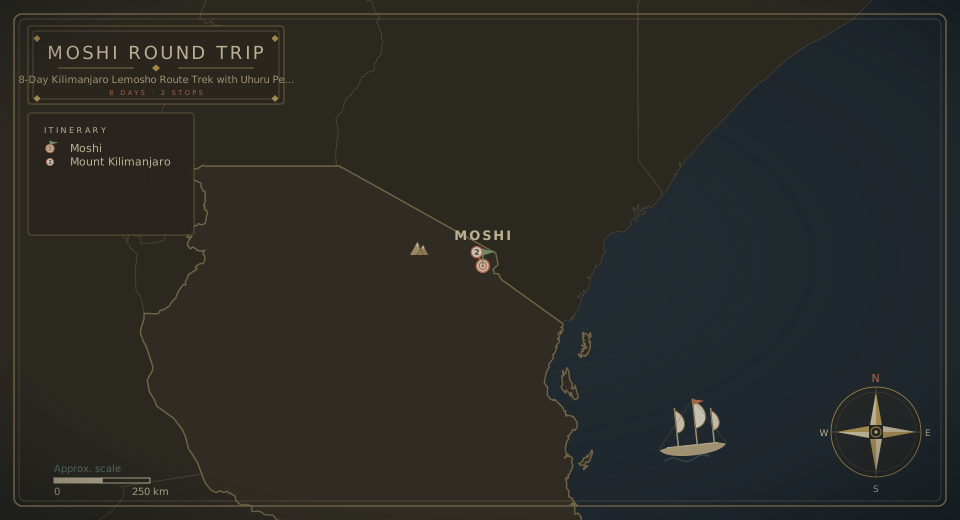
Tour route map
Round trip from Mt Kilimanjaro 2 cities · 8 Days

The fine print

Trip details

What's Included

  • Airport pickup and drop-off
  • Park fees, camping fees, hut fees, and rescue fees
  • Team Kilimanjaro Rescue fees
  • 18% VAT on tour fees and services
  • 4-season mountain tents
  • Double-layered sleeping mats, 4 inches (10cm) thick
  • Friendly and professional mountain guides, cook, and porters
  • 3 meals daily while on the mountain
  • Enough treated and filtered drinking water throughout the trek
  • Hot water for washing
  • Portable oxygen tanks and ox meter
  • Emergency first-aid kit
  • Portable flush toilet with a toilet tent
  • Mountain climbing certificates

What's Not Included

  • International or local flights
  • Optional activities
  • Alcoholic and soft drinks
  • Tips for guides, porters, and cook
  • Visa fees
  • Travel insurance
  • Personal spending money for souvenirs, etc.
  • Laundry (available at the hotel)

What to bring

When hiking Mount Kilimanjaro via the Lemosho Route for 8 days, it is essential to pack carefully. The weather can vary greatly at different altitudes, ranging from hot and humid in the lower rainforest to freezing cold at the summit.

Clothing (Layering is Key)

  1. Base layers (moisture-wicking):

    • Long-sleeve moisture-wicking shirts (avoid cotton).
    • Thermal underwear (top and bottom) for cold nights at higher altitudes.
  2. Mid-layers:

    • Fleece jacket or down jacket for warmth.
    • Lightweight insulating layer, such as a soft-shell or down vest.
  3. Outer layer (weather protection):

    • Waterproof, windproof jacket (breathable) for rain and wind.
    • Waterproof pants for wet conditions.
  4. Pants and shorts:

    • Convertible pants (zip-off for warmth or comfort).
    • Knee-length shorts for lower altitudes (optional).
  5. Headwear:

    • Wide-brimmed hat for sun protection in lower altitudes.
    • Beanie or warm hat for summit night and cold evenings.
    • Buff or scarf for protecting your face from dust or cold.
  6. Gloves:

    • Lightweight gloves for the lower altitudes.
    • Insulated gloves for summit day, when it gets freezing.
  7. Socks:

    • Moisture-wicking socks (bring 5-6 pairs).
    • Wool socks for summit day to keep feet warm.
  8. Boots:

    • Sturdy, waterproof hiking boots with ankle support and proper break-in.
    • Camp shoes, such as sandals or lightweight sneakers, for the evenings at camp.

Essential Gear

  1. Backpack (30-40L) for daily hikes.

    • Daypack to carry snacks, water, and a camera during day treks.
  2. Sleeping bag (for high-altitude, cold weather):

    • 4-season sleeping bag rated for temperatures as low as -10°C to -20°C (14°F to -4°F).
  3. Trekking poles:

    • Collapsible poles to help with stability on rocky paths, especially on the Barranco Wall.
  4. Hydration:

    • Water bottles (2-3L capacity) or a hydration system like Camelbak, with an insulating sleeve to prevent freezing on summit night.
    • Water purification tablets or filters in case you run out of clean water.
  5. Headlamp with extra batteries for early starts, nighttime walks, or the summit push.

  6. Personal items:

    • Sunglasses with UV protection for high altitudes.
    • Sunblock with high SPF and broad-spectrum protection for sun exposure.
    • Lip balm with SPF to protect lips from wind and sun.
    • Insect repellent for lower altitudes, especially rainforest areas.

Health and Safety

  1. First-aid kit:

    • Include bandages, pain relievers, anti-inflammatory tablets, blister treatment, and personal medications.
    • Altitude sickness medication, such as Diamox, if prescribed by your doctor.
  2. Hand sanitizer and wet wipes for hygiene, as facilities may be limited.

  3. Personal toilet paper and tissues, as some camps may have limited or no toilets.

  4. Water purification tablets or a water bottle filter, just in case.

Summit Day Essentials

  1. Summit clothing:

    • Down jacket, essential for freezing temperatures at the summit.
    • Thermal pants and an extra pair of warm socks for summit day.
    • Gaiters to protect against snow and scree.
    • Balaclava or face mask to protect against wind chill.
  2. Snacks:

    • High-energy snacks, such as energy bars, chocolate, nuts, and dried fruit, for quick energy on summit night and long hikes.

Personal Items

  1. Passport and copies for entry permits.
  2. Travel insurance, especially for trekking and evacuation.
  3. Camera and extra batteries, as cold weather can drain batteries quickly.
  4. Notebook or journal for recording your experience.

Optional Items

  1. Camera with extra memory cards and a power bank.
  2. Hiking gaiters for added comfort and protection in snow and scree.

Group Gear (provided by your operator)

  • Tents (shared).
  • Cooking equipment and mess tents.
  • Porters carry the majority of the weight, including shared camping gear, so you will only need to carry your personal items and daypack.

Know before you go

Before embarking on the 8-day Kilimanjaro trek via the Lemosho Route, there are several key things to know to ensure you are well prepared for the adventure.

1. Route Overview

  • The Lemosho Route is known for its scenic beauty, diverse ecosystems, and gradual ascent, making it ideal for acclimatization. It is one of the quieter, less crowded routes, offering a more peaceful experience on the mountain.
  • An 8-day trek provides plenty of time for acclimatization, which increases your chances of successfully reaching the summit.

2. Physical Preparation

  • Fitness: You do not need to be an elite athlete, but a moderate level of fitness is important. Training for stamina, including long hikes, cardio, and strength work, will help you manage the long days of trekking and the altitude.
  • Acclimatization: The Lemosho Route's longer itinerary allows for gradual ascent, reducing the risk of altitude sickness. However, altitude can still be challenging, so listen to your body and stay hydrated.

3. Weather and Conditions

  • Weather variations: The climate changes dramatically as you ascend - from hot and humid in the rainforest at lower altitudes to freezing cold and snowy conditions at the summit. Be prepared for all types of weather, including rain, snow, and wind.
  • Summit night: Expect freezing temperatures around -10°C to -20°C (14°F to -4°F) on summit night. The climb to the summit, Uhuru Peak, is done in the early morning hours to catch the sunrise, so dress warmly.

4. Altitude Sickness

  • Symptoms: Headaches, nausea, dizziness, and fatigue are common. It is important to acclimatize properly by following your guide's instructions, drinking plenty of water, and taking it slow.
  • Prevention: Take Diamox, if prescribed, for altitude sickness prevention. "Climb high, sleep low" days will help your body adjust to the increasing elevation.

5. Packing Essentials

  • Clothing: Layering is essential. Pack moisture-wicking base layers, insulating mid-layers such as fleece or down, and a waterproof outer layer. Do not forget warm clothes for summit day, including a down jacket, insulated gloves, and warm socks.
  • Footwear: Bring sturdy, waterproof hiking boots with ankle support and break them in before the hike. Also pack lightweight camp shoes.
  • Sleeping bag: You will need a 4-season sleeping bag, rated for temperatures as low as -10°C (14°F) for summit night.
  • Trekking poles: These help with stability, especially on challenging sections like the Barranco Wall.

6. Physical and Mental Preparation

  • Mental toughness: The climb to the summit is mentally challenging, especially the final push after a long night of hiking. Be prepared for long days of trekking, and maintain a positive attitude.
  • Pacing: The Lemosho Route's slow pace is designed for better acclimatization, but it is still a demanding hike, so pace yourself and take rest breaks.

7. Safety and Health

  • First aid: Carry a basic first-aid kit, including pain relievers, blister treatments, and any personal medications.
  • Hydration and snacks: Drink plenty of water, at least 3-4 liters a day, and carry energy snacks like bars, nuts, and dried fruit for quick energy.
  • Vaccinations: You may need vaccinations for diseases like yellow fever, typhoid, and hepatitis A/B. Consult with a healthcare provider well in advance.

8. Guides and Porters

  • Professional guides: Make sure your trek is with a licensed operator who provides experienced guides, cooks, and porters. They play a crucial role in your safety and experience on the mountain.
  • Porters: Porters carry your gear, except for your daypack, so pack light and ensure your gear is divided into manageable portions.

9. Tipping

  • Tipping guidelines: Tipping is common on Kilimanjaro. You will typically tip your guide, cook, and porters at the end of the trek. On average, tips can range from $10-$20 per day for the head guide, and $5-$10 per day for porters and cooks.

10. Travel Logistics

  • Visa and permits: Make sure to check visa requirements for Tanzania, as you can get a visa on arrival for most nationalities. Your trek operator will also arrange the necessary park permits.
  • Travel insurance: Comprehensive travel insurance is a must, covering evacuation, medical expenses, and trip cancellation.
  • Arrival and departure: Plan to arrive in Arusha a day or two before your trek begins. The drive to the Lemosho Gate, where the trek starts, takes about 3-4 hours.

11. Communication

  • Limited connectivity: Expect limited or no mobile phone signal during the hike. The focus is on disconnecting and immersing yourself in nature.
  • Safety communication: Guides will have radios or satellite phones for emergencies, and there will be a communication protocol with the park rangers in case of an emergency.

12. Environmental Responsibility

  • Leave no trace: Ensure you leave the mountain as you found it - take all trash with you, avoid using disposable plastics, and respect the local environment and wildlife.
  • Eco-friendly trekking: Some tour operators have a strong commitment to responsible tourism, supporting sustainable practices, including conservation efforts and supporting local communities.
  • As a newer route, it is more remote and arguably more beautiful, but a bit longer and slightly more expensive. It starts on the western side of the mountain at the Londorossi Gate, which is a further drive from town, and was introduced as an alternative to the Shira Route. After beautiful forests and moorlands, it crosses the Shira Plateau on day 3 to connect with the Machame Route at Lava Tower and down toward Barranco Valley via the Southern Circuit. You may be lucky enough to see buffalo, elephant, and other game. Because this route can be done over a longer period of time for acclimatization, it has a higher summit success rate.

Logistics

Meeting & route

Meeting point
Kilimanjaro International Airport, Kilimanjaro Airport Road, Tanzania
Tour start
Mt Kilimanjaro, Tanzania
Tour ends at the same location as the start point.
End of the journey

Your 8 days finish where they began, in Mt Kilimanjaro.

Watch the tourHQ film Watch the film

Create your own adventure

Can't find the perfect tour? Tailor your dream trip.

  • Tell us your destination, dates and group size.
  • Our travel experts and local guides design a tailored itinerary, just for you.
  • Enjoy your trip with peace of mind, knowing everything is taken care of.
Plan my holiday

Say goodbye to travel stress.

Starting from

USD 2,390 /person
Book This Tour

Estimated room rates

Single Room $2,390.00 — $2,889.00
Double Sharing $2,390.00 — $2,670.00

When

Travellers

Total