Overview of the trek
Pikey Peak Trek is the epitome of mountain trekking adventures in Nepal. This leisurely trek provides one of the best views of Mt. Everest, the highest mountain in the world. The stunning terrain and rich vegetation of the Khumbu region add even more to the magical experience of Pikey Peak. Countless Buddhist monasteries, gompas, and stupas provide a spiritual experience for travellers. The tranquil air coming from the Himalayas cleanses not only your body, but also your mind and soul.
Pikey Peak Trek is a rejuvenating experience that deserves a place on your Nepal travel list. Even Sir Edmund Hillary considered Pikey Peak Trek to be his favourite trekking route, which makes it even more intriguing.
Location of the trek - how to get there
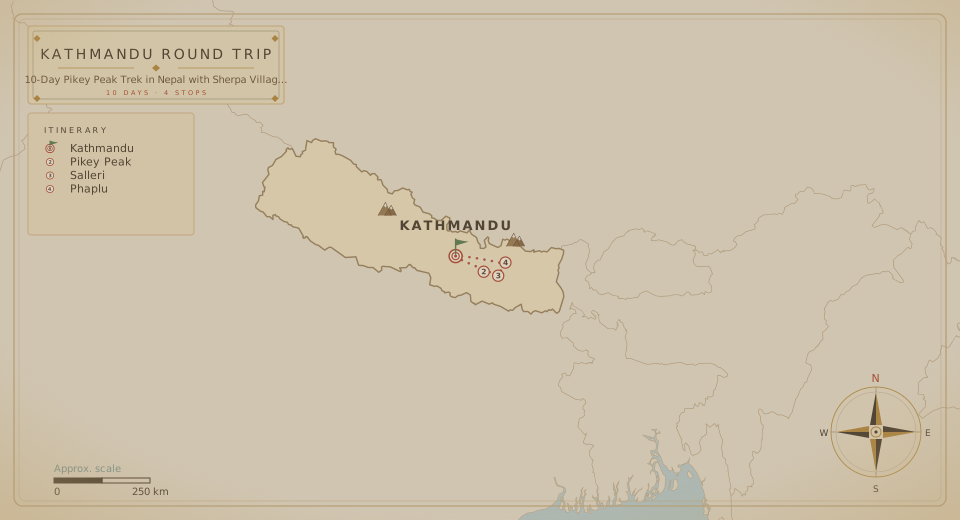
The Pikey Peak trekking route lies in the mesmerizing Lower Khumbu region of Nepal, in Solukhumbu District. The trekking route starts from Dhap, which is only a 6-7 hour drive from Kathmandu. You can also reach the trekking destination by a 30-minute flight to Phaplu from Kathmandu. Thus, it is one of the closest and most easily accessible mountain trekking routes from Kathmandu with such a spectacular Mt. Everest view.
Difficulty of the trek
The difficulty of Pikey Peak Trek is rated as moderately tricky compared to other treks in the Everest region. Even though it is essentially an off-the-beaten-trail route, the trekking path is somewhat levelled, and there are very few challenging or steep inclines. There is no need for special training, and even novice trekkers can enjoy the trek equally. The daily trekking duration is also 5-6 hours on average. The 6-7 day trek reaches a highest elevation of 4,065 m. You can prepare with regular physical exercise and activities like swimming, cycling, and running to build endurance for the trek.
Since the trail is essentially an off-the-beaten-trail route, accommodation is limited. Prior reservations for lodging are necessary. Make sure you are also informed about permit and visa conditions before travelling to Nepal. It is advisable to have a proper doctor's appointment to understand your medical needs before you travel. Local currency is a must when travelling to these rural regions, as foreign currency is not accepted.
Best season - Spring/Autumn/Winter
The ideal time for the Pikey Peak Trek is during spring, autumn, and winter, especially from September to December and from February to May. The mountain peaks are freshly snow-covered during this time and visibility is generally better.
Except for winter, spring and autumn also bring warmer temperatures, making trekking even more refreshing. The days are mostly sunny and free of clouds, so you can enjoy unobstructed mountain views at any time. There are also fewer cancellations and delays in domestic flights during this period. Winters in Pikey Peak can be turbulent at times, but the days are usually short and sunny.
Trek route
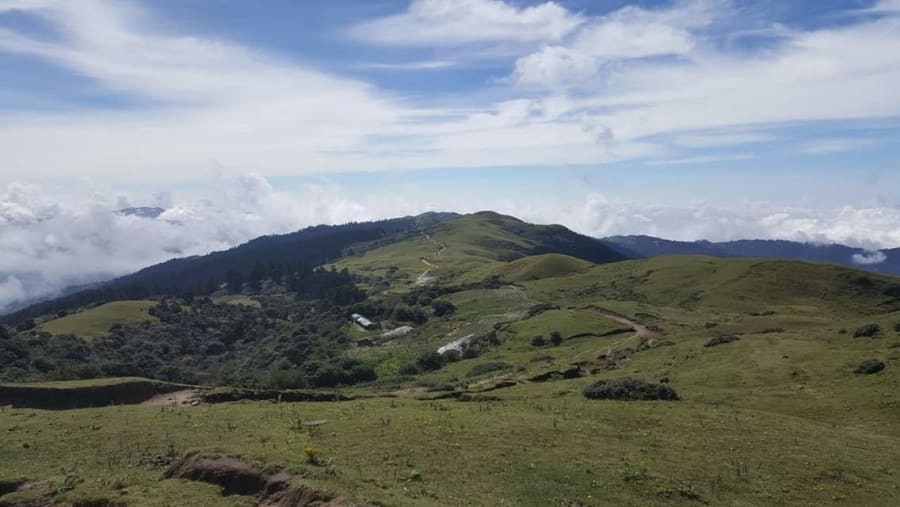
The seven-day Pikey Peak trekking route, at a leisurely pace, starts with a short 6-7 hour drive from Kathmandu to Dhap. From here, the journey on foot along the gentle terrain of Khumbu begins. The first encounter with mountain ranges comes on the trek from Dhap to Jhapre, where the stunning Numbur Himal comes into view.
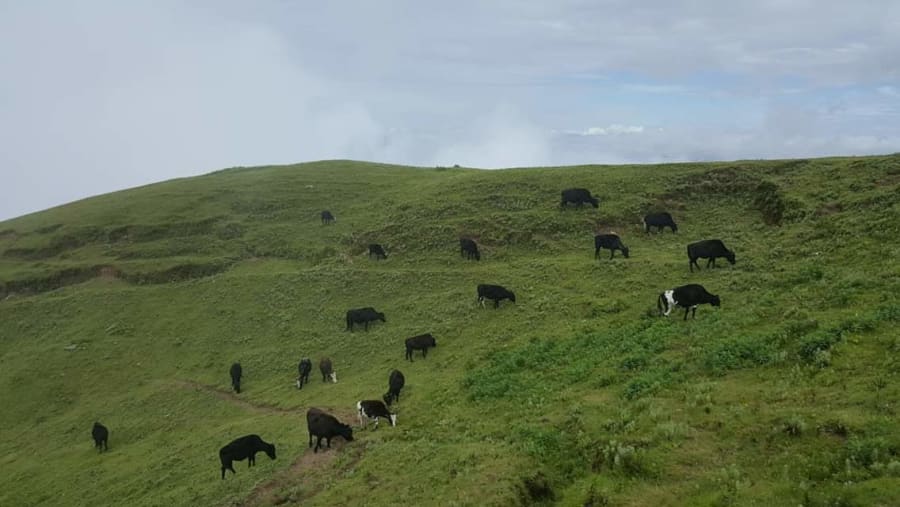
The trek from Jhapre to Pikey Peak Base is filled with several stupas, gompas, and old yak houses. The trail takes you through grassy ridges and forested terrain. During spring, these forests are dyed red with blossoming rhododendrons. After resting at Pikey Peak Base for the night, the next morning brings the hike to Pikey Peak to witness the stunning sunrise. Following the ridgeline of Loding, you then continue to Junbesi. Next comes the exploration of the ancient Thubten Choeling Monastery in Junbesi, which takes about 4 hours to complete.
From Junbesi, you are met with steep forest trails to Salung. Here, you can enjoy stunning unobstructed views of Khumbu giants like Mt. Everest, Mt. Chamlang, Mt. Makalu, and more. The trek's final destination is Phaplu, where you will spend your last night and then fly back to Kathmandu, marking the end of your trek.
You can also choose to trek to Chiwong Gompa from Phaplu if you wish, as it is separate from the main route. Another trekking option includes a 6-7 hour walk from Junbesi to Salleri, from where you can drive back to Kathmandu. You can also choose a faster climb that takes only 3-4 days, although this may be physically more demanding for novice trekkers.
Accommodation: staying at lodges/home-stays
The Pikey Peak trekking route is still a lesser-known route in the Everest region. Since the route is in a rural area, most available accommodation consists of lodges or locally run home-stays. Here, you are provided with twin-bed rooms with a pair of blankets and pillows. Toilets are generally shared among all guests. Staying in these home-stays and small lodges is a perfect way to connect with local residents and experience their culture and lifestyle up close.
Food: locally grown and organic foods
Because of the remoteness of the area, packed foods are rarely available. Most meals include local produce. Dal, bhat, and curry are staple meals for guests. The vegetables are generally grown locally and without pesticides, making them organic. The trek can therefore be rejuvenating for your stomach as well. These local foods are also known to be among the best remedies for altitude sickness.
Best viewpoint - the twin Pikey Peaks
The twin Pikey Peaks are known around the world for their breathtaking sunrise and sunset views. The view from the peaks, which stand at a height of 4,068 m, is simply stunning. On sunny days, you can witness the marvellous sun-kissed summits of Ghaurishankar, Mt. Numbur, Mt. Everest, Mt. Lhotse, and many other smaller peaks.
Experiencing local culture and tradition
People of Sherpa ethnicity inhabit the Pikey Peak trekking route. Sherpa clans live in these secluded mountain terrains with their unique culture, traditions, lifestyle, and festivities. There are also several Tamang and Magar settlements along the way. The paths are filled with prayer flags, and there are several Buddhist gumbas, stupas, and monasteries that represent the deeply rooted Buddhist culture. This distinctive culture and tradition make the trekking experience even more enjoyable. It is not every day that you get such a close look into the daily lives of people who live in these mesmerizing yet turbulent Himalayan regions.