

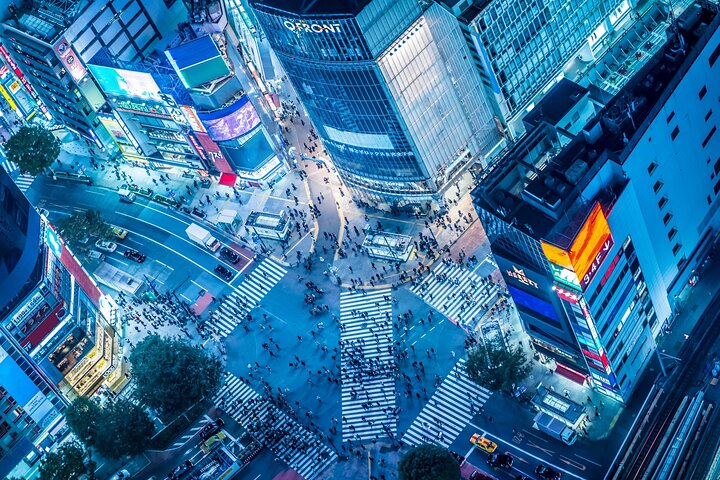
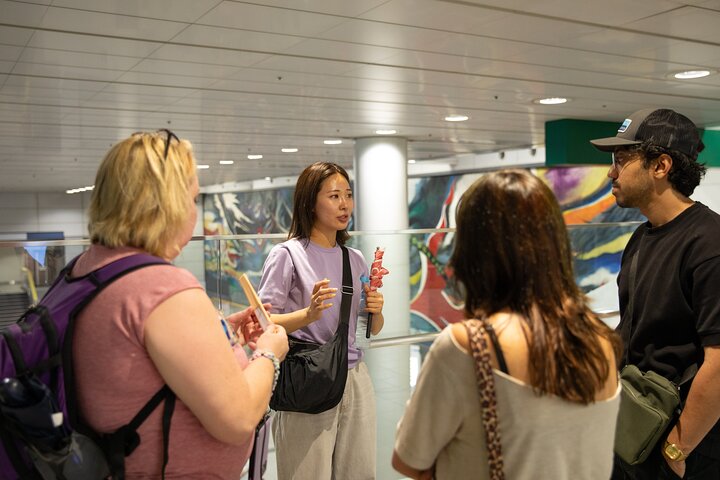
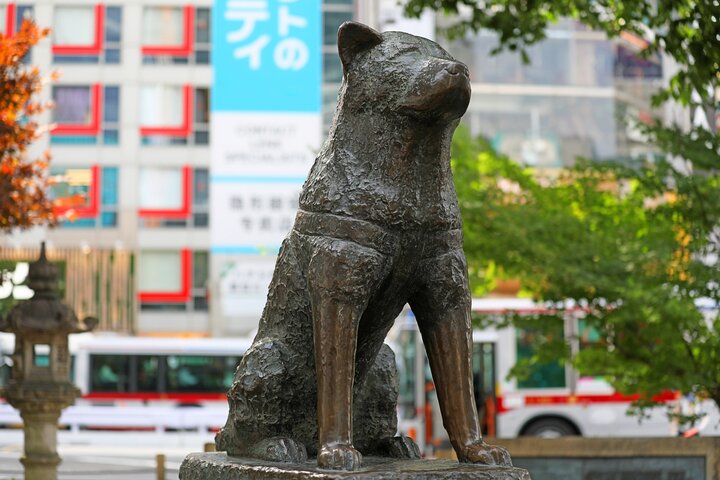
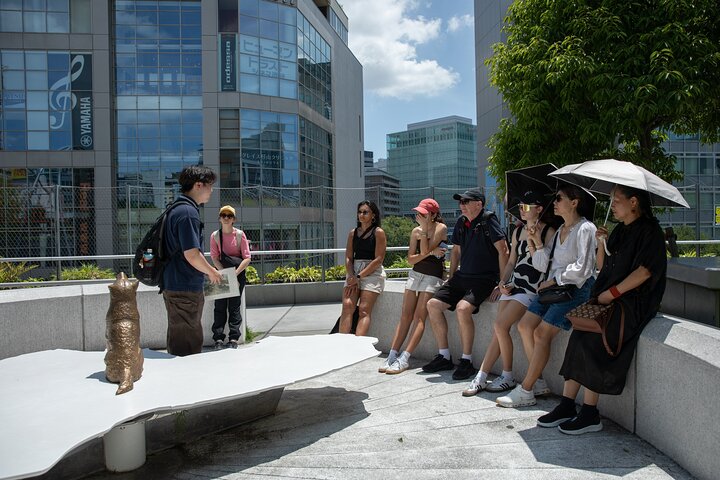
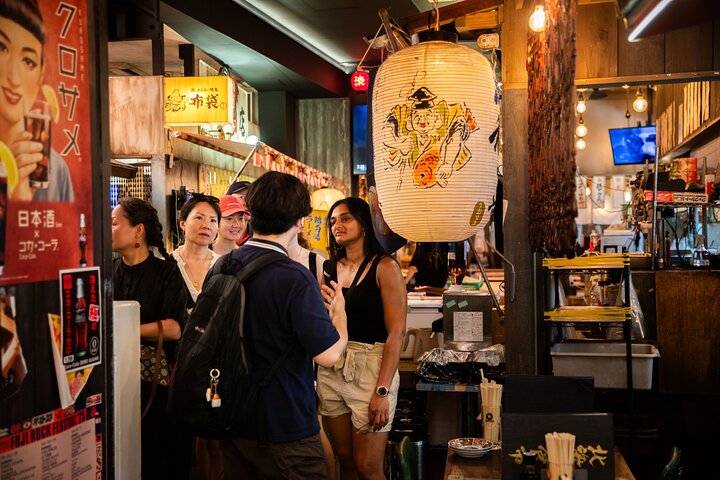
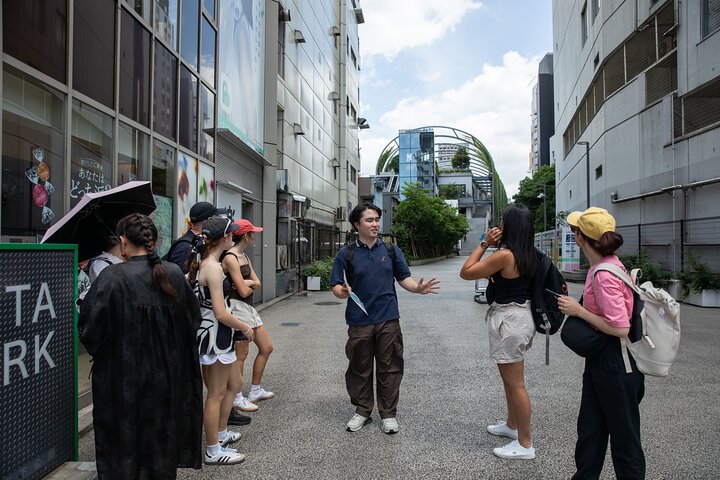
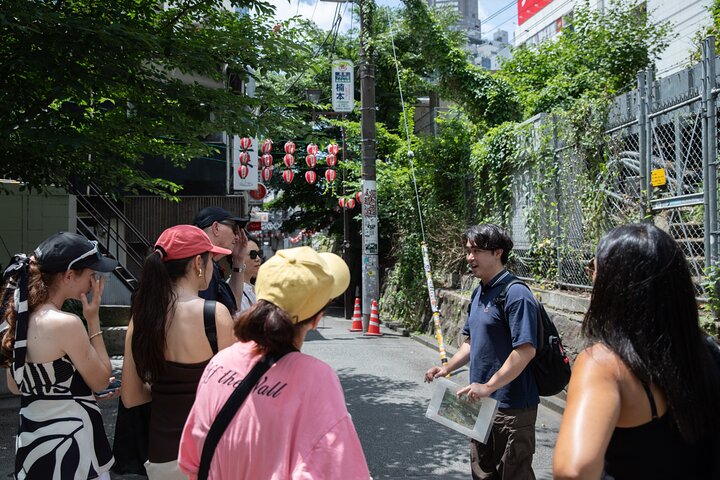
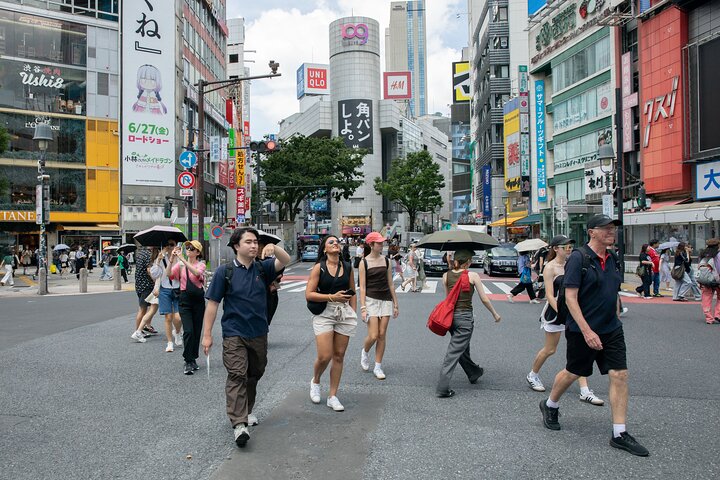
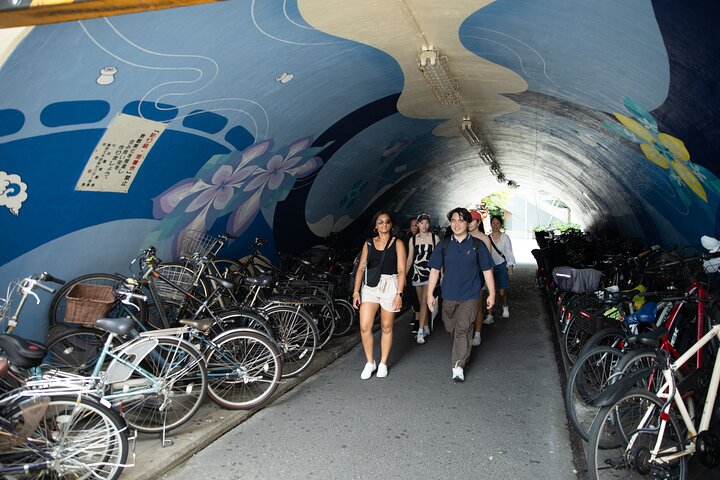
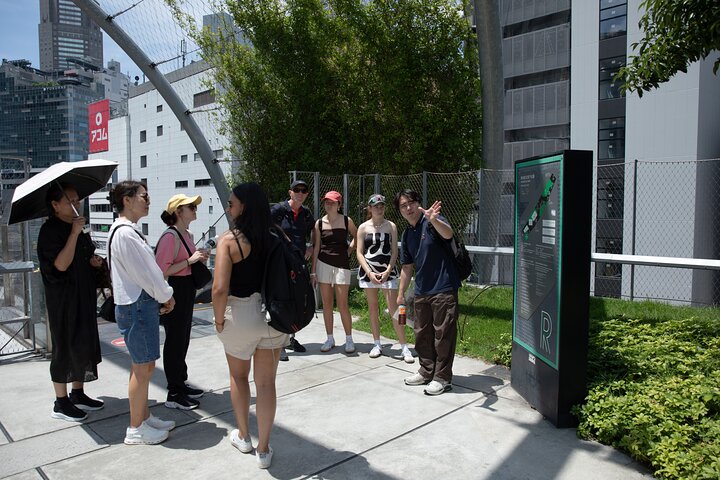
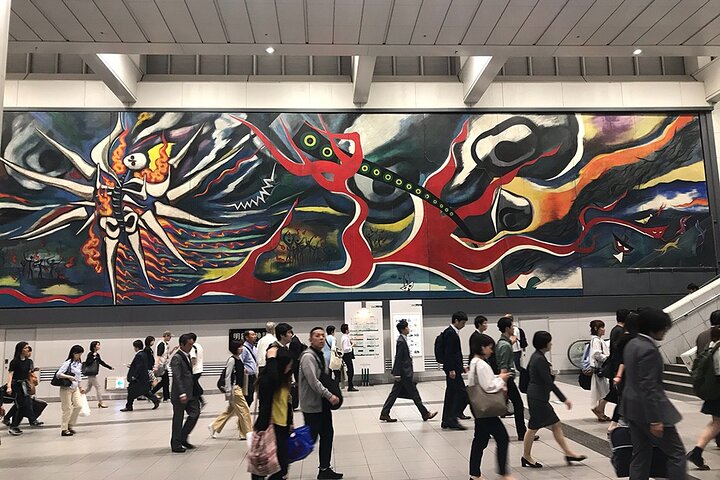
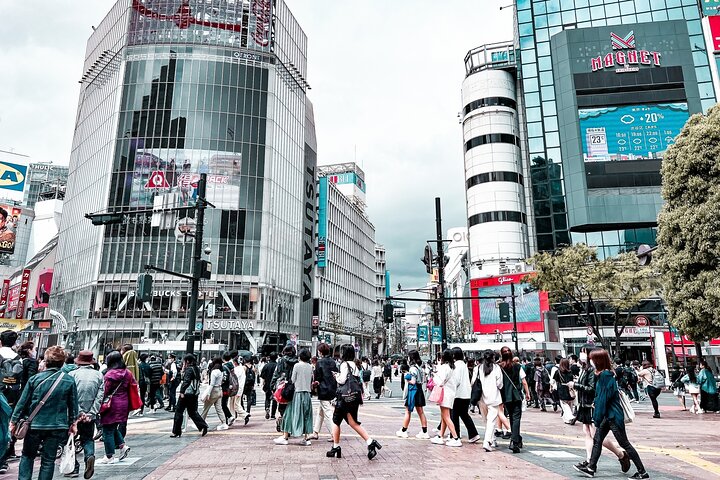
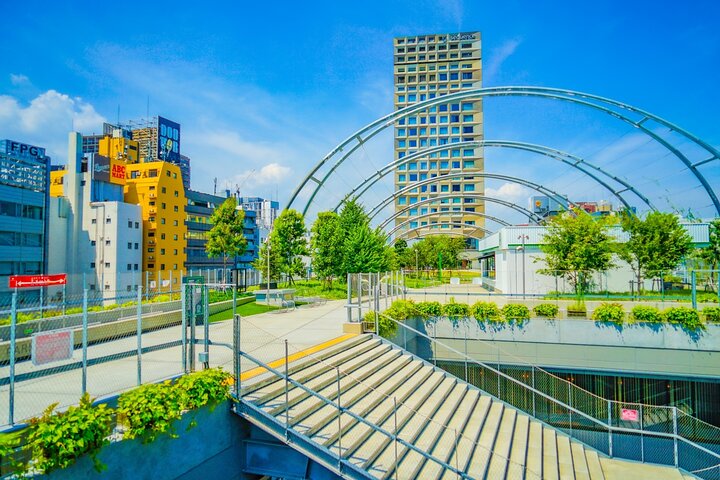
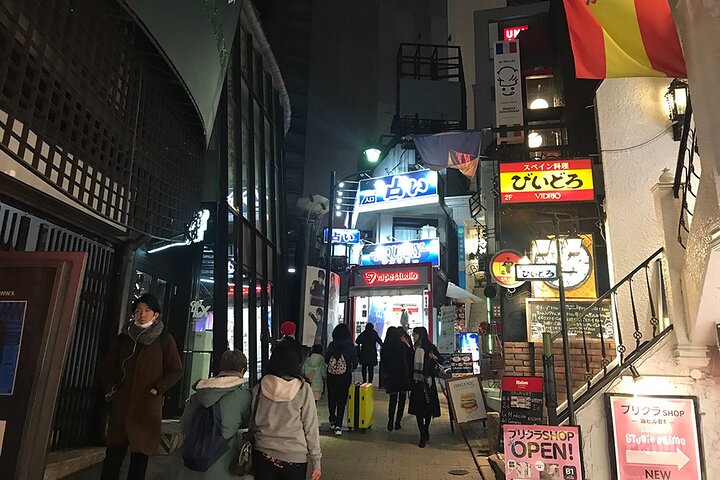
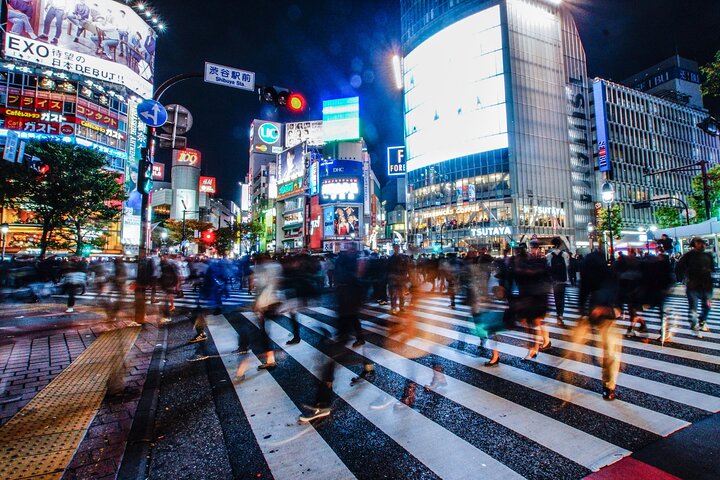
The Myth of Tomorrow" is a large mural created by the famous Japanese artist Taro Okamoto, located in Shibuya Station, Tokyo. This striking piece depicts the horrors and destruction of the atomic bombings of Hiroshima and Nagasaki, as well as a broader message of hope and rebirth. The mural, originally created in Mexico and later moved to Japan, was lost for many years before being rediscovered and restored. Now, it stands as a powerful symbol of post-war rebirth and the potential for a brighter future. Visitors to Shibuya can view this iconic work of art in the bustling context of one of Tokyo's most dynamic neighborhoods, making it a poignant stop in the heart of modern Japan.Shibuya Crossing, often referred to as "The Scramble," is one of the most iconic landmarks in Tokyo, Japan. Located in front of Shibuya Station, this intersection is famed for being one of the busiest pedestrian crossings in the world. Every few minutes, the traffic lights turn red in all directions, allowing hundreds of people to flood into the intersection from all sides, creating a remarkable spectacle of organized chaos. The area surrounding Shibuya Crossing is a hub of activity, filled with shopping, entertainment, and dining options, making it a vibrant snapshot of Tokyo's fast-paced urban culture. It's a must-see for visitors looking to experience the pulse of the city.Miyashita Park in Shibuya, Tokyo, is a unique urban renewal project that transforms a conventional park into a multi-level sports and recreational facility. Spanning over an area once known merely as a simple green space, the redesigned Miyashita Park now features a variety of sports facilities including a skate park, a climbing wall, and a multi-use sports court. It also hosts a variety of shops and eateries, effectively blending leisure, shopping, and dining into one seamlessly integrated space. Located directly above Shibuya Station and stretching between Shibuya and Harajuku, the park offers both locals and tourists a refreshing, contemporary place to relax, exercise, and enjoy the bustling city environment from a fresh perspective.Nonbei Yokocho, often translated as "Drunkard's Alley," is a charming and historical part of Shibuya, Tokyo. This narrow alleyway is tucked away near Shibuya Station and is famed for its tiny, traditional Japanese bars and eateries. The area, which consists of two parallel lanes, is packed with small establishments, some of which can only seat a handful of patrons at a time. Each bar offers a unique atmosphere and specialty, ranging from sake and beer to local snacks and full meals. Nonbei Yokocho provides an intimate setting for visitors to mingle with locals and experience the authentic, cozy izakaya (Japanese pub) culture that is a stark contrast to the bustling Shibuya outside. It's a must-visit for anyone looking to dive deeper into Tokyo's culinary and social fabric.Shibuya Center Gai is a vibrant and bustling shopping street at the heart of Tokyo's Shibuya district, known for its youthful energy and trend-setting culture. This pedestrian zone draws both locals and tourists with its wide array of shops, boutiques, and eateries, ranging from big brand names to unique, independent outlets. The street is also famous for its nightlife, featuring numerous bars, clubs, and live music venues that capture the vibrant spirit of Tokyo after dark. Center Gai is the epitome of Shibuya's fast-paced, fashion-forward, and multimedia-influenced character, making it an essential experience for anyone visiting the city and looking to immerse themselves in Tokyo's contemporary urban culture.Maruyama-cho in Shibuya, Tokyo, is a neighborhood known for its historical significance as the city's former red-light district. Today, it has transformed into a trendy area that retains an eclectic mix of the old and new. The neighborhood boasts a variety of entertainment options including live music venues, bars, and restaurants, alongside remnants of its past like love hotels and smaller, more traditional establishments. Maruyama-cho has a slightly edgier vibe compared to more polished areas of Shibuya, offering a blend of cultural experiences that appeal to both history enthusiasts and those looking to enjoy Tokyo's modern nightlife and entertainment scene. This combination makes Maruyama-cho a fascinating stop for visitors interested in exploring the layers of Shibuya's urban culture.The Hachiko Statue, located just outside Shibuya Station in Tokyo, is one of the most beloved landmarks in Japan. This bronze statue commemorates Hachiko, an Akita dog who became famous for his unwavering loyalty. Hachiko waited for his owner at Shibuya Station every day, even continuing to do so for nearly a decade after his owner's death in 1925. The story of Hachiko touches the hearts of many and symbolizes loyalty and devotion. Today, the statue is a popular meeting spot for locals and a must-visit for tourists, often serving as a poignant reminder of the enduring bonds between humans and their pets. The area around the statue frequently buzzes with visitors taking photos and enjoying one of Tokyo's most heartfelt stories.
Tokyo Shibuya Crossing & Hidden Streets Walking Tour
The journey
- 01 See the world-famous Shibuya Crossing
- 02 View Taro Okamoto’s The Myth of Tomorrow mural
- 03 Explore hidden lanes like Nonbei Yokocho
- 04 Walk through the lively Center Gai district
- 05 Visit modern Miyashita Park
- 06 Discover the contrasting character of Maruyama-cho
- 07 Finish at the iconic Hachiko Statue
Discover the many sides of Shibuya on this 2-hour walking tour through one of Tokyo’s most iconic neighborhoods. From the world-famous Shibuya Crossing to tucked-away backstreets, this experience blends major landmarks with lesser-known corners that reveal the district’s character, history, and energy.
Along the way, explore highlights such as Taro Okamoto’s powerful The Myth of Tomorrow, the lively atmosphere of Center Gai, the nostalgic lanes of Nonbei Yokocho, modern Miyashita Park, and the beloved Hachiko Statue. It’s a great way to experience Shibuya’s mix of culture, shopping, nightlife, and local stories in a short time.
At a glance
What this trip includes
Day by day
The itinerary
The route
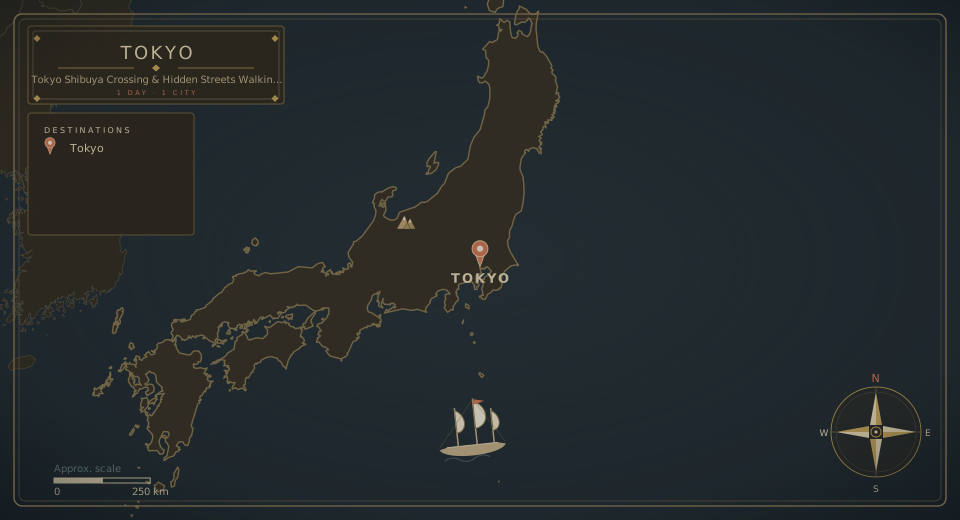
Where you'll travel
The fine print
Trip details
What's Included
All Fees and Taxes
What's Not Included
Tips to the guide
Know before you go
- STROLLER OR PRAM ACCESSIBLE
- ANIMALS OR PETS ALLOWED
- PUBLIC TRANSPORTATION NEARBY
- Not wheelchair accessible
- Infants must not sit on laps
- Infant seats unavailable
Logistics
Meeting & route
Your 2 hours finish where they began, in SABON Shibuya Mark City.
 Watch the film
Create your own adventure
Can't find the perfect tour? Tailor your dream trip.
- Tell us your destination, dates and group size.
- Our travel experts and local guides design a tailored itinerary, just for you.
- Enjoy your trip with peace of mind, knowing everything is taken care of.
Say goodbye to travel stress.