Nepal · Trekking

14-Day Everest Base Camp Trek from Kathmandu with Kala Patthar

14 Days Round trip from Kathmandu 44600 Hard pace

The journey

Trip highlights
  • 01 Experience the world-famous Everest Base Camp Trek
  • 02 Trek through picturesque Sherpa villages and lush valleys
  • 03 Visit Namche Bazaar and the Tengboche Monastery
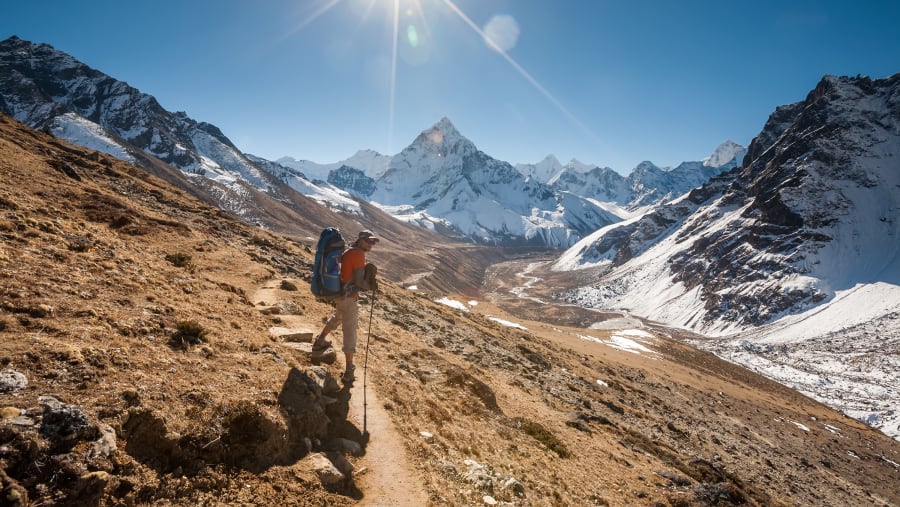
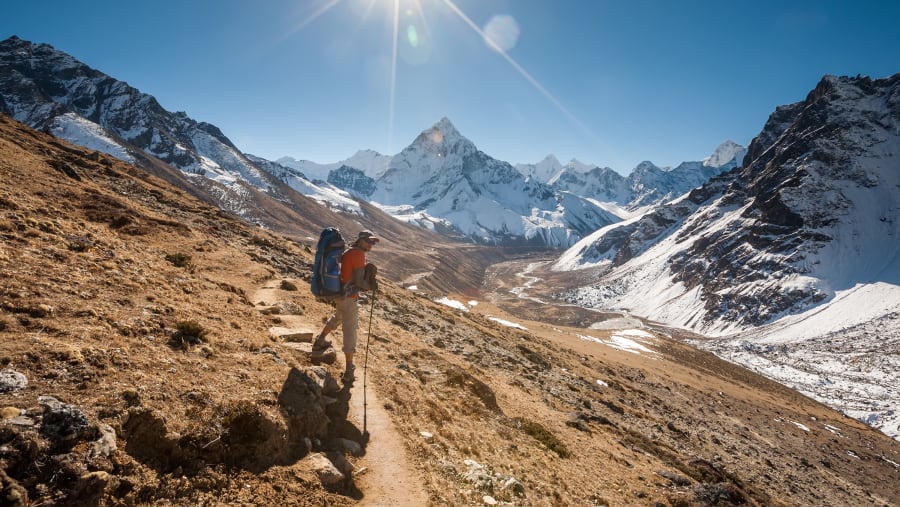
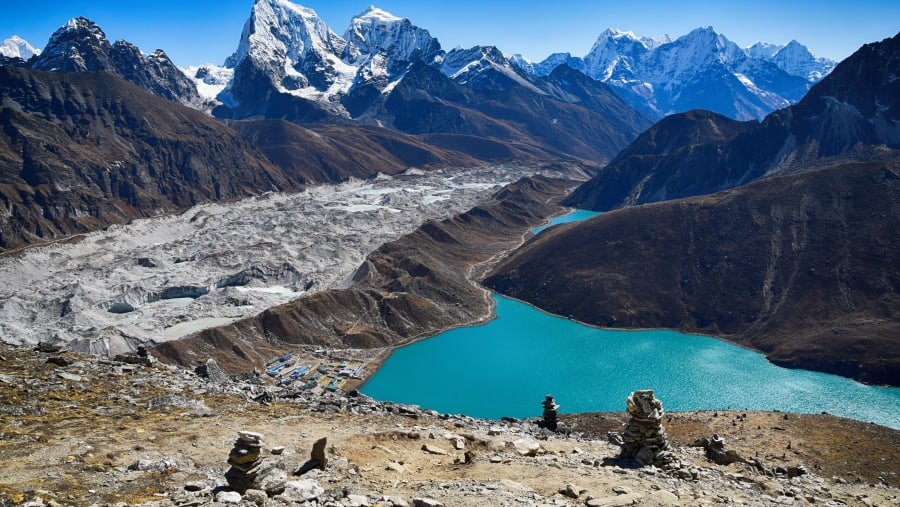
  • 04 Witness stunning views of Everest, Lhotse, and Ama Dablam
  • 05 Reach an altitude of 5,364m at Everest Base Camp

Experience the world-famous Everest Base Camp Trek on a 14-day journey from Kathmandu through the heart of the Khumbu region. Explore Thamel before flying to Lukla and trekking through picturesque Sherpa villages, lush forests, suspension bridges, and dramatic alpine landscapes. Acclimatize in Namche Bazaar and Dingboche, visit the Sherpa Museum and Tengboche Monastery, and enjoy stunning views of Everest, Lhotse, Ama Dablam, and other Himalayan peaks. The adventure culminates at Everest Base Camp and Kala Patthar, where unforgettable sunrise views reward your efforts.

Reaching Base Camp is a surreal experience-here, you'll stand in the shadow of the world's tallest peak and be surrounded by the famous Everest expedition camps.

From the itinerary

At a glance

What this trip includes

Duration 14 Days
Tour type Private
Activity level Hard
Accommodation Included · Budget
Transport Included
Wheelchair access No
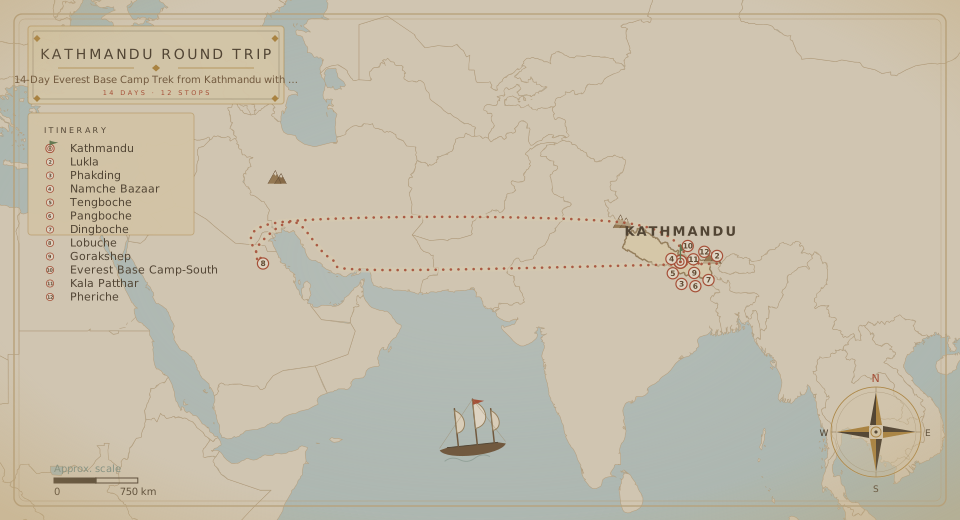
Cities Kathmandu, Everest Base Camp-South, Lukla, Dingboche, Namche Bazaar, Tengboche, Phakding, Lobuche, Kala Patthar, Pangboche, Gorakshep, Pheriche
Languages English

Day by day

The itinerary

1
Day 01

Arrival in Kathmandu and Trek Preparation

Altitude: 1,400m (4,593ft)

Activity: Arrival and preparation

  • Upon arrival at Tribhuvan International Airport in Kathmandu, you will be transferred to your hotel.
  • After a short rest, you can explore the vibrant streets of Thamel, Kathmandu's famous tourist hub, or visit nearby cultural landmarks.
  • In the evening, you will attend a trek briefing, where guides will discuss the itinerary, gear, and trekking essentials. Spend the night preparing for your adventure.
2
Day 02

Flight to Lukla and Trek to Phakding

Altitude: 2,800m (9,186ft) in Lukla and 2,652m (8,700ft) in Phakding

Trekking Time: 3-4 hours

  • In the morning, take a thrilling 35-minute flight to the famous Tenzing-Hillary Airport in Lukla. The flight offers spectacular views of the Himalayan peaks.
  • After landing, the trek begins with a gentle descent to the village of Phakding.
  • You'll pass by terraced fields, small settlements, and scenic rivers. Phakding, a peaceful village on the banks of the Dudh Koshi River, is your first overnight stop, allowing your body to acclimatize gradually.
3
Day 03

Trek from Phakding to Namche Bazaar

Altitude: 3,440m (11,286ft)

Trekking Time: 6-7 hours

  • The trek from Phakding to Namche Bazaar, the Sherpa capital, begins with a relatively easy walk alongside the Dudh Koshi River, passing through pine forests and crossing several suspension bridges.
  • As you gradually ascend, the trail steepens, and after crossing the famous Hillary Suspension Bridge, you'll begin a steep climb to Namche.
  • About halfway through the ascent, you'll catch your first glimpse of Mount Everest in the distance. Namche is a bustling village with various shops, cafes, and markets, making it an ideal place for acclimatization.
4
Day 04

Acclimatization in Namche Bazaar

Altitude: 3,440m (11,286ft)

  • Acclimatization is crucial to avoid altitude sickness, and today is set aside to allow your body to adjust to the high altitude.
  • You can explore Namche Bazaar, visiting the Sherpa Museum to learn about local culture and mountaineering history.
  • For those feeling energetic, a hike to Everest View Hotel (3,880m) is recommended. This short trek rewards you with breathtaking views of Everest, Lhotse, Ama Dablam, and other peaks.
  • Return to Namche for the night.
5
Day 05

Namche Bazaar to Tengboche Monastery

Altitude: 3,860m (12,664ft)

Trekking Time: 5-6 hours

  • The trail from Namche to Tengboche offers spectacular views of Everest, Nuptse, Lhotse, and Ama Dablam. You'll follow a ridge with views of the Dudh Koshi Valley, passing through lush rhododendron forests.
  • The final ascent to Tengboche is a steep climb, but the reward is the serene and spiritual atmosphere of the Tengboche Monastery, the largest and most famous in the region.
  • From here, the views of Everest and Ama Dablam are stunning.
  • You'll spend the night in this tranquil village.
6
Day 06

Tengboche to Dingboche via Pangboche

Altitude: 4,410m (14,469ft)

Trekking Time: 5-6 hours

  • After breakfast, you'll descend through forests of pine and rhododendron to the village of Debuche before crossing the Imja Khola River. The trail gradually climbs to the picturesque village of Pangboche, offering panoramic views of Ama Dablam.
  • Continuing on, you'll pass alpine meadows and enter high-altitude terrain as you trek toward Dingboche, a quaint village surrounded by breathtaking mountain scenery. Dingboche is a key acclimatization stop, with views of Lhotse, Nuptse, and Island Peak.
7
Day 07

Acclimatization Day in Dingboche

Altitude: 4,410m (14,469ft)

  • Today is another acclimatization day to help your body adjust to the high altitude. There are several options for hikes, with the most popular being a trek to Nangkartshang Peak (5,083m), offering incredible views of Makalu (the world's fifth-highest peak), Cholatse, and Tawache.
  • Alternatively, you can explore Dingboche and enjoy the peaceful surroundings. This is a good opportunity to rest and mentally prepare for the higher elevations ahead.
8
Day 08

Dingboche to Lobuche Through the Khumbu Glacier Moraine

Altitude: 4,940m (16,207ft)

Trekking Time: 5-6 hours

  • The trail from Dingboche to Lobuche begins with a gradual ascent past alpine landscapes and yak pastures.
  • You'll trek through the Khumbu Glacier moraine, encountering memorials at Thukla Pass dedicated to climbers who lost their lives attempting Everest.
  • From here, the trail ascends steeply to Lobuche, a small settlement surrounded by towering peaks such as Pumori and Nuptse. The altitude begins to feel more intense as you reach Lobuche, so it's important to move slowly and drink plenty of water.
9
Day 09

Lobuche to Everest Base Camp via Gorak Shep

Altitude: 5,170m (16,962ft) in Gorak Shep and 5,364m (17,598ft) at Everest Base Camp

Trekking Time: 7-8 hours

  • Today is one of the most exciting and challenging days of the trek.
  • You'll start with a gradual climb to Gorak Shep, the last village before Everest Base Camp.
  • After a short rest and an early lunch, you'll continue the trek to Everest Base Camp, walking alongside the Khumbu Glacier and navigating rocky terrain.
  • Reaching Base Camp is a surreal experience-here, you'll stand in the shadow of the world's tallest peak and be surrounded by the famous Everest expedition camps.
  • After taking in the awe-inspiring views, you'll return to Gorak Shep for the night.
10
Day 10

Kala Patthar Sunrise Hike and Descent to Pheriche

Altitude: 5,545m (18,192ft) at Kala Patthar and 4,371m (14,340ft) in Pheriche

Trekking Time: 7-8 hours

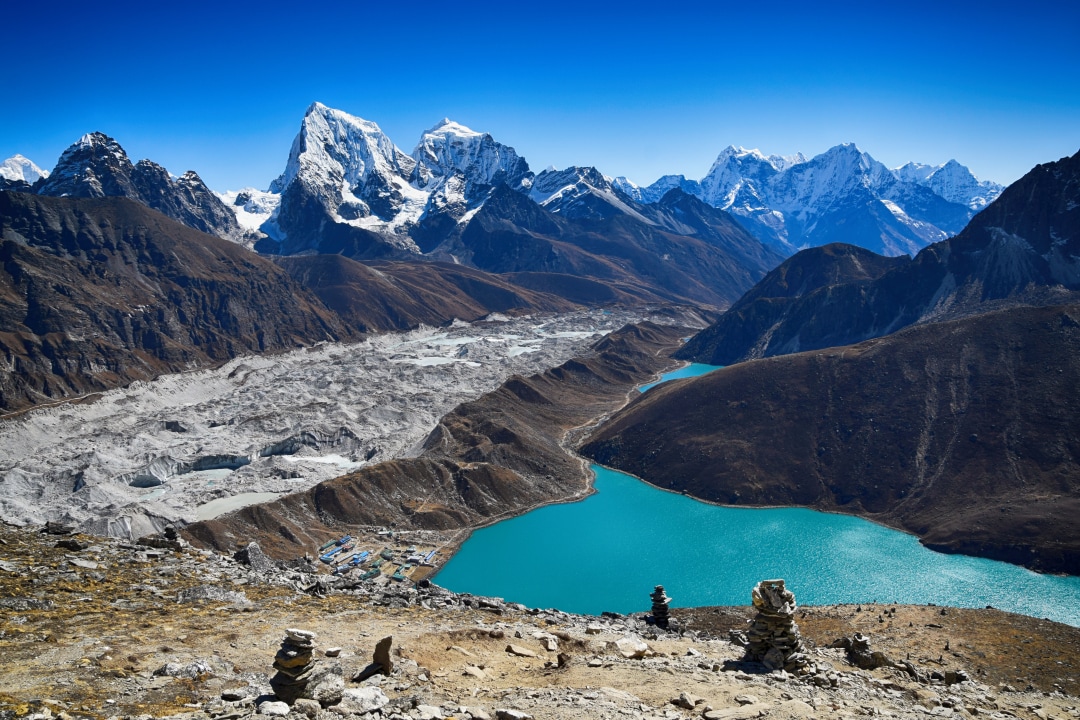
  • A pre-dawn hike to Kala Patthar is the highlight of the trek for many, as it offers the best close-up views of Mount Everest, Pumori, and other peaks.
  • The early morning light creates an unforgettable golden glow on Everest's face.
  • After spending time at the summit of Kala Patthar, you'll descend to Gorak Shep for breakfast before beginning the return journey.
  • The descent to Pheriche is much easier, and you'll feel the benefits of lower altitude as you trek past familiar landscapes.
11
Day 11

Pheriche to Namche Bazaar

Altitude: 3,440m (11,286ft)

Trekking Time: 6-7 hours

  • Retracing your steps, the trek from Pheriche to Namche Bazaar offers a relaxing descent through alpine forests and Sherpa villages.
  • You'll pass by Tengboche, where you can stop for a break and soak in the mountain views once more.
  • The trail then gradually descends through the rhododendron forests, crossing suspension bridges over the Dudh Koshi River before arriving back in Namche Bazaar.
12
Day 12

Final Trek from Namche Bazaar to Lukla

Altitude: 2,800m (9,186ft)

Trekking Time: 6-7 hours

  • Your final day of trekking takes you from Namche Bazaar back to Lukla.
  • The descent is steady, passing through forests and small villages. The walk feels more relaxed as you descend to lower altitudes, with plenty of time to reflect on the journey and take in the scenery.
  • Upon reaching Lukla, you'll celebrate the completion of the trek with your guide and fellow trekkers.
13
Day 13

Flight from Lukla to Kathmandu

Altitude: 1,400m (4,593ft)

  • After breakfast, you'll catch a morning flight from Lukla back to Kathmandu.
  • Upon arrival in Kathmandu, you'll be transferred to your hotel. The rest of the day is free to relax or explore the city.
  • You can visit cultural landmarks, shop for souvenirs, or simply unwind after your trek.
14
Day 14

Departure from Kathmandu

  • Depending on your flight schedule, you may have time for last-minute sightseeing or shopping in Kathmandu.
  • You'll be transferred to the airport for your onward journey, leaving Nepal with unforgettable memories of the Everest Base Camp Trek.
Thamel, Lukla flight, Kala Patthar sunrise

Where this trip takes you

Thamel, Lukla flight, Kala Patthar sunrise

The route

Where you'll travel

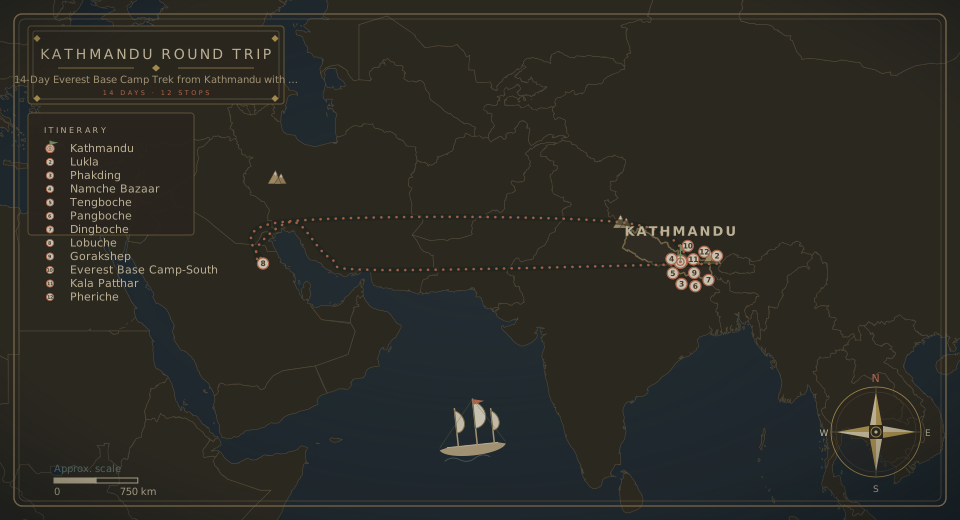
Tour route map
Round trip from Kathmandu 44600 12 cities · 14 Days

The fine print

Trip details

What's Included

  • Private transfers to and from Tribhuvan International Airport (Day 1 and Day 14)
  • 3 nights in a 3-star hotel in Kathmandu with breakfast (Day 1, Day 13)
  • Teahouse accommodations (basic lodges) during the trek
  • Breakfast in Kathmandu
  • All meals (breakfast, lunch, and dinner) during the trek, featuring traditional Sherpa and local meals
  • Round-trip domestic flights from Kathmandu to Lukla and back (Day 2 and Day 13)
  • Sagarmatha National Park Entry Permit
  • Khumbu Pasang Lhamu Rural Municipality Entry Permit
  • Experienced, English-speaking licensed trekking guide
  • Porters (2 trekkers: 1 porter) to carry luggage
  • Guide and porter insurance, meals, accommodation, and salary
  • Trekking map and other necessary trek documentation
  • First aid kit provided by the guide
  • Assistance in renting or buying trekking gear in Kathmandu
  • All government and local taxes, VAT, and service charges

What's Not Included

  • International flights: flights to and from Nepal are not included.
  • Nepal visa fee: obtainable upon arrival at Kathmandu airport or through Nepalese embassies and consulates.
  • Travel insurance: comprehensive insurance that covers high-altitude trekking, helicopter evacuation, and medical emergencies.
  • Lunch and dinner in Kathmandu.
  • Snacks, drinks, and any additional meals during the trek.
  • Hot showers, charging electronic devices, and internet access at teahouses (available for an additional cost).
  • Costs for activities not included in the itinerary, such as sightseeing tours in Kathmandu.
  • Any excursions or additional services not mentioned in the inclusions.
  • Gratuities for guide, porters, and drivers.
  • Personal trekking gear (down jacket, sleeping bag, trekking poles) unless rented or bought separately.

What to bring

1. Clothing:

  • Base Layers (Thermal):
    • Long-sleeve tops and pants for warmth during colder days.
  • Trekking Shirts:
    • Moisture-wicking shirts (both short-sleeve and long-sleeve).
  • Trekking Pants:
    • Lightweight, quick-drying pants for trekking.
    • Insulated pants for colder regions (higher altitudes).
  • Insulating Layers:
    • Fleece jacket for layering.
    • Down jacket (important for cold mornings and nights).
  • Outer Layer (Rain and Wind Protection):
    • Waterproof and windproof jacket with hood.
    • Waterproof trekking pants.
  • Trekking Socks:
    • High-quality woolen or synthetic trekking socks.
  • Innerwear:
    • Comfortable and breathable undergarments.
  • Trekking Boots:
    • Sturdy, waterproof hiking boots with good ankle support.
  • Camp Shoes:
    • Lightweight shoes or sandals for evenings at the teahouses.
  • Warm Hat and Gloves:
    • Woolen hat or beanie for warmth.
    • Lightweight inner gloves and insulated waterproof outer gloves.

2. Headwear and Eyewear:

  • Sun Hat/Cap:
    • Protect yourself from the strong sun at higher altitudes.
  • Sunglasses:
    • UV protection, polarized sunglasses (essential to avoid snow blindness).
  • Buff or Scarf:
    • To protect your face and neck from wind and dust.

3. Trekking Gear:

  • Backpack:
    • A daypack (25-35 liters) to carry essentials during the trek.
    • Waterproof cover for your backpack.
  • Trekking Poles:
    • Adjustable poles for stability, especially on rough or uneven terrain.
  • Sleeping Bag:
    • Rated for -10°C to -20°C. A good quality sleeping bag is essential for colder nights.
  • Headlamp:
    • A strong, durable headlamp with extra batteries for nighttime use.

4. Personal Items:

  • Water Bottles/Hydration System:
    • 2 reusable water bottles or a hydration bladder (minimum 2-3 liters capacity).
    • Water purification tablets or SteriPEN (optional, but recommended).
  • Toiletries:
    • Biodegradable soap, toothpaste, toothbrush, quick-dry towel.
    • Hand sanitizer and wet wipes.
    • Lip balm with SPF and sunscreen (high SPF for the strong sun).
  • First Aid Kit:
    • Personal medications, painkillers, altitude sickness pills (Diamox), blister care (bandages, moleskin), antiseptic cream, and any required prescriptions.

5. Miscellaneous:

  • Snacks:
    • Energy bars, nuts, and other high-calorie snacks.
  • Camera:
    • To capture the stunning landscapes (make sure to carry extra batteries as cold temperatures drain them faster).
  • Power Bank/Solar Charger:
    • For charging electronics (limited charging opportunities at higher altitudes).
  • Dry Bags or Ziplock Bags:
    • To keep your clothes and electronics dry.
  • Books/Journal/Playing Cards:
    • Entertainment during downtime at teahouses.

6. Important Documents:

  • Passport (with valid visa for Nepal).
  • Trekking Permits:
    • Ensure you have your Sagarmatha National Park entry permit and Khumbu Pasang Lhamu Rural Municipality entry permit.
  • Travel Insurance:
    • Comprehensive insurance that covers high-altitude trekking and emergency evacuation.
  • Extra Passport Photos:
    • Required for permits or if needed during the trek.

7. Cash and Payments:

  • Cash:
    • Bring enough Nepali rupees for the trek (there are no ATMs once you leave Namche Bazaar). You'll need cash for extra food, hot showers, charging, and tips for guides and porters.

8. Optional Items:

  • Gaiters:
    • For extra protection from snow and mud.
  • Duct Tape/Repair Kit:
    • For emergency gear repairs.
  • Earplugs:
    • For peaceful sleep in teahouses.
  • Altitude Watch/Oximeter:
    • To monitor oxygen levels and altitude gains.

Packing Tips:

  • Pack Light: You'll only need to carry a daypack while porters carry your heavier luggage (up to 15kg per person).
  • Layering: Temperatures can vary dramatically, so layering is the key to staying warm and comfortable.
  • Waterproof: Keep your gear dry by using a waterproof cover or dry bags.

By preparing with the right gear and clothing, you'll ensure a more comfortable and successful Everest Base Camp Trek experience.

Know before you go

1. Physical Fitness and Training:

  • Fitness Level: Although you don't need to be a professional athlete, a good level of physical fitness is essential. The trek involves long hours of walking (5-8 hours a day) and steep ascents and descents.
  • Endurance Training: Prepare by engaging in cardio exercises (hiking, running, cycling, swimming) and strength training (focusing on legs, core, and shoulders) months before the trek.
  • Hiking Practice: It's beneficial to go on long practice hikes carrying a daypack, ideally in hilly or mountainous terrain to simulate trekking conditions.

2. Altitude and Acclimatization:

  • High Altitude: The trek reaches an elevation of 5,364m (17,598 ft) at Everest Base Camp and 5,545m (18,192 ft) at Kala Patthar. The air is thinner at high altitudes, meaning less oxygen is available.
  • Acclimatization: To avoid altitude sickness (Acute Mountain Sickness or AMS), the itinerary includes rest days for acclimatization in Namche Bazaar and Dingboche.
  • AMS Symptoms: Mild symptoms include headaches, nausea, shortness of breath, and dizziness. Severe cases can lead to life-threatening conditions such as HAPE (high-altitude pulmonary edema) or HACE (high-altitude cerebral edema).
  • Go Slowly: Pace yourself and drink plenty of water to help your body adjust.

3. Trekking Permits:

  • Sagarmatha National Park Entry Permit: Required to enter the Everest region (Khumbu).
  • Khumbu Pasang Lhamu Rural Municipality Permit: Issued by local authorities and required for trekking in the Everest region.
  • TIMS (Trekkers' Information Management System) Card is no longer required for the Everest region as of recent regulations.

4. Best Time to Trek:

  • Spring (March to May): Clear skies, blooming rhododendrons, and warmer temperatures.
  • Autumn (September to November): The most popular time with stable weather, clear mountain views, and moderate temperatures.
  • Winter (December to February): Quieter but very cold, especially at night and at higher elevations. Some parts of the trail can be snow-covered.
  • Monsoon (June to August): Not ideal due to heavy rains, leeches, and landslides, but the trails are quieter, and the landscape is lush.

5. Route and Distance:

  • The standard route begins with a flight from Kathmandu to Lukla (2,800m) and passes through villages like Phakding, Namche Bazaar, Tengboche, Dingboche, Lobuche, Gorak Shep, and finally reaches Everest Base Camp.
  • You'll cover approximately 130 kilometers (80 miles) round-trip, spread over 12-14 days.
  • Trekking duration: Expect to walk 5-8 hours daily on rugged trails, ascending and descending steep terrain.

6. Packing Essentials:

  • You need to pack for extreme weather and changing conditions, so bring layered clothing, a down jacket, and a sleeping bag rated for -10°C to -20°C.
  • Trekking gear like waterproof jackets, sturdy trekking boots, and high-quality socks are essential to stay comfortable.
  • A daypack for carrying essentials like water, snacks, and layers during daily treks.
  • Bring water purification tablets or a SteriPEN, as bottled water is expensive and creates plastic waste.

7. Guides and Porters:

  • Hiring a Guide: Highly recommended for navigation, safety, and cultural immersion. Licensed guides have deep knowledge of the area, the trails, and potential risks.
  • Porters: They help carry heavy loads (up to 15kg of your gear). A typical ratio is 1 porter per 2 trekkers.
  • Make sure that the trekking company employs ethical practices, ensuring porters are treated fairly and adequately compensated.

8. Costs and Budget:

  • Trek Cost: The trek can cost anywhere between $1,200 to $3,000 depending on the services you choose (group vs. private trek, teahouse or camping, etc.).
  • Additional Costs: Include meals in Kathmandu, tipping guides and porters, souvenirs, and additional services during the trek (charging devices, Wi-Fi, hot showers).
  • ATMs are limited beyond Namche Bazaar, so carry enough Nepali rupees for the duration of the trek.

9. Lodging and Meals:

  • Teahouses (Lodges): The trek relies on simple teahouses for accommodation. These offer basic amenities like shared rooms, common dining areas, and simple beds with blankets.
  • Food: Meals typically include dal bhat (rice and lentil soup), noodles, soups, pasta, potatoes, and local bread. Some lodges may offer Western dishes.
  • Water: Bottled water is available but expensive at higher altitudes. Carrying a water purification system is cost-effective and eco-friendly.

10. Trekking Insurance:

  • Travel Insurance: Make sure your insurance covers high-altitude trekking, including emergency helicopter evacuation up to 5,500m.
  • Ensure it also includes medical emergencies and trip cancellation due to unforeseen circumstances (weather, strikes, personal illness).

11. Health Precautions:

  • Altitude Sickness Prevention: Consider taking Diamox (acetazolamide) for altitude sickness (consult with your doctor beforehand).
  • Vaccinations: Ensure your vaccinations for Hepatitis A, Typhoid, Tetanus, and Rabies are up to date.
  • Hygiene: Bring hand sanitizer and wet wipes, as teahouse facilities can be basic, especially at higher altitudes.

12. Cultural Respect:

  • The Everest region is home to the Sherpa people, a community with deep-rooted cultural and spiritual traditions. Show respect by learning a few local customs, such as saying 'Namaste,' which is a common greeting.
  • Dress modestly, especially near monasteries and religious sites like Tengboche.
  • Monastery Etiquette: When visiting monasteries, remove your shoes and avoid touching religious items or prayer flags.

13. Communication and Connectivity:

  • Wi-Fi is available at most teahouses but can be slow and expensive at higher altitudes.
  • Mobile Network: NCell and NTC provide coverage in parts of the region. A local SIM card with data may be useful.
  • For emergencies, a satellite phone is more reliable, especially in remote areas.

14. Environmental Responsibility:

  • Follow the principle of Leave No Trace to help preserve the beauty of the region.
  • Avoid using single-use plastics and carry your waste down to areas where it can be disposed of properly.
  • Stick to designated trails to minimize environmental impact.

Final Tips:

  • Trek Slowly: Rushing increases your risk of altitude sickness. Take rest days seriously.
  • Hydrate: Drink plenty of water to stay hydrated at high altitudes.
  • Mentally Prepare: Be ready for challenging days, unpredictable weather, and the physical toll of high-altitude trekking. Keep a positive mindset!

By preparing thoroughly and knowing what to expect, your Everest Base Camp Trek can be a safe, enriching, and unforgettable adventure.

Logistics

Meeting & route

Meeting point
Real Adventure Nepal Tours & Travel, ठमेल भगवती मार्ग, Kathmandu, Nepal
Tour start
Kathmandu 44600, Nepal
Tour ends at the same location as the start point.
End of the journey

Your 14 days finish where they began, in Kathmandu 44600.

Watch the tourHQ film Watch the film

Create your own adventure

Can't find the perfect tour? Tailor your dream trip.

  • Tell us your destination, dates and group size.
  • Our travel experts and local guides design a tailored itinerary, just for you.
  • Enjoy your trip with peace of mind, knowing everything is taken care of.
Plan my holiday

Say goodbye to travel stress.

Starting from

USD 1,515 /person
Book This Tour

Estimated room rates

Single Room $1,515.00 — $1,770.00
Double Sharing $1,515.00 — $1,770.00

When

Travellers

Total