


Day 01
Rotterdam Landmarks and Kinderdijk Windmills
- Pick up from Rotterdam Central Station or your hotel in Rotterdam. After meeting, we shall continue with the stops listed below.
- Visit Rotterdam Central Station, known as a pearl of modern architecture. The city's main railway station receives an average of 170,000 passengers daily and is one of Rotterdam's greatest architectural highlights.
- Next, visit the Schieland House, built in the 17th century and formerly the headquarters of Waterschap Schieland, the institution responsible for water policy and management in this part of South Holland. It also once served as temporary accommodation for Napoleon Bonaparte.
- Marvel at the Big Church/St. Lawrence Church, a late Gothic building dating from 1525 and at the same time the oldest building in the city of Rotterdam. It is one of the rare buildings that survived the Nazi bombing on May 15, 1940.
- Spot the Erasmus of Rotterdam Monument, dedicated to Desiderius Erasmus Roterdamus, also known as Erasmus of Rotterdam, one of the greatest philosophers, theologians, scholars, and priests of the 16th century. Many public buildings, structures, and educational institutions are named after this famous Rotterdammer.
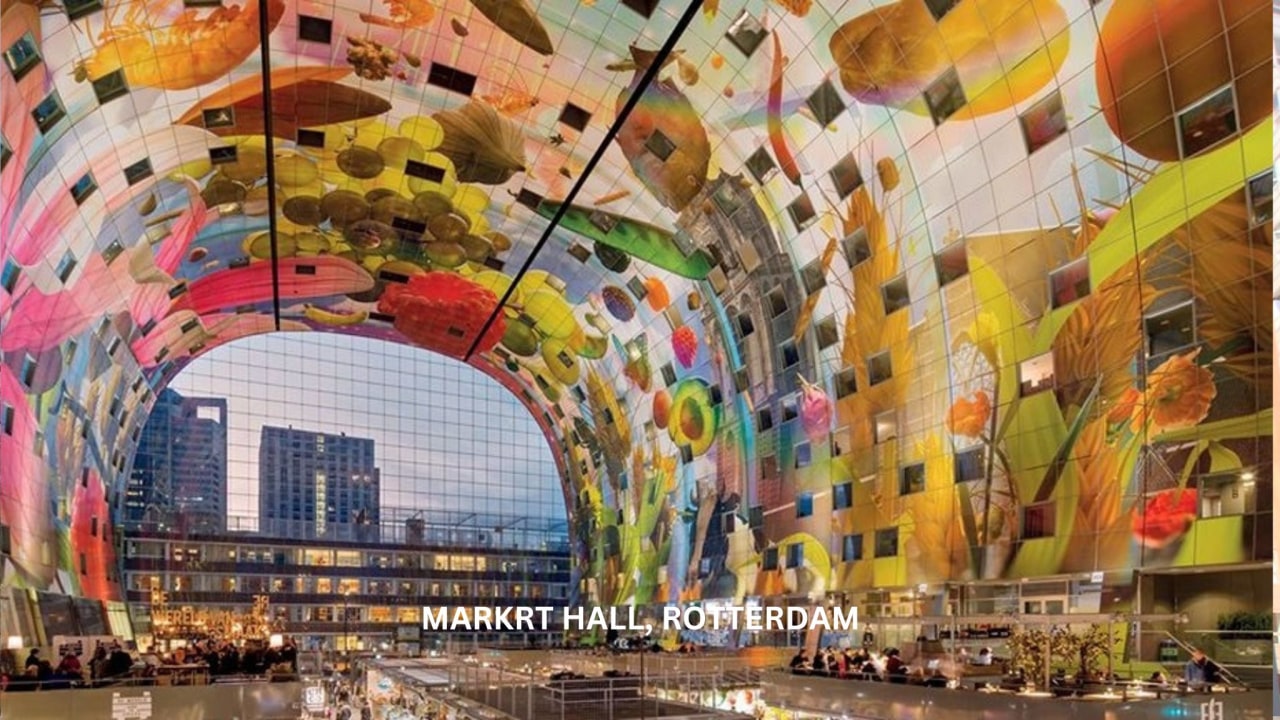
- View the Markthal (Market Hall), also known as "The Horseshoe," a modern building situated on one of Rotterdam's biggest squares. Built in the shape of a horseshoe, it combines a covered market with living space and facilities, and is also nicknamed "The Sistine Chapel of Rotterdam."
- Spot the famous Kijk-Kubus (the Cube Houses), atypical tree-like buildings with cube-shaped apartments on top of supporting columns. Because of their form, only three-quarters of the inner space is suitable and usable for everyday living.
- Next, visit Old Harbor, one of the oldest - though not the oldest - ports of medieval Rotterdam, once the river mouth of the River Rotte into the New Meuse River. Today, it is a favourite gathering place for Rotterdam citizens, with plenty of coffee bars, restaurants, taverns, and disco clubs.
- Witness De Witte Huis (the White House), dating from the end of the 19th century, one of the highest "skyscrapers" in Europe and one of the rare buildings that survived the Rotterdam bombing of May 14, 1940.
- Visit the Willemsbrug, also called "The Red Bridge," dedicated to Willem III. It is one of Rotterdam's three bridges connecting the central and northern parts of the city with the southern districts.
- View the gigantic De Hef (The Elevator), made of huge steel. Meaning "The Lift," it once served as a rotating and lifting train bridge across the New Meuse River before the rail tunnel was dug beneath the river.
- Visit De Boeg ("The Bow") Monument, a war memorial placed on the right embankment of the New Meuse River. It commemorates the 3,500 people on board Dutch merchant ships who lost their lives in World War II.
- Marvel at Leuwhaven Maritime Museum, an open-air maritime museum with a great collection of steamships, docking cargo machines and equipment, ship engines, and other objects related to the navy and shipping from the middle of the 19th century to the 1970s.
- Venture to Erasmus Bridge. This suspension bridge is the youngest bridge in Rotterdam crossing the New Meuse and certainly the most popular and well-known bridge in the city. One of Rotterdam's greatest symbols, it is also called "The Swan" or "The Harp," stands 139 m high, and has the biggest and heaviest opening section of any bridge in Europe at 80 m long.
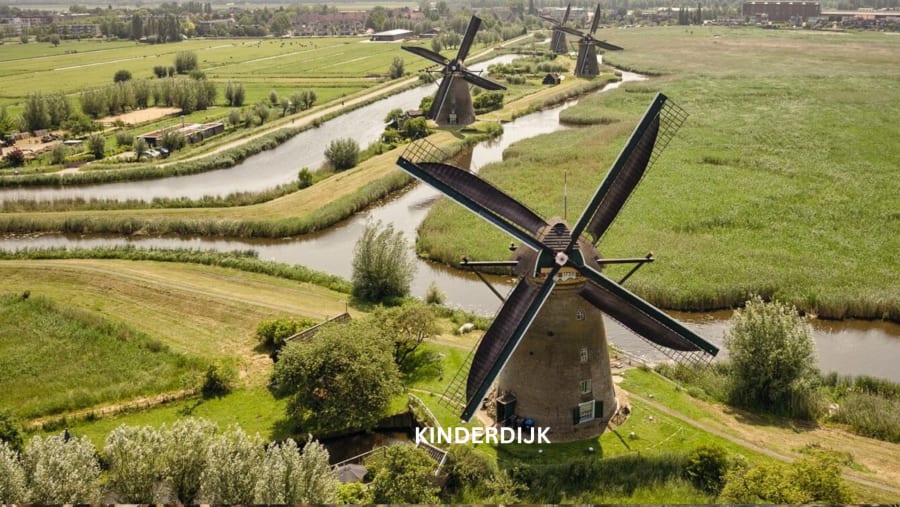
- Stop at Kinderdijk, a picturesque area with 19 unique and authentic polder windmills from the first half of the 18th century, located 25 km from Rotterdam. It is one of the best examples of efficient and well-organized Dutch water management through the centuries.
Boat transport from Rotterdam to Kinderdijk takes approximately 45 minutes.
Boat transport from Kinderdijk to Rotterdam takes approximately 45 minutes.