
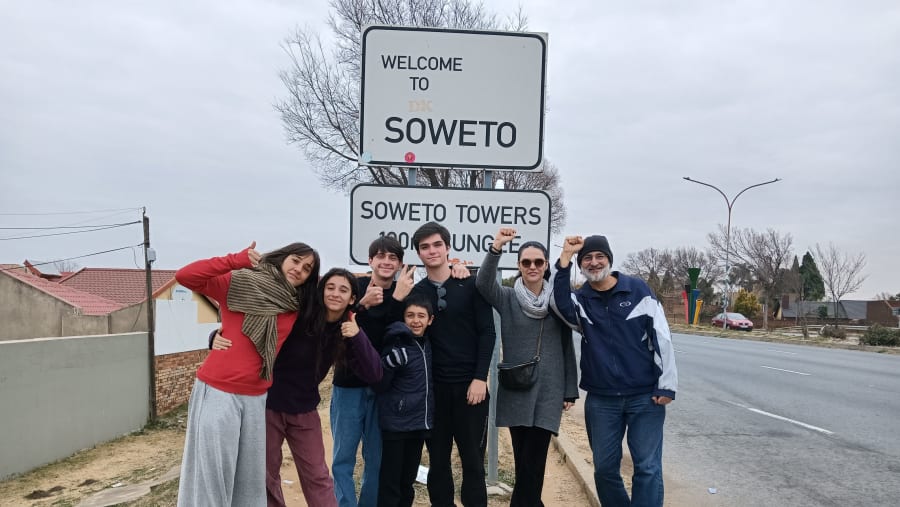
South Africa · City Tours

8-Hour Johannesburg and Soweto Tour with Apartheid History

8 Hours Round trip from Johannesburg Easy pace

The journey

Trip highlights
  • 01 Explore Johannesburg's historic and modern landmarks, from Constitution Hill to Nelson Mandela Bridge
  • 02 Visit Soweto, a vibrant township central to South Africa's anti-apartheid struggle
  • 03 Walk along Vilakazi Street, where Nelson Mandela and Desmond Tutu once lived
  • 04 Learn the story of apartheid and resistance at the Apartheid Museum
  • 05 Step into Mandela House Museum, the former home of Nelson Mandela
  • 06 See Kliptown, where the Freedom Charter was adopted in June 1955
  • 07 Reflect on the 1976 Soweto Uprising at the Hector Pieterson Memorial

Discover the vibrant soul of South Africa on an immersive Johannesburg and Soweto tour that blends history, culture, and local life. Explore the City of Gold through landmarks that reflect the country's journey from apartheid to democracy, including Constitution Hill, Chancellor House, the Nelson Mandela Bridge, and the Apartheid Museum. Continue into Soweto, where powerful stories of resistance, resilience, and community come to life in places such as Vilakazi Street, Kliptown, and the Hector Pieterson Memorial. This experience offers a deeper look at the people, places, and history that helped shape a nation.

Constitution Hill is one of Johannesburg's most powerful and important landmarks - a place where South Africa's painful past and hopeful future meet.

From the itinerary

At a glance

What this trip includes

Duration 8 Hours
Tour type Private
Activity level Easy
Accommodation Not included
Transport Included
Wheelchair access Yes
Cities Johannesburg, Soweto
Languages English

Day by day

The itinerary

1
Day 01

Introduction to Johannesburg, the City of Gold

Johannesburg, often called Joburg or Jozi, is South Africa's largest city and the beating heart of its economy. Known as the "City of Gold", it was founded in 1886 after the discovery of gold on the Witwatersrand, sparking one of the world's biggest gold rushes and transforming the city into a thriving metropolis.

Today, Johannesburg is a vibrant blend of contrasts:

  • Modern skyscrapers and historic buildings

  • Cosmopolitan neighborhoods and culturally rich townships

  • A place where art, fashion, music, and history intersect

It is also a city of resilience and transformation, central to South Africa's political journey, especially during and after apartheid. With its dynamic energy, world-class museums such as the Apartheid Museum, a diverse food scene, and welcoming locals, Johannesburg offers a deeper, more authentic side of South Africa that many travelers never forget.
2
Day 02

Constitution Hill and South Africa's Democratic Journey

Constitution Hill is one of Johannesburg's most powerful and important landmarks - a place where South Africa's painful past and hopeful future meet.

Located in the heart of the city, Constitution Hill was once home to a notorious prison complex where political activists, including Nelson Mandela, Mahatma Gandhi, and Winnie Madikizela-Mandela, were incarcerated. Known as the Old Fort Prison Complex, it stood as a brutal reminder of the oppression faced during apartheid and colonial times.

But today, Constitution Hill tells a different story.

It is now the site of South Africa's Constitutional Court, the highest court in the land, dedicated to protecting the rights and freedoms of all its people. The court building itself is rich in symbolism and was built using bricks from the demolished prison, showing how justice has risen from injustice.

Why Visit Constitution Hill?

  • Walk through the chilling Number Four Prison and Women's Jail

  • Hear the stories of struggle and survival from former prisoners

  • Witness how the Constitutional Court works today - a beacon of democracy

  • Reflect in the human rights exhibitions that inspire change and healing

3
Day 03

Nelson Mandela Bridge and Johannesburg Park Station

The Nelson Mandela Bridge is one of Johannesburg's most iconic modern landmarks. Opened in 2003 and named in honor of Nelson Mandela, this striking architectural piece connects the cultural districts of Braamfontein and Newtown, symbolizing unity and progress in post-apartheid South Africa.

Stretching over 284 meters and spanning dozens of railway lines, the bridge is not just functional - it is symbolic. It represents South Africa's journey from division to connection, both literally and metaphorically. At night, it lights up in vibrant colors, offering stunning photo opportunities and a sense of the city's energy.

Johannesburg Park Station is the largest railway station in Africa and the historic gateway to Johannesburg. First established in the late 1800s, it has long been the main entry point for travelers and migrant workers coming to the "City of Gold" in search of opportunity.

Today, Park Station is a bustling hub for trains, buses, and long-distance taxis, serving millions of commuters across South Africa and beyond. While it is busy and chaotic, it is also full of life - a real look at the movement and diversity of Johannesburg's people.

For many South Africans, Park Station holds personal and emotional significance - it is where journeys began, families reunited, and dreams were chased.

4
Day 04

Mary Fitzgerald Square and Labour History

A Meeting Place Rooted in History

Originally known as Aaron's Ground, this open plaza was where early 20th-century labourers and strikers gathered. In 1939, it was officially renamed in honour of Mary "Pickhandle" Fitzgerald, South Africa's first female trade unionist. A fearless advocate for workers' rights, she led key mining strikes and later became Johannesburg's first woman councillor and deputy mayor.

5
Day 05

Chancellor House and the Mandela-Tambo Legacy

Chancellor House

At 25 Fox Street in Ferreirasdorp, Chancellor House stands as the historic offices of the first black law firm in South Africa, founded by Nelson Mandela and Oliver Tambo in 1952. Directly across from the Magistrate's Court, the firm served as a beacon of resistance, advocating for black South Africans detained under apartheid laws and often representing them in the very court across the street.

6
Day 06

Apartheid Museum and Stories of Resistance

Historical Exhibits - The museum provides a detailed account of apartheid, from its origins to its eventual dismantling, including the rise of the African National Congress (ANC) and other resistance movements.

  1. Personal Stories - It showcases the experiences of individuals affected by apartheid, including victims of forced removals, imprisonment, and violence.

7
Day 07

Soccer City Stadium and South Africa's Sporting Pride

FNB Stadium, also known as Soccer City, is the largest stadium in Africa and one of South Africa's most iconic sports venues. Located in Nasrec, Johannesburg, it played a central role in the 2010 FIFA World Cup, hosting both the opening match and the final.

Key facts and features:

  • Capacity: 94,736 (Africa's biggest stadium)

  • Architecture: Designed to resemble a traditional African pot (calabash), symbolizing unity.

  • Nicknames: Soccer City, The Calabash

  • Home Teams: Kaizer Chiefs (PSL), South African national team (Bafana Bafana)

  • Major Events Hosted:

    • 2010 FIFA World Cup(TM) (Opening match & Final - Spain vs Netherlands)

    • 2013 AFCON Final (Nigeria vs Burkina Faso)

    • 2010 & 2023 Nelson Mandela Legacy Cup

    • Concerts (U2, Coldplay, Ed Sheeran, WWE events)

8
Day 08

Soweto's History, Culture, and Township Life

Soweto: History & Township Life

Soweto (short for South Western Townships) is one of South Africa's most famous and historically significant townships. Located southwest of Johannesburg, it played a crucial role in the anti-apartheid struggle and remains a vibrant symbol of resilience, culture, and urban life.

A Brief History of Soweto

Origins (Late 19th-Early 20th Century)

  • Soweto was created in the 1890s as a settlement for Black laborers working in Johannesburg's gold mines and industries.

  • Under segregation laws, Black South Africans were forced to live outside the city.

Apartheid Era (1948-1994)

  • The Group Areas Act (1950) enforced racial segregation, pushing Black residents into townships like Soweto.

  • Overcrowding & poverty grew as more people were forcibly relocated.

  • No political rights, poor infrastructure, and harsh police control defined life under apartheid.

1976 Soweto Uprising - A Turning Point

  • On June 16, 1976, thousands of students protested against the forced use of Afrikaans in schools.

  • Police opened fire, killing Hector Pieterson (12) and hundreds of others, sparking global outrage.

  • The uprising became a key moment in the fall of apartheid.

  • After Nelson Mandela's release (1990) and South Africa's first democratic elections (1994), Soweto saw gradual improvements.

  • Today, it is a mix of poverty and progress, with growing businesses, tourism, and cultural pride.

  • Orlando West - Home to Vilakazi Street (Mandela and Tutu's former homes).

  • Diepkloof - A lively area with markets and nightlife.

  • Kliptown - Where the Freedom Charter (1955) was signed.

  • Meadowlands & Dobsonville - More residential areas.

2. Economy & Daily Life

  • Informal sector dominates (street vendors, spaza shops, taxi industry).

  • High unemployment but also growing entrepreneurship.

  • Shebeens (local bars) and braai (barbecue) culture are central to social life.

  • Kwaito music (born in Soweto in the 1990s).

  • Football (soccer) passion - Orlando Pirates & Kaizer Chiefs rivalry.

  • Street art, fashion, and slang ("Soweto style" is iconic).

  • Crime & unemployment remain issues.

  • Service delivery protests over housing, water, and electricity.

  • Gentrification in some areas as tourism grows.

The route

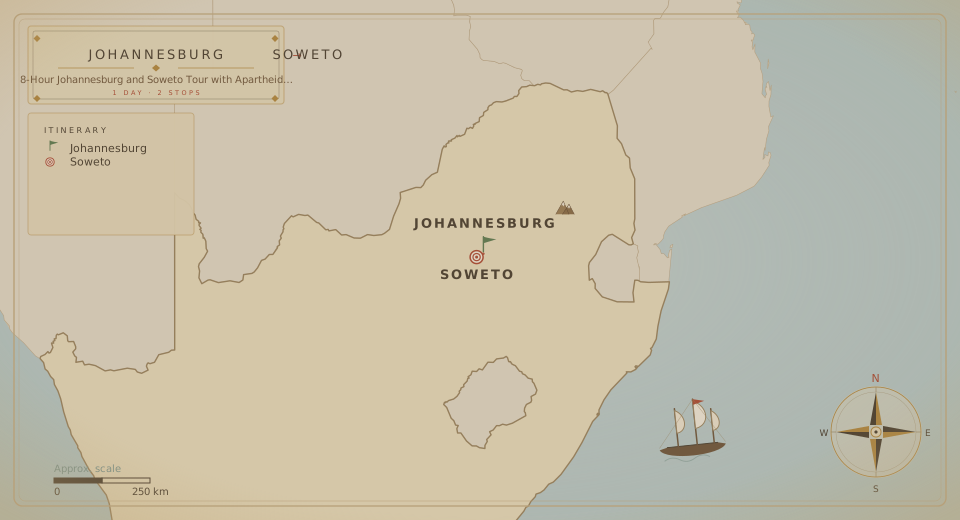
Where you'll travel

Tour route map
Round trip from Johannesburg 2 cities · 8 Hours

The fine print

Trip details

What's Included

Transport from the hotel, including pick-up and drop-off after the tour.

Water and a tasting of local food.

What's Not Included

Entry fees.

Lunch.

What to bring

  • Comfortable sneakers

  • Money if you want to buy gifts

  • Sun hat

  • Sunscreen on hot days

Know before you go

Respect Local Culture

  • Ask before taking photos of people or homes.

  • Dress modestly (avoid flashy jewelry or expensive gear).

  • Engage respectfully - Soweto isn't a "poverty safari"; it's a vibrant community.

  • Support local businesses (buy crafts, eat at township restaurants).

Logistics

Meeting & route

Meeting point
Pick up from accommodation
Tour start
Johannesburg, South Africa
Tour ends at the same location as the start point.
End of the journey

Your 8 hours finish where they began, in Johannesburg.

Watch the tourHQ film Watch the film

Create your own adventure

Can't find the perfect tour? Tailor your dream trip.

  • Tell us your destination, dates and group size.
  • Our travel experts and local guides design a tailored itinerary, just for you.
  • Enjoy your trip with peace of mind, knowing everything is taken care of.
Plan my holiday

Say goodbye to travel stress.

Starting from

ZAR 2,500 /person
Book This Tour

When

Travellers

Total
