Tanzania · Trekking

8-Day Kilimanjaro Northern Circuit Trek to Uhuru Peak from Moshi

8 Days Round trip from Moshi Moderate pace

The journey

Trip highlights
  • 01 Hike through montane forest and moorland zones
  • 02 Cross the Shira Plateau and enter the high alpine desert
  • 03 Follow Kilimanjaro's scenic Northern Circuit route
  • 04 Summit Uhuru Peak, Africa's highest point

Embark on an unforgettable 8-day journey to summit Kilimanjaro via the scenic Northern Circuit Route. Led by experienced guides, this expedition promises stunning scenery, camaraderie, and the ultimate achievement of standing atop Africa's highest peak.

You will be awoken around 11:30 with hot tea and biscuits and will then begin the steep incline up the slopes of Kibo under the cover of darkness.

From the itinerary

At a glance

What this trip includes

Duration 8 Days
Tour type Private
Activity level Moderate
Accommodation Included · Budget
Transport Included
Wheelchair access Yes
Cities Moshi, Mount Kilimanjaro
Languages English

Day by day

The itinerary

1
Day 01

Hotel Transfer to Mti Mkubwa Camp

After breakfast and a briefing, drive to Londorossi Park Gate, about a 3-hour drive. From here, a forest track requiring a 4WD vehicle leads to Lemosho Glades. Walk along forest trails to Mti Mkubwa (Big Tree) Campsite.

Elevation: 1830m/6000ft to 2650m/8700ft
Distance: 6km/4mi
Hiking Time: 2-3 hours
Habitat: Montane Forest
Meals: Lunch and Dinner

2
Day 02

Mti Mkubwa Camp to Shira 1 Camp

After breakfast, continue as the trail gradually steepens and enters the giant heather moorland zone. After crossing several streams, continue over the Shira Ridge and then gently descend to Shira 1 Camp, located by a stream on the Shira Plateau.

Elevation: 2650m/8700ft to 3500m/11,500ft
Distance: 8km/5mi
Hiking Time: 4-5 hours
Habitat: Moorland
Meals: Breakfast, Lunch and Dinner

3
Day 03

Shira 1 Camp to Moir Camp via the Garden of the Senecios

After breakfast, a gentle hike across the plateau leads to Shira 2 Camp on moorland meadows by a stream. Continue with a trek heading east that passes through the 'Garden of the Senecios' and then enters the high alpine desert zone before joining the Northern Circuit and heading down to Moir Camp.

Elevation: 3500m/11,500ft to 4200m/13780ft
Distance: 14km/8mi
Hiking Time: 6-8 hours
Habitat: Moorland
Meals: Breakfast, Lunch and Dinner

4
Day 04

Moir Camp to Buffalo Camp

Today, you will encounter a moderately steep climb out of Moir Valley. You can do an optional hike to the summit of Little Lent Hill at 4,375 meters before returning to the Northern Circuit trail. From here, the route follows a series of inclines and declines, skirting around the northern slopes of Kibo to Buffalo Camp.

Elevation: 4200m/13,780ft to 4020m/13,188ft
Distance: 12km/7mi
Walking Time: 5-6 hours
Habitat: High Alpine
Meals: Breakfast, Lunch and Dinner

5
Day 05

Buffalo Camp to Rongai Third Cave

Start the day with a climb up the Buffalo Ridge and down into Porfu Camp, where lunch is usually served. The route then continues east around the northern slopes to the Rongai Third Cave. The trek is shorter than the day before, and by now you should be feeling well acclimated to the altitude. You will arrive at the Third Cave around mid-afternoon.

Elevation: 4020m/13,188ft to 3800m/12,467ft
Distance: 8km/5mi
Climbing Time: 5-7 hours
Habitat: High Alpine
Meals: Breakfast, Lunch and Dinner

6
Day 06

Third Cave to School Hut

Today involves a steady incline up and over the Saddle, which sits between the peaks of Kibo and Mawenzi Peak. Trekkers then continue walking south-west up to School Hut.

After arriving at School Hut, you will be served an early dinner and should get some shut-eye, as you will be awoken before midnight to start your summit attempt. Remember to prepare all your gear, including warm clothes, insulated water bottles, snacks, headlamp, and camera before going to bed.

Elevation: 3800m/12,467ft to 4800m/15,748ft
Distance: 15km/8mi
Climbing Time: 4-5 hours
Habitat: Alpine Desert
Meals: Breakfast, Lunch and Dinner

7
Day 07

School Hut to Uhuru Peak to Millennium Camp

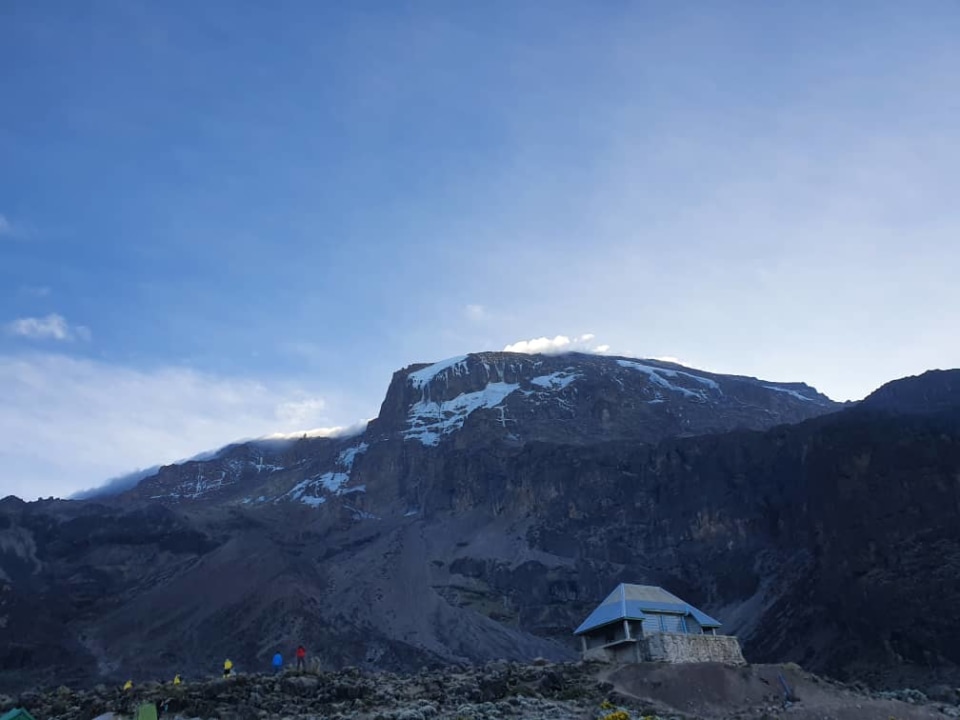
You will be awoken around 11:30 with hot tea and biscuits and will then begin the steep incline up the slopes of Kibo under the cover of darkness. Your first checkpoint is Hans Meyer Cave, where you will take a short break. The climb steepens as you approach Gilman's Point (5,681 meters), which will be around 5-6 hours after departing School Hut.

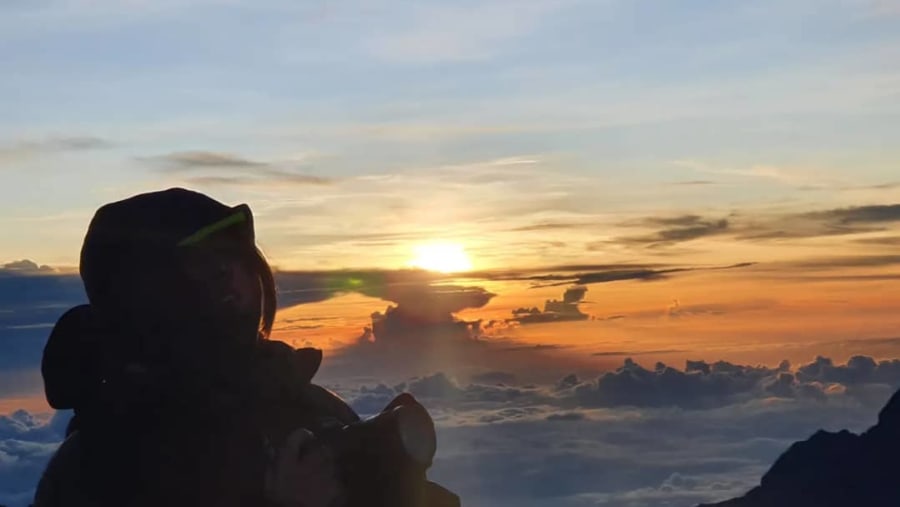
Take a moment to enjoy the approaching dawn and incredible views out across to Mawenzi Peak, but remember you still have 2 hours of trekking to reach Uhuru Peak, so dig deep for the energy. The slope flattens as you head west around the crater rim, and you should arrive at the summit at or just after sunrise.

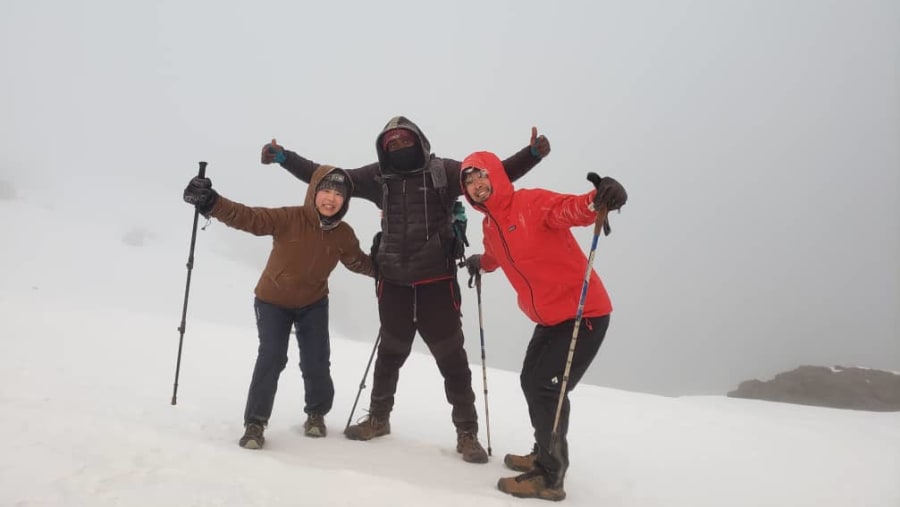
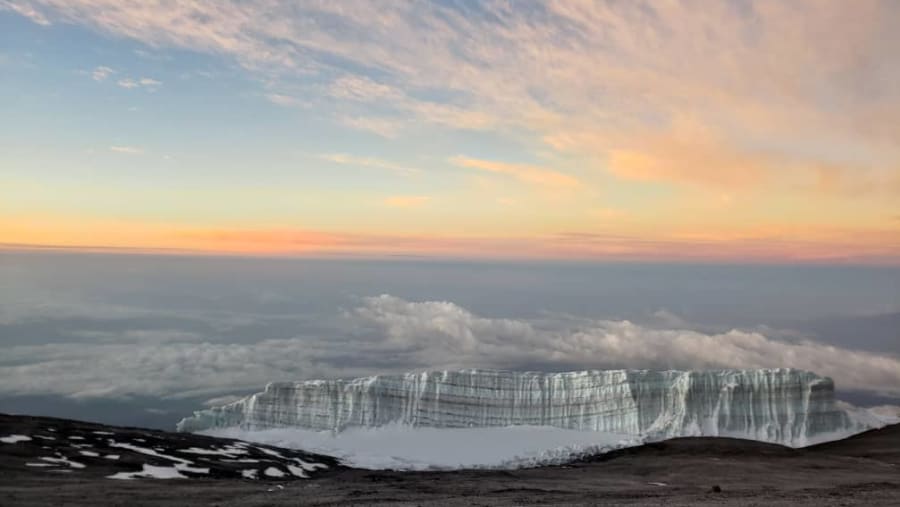
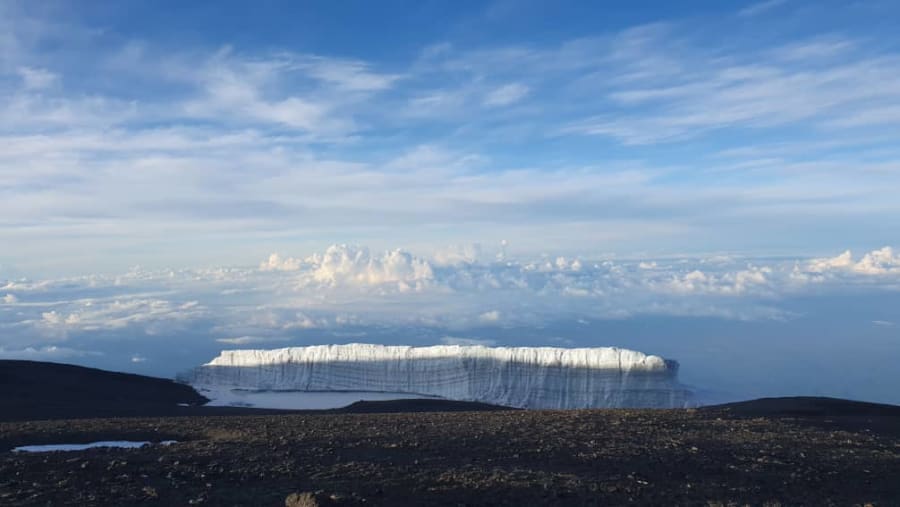
Your stay here will be brief, so get as many pictures as you can of the incredible views and surrounding glaciers. You will then retrace your steps back around the crater rim to Stella Point (5,739 meters), where you will turn south and head down the heavily screed slopes of Kibo to Barafu Camp (4,680 meters).

Most trekkers take a short break here before continuing down to Millennium Camp (3,950 meters) for your final night on the mountain. In total, you will be trekking for 14-16 hours on day eight, so it is important to pace yourself, remain hydrated, and keep your blood sugar levels up.

Elevation: 4800m/15,748ft to 5895m/19,340ft
Down to 3950m/12,959ft
Distance: 6km/3.5mi up / 11km/6mi down
Hiking Time: 5-7 hours up / 5-6 hours down
Habitat: Stone scree and ice-capped summit
Meals: Breakfast, Lunch and Dinner

8
Day 08

Millennium Camp to Mweka Gate and Hotel

After breakfast, continue the descent down to Mweka Park Gate to receive your summit certificates. At lower elevations, it can be wet and muddy. Gaiters and trekking poles will help. Shorts and T-shirts will probably be plenty to wear, but keep rain gear and warmer clothing handy.

Our vehicle will be waiting for you at Mweka Gate to drive you back to your hotel in Moshi, around 60 minutes away.

Elevation: 3950m/12,959ft to 1680m/5500ft
Distance: 10km/6mi
Hiking Time: 3-4 hours
Habitat: Forest
Meals: Breakfast

Lemosho Glades, Shira Plateau, Garden of the Senecios, Uhuru Peak

Where this trip takes you

Lemosho Glades, Shira Plateau, Garden of the Senecios, Uhuru Peak

The route

Where you'll travel

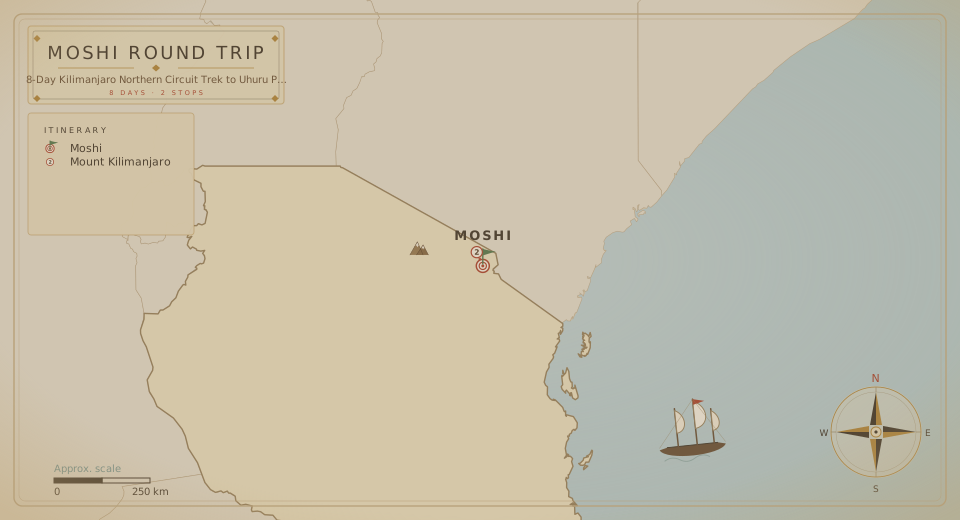
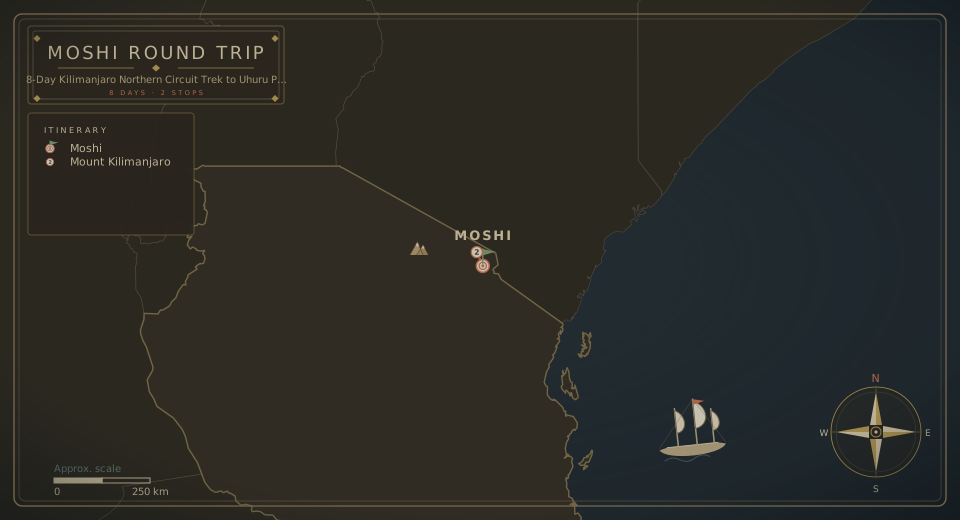
Tour route map
Round trip from Moshi 2 cities · 8 Days

The fine print

Trip details

What's Included

  • All transfers to the mountain and back to your Moshi hotel
  • Professional, experienced mountain guides
  • Guides, porters, cook salaries, and park fees
  • Quality, waterproof, four-season mountain sleeping tents (on a twin-sharing basis)
  • Sleeping mattress
  • Emergency oxygen cylinder
  • All meals while on the mountain
  • Quality mess tents with tables and chairs
  • Large portions of fresh, healthy, nutritious food
  • Clean, purified drinking water
  • Conservation fees (part of park fees)
  • Camping or hut fees (part of park fees)
  • Rescue fees (part of park fees)
  • VAT (18% charged by the Government)
  • Kilimanjaro summit certificate

What's Not Included

  • Tanzania visa
  • International and domestic flights
  • Hotel (available as an optional add-on)
  • Transfers (available as an optional add-on)
  • Personal trekking equipment such as sleeping bags, hiking boots, clothes, etc. (available for rent)
  • Tips and gratuities
  • Travel insurance
  • Personal expenses (e.g. laundry, telephone, beverages, etc.)
  • Meals not listed in the itinerary
  • Liquors, beers, and bottled beverages
  • Surcharge for online payment of advance and balance (5% on each payment)

What to bring

Preparing for a Kilimanjaro climb requires careful consideration of the gear and equipment needed to ensure a safe and comfortable journey.

Clothing:

  • Moisture-wicking base layers: tops and bottoms to help regulate body temperature and manage sweat.
  • Insulating layers: fleece jackets, down jackets, or synthetic insulated jackets to keep warm at higher altitudes.
  • Waterproof and windproof jacket: protection against rain, snow, and wind.
  • Hiking pants: lightweight, quick-drying pants for trekking.
  • Convertible pants: pants that can be converted into shorts for variable weather conditions.
  • Synthetic or wool socks: several pairs of moisture-wicking socks to prevent blisters.
  • Hiking boots: sturdy, waterproof boots with ankle support and good traction.
  • Gaiters: to keep snow, rocks, and debris out of your boots.
  • Sun hat and warm hat: protection from the sun during the day and warmth at night.
  • Gloves: lightweight gloves for hiking and warmer gloves or mittens for colder temperatures.
  • Buff or neck gaiter: this versatile accessory protects the neck and face from sun, wind, and cold.

Gear:

  • Daypack: a comfortable backpack for carrying essentials during daily hikes.
  • Sleeping bag: rated for cold temperatures (0°F to -10°F or lower) to stay warm at night.
  • Sleeping pad: insulated sleeping pad for cushioning and insulation from the ground.
  • Trekking poles: adjustable poles for stability and to reduce knee strain during descents.
  • Headlamp or flashlight: essential for navigating in the dark and for nighttime use.
  • Sunglasses: UV-protective sunglasses with high-quality lenses to shield eyes from glare and snow reflection.
  • Water bottles or hydration system: insulated water bottles or a hydration reservoir to stay hydrated.
  • Water purification: water purification tablets or a filtration system for refilling water along the trail.
  • Duffel or dry bag: pack gear for porters to carry between campsites.
  • Toiletries: including biodegradable soap, toothpaste, toothbrush, and toilet paper.
  • Personal first-aid kit: including basic medications, blister treatment, and any personal medications.

Miscellaneous:

  • Passport and permits: required documents for entering Tanzania and climbing Kilimanjaro.
  • Cash: for tipping guides, porters, and other expenses.
  • Camera or smartphone: for capturing memories of the journey.
  • Sunscreen: high SPF sunscreen to protect from sunburn at high altitudes.
  • Lip balm with SPF: to prevent chapped lips in dry and windy conditions.
  • Snacks: high-energy snacks like nuts, trail mix, and energy bars for on-the-go fuel.
  • Notebook and pen: for journaling or taking notes along the journey.

Optional:

  • Portable battery charger: to recharge electronics like cameras or smartphones.
  • Portable oxygen: in case of altitude sickness, especially for those prone to it.
  • Trekking towel: quick-drying and compact towel for personal hygiene.
  • Trekking snacks: favourite snacks for extra energy during long hikes.

Know before you go

  • Supplements: Off-season supplement = USD 75
  • Charges apply for solo trekkers starting a new departure in March, April, May, and November. This does not apply if you join an existing group, and it does not apply if other trekkers also join your new group.

Logistics

Meeting & route

Meeting point
Moshi, Tanzania
Tour start
Moshi, Tanzania
Tour ends at the same location as the start point.
End of the journey

Your 8 days finish where they began, in Moshi.

Watch the tourHQ film Watch the film

Create your own adventure

Can't find the perfect tour? Tailor your dream trip.

  • Tell us your destination, dates and group size.
  • Our travel experts and local guides design a tailored itinerary, just for you.
  • Enjoy your trip with peace of mind, knowing everything is taken care of.
Plan my holiday

Say goodbye to travel stress.

Starting from

USD 2,160 /person
Book This Tour

When

Travellers

Total