Tanzania · Trekking

6-Day Mount Kilimanjaro Climb via Marangu Route with Uhuru Peak

6 Days Round trip from Moshi Moderate pace

The journey

Trip highlights
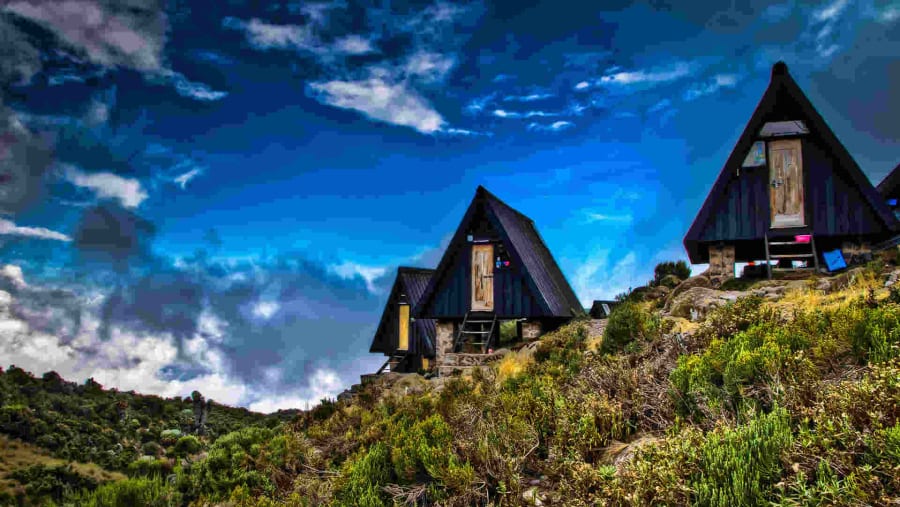
  • 01 Ascend Mount Kilimanjaro via the Marangu Route with overnight stays in mountain huts
  • 02 Walk through diverse landscapes, from rainforest and moorland to the desert saddle
  • 03 Use the acclimatization day at Horombo Hut to improve your summit success chances
  • 04 Reach Uhuru Peak at 5,895 metres, the highest point in Africa
  • 05 Enjoy views of Maundi Crater, Mawenzi, Kibo, and the striking Zebra Rocks

Embark on the Marangu Route to climb Mount Kilimanjaro via one of the mountain's most established approaches. Starting at the national park headquarters, this route offers the convenience of mountain huts with bunk beds, mattresses, and dining facilities, allowing climbers to sleep indoors while trekking through rainforest, moorland, alpine desert, and up to Uhuru Peak. A dedicated acclimatization day at Horombo Hut helps improve summit success, making this a well-paced 6-day ascent. Additional amenities are available for purchase independently.

This extra day is what sets the 6-day Marangu Route apart from the 5-day climb.

From the itinerary

At a glance

What this trip includes

Duration 6 Days
Tour type Shared
Activity level Moderate
Accommodation Included · Standard
Transport Included
Wheelchair access Not applicable
Cities Moshi, Mount Kilimanjaro, Marangu
Languages English, Swahili

Day by day

The itinerary

1
Day 01

Moshi to Marangu Gate and Hike to Mandara Hut

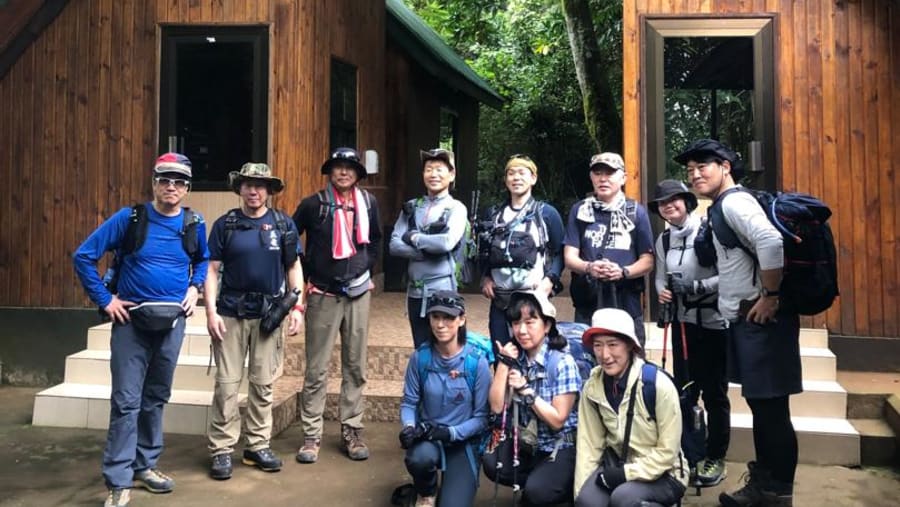
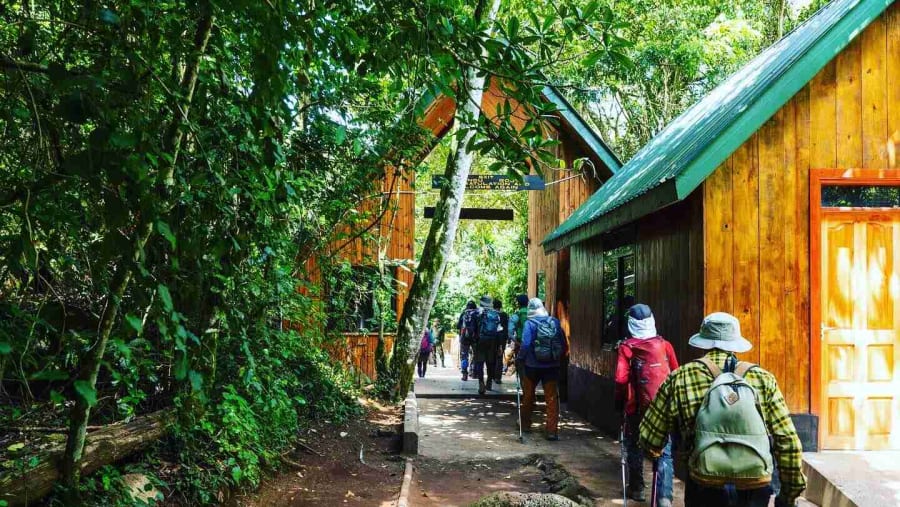
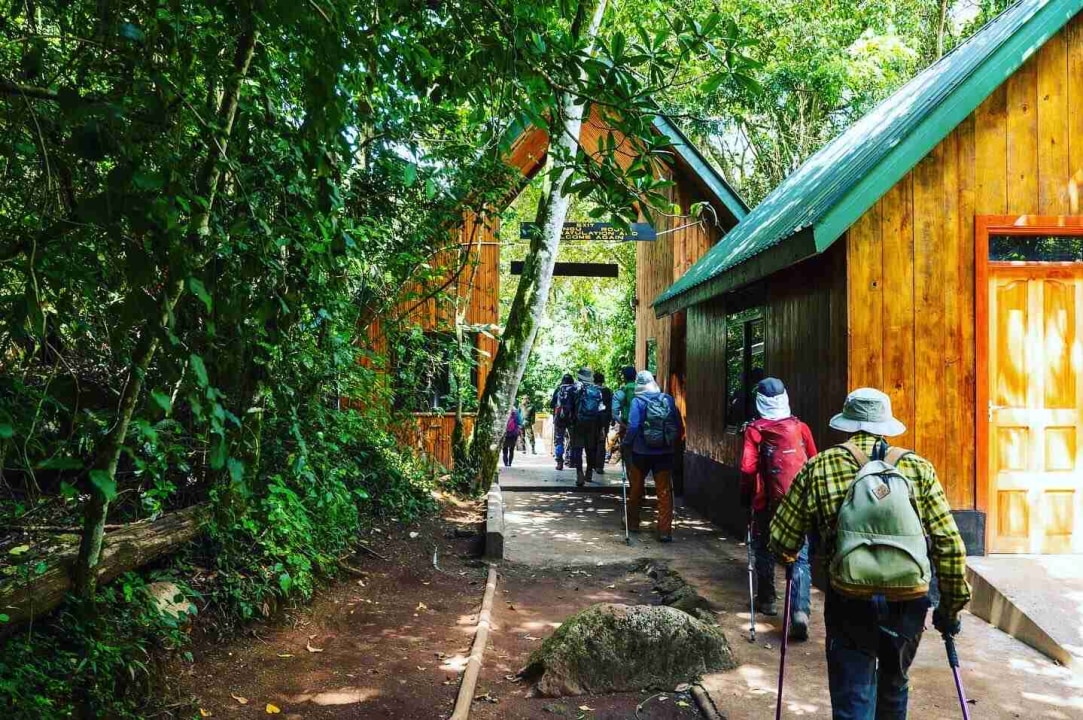
  • Your day begins with a drive from Moshi town to Marangu Gate. Upon arrival, you will complete the national park formalities before starting your hike to Mandara Hut. This trek takes about 3 to 4 hours and covers a distance of 8 kilometres. At the hut, you will meet your chef and porters, who will prepare your meals and arrange your environment for rest.
  • Along the way, you will walk through the rainforest, enjoy views of Maundi Crater, and see eucalyptus trees, birds, and colobus monkeys.
  • Time & Distance: 3 to 4 hours of hiking over 8 km. Elevation: 1860 m/6100 ft to 2700 m/8875 ft.
2
Day 02

Mandara Hut to Horombo Hut Through Moorland

  • Today is a 5 to 6-hour hike through the moorland forest as you make your way to Horombo Hut, covering a distance of 12 kilometres.
  • During the hike, you will enjoy views of lobelias, groundsels, Mawenzi, and the summit of Kibo before reaching the Horombo encampment.
  • Elevation: 2700 m/8875 ft to 3700 m/12,200 ft. Meal plan: Breakfast, lunch, and dinner.
3
Day 03

Acclimatization Hike to Zebra Rocks

  • This extra day is what sets the 6-day Marangu Route apart from the 5-day climb. It is purposefully included to help your body adapt to the altitude before ascending higher the following day, increasing your chances of successfully reaching Uhuru Peak.
  • Today's hike takes you to Zebra Rocks before returning to Horombo Hut for lunch. After that, you can relax and regain strength for the adventure ahead.
  • You will walk 5 kilometres from Horombo to Zebra Rocks and back, with about 4 hours of hiking to see the distinctive black-and-white rocks.
  • Time & Distance: 4 hours of hiking over 5 km. Elevation: Zebra Rocks 4020 m / Horombo Hut 3700 m.
4
Day 04

Horombo Hut to Kibo Hut Across the Saddle

  • Today involves 5 to 7 hours of walking through the saddle of Kilimanjaro between the two cones of Kibo and Mawenzi. You will cover 9.5 kilometres to reach Kibo Hut.
  • As you cross this desert landscape, you will see a water stream and very little grass. Kibo Hut is your final ascending stop and overnight stay before the summit attempt.
  • Time & Distance: 5 to 7 hours of hiking over 9.5 km. Elevation: 3700 m/12,200 ft to 4700 m/15,500 ft.
5
Day 05

Midnight Summit Push to Uhuru Peak and Descent to Horombo

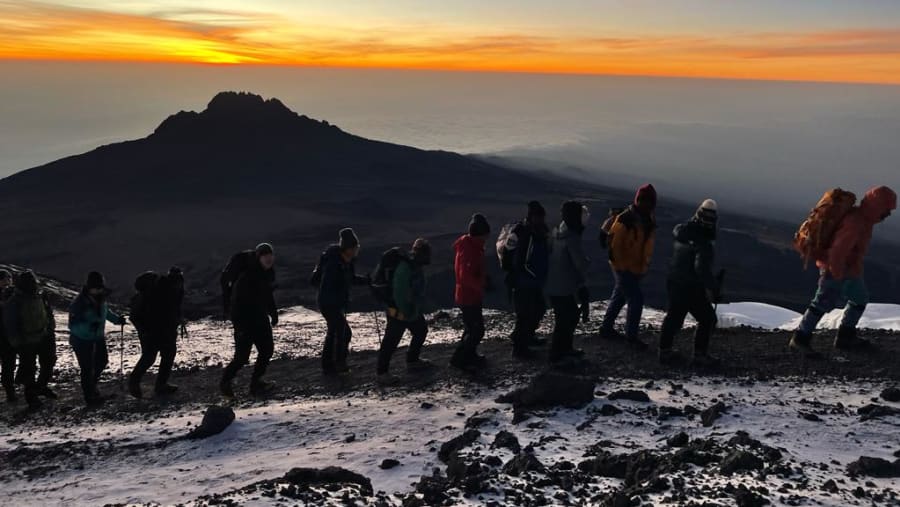
  • This is the day you earn your certificate for reaching the highest peak in Africa and the world's highest freestanding mountain peak. The climb begins at midnight as you leave Kibo Hut and ascend steep, heavy scree, or sometimes snow, to Gilman's Point on the crater rim. From Gilman's Point, you continue the final ascent to Uhuru Peak.
  • "CONGRATULATIONS, YOU HAVE REACHED THE HIGHEST PEAK IN AFRICA, THE UHURU PEAK OF KILIMANJARO MOUNTAIN"
  • Because of the weather conditions, you will not stay long at the summit. After taking photos at the Uhuru Peak signpost, you will begin your descent via the Marangu Route. You will stop at Kibo Hut for lunch and then continue trekking down to Horombo for dinner and your overnight stay.
  • Time & Distance: 6 to 8 hours ascending over 6 km and 15 km descending to Horombo. Elevation: 4700 m/15,500 ft to 5895 m/19,340 ft, then down to 3700 m/12,200 ft.
6
Day 06

Descend from Horombo to Marangu Gate and Return to Moshi

  • The day starts with breakfast at Horombo Hut. You will then trek down to Marangu Gate, passing Mandara Hut along the way.
  • At the gate, you will meet the porters with your luggage and the driver, who will pick you up and take you back to Moshi town.
  • During today's descent, you will walk through moorland and lush forest for 4 to 5 hours, covering a distance of 20 kilometres before reaching Marangu Gate.
  • Time & Distance: 4 to 5 hours descending over 20 km. Elevation: 3700 m/12,200 ft to 1700 m/5500 ft.
Zebra Rocks, Horombo Hut moorland, Uhuru Peak, Maundi Crater

Where this trip takes you

Zebra Rocks, Horombo Hut moorland, Uhuru Peak, Maundi Crater

The route

Where you'll travel

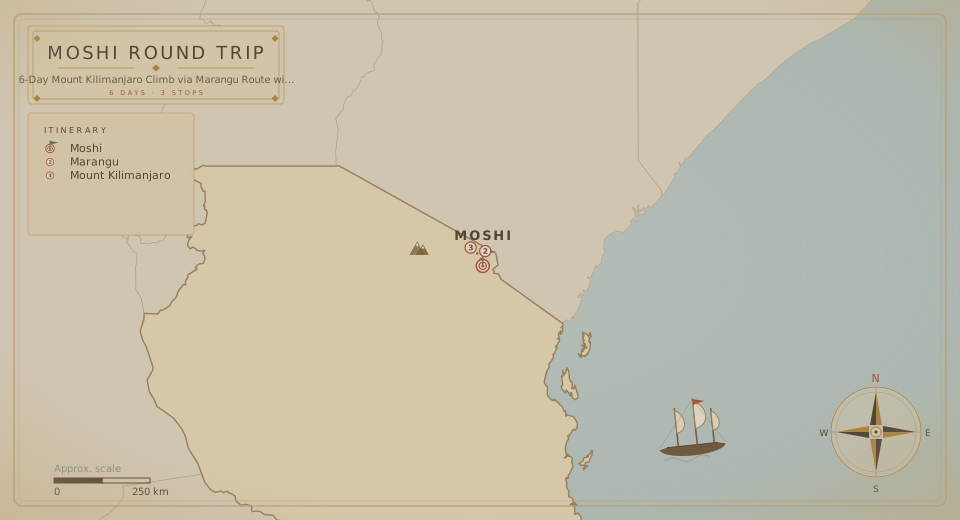
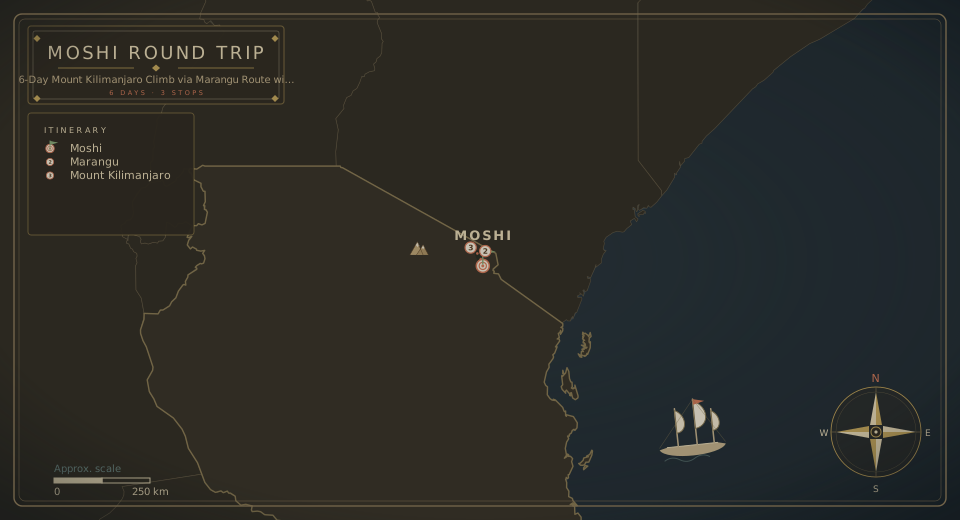
Tour route map
Round trip from Moshi 3 cities · 6 Days

The fine print

Trip details

What's Included

  • Kilimanjaro Airport pickup and drop-off
  • 2 nights' accommodation in Moshi
  • All transfers to the mountain and back to your hotel in Moshi
  • Professional, experienced mountain guides
  • Guides, porters, cook salaries, and park fees
  • Accommodation in mountain huts during the hike
  • Oxygen cylinder
  • All meals while on the mountain
  • Large portions of fresh, healthy, nutritious food
  • Clean, purified drinking water
  • Kilimanjaro National Park entrance fees
  • All government taxes and levies, including 18% VAT
  • Community Development Fund & Conservation Fund

What's Not Included

  • International or local flights
  • Optional activities
  • Alcoholic and soft drinks
  • Passport and visa fees
  • Personal spending money for souvenirs, etc.
  • Travel insurance
  • Travel documents (Yellow Fever Certificate, etc.)
  • Tips for your crew

What to bring

  • Mount Kilimanjaro Packing List

During a day on Kilimanjaro, temperatures can easily range from the high 20s centigrade down to -15C at night. To cope with this huge range in temperature, your clothing and kit strategy should be based on combining lots of thin layers that you can add or remove as the weather demands. Kilimanjaro National Park operates a strict limit of 15 kg per porter for your main equipment bag, which includes your sleeping bag. This is more than sufficient for your needs on the mountain. Your bag will be weighed before you leave the hotel to start the climb, and if it is overweight, you will have to remove items and leave them at the hotel.

  • What to Wear and Carry

How do you dress to hike through Kilimanjaro's five climate zones? This mountain requires several wardrobe changes, from the humid equatorial heat of the rainforest (high of 70-90 degrees) to the peak's icy drifts (low of -10 degrees).

You will not just change outfits from zone to zone. Kilimanjaro creates its own weather, and conditions often change within a matter of hours. You may shed layers under the intense midday sun and bundle up when the temperature drops after sunset. In between, you may experience everything from biting wind to rain and mist to a pleasant, mild atmosphere.

Preparing for it all takes some thought. After all, you can only pack so much due to the 33-pound luggage weight limit needed on the hike.

Note that if you do not have everything you need, you should not worry. We have all the Kilimanjaro climbing gear for rent, and it will suit all your needs.

  • HEADWEAR
    • Warm winter hat
    • Neck gaiter or scarf - We recommend bringing a neck gaiter or bandana, as it can get dusty on Kilimanjaro.
    • Sun hat - Choose a wide-brimmed hat for protection.
    • Sunglasses - Choose a pair with high UV protection, as sun intensity above 4,500 m is very high.
    • Headlamp - You will need a headlamp with good light output for any late-night toilet journeys and, importantly, for summit night. We also recommend bringing extra batteries (AAA batteries).
  • UPPER BODY
    • Thermal base layer - 1 thermal base layer, ideally made from merino wool.
    • Short-sleeved shirt - 2 lightweight, moisture-wicking short-sleeved shirts are sufficient.
    • Long-sleeved shirt - 2 or 3 light- or medium-weight, moisture-wicking long-sleeved shirts.
    • Fleece or soft shell jacket - A mid-weight fleece jacket is ideal for Kilimanjaro.
    • Insulated jacket - A good-quality, warm down or Primaloft jacket is required for cold nights and the summit push.
    • Hard shell outer jacket - A windproof hard shell outer jacket to protect you from the elements.
    • Poncho - The weather is unpredictable on Kilimanjaro, so a poncho is recommended.
    • Leggings - 2 thermal or fleece base layers for your legs.
    • Trekking trousers - 1 medium-weight pair of trekking trousers is recommended.
    • Hard shell trousers - Windproof trousers will protect you from the elements.
  • HAND AND FOOTWEAR
    • Lightweight gloves - We recommend these for the lower slopes.
    • Warm gloves or mittens - For the cold nights and the summit, we recommend heavyweight gloves.
    • Trekking boots - We recommend using mid-weight trekking boots with good ankle support. They should also be waterproof.
    • Gym shoes/sandals - Wear these around camp after a day's trek.
    • Socks - We recommend bringing 3-4 pairs of outer socks and 2-3 pairs of liner socks. We also recommend bringing one pair of thick thermal socks for summit night.
    • Gaiters - We recommend these to keep your trousers clean in wet, muddy, or dusty conditions.
    • Micro-spikes/crampons - Not always required, but there are periods when the mountain receives excessive ice near the summit.
  • TOILETRIES AND OTHER ACCESSORIES
    • Sun and lip screen - High-SPF sunscreen and lip protection balm are recommended.
    • Toothbrush and toothpaste
    • Wet wipes and hand sanitiser
    • Personal medicines and medical kit - We recommend bringing paracetamol and Imodium at a minimum.
    • Extra bag - For your extra luggage that will remain at the hotel.
    • Packing cubes - Useful for keeping items organised within your duffle bag.
    • Camera and spare batteries
    • Plug adapter - A plug adapter for charging your devices in the hotels before and after the trek. We recommend adapter type G.
    • Personal snacks - Boiled sweets, nuts, energy bars, and dried fruit are all good for Kilimanjaro.
    • Towel - Lightweight and quick-dry.
    • Portable power bank and an extra one, if possible

Know before you go

Travel documents, visa, and entry to Tanzania

  • You should make sure that all your travel documents are in place.
  • Among other things, your passport for international travel should remain valid for at least six months after you enter Tanzania. It should also have at least two blank pages for the visa and stamps. You should obtain a visa to enter Tanzania, and applying online through the Tanzania Immigration Department's website is the most convenient and fastest way to do this.
  • Though we will share some visa-related tips, please do not consider our recommendations as ultimate or comprehensive advice. The information about visas and other entry requirements for visiting Tanzania published on our website is for general knowledge only. Although we try to keep it accurate and up to date, we recommend contacting the Embassy of the United Republic of Tanzania for the latest updates. No information published on our website about visas, vaccinations, or other entry requirements should be viewed as a warranty or representation.
  • You are also responsible for bearing all visa and other entry-related costs.
  • We shall not be liable if, in the highly unlikely event, you are denied entry to Tanzania or any other country on the way to Tanzania for any reason. You also agree that if you fail to enter the country for any reason, no refunds will be made, and it will not be possible to reschedule your tour because all park fees will already have been prepaid and other expenses incurred in preparation for your arrival.

Logistics

Meeting & route

Meeting point
Kilimanjaro International Airport, Kilimanjaro Airport Road, Tanzania
Tour start
Moshi, Tanzania
Tour ends at the same location as the start point.
End of the journey

Your 6 days finish where they began, in Moshi.

Watch the tourHQ film Watch the film

Create your own adventure

Can't find the perfect tour? Tailor your dream trip.

  • Tell us your destination, dates and group size.
  • Our travel experts and local guides design a tailored itinerary, just for you.
  • Enjoy your trip with peace of mind, knowing everything is taken care of.
Plan my holiday

Say goodbye to travel stress.

Starting from

USD 1,540 /person
Book This Tour

Estimated room rates

Single Room $1,540.00 — $1,750.00
Double Sharing $1,540.00 — $1,750.00

When

Travellers

Total