Ephesus, the House of Virgin Mary and St. John's Basilica
Visit the shrine believed to be the House of Virgin Mary. Tradition states that Mary, accompanied by John the Apostle, came to Ephesus at the end of her life. In 1967, Pope Paul VI declared the site authentic, and each year a traditional service celebrated by Orthodox and Muslim clergy honours Mary's Assumption into heaven.
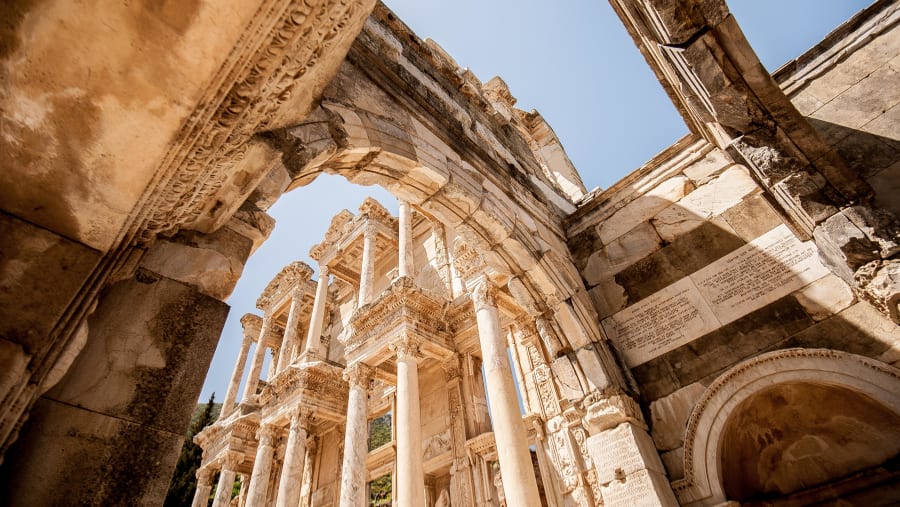
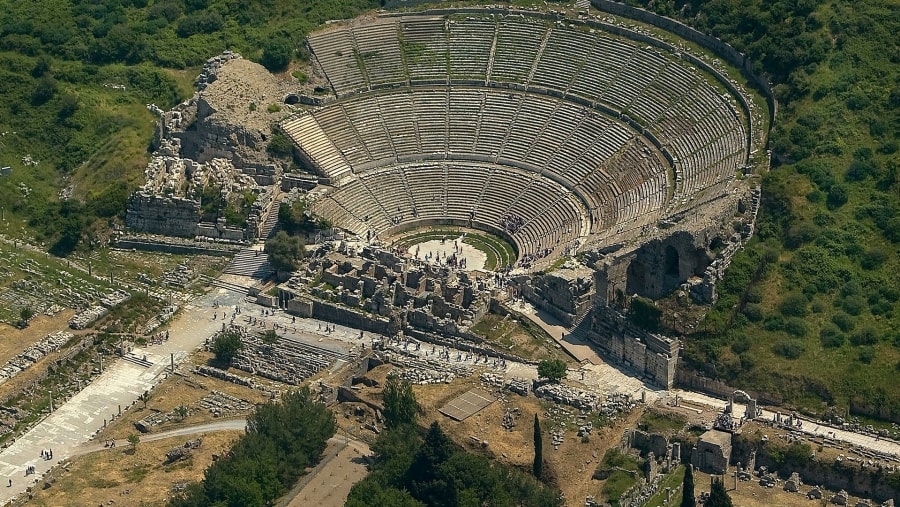
Walk through one of the most magnificent excavations in the world. You will see the Odeon, the Fountain of Trajan, the five terraces of the Apartment House, the Steam Baths of Scolastika, the Temple of Hadrian, and the impressive Library of Celsus. The library is adorned with columns and statues and is considered among the most magnificent ruins in Ephesus. Continue to the Grand Theater, where St. Paul preached. It is the largest theater in antiquity, with a capacity of 24,000 seats.
Visit the Ephesus Archaeological Museum and walk through its many exhibits tracing the religious and chronological history of the ancient city. Filled with attractively displayed mosaics, statuary, and other artifacts, the museum exhibits two marble statues of the Mother Goddess Artemis - Goddess of Nature, Childbirth, and the Harvest.
Go to the remains of St. John's Basilica, once a great church built on a 2nd-century tomb thought to hold the remains of St. John. While the church is now in ruins, there are many frescoes, mosaics, and graceful columns that attest to the glory of the place where St. John the Evangelist lived and died.