
Market Square: The City’s Meeting Point
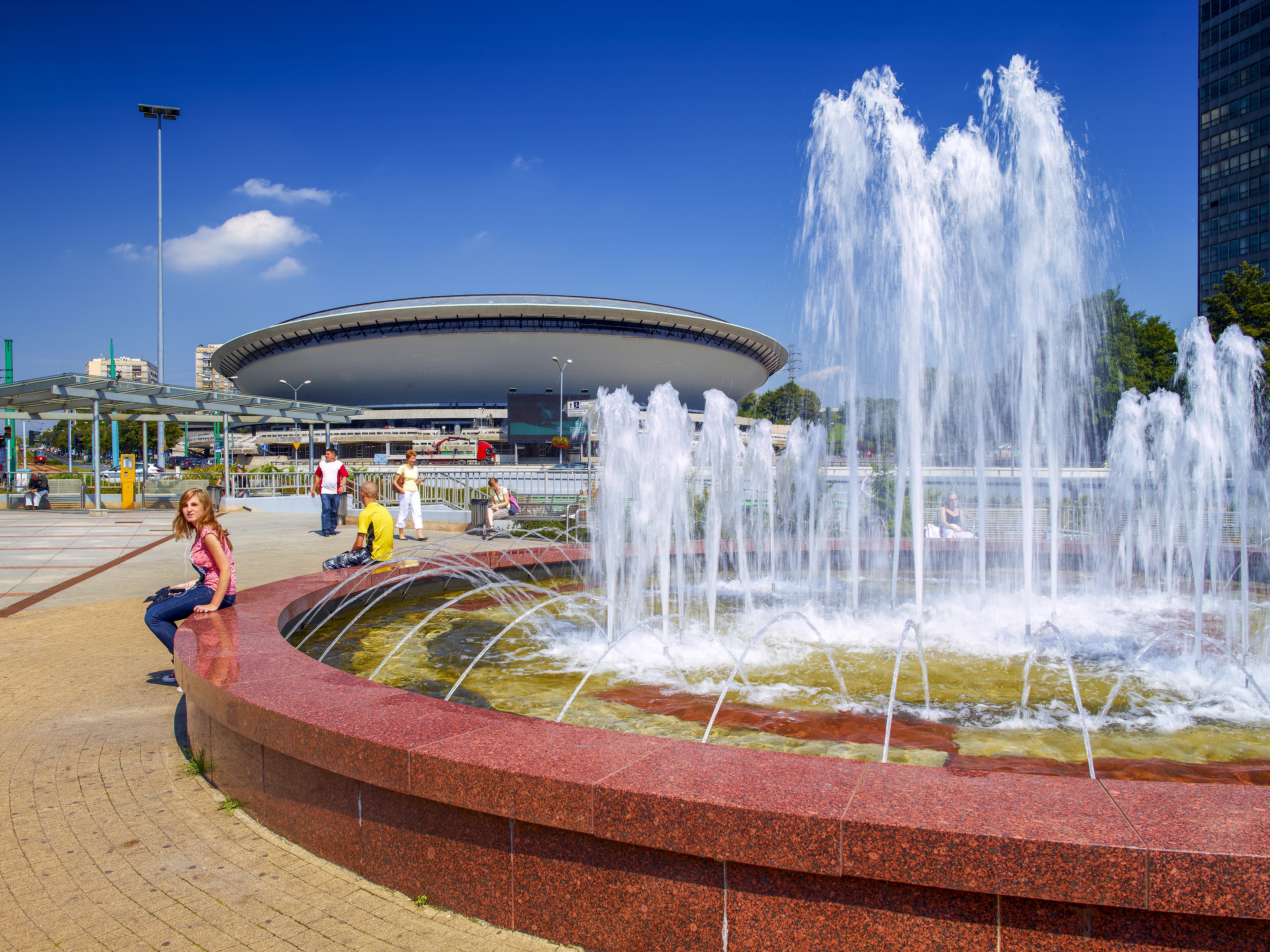
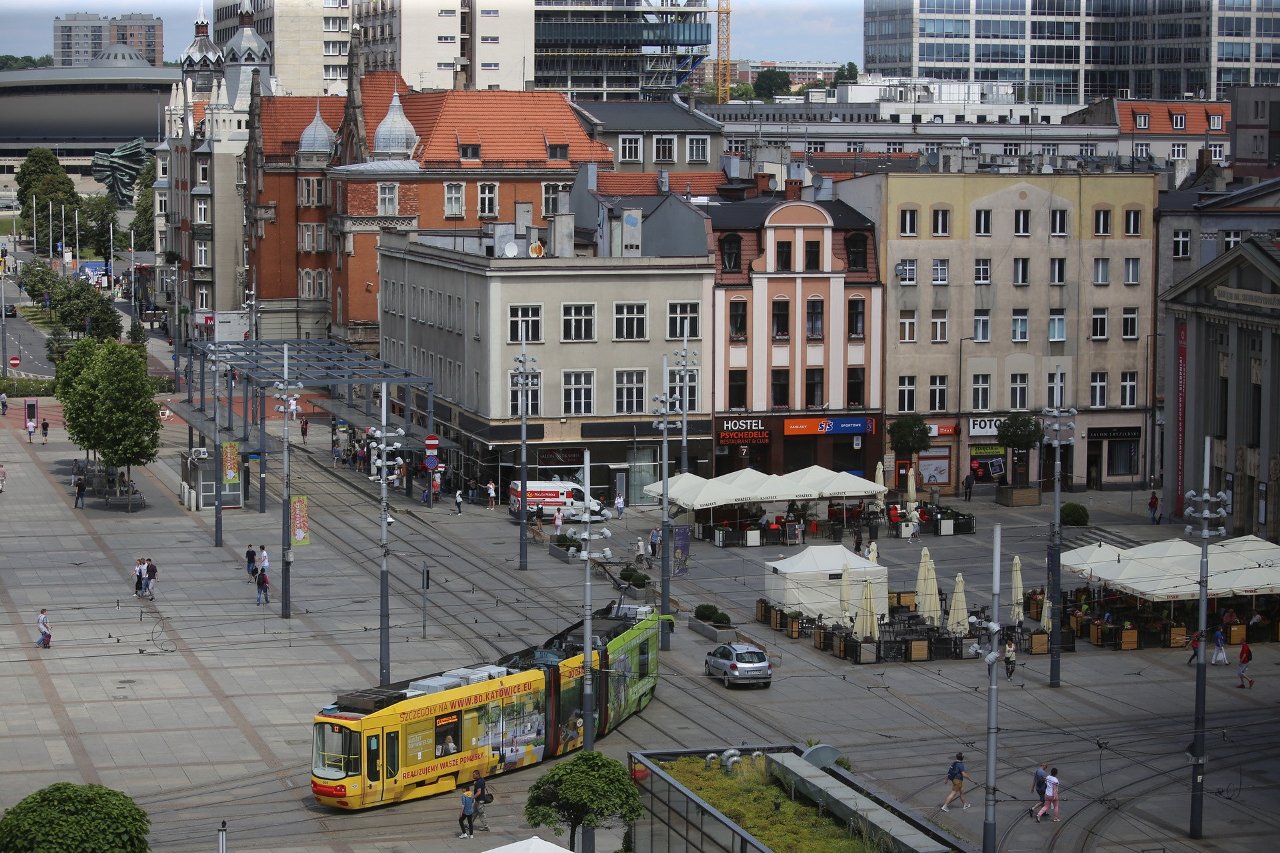
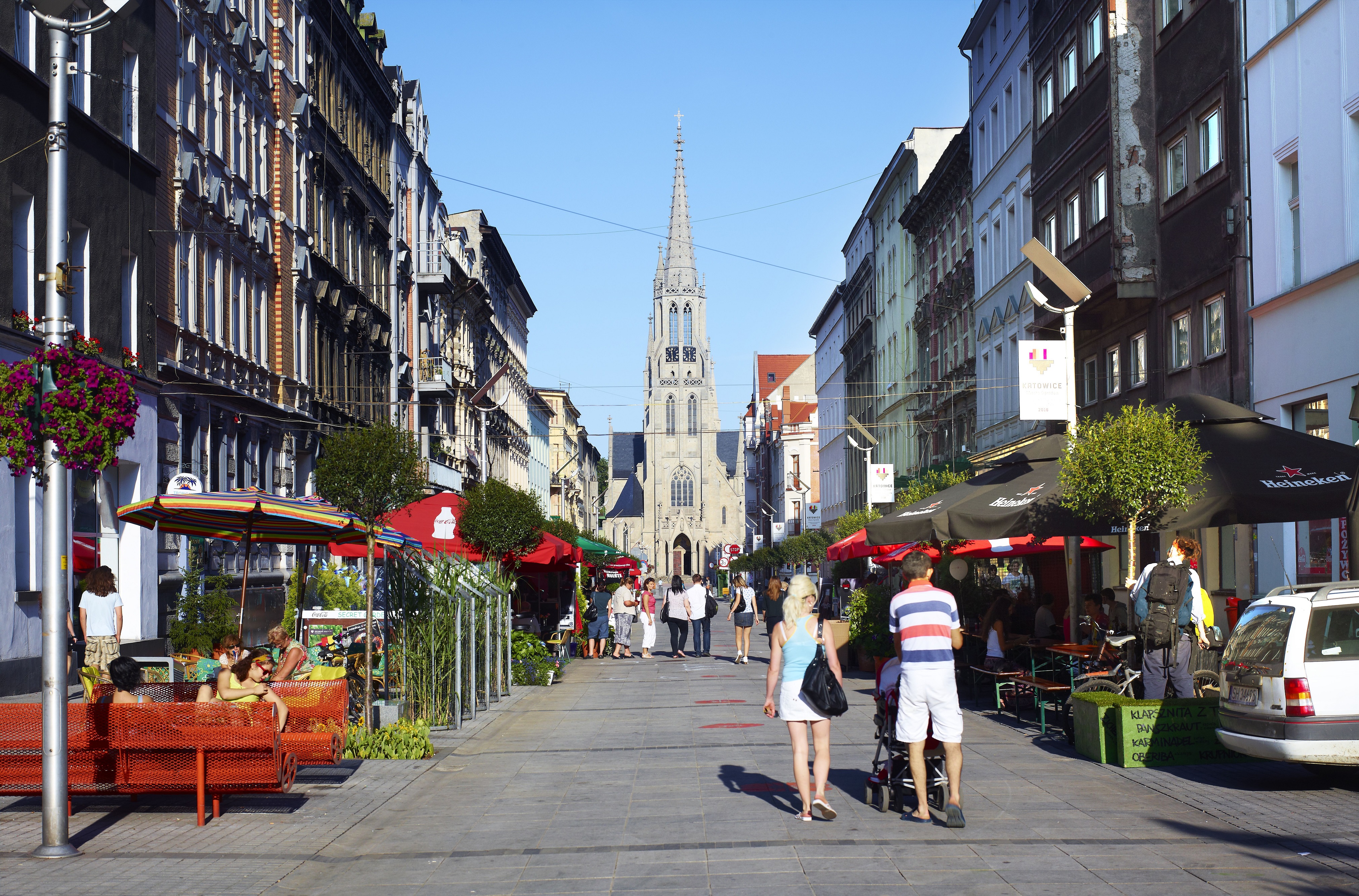
This large, recently revamped space right in the heart of the city centre is one of Katowice residents’ favourite places to meet up. It’s also the place where many concerts, fairs, children’s events and the increasingly popular food truck rallies are celebrated. For a few years now, the square’s special drawcard during the summer months has been the exotic five-metre-high palm trees offering welcome shade to passers-by. The date palms, which, interestingly, travelled all the way from the Canary Islands, stand by a fountain imitating the River Rawa that flows directly under the market square. If you take a good look around, you’ll see that the Market Square is a place where history meets modernity; 19th-century tenement buildings and the Silesian Theatre, built well over a century ago, stand proudly together with the city’s first department stores, Zenit and Skarbek and newly built restaurant pavilions. All in harmony, perfectly characteristic of the city itself.
Nikiszowiec
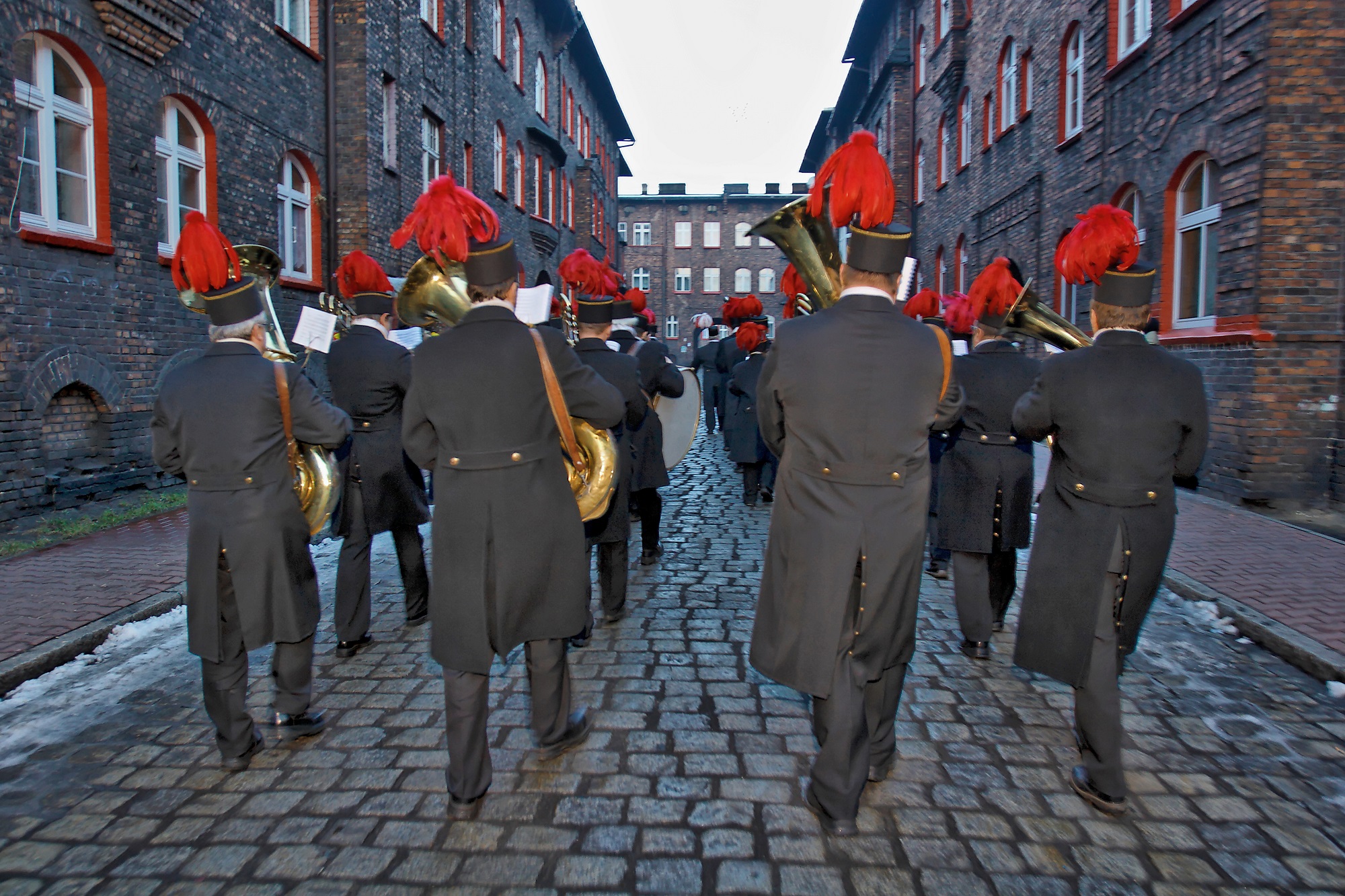
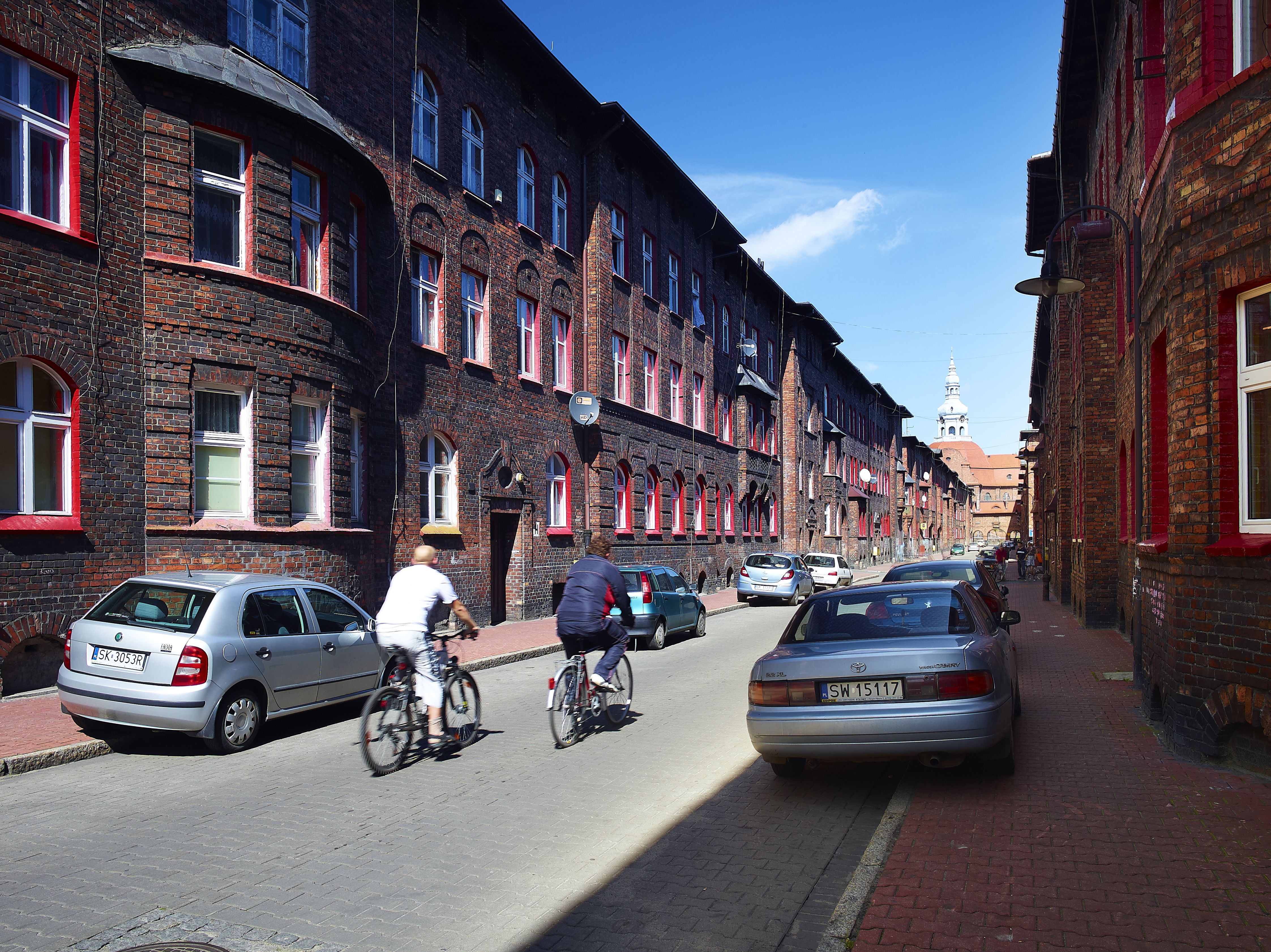
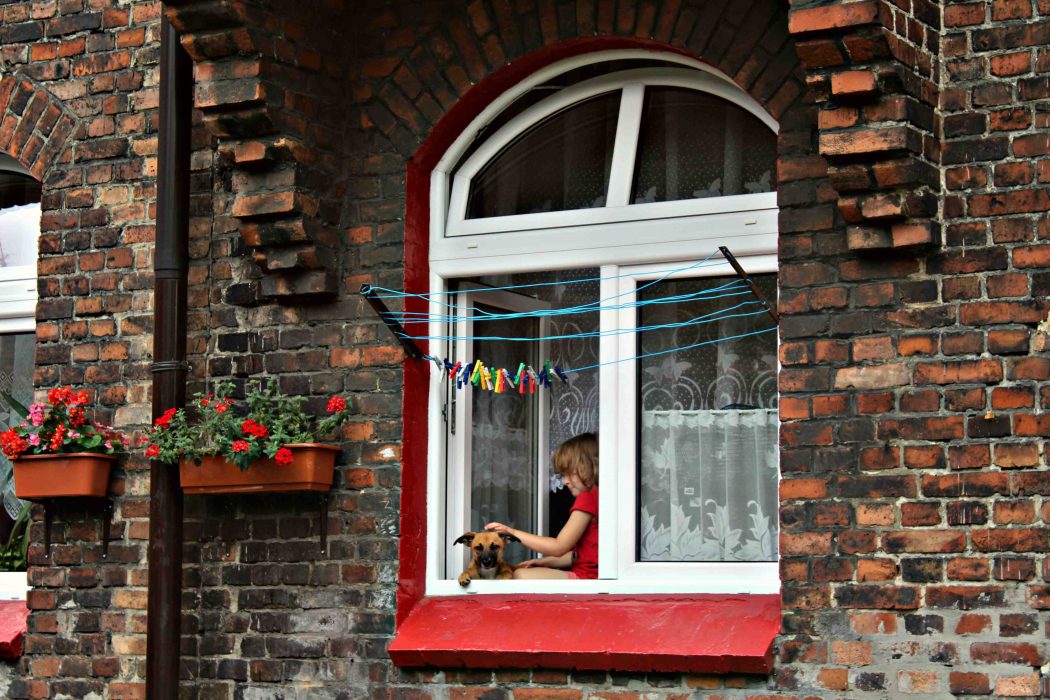
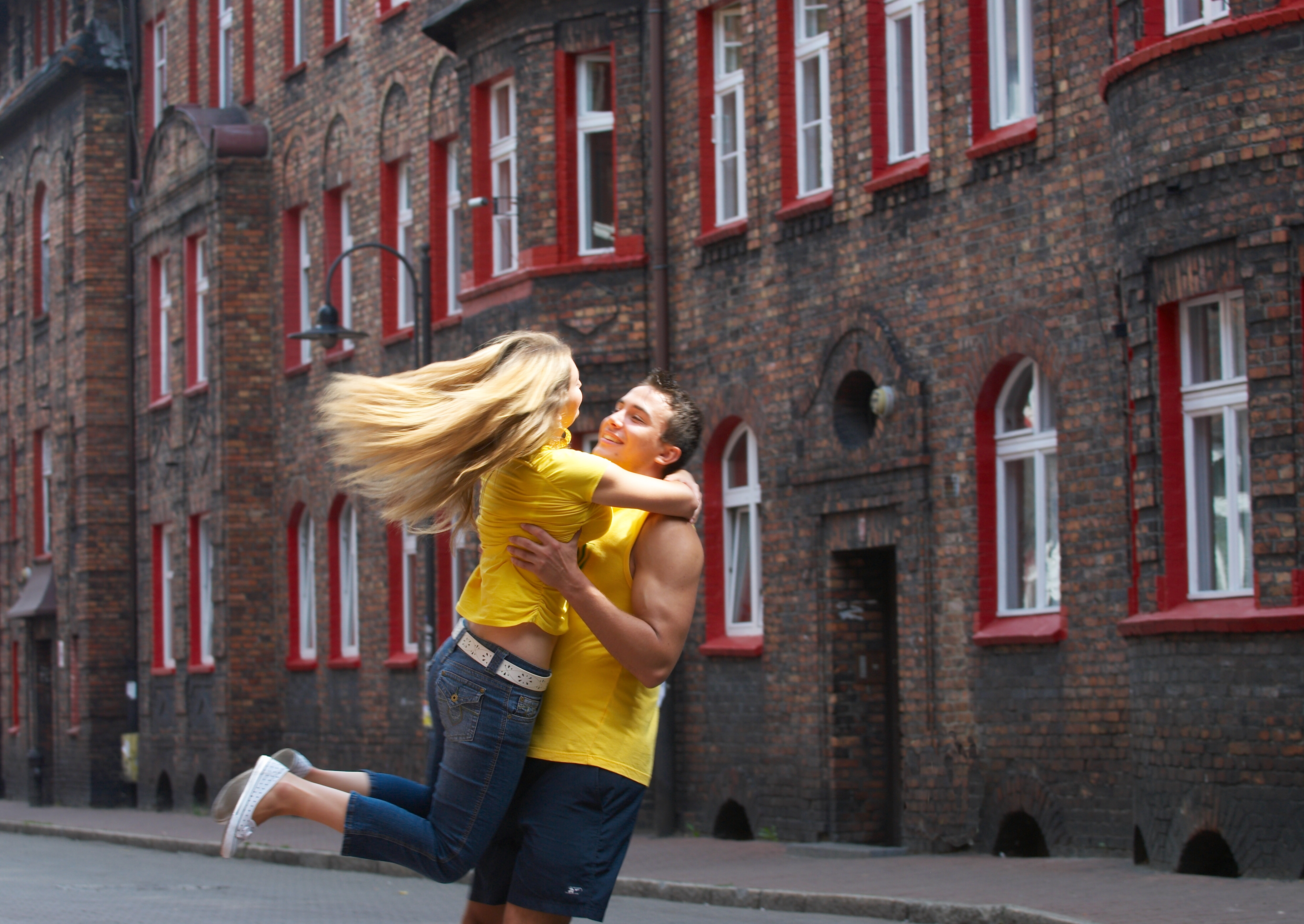
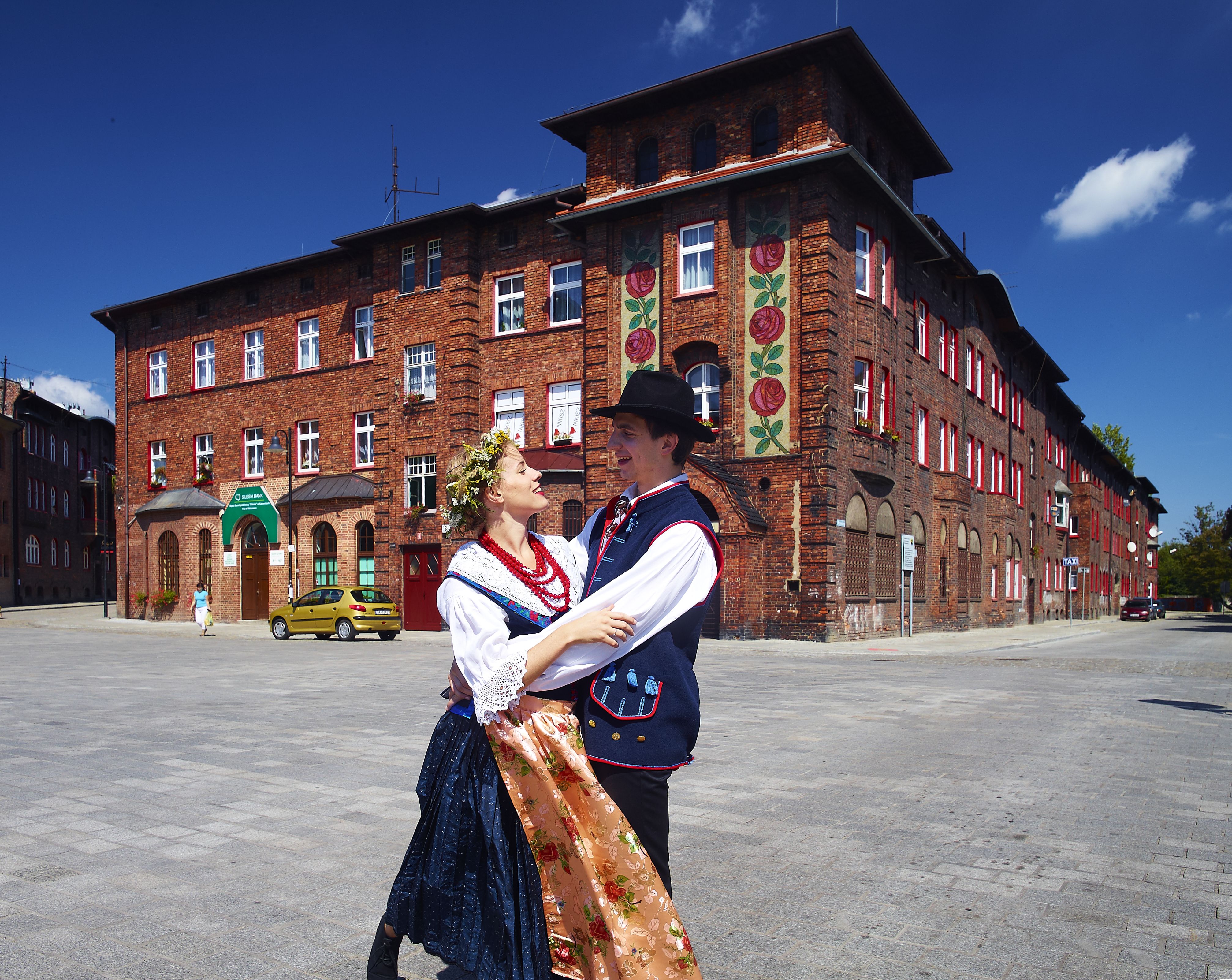
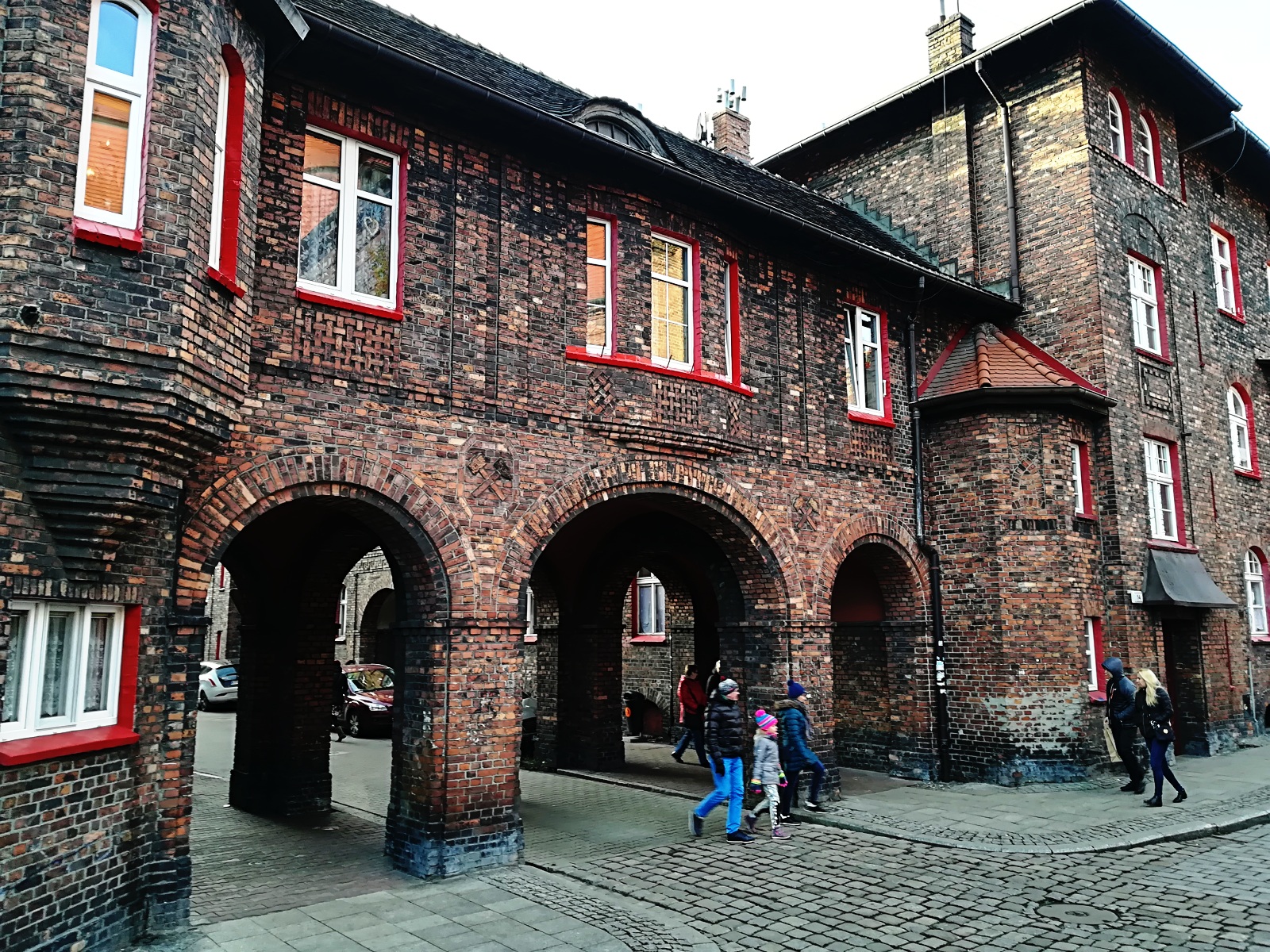
Nikiszowiec, once an entirely separate district built solely for mining families, is a unique example of architecture and a must for street photography enthusiasts. The beautiful brick housing estate, designed by Emil and Georg Zillmann, is featured prominently in films by Kazimierz Kutz and Lech Majewski, among others. Many say there is something undeniably magical about Nikiszowiec, which is probably thanks to the artists of the Janowska Group who are still active here today. Even though they portray reality with simple strokes, the Art Naif Festival held annually at the nearby Wilson Shaft Gallery attracts crowds of enthusiasts of this particular style of primitive art. Many local craftspeople still work here today, producing creative pieces such as beautiful watercolours and unique coal jewellery.
For many years now, Nikiszowiec has formed part of the Industrial Monuments Route, which takes visitors on a journey around important sites of the industrial heritage of Śląskie province. If you do embark on the route, definitely don’t miss out on exploring the nearby Giszowiec – another mining housing estate also built over 100 years ago, this time for the workers of the Giesche corporation. Its rather unique design was based on the concept of the Garden City, developed by English urban planner Ebenezer Howard. The Katowice section of the Industrial Monuments Route also includes the Walcownia Zinc Metallurgy Museum and the China Factory, whose renovated compound has since been turned into a technology park. China isn’t produced here anymore; it is however decorated and sold, either in exquisite sets or as stunning individual pieces.
Modernism with a capital M
The city of Katowice boasts the largest and most interesting group of important Neoclassical buildings in the whole of Poland. Architecture fans will certainly enjoy their visit! Amongst the most valuable are the Silesian Province Office and the imperial-looking Silesian Parliament buildings, to which the Polish President has granted “National Historic Monument” status. Two curious facts about this building: firstly, it is home to one of only four still-operational paternoster lifts in Poland. Secondly, the treasury, located in the basement, is protected by a special mechanism which – in the case of a break-in – submerges the contents into the tank situated below.
Another, equally interesting building was one of the highest in Europe in the 1930s, when its five-year construction ended. Often called ‘Flying Saucer’ and ‘Cloud Scraper’, its real name is Drapacz Chmur and it was one of the things that won Katowice the nickname of the “Polish Chicago”. Its steel structure supports 14 storeys above ground, plus another three floors hidden underground. This and 14 other sites form the several-kilometre-long Modernism Trail whose architecture testifies to what was then an innovative approach to urban space.
The Wings that shaped Poland
Near the Culture Zone, on the other side of Roździeńskiego Street, stands the eye-catching Silesian Insurgents’ Monument. Based on an idea by architect Wojciech Zabłocki and sculptor Gustaw Zemła, the three-part monument was unveiled more than 50 years ago and stands on the former site of the Red Army soldiers’ cemetery, which was later moved to Kościuszko Park. Composed of three eagle’s wings, the monument commemorates the three Silesian uprisings, which took place in 1919, 1920 and 1921. At its base, you’ll find the names of all the localities where insurgents fought proudly against German domination. Today, it’s one of the most important sights in Katowice and among the most easily recognisable monuments in the whole of Poland.