Tanzania · Safari

3-Day Tanzania Great Migration Safari with Ndutu Calving Season

3 Days Round trip from Arusha Easy pace

The journey

Trip highlights
  • 01 Witness herds of elephants in Lake Manyara that are not very shy
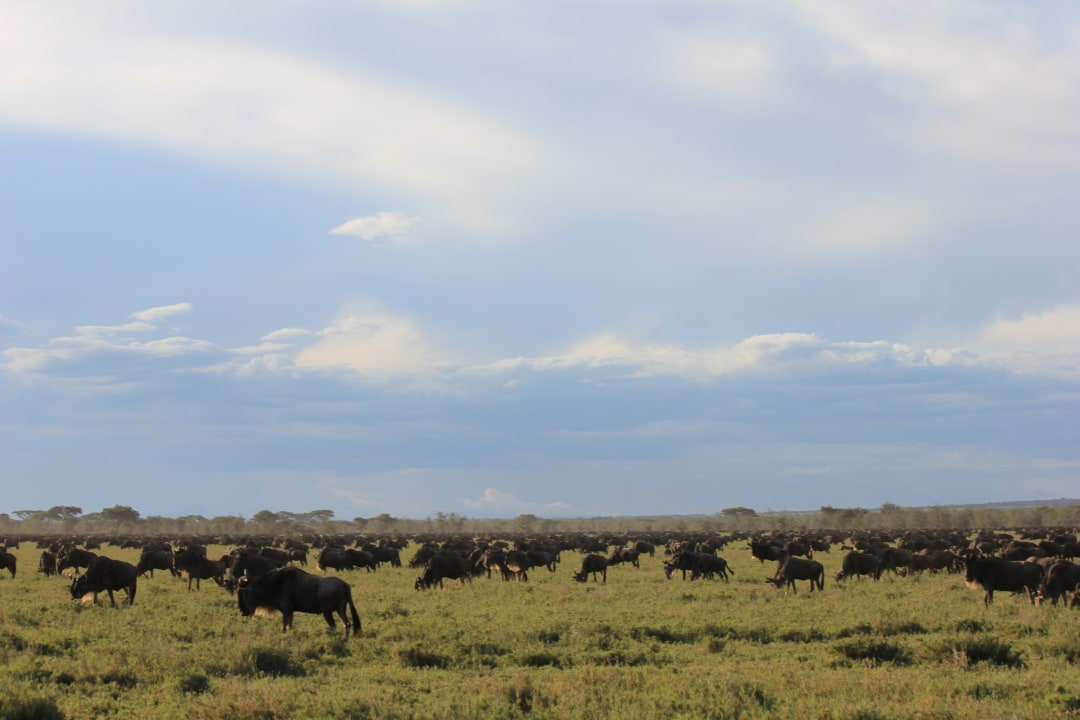
  • 02 See the seasonal Wildebeest Migration in the Ndutu area
  • 03 Look out for flamingos and hundreds of other bird species at Lake Manyara
  • 04 Spend a full day on the Ngorongoro Crater floor, where wildlife is easy to spot

On this 3-day safari, you will visit Lake Manyara, the Ndutu area, and the Ngorongoro Crater. Expect to see large herds of wildebeest and zebras, along with ostrich, impalas, giraffes, and many bird species. In the Ngorongoro Conservation Area, hippos, rhinos, and buffalo are among the many crater residents. Ndutu is especially famous for the Great Migration calving season of wildebeest, zebra, and gazelle.

Your guide will drive you to follow the Great Migration, and if you are lucky, you may be able to witness wildebeest calving.

From the itinerary

At a glance

What this trip includes

Duration 3 Days
Tour type Private
Activity level Easy
Accommodation Included · Standard
Transport Included
Wheelchair access No
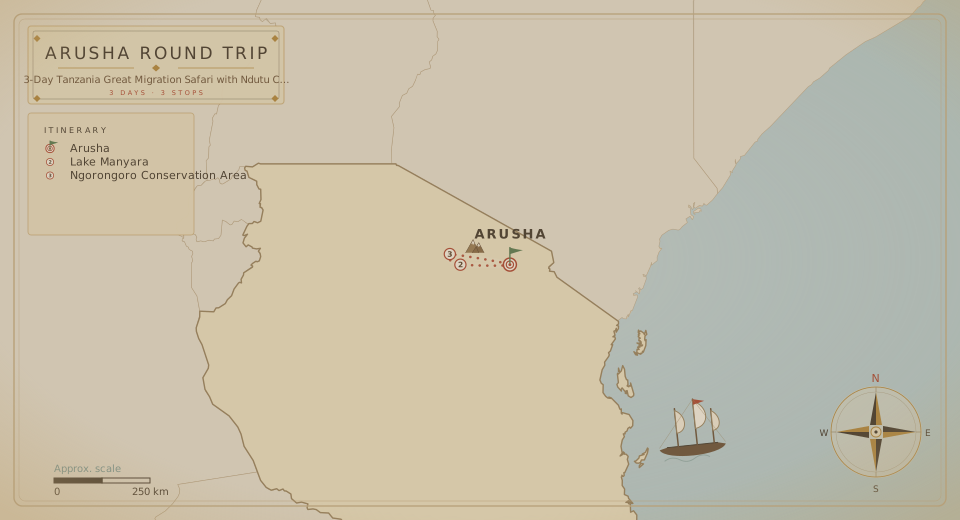
Cities Arusha, Ngorongoro Conservation Area, Lake Manyara
Languages English

Day by day

The itinerary

1
Day 01

Lake Manyara National Park Safari

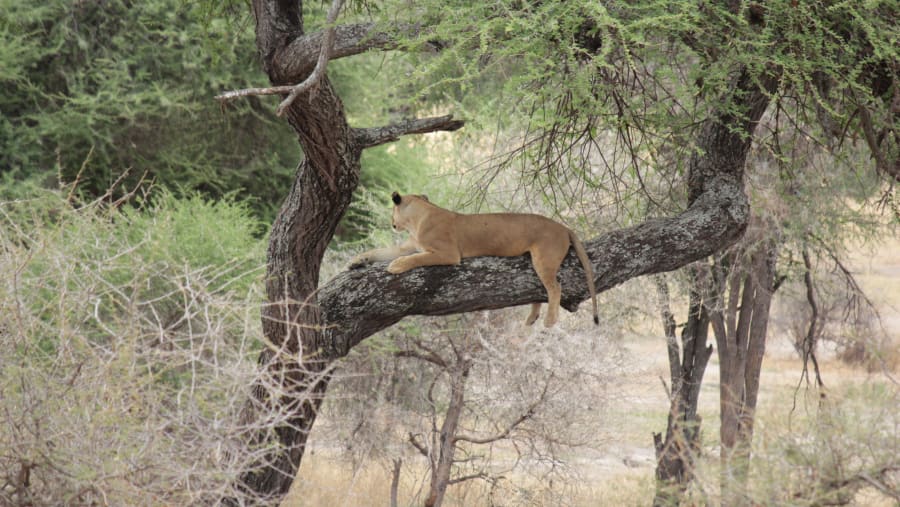
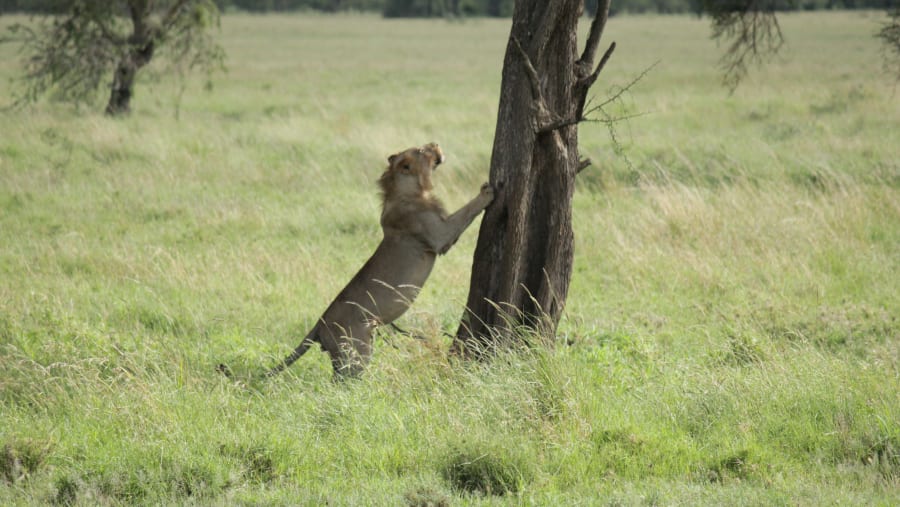
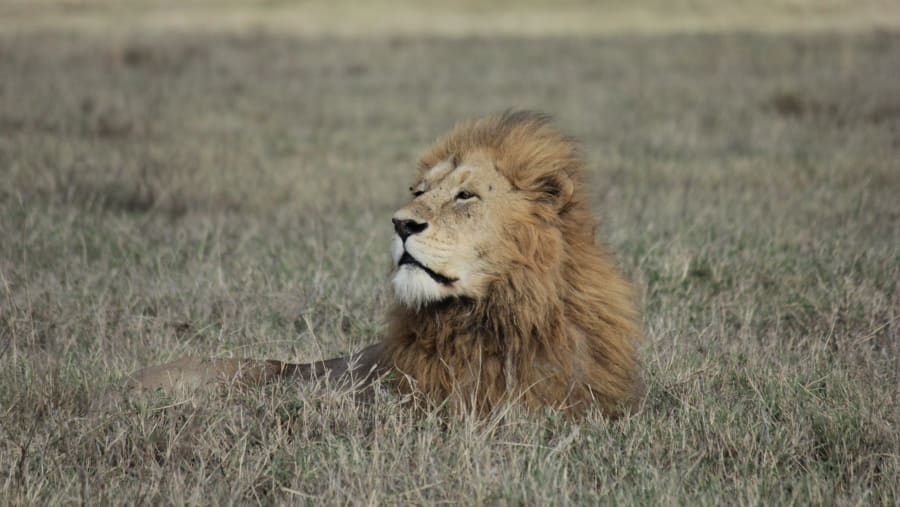
  • After breakfast, we head to Lake Manyara National Park. The park is dominated by the lake of the same name, which attracts large colonies of waterbirds. Particularly impressive are the pink-colored flamingos, but many other bird species such as cormorants, pelicans, and storks can also be observed here. A total of about 400 different bird species live in the park. The park is also famous for its tree-climbing lions, which are usually found in the central and open part of the park. During the safari, you will also see elephants, zebras, giraffes, buffaloes, hippos, and many other animal species.
  • In the late afternoon, you will leave the national park and drive back to the lodge for dinner and an overnight stay at Crater Rim Inn Karatu.
2
Day 02

Ndutu Great Migration and Calving Season

  • Today, you will have an early start and head out for a game drive in Ndutu, which is famous around February and March for the calving season. Your guide will drive you to follow the Great Migration, and if you are lucky, you may be able to witness wildebeest calving. Due to the huge number of migrating herds, it is even easier to find predators like prides of lions, cheetahs, hyenas, and leopards. You can even decide to break for lunch within the large herd of wildebeest.

Dinner and overnight at the Tanzania Bush Camp.

3
Day 03

Full-Day Ngorongoro Crater Tour

  • This morning, you will travel to the Ngorongoro Crater - a wonderful haven for wildlife. Here, you are likely to experience a range of small animals, birds, and local flora and fauna. Today, you will journey into the heart of this amazing crater and spend the full day on the crater floor. Ngorongoro is unique in that almost all the wildlife lives within the crater walls, giving you the opportunity to find game easily. Rhinos can be seen regularly, as well as prides of lions and cheetahs. After lunch, you will commence the drive to Arusha, JRO.
Lake Manyara National Park, Ndutu calving plains, Ngorongoro Crater floor

Where this trip takes you

Lake Manyara National Park, Ndutu calving plains, Ngorongoro Crater floor

The route

Where you'll travel

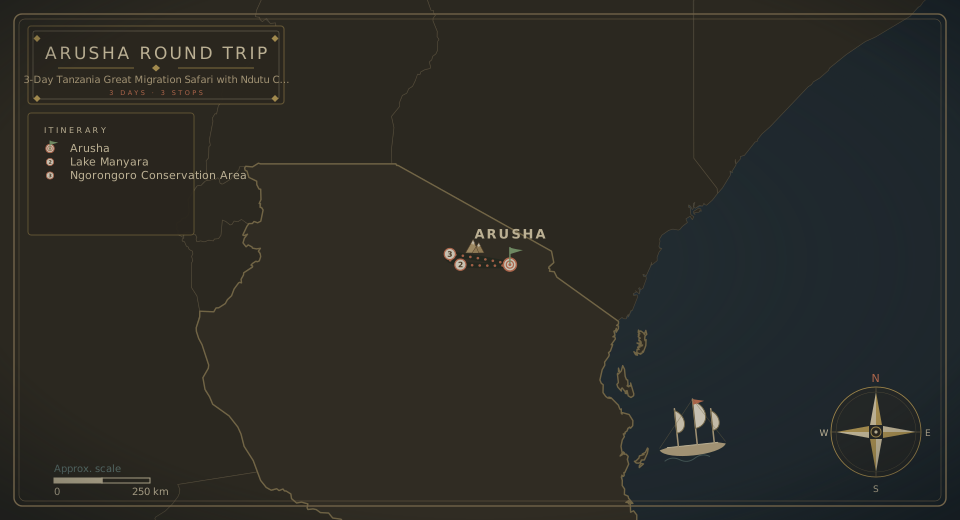
Tour route map
Round trip from Arusha 3 cities · 3 Days

The fine print

Trip details

What's Included

  • Full-board accommodation whilst on safari in the above-mentioned camps and lodges
  • Private safari guide
  • Safari jeep with pop-up roof for game viewing
  • Transfers in both directions between the International Airport and Arusha
  • All entrance park fees

What's Not Included

  • Tanzania visa
  • Personal expenses
  • Optional tours
  • Tips and any items of a personal nature
  • Flights and insurance

What to bring

  • A set of binoculars
  • Mosquito repellents
  • Warm clothes, as the temperature varies between places

Know before you go

  • The name Tanzania conjures up images of wildebeest stampeding across vast savannah, rain forests teeming with monkeys and birdlife, and great plains brimming with legions of game. All of these natural wonders and more are on offer in this exceptionally diverse African nation. Visitors typically visit Tanzania to partake in at least one of the four well-known Tanzanian tourist experiences: a relaxing seaside vacation on the picturesque island paradise of Zanzibar, an underwater tour of some of the world's most renowned dive sites around the gorgeous Spice Islands, a safari adventure in some of Africa's most impressive game reserves, or a hiking excursion around Mount Kilimanjaro National Park. Whichever of these incredible holidays you choose, you will undoubtedly be welcomed by some fabulously friendly and peaceful inhabitants who, despite being divided into 120 different ethnic groups and cultures, live in harmony with one another and provide some of the most wonderfully exotic local cuisine you could imagine. With all of this diversity on offer, the most difficult part of your Tanzanian holiday experience is likely to be deciding where to go.
  • In Tanzania, the unit of currency is the Tanzanian Shilling, which is divided into 100 cents. Notes are issued in denominations of 500, 1000, 2000, 5000, and 10000 shillings. Coins are issued in denominations of 50, 100, and 200 shillings.
    Banks are open from 9:00am to 3:00pm Monday to Friday. Many banks are equipped with 24-hour ATM machines.
    Credit cards and travelers' checks are not widely accepted in Tanzania. Where they are accepted, high service fees and poor exchange rates are to be expected. Major foreign currencies - particularly US $ - are accepted in Tanzania and are convertible at banks and bureau de changes in the main towns and tourist areas. If bringing cash in US $, please make sure bank notes are in good condition, with no cuts or damage, and are not older than 2004. Most banks offer higher exchange rates for US $100 / US $50 bank notes compared to US $20 / US $10 or US $5 bank notes.
  • If you are visiting a number of parks and reserves in Tanzania, you can either drive or fly between them. Roads in most of the wilderness areas are in poor condition and unmarked, and self-driving is not recommended. Operators will supply you with a driver who doubles as an informal guide; alternatively, you can arrange to fly to your destination and utilize a car and driver supplied by the lodgings. Elsewhere in Tanzania, towns and cities are linked by a steady stream of buses and dala-dalas (minibuses), and in the cities, there is public transport in the way of buses, dala-dalas, taxis, and, in some places, bicycles or tuk-tuks.
  • Precision Air runs regular services, mostly via Dar es Salaam, Kilimanjaro, or Zanzibar, to all main towns and other destinations in East Africa and beyond. All national parks and some of the top-end luxury lodges have airstrips, and Coastal Air operates between these and the main airports on the mainland and the islands of Zanzibar, Pemba, and Mafia. ZanAir has frequent connections between Zanzibar, Pemba, and the mainland.
  • Driving is on the left-hand side of the road.
  • Most camps, lodges, or hotels cater specifically to tourists and serve Western-style food, ranging in standard, but generally are excellent. Game lodges tend to offer a daily set menu with a limited selection, so it is advisable to have your tour operator specify in advance if you are a vegetarian or have other specific dietary requirements. First-time visitors to Africa might take note that most game lodges in and around the national parks have isolated locations, and driving within the parks is neither permitted nor advisable after dark, so there is no realistic alternative to eating at your lodge.
    Tap water in Tanzania is generally not safe to drink, and most travelers try to stick to mineral water. Filtered and bottled water can be difficult to find if you are travelling outside the main town, so it is advisable to stock up. Most camps, lodges, and hotels have it available.
  • Just south of the equator, Tanzania is huge, and its sheer size means that the climate varies considerably within it. However, generally the main rainy season, or the 'long rains', lasts during about March, April, and May. Afternoon tropical downpours are the norm - these are heavier and more predictable beside the coast and on the islands. The humidity is high, and daily temperatures reach the low-mid 30°C.
  • The long dry season lasts throughout June, July, August, September, and October, when rainfall is unusual, even on the islands. Temperatures vary hugely with altitude and location, but it is usually a fine, clear sky and sunny weather.
    - It's a great time to visit Tanzania. During November and December, there's another rainy season: the 'short rains'. These are much lighter than the main rains and less reliable.
    If it has rained during the short rains, then it normally dries up for a few months, January and February, which is Tanzania's 'short dry season', before starting to rain again in earnest in March.
  • It never gets really cold in Tanzania, so lightweight clothing, preferably cotton or linen, is recommended. While on a game-viewing safari, avoid brightly colored clothing; stick to whites, beiges, khakis, and browns. There may be long days sitting in safari vehicles, so it is advisable to wear light, comfortable clothing such as short-sleeved shirts and cotton/linen trousers or shorts. Denim will become too hot and extremely uncomfortable. Walking shoes and socks will be required.
    The evenings will be chilly, so long-sleeved shirts and trousers should be worn. A sweater may be needed. These will also prevent you from being bitten by insects. A hat should be worn at all times outside. The sun may sometimes not feel hot, but it can still easily burn, especially if it is cloudy and overcast.
  • If visiting Zanzibar or any coastal town, don't forget to take a swimsuit, as it is invariably warm. Ladies are recommended to take cotton skirts, blouses, and dresses. Sandals are a must for this environment. On the beaches and within the confines of hotels, normal swimwear is acceptable, but nudity is not.
  • As over a third of the population in Tanzania is Muslim, it is therefore not etiquette for ladies to walk around in public displaying their legs and shoulders. Remember to dress modestly, as short shorts, miniskirts, vests, and tank tops will be frowned upon.
  • The electricity supply in Tanzania is 220/240 volts at 50Hz. Plugs are 3-point square (UK Type). Adapters are available at major airports.

Logistics

Meeting & route

Meeting point
Arusha Region, Tanzania
Tour start
Arusha, Tanzania
Tour ends at the same location as the start point.
End of the journey

Your 3 days finish where they began, in Arusha.

Watch the tourHQ film Watch the film

Create your own adventure

Can't find the perfect tour? Tailor your dream trip.

  • Tell us your destination, dates and group size.
  • Our travel experts and local guides design a tailored itinerary, just for you.
  • Enjoy your trip with peace of mind, knowing everything is taken care of.
Plan my holiday

Say goodbye to travel stress.

Starting from

USD 3,050 /person
Book This Tour

When

Travellers

Total