

Imerovigli
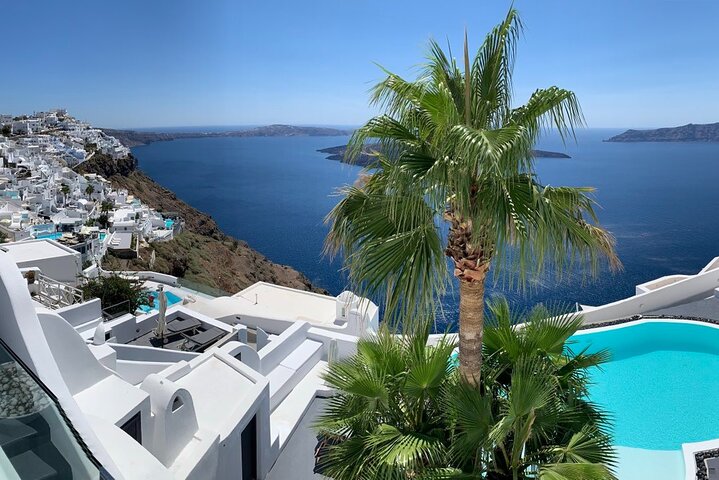
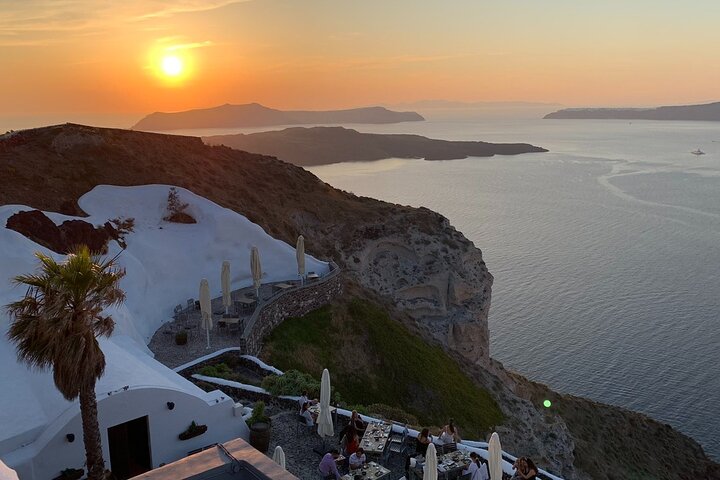
Continuing North-West from Fira, we reach Imerovigli. Located at about 300 meters above sea level, Imerovigli is very often referred to as the” balcony of the Aegean sea", and it definitely lives up to this name by offering the most spectacular view of the Aegean sunset. Other attractions include many churches in typical Cycladic architecture, especially the Church of ay-Stratis and the Monastery of Saint Nicholas, as well as The Skaros Rock, where the remains of a medieval fortress are preserved.
Oia
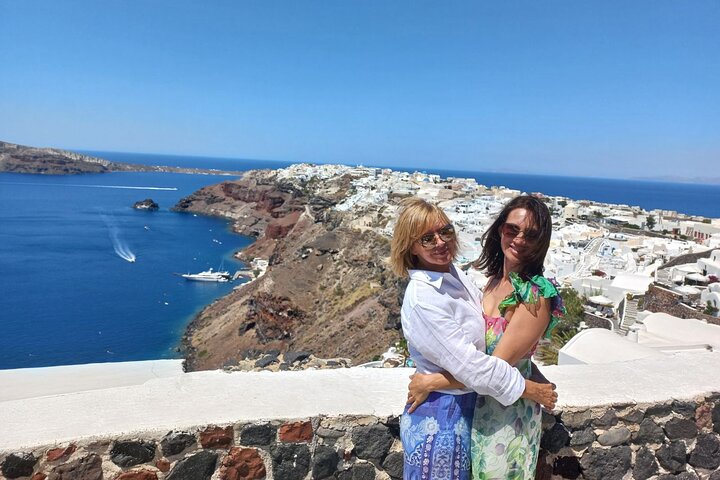
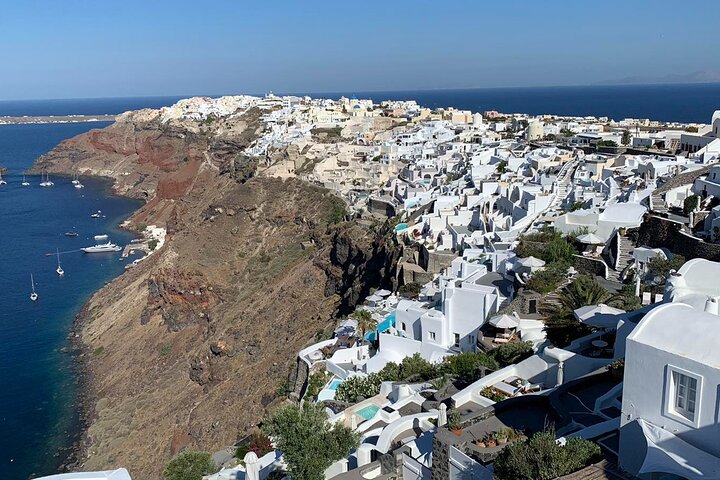
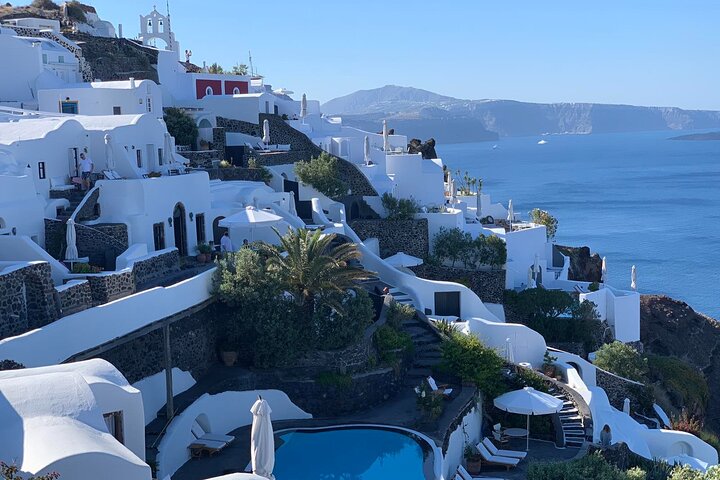
Oia is by far the most famous village in Santorini and one of the most unsurpassed in beauty. Of course, there is no shortage of attractions that will intrigue the visitor-a magnificent sunset, houses built in niches inside the volcanic rock, Churches with blue roofs, inspiring views, and an idyllic atmosphere will richly reward the visitor of this unique place.
Prophet Ellias
Mount Profitis Ilias, located less than five kilometers (3.1 miles) from the village of Pyrgos, is the island's highest point. And right on its top stands the monastery of the same name. Built in 1711, the Profitis Ilias Monastery, one of the oldest on the island, is a stunning example of Cycladic architecture at its best.
Even those who dislike taking photos will not resist the desire to take a few pictures from this unique vantage point.
Pyrgos
The village of Pyrgos shows all the magic of Santorini and the signature panoramic views on both sides of the island, but also retains the features of Venetian rule. Traditional Cycladic houses and paths surround the old Venetian castle, offering the best of both worlds and making the village of Pyrgos a place not to be missed.
Megalochori
The sights of Megalochori are two impressive churches standing on the central square of the village. The Church of the Introduction of the Blessed Virgin Mary with a wooden iconostasis and Byzantine icons of the Russian school and the church of Agia Anargiri celebrate July 1, the day on which a big holiday takes place in the village. The village has been mentioned in written sources since the mid-17th century. It also appears on the map of 1801. Finds in the wider area indicate that it has been inhabited since the early Cycladic and Late Cycladic periods.