Is it safe to travel to Africa? Is it safe to travel to Tanzania?
Africa is currently safe. Tanzania is very safe, and we are ready to organize your African epic holiday. Despite the fact that we are mostly safe from COVID-19, Tanzania still has standard operating procedures in place to contain COVID-19 and ensure your maximum safety. Some airlines have already resumed international flights, and we can plan the entire trip for you. Tanzania welcomes you again!
Requirements to get into the country: Visa
Visas are compulsory for all visitors and cost from $50. Visas are obtainable at the airport when you arrive, but it is better to have one before you land, as officials tend to "not have change". Visas are also obtainable from the Tanzanian Embassy. You will need 2 passport photos and 2 completed forms. If you do not have time to organize a visa, please contact us and we will gladly assist you for a small fee.
Yellow Fever inoculation certificate
The inoculation is obtainable from your nearest travel clinic or from your local physician. Staple it into the front of your passport if you are afraid of losing it. Most African countries require this certificate, so do not travel in Africa without it.
Malaria tablets
Zanzibar is situated in a malaria zone, so it is recommended that you consult your physician about the prescription that is right for you. Pregnant women are not allowed to take malaria prevention drugs and are cautioned before entering any malaria area. To set your mind at rest, we stayed in Zanzibar for 2 years and fortunately never contracted malaria. This is not to say you will not get it... just be careful.
Insect/mosquito repellent
Mosquitoes, like little vampires, favor night conditions. Be sure to take a repellent and cover all exposed areas of your body, such as your neck and arms. We recommend that you wear trousers at night and long-sleeved shirts if you are outdoors. If the heat is too much and you wear a short-sleeved shirt, make sure you smear or spray your arms with repellent. At night before you go to bed, make sure your mosquito net is either touching the ground or tucked in, and that your exposed areas, especially your ankles, are protected with repellent.
Anti-histamine cream
For those irritating bites.
Currency
Traveller's cheques and cash are accepted at hotels and bureau de change offices. US dollars are the preferred currency. If you plan on taking cash, make sure you take large bills, such as $50 or $100, as these for some unknown reason always get a better rate. Do not go running to the first bureau you see at the airport, as these, along with the hotels and resorts, normally have the worst exchange rate. If you are planning on taking a taxi into town, rather pay the fare in US dollars and go to a bureau in town. There are many all over town. Try to negotiate a better rate - you never know.
Try to pay for as much as possible in the local currency (Tanzanian shillings), always bearing in mind the exchange rate. If the locals see you have foreign currency, they will try to relieve you of it. Always haggle or bargain and try to pretend you know what you are doing. Remember to keep some of your home currency for your return, just in case. You will also have to pay a departure tax of $30 when you leave.
Embassies
There are a few consulates on the island, but all embassies are situated in Dar Es Salaam.
Do I need vaccinations to travel to Tanzania and Zanzibar?
The vaccination should be acquired a minimum of 10 days before travel to Tanzania and Zanzibar. A certificate of vaccination for Yellow Fever will be necessary for arrival from Kenya or other neighboring East African countries, and if you have traveled recently in any other areas at risk of Yellow Fever, including South America and parts of Asia.
Travel insurance
It is imperative that you have travel insurance. Even though they do not check any certificates when you enter the airports, for your own peace of mind, make sure that you are adequately covered.
What to pack
- Light sandals or rubber flip-flops. Some places require you to remove your shoes before entering. Good walking shoes if you plan on doing a lot of sightseeing.
- Raincoat or umbrella if you are traveling in the rainy season. Monsoon rains are heavy.
- Flashlight, for those irritating power cuts. Many hotels do have generator backup systems, though.
- Clothes - these should be light, as it is very hot and humid. A jersey or windbreaker is recommended for those winter nights, just in case. Women are frowned upon for wearing revealing clothes. Mini-skirts are a definite no. Try to wear shorts (not hot pants) or a long skirt, and try to keep the shoulders covered.
Communications
There are many internet cafes in major towns and at some of the hotels and resorts, so in a non-emergency this is the best form of communication. Charges range from Tsh1,000 to Tsh5,000 (about $1 to $5) for an hour's connection. The local telephone company TTCL is inadequate, so if you need to phone internationally, it is best to ask at the internet cafe. They usually have facilities, or they will be able to direct you to someone who has. Be careful, as it may be expensive.
Electricity
This is the same as the UK and in South Africa, being 220/230 V. Do not leave appliances plugged in all day, as there are many power fluctuations which might destroy them. US citizens will have to get an adapter and a transformer for Zanzibar power. If your plug does not match, then enquire at a local shop; they should be able to assist.
Driving
If you are planning on renting a car or motorbike, make sure you have a valid international driver's license. You will be stopped at one of the many roadblocks, and often police are just looking for a bribe. Bribery has become a culture amongst the police, so make sure you have the correct documentation to avoid having to pay a bribe.
If you plan on driving in Stone Town, make sure you know the roads, as there are many one-way streets and the drivers are reckless. If a police car approaches with a siren hailing, you have to pull over to the side of the road and stop, no matter which way it is going. Once it has passed, you may pull out and continue.
Crime
As with all cities, Zanzibar is not free of crime. Unfortunately, it has been on the increase, so make sure you do not take valuables on holiday with you. If you do take expensive jewellery, make sure it is either locked up when you go out or hidden from sight.
Be careful not to walk the streets at night alone, as this invites trouble. If you are confronted, do not resist, and try to report the matter to the police as soon as possible. The police are sometimes rude and arrogant, but an attempt will be made to recover your property.
The shorter rainy period of October to December often has thunderstorms that pass over the mountain, dropping rain as they go. Typically, the clouds disappear in the evening, leaving the nights and mornings very clear with excellent visibility.
January and February are usually dry, warm, and clear, with brief rain showers that make good climbing conditions.
Even though one can climb throughout the year, January, February, and September are the best months, with July, August, November, and December also being good.
If you have one day to stay after or before Kilimanjaro climbing, Tanzania wildlife safaris, and beach holidays, you do not need to feel bored at your hotel. Twende Africa Tours is pleased to organize your excursion tour to one of our favorite cultural destinations. We mostly offer a town tour around Moshi for free for Twende Africa Tours customers only, but tips for the guide will be appreciated.
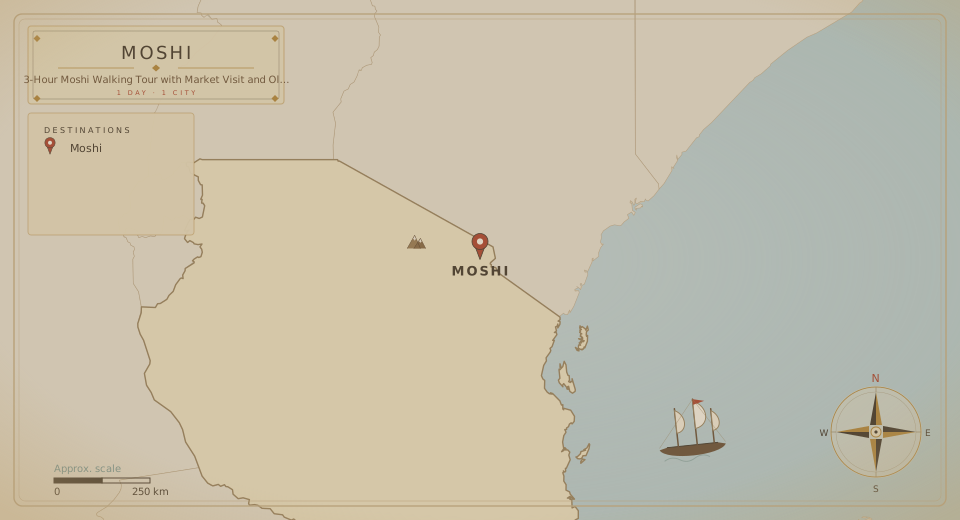
Moshi is a town in northern Tanzania, near the Kenyan border. It is known as a gateway to Kilimanjaro National Park, home to Africa's highest mountain, Mount Kilimanjaro. Trails run up the mountain's cloud-ringed, snow-capped dome through alpine forests and meadows home to elephants and leopards. One of Tanzania's major coffee-producing hubs, Moshi is known for its coffee farms and auctions. The truth is many tourists come to Moshi to climb Mount Kilimanjaro.
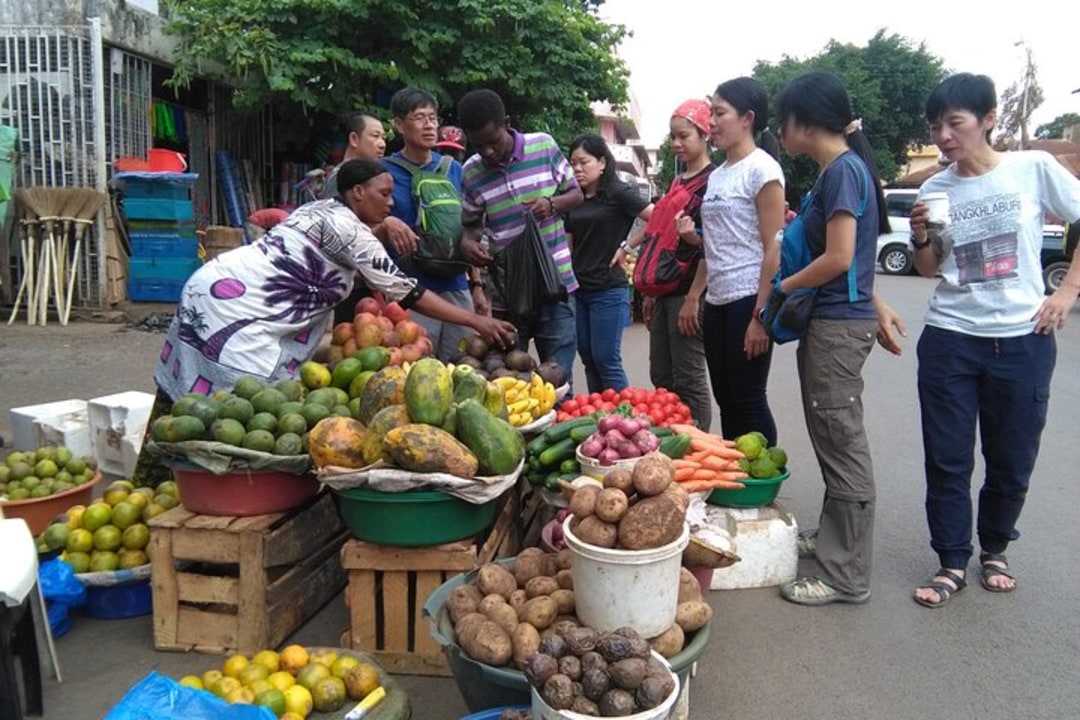
This free tour from Twende Africa Tours company will take you to interact with local people during their daily activities at the local market (farmer market), visit some souvenir shops and restaurants with local dishes, and finish at historic areas such as the Old Railway Station.