Nepal · Trekking

16-Day Mera Peak Climbing in Nepal with High Camp Summit Attempt

16 Days Round trip from Kathmandu 44600 Challenging pace

The journey

Trip highlights
  • 01 Summit Mera Peak at 6,461 meters on a challenging Himalayan climbing expedition
  • 02 Trek through picturesque Sherpa villages and the scenic Hinku Valley
  • 03 Cross glaciers and high mountain terrain on the approach to Mera Base Camp
  • 04 Take in breathtaking panoramic views from Mera High Camp
  • 05 Acclimatize in Khare before the final ascent for a safer summit attempt

Embark on a thrilling 16-day Mera Peak climbing expedition in Nepal, trekking from Lukla through the Hinku Valley to summit Mera Peak at 6,461 meters. Along the way, pass through picturesque Sherpa villages, forests, glaciers, and high mountain landscapes while acclimatizing for the ascent. Reach Mera High Camp and take in breathtaking panoramic views before your summit push. This journey combines trekking, climbing, and Himalayan scenery with the support needed for a challenging high-altitude adventure.

Embark on a thrilling 16-day Mera Peak climbing expedition in Nepal, trekking from Lukla through the Hinku Valley to summit Mera Peak at 6,461 meters.

From the itinerary

At a glance

What this trip includes

Duration 16 Days
Tour type Private
Activity level Challenging
Accommodation Included · Standard
Transport Included
Wheelchair access Yes
Cities Kathmandu, Lukla, Mera Peak, Sagarmatha National Park
Languages English

Day by day

The itinerary

1
Day 01

Arrival in Kathmandu and Welcome Dinner

On arrival in Kathmandu, our representative will pick you up and transfer you to your hotel. In the afternoon, there will be a group meeting about the expedition, and then you will have time to explore the area around Thamel. Later, there will be a welcome dinner at an authentic Nepalese restaurant. (Hotel with breakfast)
2
Day 02

Preparation Day and Drive to Ramechhap

Ramechhap is the usual starting point for Mera Peak climbers. To reach Ramechhap, you can take a domestic flight from Kathmandu to Manthali Airport, the closest airport to Ramechhap. Alternatively, you can drive from Kathmandu to Ramechhap, which takes around 5-6 hours. Ensure you have arranged your transportation in advance.

3
Day 03

Fly to Lukla and Trek to Chhutang

After your preparation day in Ramechhap, you will fly from Ramechhap to Lukla and trek to Chhutang to continue your Mera Peak climbing journey. Head to Manthali Airport in Ramechhap in the morning to catch a domestic flight to Lukla. The flight duration from Ramechhap to Lukla is approximately 30 minutes, but it can vary depending on weather conditions.

Upon landing at Lukla Airport (2,860m), you will meet your guide and porters, if you have hired any, and begin your trek towards Chhutang. The trek from Lukla to Chhutang is approximately 5-6 hours, covering a distance of about 8-9 kilometres.

The trail initially descends to the Dudh Koshi River and then ascends gradually through beautiful forests, passing several villages and suspension bridges. Along the way, you will encounter small teahouses and lodges where you can rest and have meals.

4
Day 04

Trek from Chhutang to Tuli Kharka

After staying in Chhutang, your next destination on the Mera Peak climbing journey is Tuli Kharka. The trek from Chhutang to Tuli Kharka is approximately 6-7 hours, covering a distance of around 10-12 kilometers. The trail from Chhutang to Tuli Kharka involves a gradual ascent through picturesque landscapes, offering breathtaking views of the surrounding mountains.

You will pass through rhododendron and juniper forests, typical of the Sagarmatha National Park region. Along the way, you might encounter yak herds grazing in the meadows and enjoy the tranquillity of the mountainous environment.

As you trek from Chhutang to Tuli Kharka, take the time to appreciate the natural beauty surrounding you. The journey will be memorable, with stunning mountain views, unique flora and fauna. Interact with fellow trekkers and locals, immersing yourself in the rich Sherpa culture and traditions.

5
Day 05

Trek from Tuli Kharka to Kothe

After staying in Tuli Kharka, your next destination on the Mera Peak climbing journey is Kothe. The trek from Tuli Kharka to Kothe is approximately 5-6 hours, covering a distance of around 9-10 kilometres. The trail from Tuli Kharka to Kothe offers a mix of ascent and descent, taking you through beautiful forests and along the Dudh Koshi River. You will pass through dense rhododendron forests, lush green meadows, and charming Sherpa villages.

6
Day 06

Trek from Kothe to Thangnak

After your stay in Kothe, the next leg of your Mera Peak climbing journey takes you from Kothe to Thangnak. The trek from Kothe to Thangnak is approximately 5-6 hours, covering a distance of around 7-8 kilometres. You will follow the banks of the Hinku River and pass through dense forests of pine and rhododendrons. Along the way, you will witness stunning views of the surrounding mountains, including Mera Peak.

7
Day 07

Trek from Thangnak to Khare

After your stay in Thangnak, the next segment of your Mera Peak climbing journey is trekking from Thangnak to Khare. The trek from Thangnak to Khare is approximately 3-4 hours, covering a distance of around 4-5 kilometres. Take your time and maintain a steady pace to allow your body to adjust to the increasing altitude.

The trail from Thangnak to Khare presents stunning views of the surrounding snow-capped peaks and glaciers. You will gradually ascend through rocky terrain, crossing a moraine and a glacier. The landscape becomes more rugged and dramatic as you approach Khare.

8
Day 08

Acclimatization Day in Khare

Taking an acclimatization day at Khare is essential to your Mera Peak climbing itinerary. Acclimatization allows your body to adjust to the high altitude and reduces the risk of altitude-related illnesses.

9
Day 09

Trek from Khare to Mera Base Camp

After your acclimatization day in Khare, you will embark on a trek from Khare to Mera Base Camp. The trek from Khare to Mera Base Camp is approximately 3-4 hours, covering a distance of around 4-5 kilometres. The Khare to Mera Base Camp trail offers breathtaking views and takes you through a glaciated landscape. You will traverse the Mera Glacier and negotiate through crevasses and ice formations.

10
Day 10

Trek to Mera High Camp

After your stay at Mera Base Camp, your next destination on the Mera Peak climbing journey is Mera High Camp. The trek from Mera Base Camp to Mera High Camp is approximately 3-4 hours, covering a distance of around 2-3 kilometers. The trail from Mera Base Camp to Mera High Camp is steep and challenging, crossing rocky terrain and snow-covered slopes. You will ascend along the ridge, gradually gaining elevation towards the High Camp.

11
Day 11

Summit Mera Peak and Descend to Khare

Congratulations on reaching the pinnacle of your Mera Peak climbing adventure! Summiting Mera Peak is an incredible achievement. You will start early, usually around 2-3 a.m., to allow ample time to reach the summit and descend safely.

Prepare yourself with warm layers, proper mountaineering equipment, and sufficient food and water. The climb to the summit involves navigating steep slopes, glacier crossings, and potentially challenging weather conditions. Follow the guidance of your experienced climbing guide and stay connected with your climbing team.

After successfully summiting Mera Peak, you will descend back to Khare. Once you return to Khare, it is essential to rest and recover from the physically demanding summit day.

12
Day 12

Trek Back from Khare to Kothe

The trail from Khare to Kothe retraces your steps through the picturesque Hinku Valley. You will descend through the beautiful forested areas, crossing rivers and streams. Enjoy the lush greenery, the sounds of nature, and the refreshing atmosphere as you return to Kothe.

As you descend from Khare to Kothe, you will gradually lose altitude. Along the trail from Khare to Kothe, you will find teahouses and lodges where you can rest, eat, and spend the night. As you trek back through the Hinku Valley, take the time to enjoy the scenery and reflect on your incredible Mera Peak climbing journey.

13
Day 13

Trek from Kothe to Tuli Kharka

The trek from Kothe to Tuli Kharka is approximately 5-6 hours, covering a distance of around 10-12 kilometres. The Kothe to Tuli Kharka trail offers beautiful views of the surrounding landscapes, forests, and rivers. You will continue to trek through lush forests and quaint villages, immersing yourself in the region's natural beauty.

As you trek from Kothe to Tuli Kharka, you will gradually gain altitude. Along the trail from Kothe to Tuli Kharka, you will find teahouses and lodges where you can rest, eat, and spend the night.

14
Day 14

Trek to Lukla via Zatrawala Pass

The trail initially descends from Tuli Kharka, passing through picturesque landscapes, including rhododendron forests, charming villages, and terraced fields. As you approach Zatrawala Pass, the trail gradually ascends, offering stunning views of the surrounding mountains, including Mera Peak, Everest, and other regional peaks.

While descending from Zatrawala Pass to Lukla, you will gradually lose altitude. Upon reaching Lukla, you will have completed your Mera Peak climbing journey. Take time to celebrate your accomplishments and reflect on your incredible experiences. You can rest, explore the town, and prepare for your flight back to Kathmandu.

Enjoy the final leg of your trek from Tuli Kharka to Lukla via Zatrawala Pass. Embrace the natural beauty, engage with the local communities, and treasure the memories of your Mera Peak climbing adventure. After spending the night in Lukla, you will catch an early morning flight back to Kathmandu.

Tipping: $250-300 per client

15
Day 15

Fly from Lukla to Kathmandu

Flying from Lukla to Kathmandu is a popular and convenient way to end a trek in the Himalayas. The flight offers stunning views of the Himalayan mountains and takes around 35-40 minutes. After arriving in Kathmandu, you can take some time to explore the city and reflect on your trekking experience.

16
Day 16

Final Departure from Kathmandu

It looks like you have completed your adventure in Nepal! Before you head back home, please take a moment to share your feedback with us. We hope you had an amazing time exploring Nepal's natural beauty and cultural richness.

Finally, as you prepare for your international flight back home, thank you for choosing us as your travel partner. We hope that you will cherish the memories of your trip to Nepal for years to come, and we look forward to welcoming you back for another adventure in the future. Be ready at the hotel lobby 3 hours before your international flight. Namaste! See you again next time!

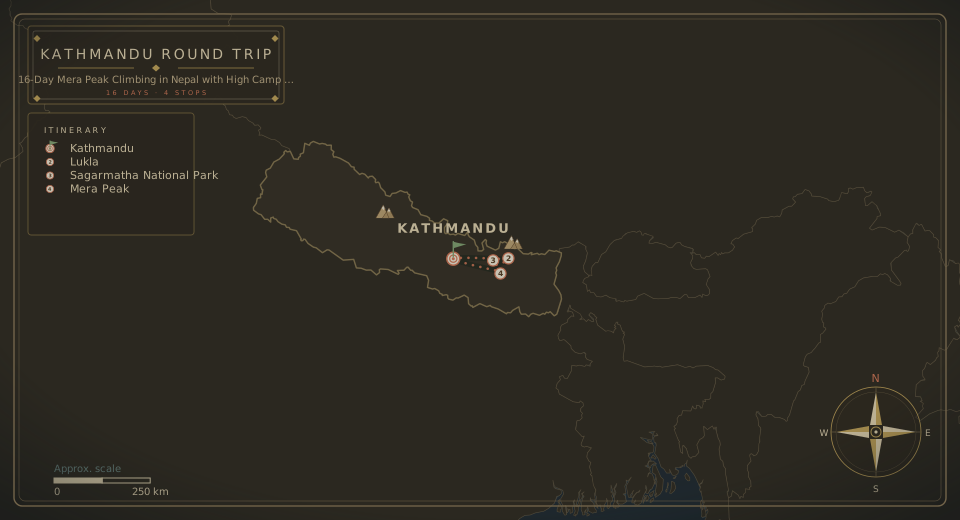
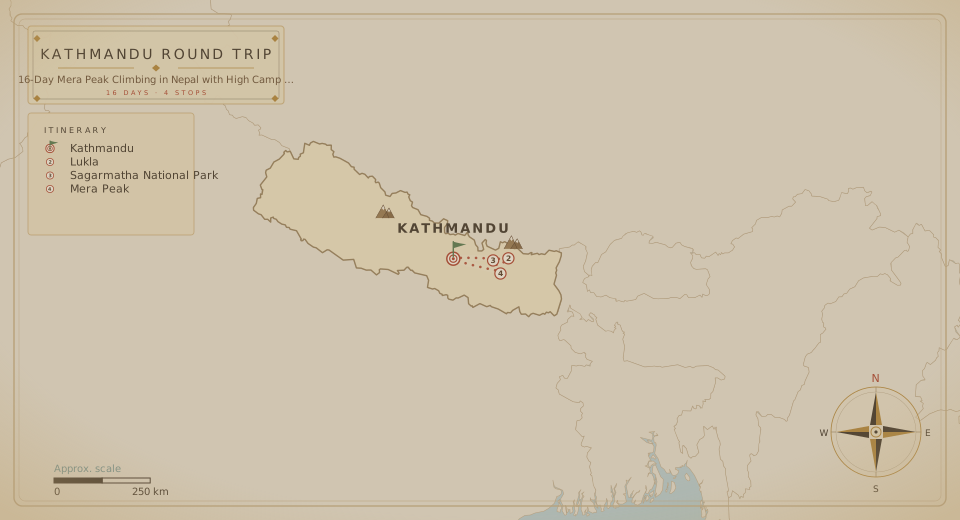
Mera High Camp, Mera Peak, Hinku Valley, Lukla Airport (2,860m)

Where this trip takes you

Mera High Camp, Mera Peak, Hinku Valley, Lukla Airport (2,860m)

The route

Where you'll travel

Tour route map
Round trip from Kathmandu 44600 4 cities · 16 Days

The fine print

Trip details

What's Included

  • All transport pick-up and drop-off
  • 3-star hotel in Kathmandu with breakfast for 4 nights
  • Guided city tour in Kathmandu covering 4 UNESCO heritage sites
  • All necessary paperwork and permits (National Park permit and TIMS), all crew tax, and peak climbing permits
  • An experienced English-speaking government-registered trekking guide, an experienced climbing guide, and local porters to carry luggage (2 trekkers: 1 porter)
  • Guide and porter salaries, insurance, equipment, transport, food, and lodging
  • Welcome dinner at a Nepali restaurant
  • Best available twin-sharing lodge accommodation during the trek, and tented accommodation, food with tea/coffee, and seasonal fruits during the climbing
  • A comprehensive first aid kit and Oxi-meter to check heart rate and oxygen saturation at Everest Base Camp and return
  • All government and local taxes
  • Boiled water will be provided during the climb
  • General climbing equipment such as rope, ice screw, snow bar, etc.
  • Everest trekking and climbing route map, free information, and distribution achievement certificates

What's Not Included

  • International flight ticket
  • Nepal visa fees
  • Food and drinks in Kathmandu
  • Lunch and dinner during the trip
  • City entrance fees
  • Hot and bottled drinks
  • Electronic device recharging
  • Travel insurance and medical evacuation
  • Electronic device charging, Wi-Fi, hot shower, and laundry at extra cost
  • Single room in Kathmandu and early arrival extra room cost
  • Tipping for crews, driver, porter, guides, and climbing guides; you may pay $350-500
  • Flight delays or cancellations due to bad weather
  • Personal trekking and climbing gear

What to bring

Clothing:

  • Base layers (moisture-wicking shirts, thermal tops, and bottoms)
  • Insulated jacket or down jacket (suitable for cold temperatures)
  • Waterproof and windproof outer shell jacket and pants
  • Fleece or softshell jacket
  • Trekking pants (convertible pants are useful)
  • Synthetic or wool socks (carry extra pairs)
  • Warm hat and gloves (insulated for cold temperatures)
  • Balaclava or neck gaiter
  • Gaiters (to protect against snow, debris, and moisture)
  • Climbing boots (sturdy and suitable for crampons)
  • Camp shoes or sandals (for rest days)

Climbing Gear:

  • Mountaineering boots (compatible with crampons)
  • Crampons
  • Ice axe
  • Harness
  • Helmet
  • Climbing ropes
  • Carabiners and quickdraws
  • Ascenders and descenders (e.g., jumar, belay device)
  • Prusik loops
  • Snow shovel (for snow camping)
  • Snow goggles or glacier glasses
  • Trekking poles

Camping Equipment:

  • Sleeping bag (rated for cold temperatures)
  • Sleeping pad or insulated mat
  • Tent (appropriate for the season and weather conditions)
  • Cooking stove and fuel
  • Cookware and utensils
  • Water purification tablets or filtration system
  • Headlamp or flashlight (with extra batteries)
  • Portable power bank (for charging electronics)

Personal Essentials:

  • Backpack (large enough to carry your gear)
  • Daypack (smaller pack for day hikes or summit push)
  • Sunglasses (with UV protection)
  • Sunscreen (high SPF)
  • Lip balm
  • First aid kit (including any personal medications)
  • Toiletries (toothbrush, toothpaste, biodegradable soap, etc.)
  • Lightweight towel
  • Water bottles or hydration bladder
  • Snacks and energy bars
  • Trekking poles

Miscellaneous:

  • Map and compass (or GPS device)
  • Cash (local currency)
  • Travel adapter and charger (if needed)
  • Trekking permits and relevant documents
  • Camera or video equipment (with spare batteries)
  • Portable altitude sickness medication (consult with a healthcare professional)
  • Entertainment items (books, playing cards, etc.)

Remember to pack light and only bring what you truly need. It's also advisable to check with local guides or tour operators to get specific recommendations and up-to-date information about the climb. Proper acclimatization, physical fitness, and preparation are essential for a successful and safe climb.

Know before you go

  • Before embarking on a Mera Peak climbing expedition, it's important to be aware of certain factors to ensure a safe and successful journey. Here are some key points to know before you go:
  • Physical fitness and mountaineering experience: Mera Peak is a challenging trekking peak requiring good physical fitness and prior mountaineering experience. Regular physical training should include cardiovascular exercises, strength training, and endurance-building activities. Familiarize yourself with basic mountaineering skills like walking with crampons, using ice axes, and rope handling. Consider joining a mountaineering course or hiring an experienced guide if you lack the necessary skills and experience.
  • Altitude considerations: Mera Peak stands at an elevation of 6,476 meters (21,247 feet). Acclimatization is crucial to prevent altitude sickness. Gradually ascend, allowing your body time to adjust and adapt. Take rest days and be aware of the symptoms of altitude sickness, such as headache, nausea, dizziness, and shortness of breath. If symptoms persist or worsen, descend immediately and seek medical attention.
  • Season and weather: The best time to climb Mera Peak is during the spring (March to May) and autumn (September to November) seasons. These months offer more stable weather conditions and clear skies. Winter climbs are possible but require more technical skills and experience. Avoid the monsoon season (June to August) due to heavy rainfall and poor visibility.
  • Permits and guides: Obtain the necessary permits and licenses before starting your climb. Mera Peak climbing requires permits such as the Sagarmatha National Park Permit and the Mera Peak Climbing Permit. Consult with a local trekking agency or guide who can assist you in acquiring the permits and provide guidance throughout the climb. They can also offer insights into the route, conditions, and safety considerations.
  • Climbing equipment and gear: As mentioned in the previous response, ensure you have the appropriate climbing gear and equipment. It's crucial to have proper mountaineering boots, crampons, ice axes, harnesses, helmets, and other essential items for safe navigation on snow and ice. Don't compromise on quality when it comes to your gear.
  • Accommodation and food: During the trek, teahouses and lodges are available along the trail, providing basic accommodation and meals. However, as you approach higher altitudes, the facilities become more basic, and availability may be limited. For emergencies, carry some energy bars, snacks, and water purification tablets or filtration systems.
  • Route and navigation: Familiarize yourself with the route and carry detailed maps, a compass, or GPS devices. Pay attention to route changes or variations due to weather conditions or safety considerations. Travelling with a guide with local knowledge and experience is advisable.
  • Safety considerations: Safety should be a top priority during the climb. Stay updated on weather forecasts and conditions. Be prepared for changes in weather and carry appropriate gear to handle cold temperatures and strong winds. Always prioritize safety over summit goals and be prepared to turn back if conditions become unfavourable.
  • Environmental considerations: Respect the local culture, customs, and environment. Follow the

Logistics

Meeting & route

Meeting point
Kathmandu, Nepal
Tour start
Kathmandu 44600, Nepal
Tour ends at the same location as the start point.
End of the journey

Your 16 days finish where they began, in Kathmandu 44600.

Watch the tourHQ film Watch the film

Create your own adventure

Can't find the perfect tour? Tailor your dream trip.

  • Tell us your destination, dates and group size.
  • Our travel experts and local guides design a tailored itinerary, just for you.
  • Enjoy your trip with peace of mind, knowing everything is taken care of.
Plan my holiday

Say goodbye to travel stress.

Starting from

USD 2,399 /person
Book This Tour

When

Travellers

Total