Nepal · Trekking

15-Day Everest Base Camp Trek in Nepal with Kala Patthar Summit

15 Days Round trip from Kathmandu 44600 Challenging pace

The journey

Trip highlights
  • 01 Experience a thrilling flight from Kathmandu to Lukla
  • 02 Enjoy stunning panoramic views of Mount Everest from Everest View Hotel
  • 03 Visit the famous Tengboche Monastery and witness daily rituals
  • 04 Reach the iconic Everest Base Camp and witness the Khumbu Icefall
  • 05 Trek to Kala Patthar for breathtaking views of the Himalayas

Embark on a 15-day Everest Base Camp trek in Nepal, beginning with a scenic flight to Lukla and a rewarding journey through the Khumbu region. Trek through picturesque landscapes, suspension bridges, and Sherpa villages, with acclimatization stops in Namche Bazaar and Dingboche to help you adjust to the altitude. Along the way, visit the famous Tengboche Monastery, reach the iconic Everest Base Camp, and ascend Kala Patthar for awe-inspiring views of Mount Everest and the surrounding Himalayas. The trip also includes time in Kathmandu to explore cultural landmarks and unwind after the trek.

The Everest Base Camp Trek starts with a scenic flight from Kathmandu to Lukla, one of the most thrilling flights in the world.

From the itinerary

At a glance

What this trip includes

Duration 15 Days
Tour type Private
Activity level Challenging
Accommodation Included · Budget
Transport Included
Wheelchair access Yes
Cities Kathmandu, Everest Base Camp-South, Lukla, Dingboche, Namche Bazaar, Tengboche, Phakding, Lobuche, Kala Patthar, Pangboche, Gorakshep, Pheriche, Khumjung
Languages English

Day by day

The itinerary

1
Day 01

Arrival in Kathmandu and Welcome Dinner

  • Your tour representatives will welcome you at TIA, Kathmandu, and assist with your transfer to the hotel.
  • Once you have had a chance to settle in, you will meet your guide to discuss the details of the trip before joining a welcome dinner.
  • Stay overnight at the hotel.
2
Day 02

Fly to Lukla and Trek to Phakding

  • The Everest Base Camp Trek starts with a scenic flight from Kathmandu to Lukla, one of the most thrilling flights in the world.
  • Upon arrival in Lukla, you will begin a 3-4 hour hike to Phakding, a small village at an altitude of 2,652 meters.
  • The trail passes through beautiful forests and offers stunning views of the surrounding hills and valleys.
  • Along the way, you will cross several suspension bridges over the Dudh Koshi River and pass through small villages like Chheplung, Thado Koshi, and Ghat.
  • Phakding is a popular stop for trekkers on their way to Everest Base Camp and provides a range of accommodation options, including teahouses and lodges.
  • It is a great opportunity to acclimatize to the altitude before continuing the trek.
3
Day 03

Trek from Phakding to Namche Bazaar

  • Altitude: The trek starts from Phakding at an altitude of 2,652 meters and reaches Namche Bazaar at 3,440 meters.
  • Walking Distance: The trek covers approximately 10-12 kilometres and takes around 5-6 hours, depending on walking speed and breaks.
  • The trail from Phakding to Namche Bazaar is a gradual uphill climb following the Dudh Koshi River.
  • It passes through beautiful forests, suspension bridges, and small villages.
  • On clear days, you can enjoy stunning views of Mt. Thamserku (6,623 m) and Mt. Everest (8,848 m).
  • After crossing several suspension bridges, the trail ascends steeply to Namche Bazaar, the main trading center of the Khumbu region.
  • Namche Bazaar offers a variety of amenities, including hotels, restaurants, shops, and bakeries.
  • Proper acclimatization in Namche Bazaar is essential, and it is recommended to rest and explore the area, including nearby Khumjung village, Sherpa Culture Museum, and Everest View Hotel.
4
Day 04

Acclimatization Hike to Everest View Hotel

  • On the acclimatization day in Namche Bazaar, hike to the Everest View Hotel (3,880 m) for stunning panoramic views of Mount Everest, Lhotse, Ama Dablam, Thamserku, and other snow-capped peaks.
  • The hiking distance for this trip is around 3-4 kilometres (round trip), taking approximately 3-4 hours to complete.
  • The trail can be steep in some parts, but the breathtaking views make it worthwhile.
  • Use this acclimatization day to help your body adjust to higher altitudes and prevent altitude sickness.
  • Take it slow, stay hydrated, and listen to your body.
5
Day 05

Trek from Namche Bazaar to Tengboche

  • Trek from Namche Bazaar to Tengboche, an exciting journey with breathtaking views and cultural encounters.
  • The altitude gradually increases, allowing for proper acclimatization.
  • Altitude: Starts at 3,440 meters (11,286 feet) in Namche Bazaar and reaches 3,860 meters (12,664 feet) in Tengboche.
  • Walking Distance: Approximately 10 kilometres (6.2 miles) in 5-6 hours.
  • Major Viewpoints: Enjoy stunning views of Mount Everest, Lhotse, Nuptse, and Ama Dablam.
  • Local People: Interact with friendly Sherpa people and learn about their customs and traditions.
  • Tengboche Monastery: Visit the significant Tengboche Monastery, known for its architecture and religious significance.
  • Flora and Fauna: Pass through lush forests of rhododendron, magnolia, and pine, with wildlife such as musk deer, Himalayan tahr, and pheasants.
  • Vegetation: Varies from oak and pine forests to alpine shrubs and grasses.
6
Day 06

Trek from Tengboche to Dingboche

  • Trek from Tengboche to Dingboche, a beautiful and challenging segment of the Everest Base Camp Trek.
  • Altitude: Starts at 3,860 meters (12,664 feet) in Tengboche and ascends to 4,410 meters (14,469 feet) in Dingboche.
  • Walking Distance: Covers approximately 11-12 kilometres (7-8 miles) in 5-6 hours.
  • Major Viewpoints: Enjoy stunning views of Mount Everest, Lhotse, Ama Dablam, and other Himalayan peaks.
  • Local People: Observe the traditional Sherpa way of life and interact with the friendly locals.
  • Tengboche Monastery: Pass through Tengboche and witness the daily prayers and rituals at the famous monastery.
  • Flora and Fauna: Experience the changing vegetation and spot rhododendrons, junipers, and wildlife.
  • Vegetation: Ranges from lush forests to alpine plants and shrubs.
7
Day 07

Acclimatization Day in Dingboche

  • Spend an acclimatization day in Dingboche at an altitude of 4,410 meters (14,469 feet).
  • Take day hikes to Amadablam Base Camp, Nagarjun Hill, or Chukkhung for excellent views and acclimatization.
  • Witness unique flora and fauna, including rhododendrons, Himalayan thars, and musk deer.
  • Interact with the local Sherpa people and learn about their culture and traditions.
  • The walking distance for these hikes varies, offering options based on preferences and physical fitness.
8
Day 08

Trek from Dingboche to Lobuche

  • Start the trek from Dingboche and head towards Lobuche at 4,940 meters (16,207 feet).
  • Walking Distance: Approximately 5-6 hours, covering a distance of around 5-6 kilometres (3-4 miles).
  • Major Viewpoints: Enjoy views of Khumbutse, Lingtren, Pumori, and Mahalangur Himal.
  • Local People: Observe the Sherpa community and learn about their culture.
  • Vegetation: Sparse vegetation due to high altitude, but mosses and lichens can be seen.
  • Fauna: Spot wildlife such as Himalayan tahr, musk deer, and snow leopards (rarely).
  • Trail Highlights: Pass through the beautiful Lobuche River valley and visit the Italian research center at Pyramid.
  • Memorial Area: Pay respects at the Sherpa's Memorial dedicated to climbers who lost their lives on Mount Everest.
9
Day 09

Trek to Gorak Shep and Everest Base Camp

  • Trek from Lobuche to Gorak Shep and then to Everest Base Camp, the ultimate goal of the trek.
  • Altitude: Reach 5,170 meters (16,961 feet) in Gorak Shep and 5,364 meters (17,598 feet) in Everest Base Camp.
  • Walking Distance: Approximately 7-8 hours with a total distance of around 10-12 kilometres (6-7 miles).
  • Trail Highlights: Pass through the Khumbu Glacier and witness stunning views of Mount Everest, Lhotse, and Nuptse.
  • Local People: Encounter Sherpa communities along the way.
  • Vegetation: Sparse due to high altitude, with alpine plants and shrubs.
  • Everest Base Camp: Explore the base camp and enjoy breathtaking views of the Khumbu Icefall and Western Cwm.
  • Memorials: Pay respects at the memorials for climbers who lost their lives on Mount Everest.
10
Day 10

Kala Patthar Sunrise and Descent to Pheriche or Pangboche

  • Start early in the morning and trek from Gorak Shep to Kala Patthar, the highest point on the trek.
  • Altitude: Reach 5,545 meters (18,192 feet) in Kala Patthar.
  • Walking Distance: Cover around 7-8 kilometres (4-5 miles) in approximately 7-8 hours.
  • Major Viewpoints: Enjoy stunning views of Mount Everest, Lhotse, Nuptse, and other peaks.
  • Local People: Observe the Sherpa way of life and interact with the locals.
  • Vegetation: Notice changes in vegetation as you descend, including rhododendron forests.
  • Fauna: Spot various birds and wildlife along the way.
  • Descent: Return to Pheriche or Pangboche for rest and recovery.
  • Thukla Pass: Pass through Thukla Pass and visit the Sherpa's Memorial, dedicated to climbers who lost their lives.
11
Day 11

Trek from Pheriche to Namche Bazaar

  • Trek from Pheriche to Namche Bazaar via Tengboche and Kyangjuma.
  • Trail Highlights: Pass through beautiful forests, cross streams, and enjoy views of Ama Dablam, Thamserku, and Khumbila.
  • Altitude: Varies along the trail, starting at 4,410 meters (14,469 feet) in Pheriche and reaching 3,440 meters (11,286 feet) in Namche Bazaar.
  • Walking Distance: Cover approximately 19 kilometres (11.8 miles) in 6-7 hours.
  • Local People: Interact with the Sherpa community and learn about their culture and traditions.
  • Tengboche Monastery: Explore the famous Tengboche Monastery and its serene surroundings.
  • Vegetation: Enjoy the changing flora, including rhododendron forests.
  • Final Stop: Reach the bustling Namche Bazaar and rest or explore the local market.
12
Day 12

Trek from Namche Bazaar to Lukla

  • Trek from Namche Bazaar to Lukla, covering a distance of approximately 19 kilometers (11.8 miles).
  • Walking Distance: Takes around 6-7 hours to complete.
  • Trail Highlights: Pass through villages, suspension bridges, and enjoy stunning views of the Himalayas.
  • Altitude: Starts at 3,440 meters (11,286 feet) in Namche Bazaar and ends at 2,860 meters (9,383 feet) in Lukla.
  • Villages: Pass through Monjo and Phakding, offering beautiful mountain views.
  • Lukla: Arrive in Lukla, the gateway to the Khumbu region, and rest or stock up on supplies.
  • Weather Note: Flights from Lukla to Kathmandu are subject to weather conditions and may experience delays or cancellations. Plan extra time in the itinerary to accommodate any unexpected changes.

Last Night in Lukla

  • Enjoy a special and memorable evening in Lukla, reflecting on the trekking experience.
  • Organize a farewell dinner with your trekking crew, sharing stories and memories.
  • Marvel at the stunning night sky of the Himalayas.
  • Consider having a bonfire or campfire (if permitted) for warmth and a cozy atmosphere.
  • Exchange contact information with fellow trekkers to stay in touch.
  • Regarding tipping, it is customary to tip your guide around 10-15% and your porter around 5-10% of the total trip cost. However, the amount can vary based on personal preference and the level of service received.
  • Express your gratitude and thank the trekking crew for their hard work and support.
13
Day 13

Fly from Lukla to Kathmandu

  • Fly from Lukla to Kathmandu, enjoying scenic views of the Himalayan mountains during the 35-40 minute flight.
  • Altitude: Experience a significant change in altitude from approximately 2,860 meters (9,383 feet) in Lukla to 1,400 meters (4,593 feet) in Kathmandu.
  • Explore Kathmandu, visit historic temples, taste local cuisine, and shop for souvenirs.

Note: Flights from Lukla to Kathmandu can be subject to weather conditions and may experience delays or cancellations. Plan accordingly and have a backup plan in case of unexpected changes.

14
Day 14

Leisure Day in Kathmandu or Optional Valley Sightseeing

  • After your trek, spending a leisurely day in Kathmandu is a great idea to relax and explore the city. One of the most popular areas to explore is Thamel, a vibrant and bustling district filled with shops, restaurants, and cafes.
  • You can wander through the narrow streets and alleys, shop for souvenirs or locally made handicrafts, or simply sit at a cafe and watch the world go by. Thamel is also home to many trekking and adventure gear shops, so it is a good place to pick up any last-minute items.
  • If you are interested in exploring Kathmandu's cultural and historical sites, you can take many optional sightseeing tours. Some of the top attractions include:
    • Swayambhunath Stupa (Monkey Temple): This ancient Buddhist temple sits atop a hill overlooking the city and is known for its colourful prayer flags, intricate carvings, and resident monkeys.
    • Pashupatinath Temple: This sacred Hindu temple complex is located on the banks of the Bagmati River and is dedicated to Lord Shiva. It is a fascinating place to observe the rituals and customs of Hinduism.
    • Kathmandu Durbar Square: This historic square in the heart of the city is home to many temples, palaces, and statues and is a UNESCO World Heritage Site.
    • Boudhanath Stupa: This massive Buddhist stupa is one of the world's largest and a center for Tibetan Buddhism in Kathmandu.
15
Day 15

Final Departure from Kathmandu

  • It looks like you have completed your adventure in Nepal. Before you head back home, please take a moment to share your feedback with us. We hope that you had an amazing time exploring the natural beauty and cultural richness of Nepal.
  • Finally, as you prepare for your international flight back home, thank you for choosing us as your travel partner. We hope that you will cherish the memories of your trip to Nepal for years to come, and we look forward to welcoming you back for another adventure in the future.

Please be ready at the hotel lobby three hours before your international flight. Namaste! See you again next time.

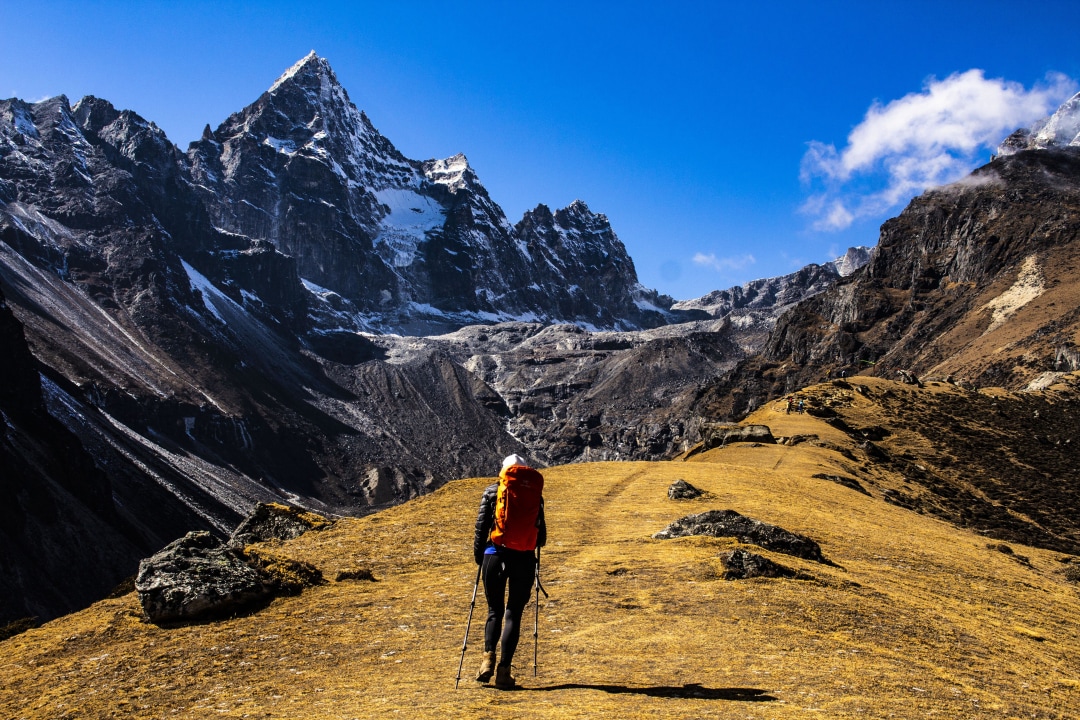
Lukla flight, Tengboche Monastery, Everest Base Camp, Kala Patthar sunrise

Where this trip takes you

Lukla flight, Tengboche Monastery, Everest Base Camp, Kala Patthar sunrise

The route

Where you'll travel

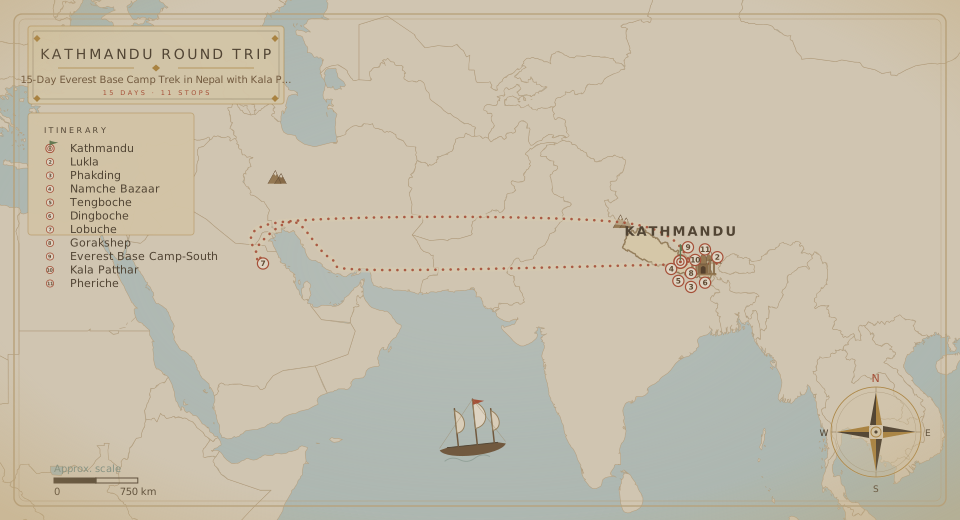
Tour route map
Round trip from Kathmandu 44600 13 cities · 15 Days

The fine print

Trip details

What's Included

  • Trekking permits: The Sagarmatha National Park Permit and the TIMS (Trekkers' Information Management System) card are required for trekking in the Everest region. The cost of these permits is typically included in the trek package.
  • Domestic flights: The cost of round-trip domestic flights from Kathmandu to Lukla is usually included. These flights are necessary to reach Lukla, the starting point of the EBC trek.
  • Accommodation: The cost of accommodation during the trek is generally included. Tea houses or lodges along the trail are the primary forms of accommodation, offering basic facilities such as a bed, blanket, and shared bathroom. Higher-end packages may include upgraded accommodation in certain places.
  • Meals: Most trek packages include meals (breakfast, lunch, and dinner) during the trek. Meals are typically provided at the tea houses or lodges along the trail. The variety and quality of meals may vary, but they generally consist of local dishes and some international options.
  • Guide and porter services: The cost of a licensed trekking guide and porter(s) is usually included. The guide provides assistance, navigational support, and information about the region, while porters carry the main luggage, allowing you to trek with a lighter backpack.
  • Transportation: Ground transportation from the airport to your hotel in Kathmandu and vice versa is often included. It may also cover any necessary transfers between the hotel and domestic airport for the Lukla flights.
  • Medical kit and safety equipment: Trekking agencies typically provide a basic medical kit and safety equipment such as a portable oxygen cylinder, a first aid kit, and a satellite phone for emergencies. These items are generally included in the package cost.

What's Not Included

  • International Flights: The cost of international flights to and from Nepal, specifically to Kathmandu, is usually not included in the trek package. You will need to budget separately for your airfare from your home country to Nepal.

  • Visa Fees: Travelers to Nepal are required to obtain a visa upon arrival at the Tribhuvan International Airport in Kathmandu or at land border crossings. The visa fees are not included in the trek cost and will need to be paid separately.

  • Travel Insurance: It is highly recommended to have travel insurance that covers medical emergencies, evacuation, trip cancellation, and personal belongings. The cost of travel insurance is generally not included in the trek package, so you will need to arrange and pay for it separately.

  • Personal Trekking Gear: While some trekking agencies may provide certain trekking gear such as sleeping bags and down jackets, it is advisable to have your own personal gear for comfort and suitability. Costs for personal gear such as trekking boots, backpacks, clothing, and other equipment are usually not included in the trek package.

  • Meals in Kathmandu: Most trek packages include meals during the actual trek, but meals in Kathmandu before and after the trek are typically not included. You will need to budget separately for meals in Kathmandu, which can vary depending on your dining preferences.

  • Accommodation in Kathmandu: Accommodation in Kathmandu is generally not included in the trek package. You will need to arrange and pay for your accommodation in Kathmandu before and after the trek, which can range from budget guesthouses to luxury hotels.

  • Personal Expenses: Personal expenses such as snacks, drinks (including bottled water), alcoholic beverages, souvenirs, and additional activities or excursions are not included in the trek cost. It is advisable to budget for these expenses separately.

  • Tips and Gratuities: Tipping is customary in Nepal as a gesture of appreciation for the services provided by guides, porters, and other support staff. Tips are not usually included in the trek package, so it is recommended to allocate a separate budget for tips and gratuities. ($185-200 per client)

What to bring

  • When preparing for the Everest Base Camp trek, it is crucial to pack wisely and bring the necessary gear to ensure your safety, comfort, and enjoyment throughout the journey.
  • Clothing:
    • Base layers (moisture-wicking tops and bottoms)
    • Insulating layers (fleece jackets, down jackets)
    • Waterproof and windproof outer shell jacket
    • Waterproof and windproof pants
    • Trekking pants (convertible ones are practical)
    • Long-sleeved shirts
    • T-shirts
    • Thermal socks
    • Hiking boots
    • Camp shoes/sandals
    • Gaiters (to keep snow and debris out of your boots)
    • Warm hat
    • Sun hat
    • Gloves (inner and outer layers)
    • Neck gaiter or scarf
  • Equipment and Accessories:
    • Backpack (large enough to carry your essentials)
    • Sleeping bag (rated for cold temperatures)
    • Sleeping pad or mat
    • Trekking poles
    • Headlamp (with extra batteries)
    • Sunglasses (with UV protection)
    • Duffel bag (to be carried by porters)
    • Dry bags (to keep your belongings dry)
    • Water bottle or hydration bladder
    • Trekking watch or altimeter
    • Camera and spare batteries
    • Power bank
    • Travel adapter
  • Personal Essentials:
    • Personal medications and first aid kit
    • High-altitude sickness medication (consult with your doctor)
    • Sunscreen (with a high SPF)
    • Lip balm with SPF
    • Insect repellent
    • Wet wipes or hand sanitiser
    • Toilet paper
    • Towel (quick-drying and lightweight)
    • Personal toiletries
  • Miscellaneous:
    • Trekking map or guidebook
    • Passport and permits (such as the Sagarmatha National Park entry permit)
    • Cash (Nepalese rupees) for small purchases and tipping
    • Snacks (energy bars, trail mix, etc.)
    • Waterproof cover for your backpack
    • Whistle (for emergencies)
    • Trekking insurance (including helicopter evacuation coverage)

Remember to pack efficiently and consider the weight restrictions imposed by airlines or trekking agencies. It is advisable to consult with a professional trekking company or experienced climbers for personalized advice based on the specific season and your individual needs.

Know before you go

  • Before embarking on the Everest Base Camp trek, it is essential to be well prepared and have a good understanding of what to expect.
  • Physical Fitness: The Everest Base Camp trek is physically demanding and involves long days of hiking at high altitudes. It is crucial to be in good physical condition and undertake regular exercise and cardio workouts to prepare your body for the trek. Consult with a healthcare professional before starting any strenuous physical activity.
  • Altitude Sickness: Altitude sickness, also known as acute mountain sickness (AMS), is a common concern during the trek. It occurs as you ascend to higher elevations, where the air becomes thinner. It is important to acclimatize properly, stay hydrated, and ascend gradually to minimize the risk of AMS. Be aware of the symptoms, such as headaches, nausea, dizziness, and fatigue, and descend if symptoms worsen.
  • Trekking Permits: You will need to obtain permits to enter the Sagarmatha National Park and the Khumbu region. The Sagarmatha National Park Entry Permit and the TIMS (Trekkers' Information Management System) card are required. These permits can be obtained in Kathmandu or through a registered trekking agency.
  • Best Time to Trek: The peak seasons for the Everest Base Camp trek are spring (March to May) and autumn (September to November). During these months, the weather is generally favorable, with clear skies and stable temperatures. However, be prepared for colder temperatures at higher altitudes and expect crowded trails during the peak seasons.
  • Accommodation and Facilities: Tea houses, which are basic lodges, are available along the trekking route. These provide accommodation and meals, usually in shared rooms. The facilities become more basic and crowded as you ascend higher. It is advisable to carry a sleeping bag and be prepared for basic amenities such as shared bathrooms and limited hot water availability.
  • Packing and Gear: Pack wisely and bring appropriate trekking gear, as mentioned in the previous response. Layers of clothing, sturdy hiking boots, a good-quality sleeping bag, and essential personal items are essential. It is recommended to pack light and carry only the necessary items, as porters have weight restrictions.
  • Trekking Guides and Porters: Hiring a licensed trekking guide is highly recommended, especially if you are inexperienced or unfamiliar with the region. Guides provide valuable assistance, navigate the trails, arrange accommodations, and help in case of emergencies. Porters can also be hired to carry your heavy backpack, allowing you to trek with less weight.
  • Travel Insurance: Obtain comprehensive travel insurance that covers trekking activities at high altitudes and includes helicopter evacuation coverage. Ensure that your insurance policy covers any potential risks or emergencies you might encounter during the trek.
  • Cash and Communication: ATMs are available in Kathmandu and Namche Bazaar, but they may not be reliable along the trekking route. Carry enough cash (Nepalese rupees) for your entire trek, including meals, accommodations, and incidentals. Mobile network coverage is available in some parts of the trail, but it can be intermittent and expensive. Consider purchasing a local SIM card if necessary.
  • Environmental Considerations: Respect the environment and local culture during your trek. Preserve the natural surroundings by not littering, using designated waste disposal facilities, and carrying out any non-biodegradable items. Respect the local customs, traditions, and religious sites along the trail.
  • It is advisable to consult with experienced trekking companies, obtain updated information, and be well prepared before embarking on the Everest Base Camp trek. Planning ahead will ensure a safer and more enjoyable experience.

Logistics

Meeting & route

Meeting point
Kathmandu 44600, Nepal
Tour start
Kathmandu 44600, Nepal
Tour ends at the same location as the start point.
End of the journey

Your 15 days finish where they began, in Kathmandu 44600.

Watch the tourHQ film Watch the film

Create your own adventure

Can't find the perfect tour? Tailor your dream trip.

  • Tell us your destination, dates and group size.
  • Our travel experts and local guides design a tailored itinerary, just for you.
  • Enjoy your trip with peace of mind, knowing everything is taken care of.
Plan my holiday

Say goodbye to travel stress.

Starting from

USD 1,399 /person
Book This Tour

When

Travellers

Total