

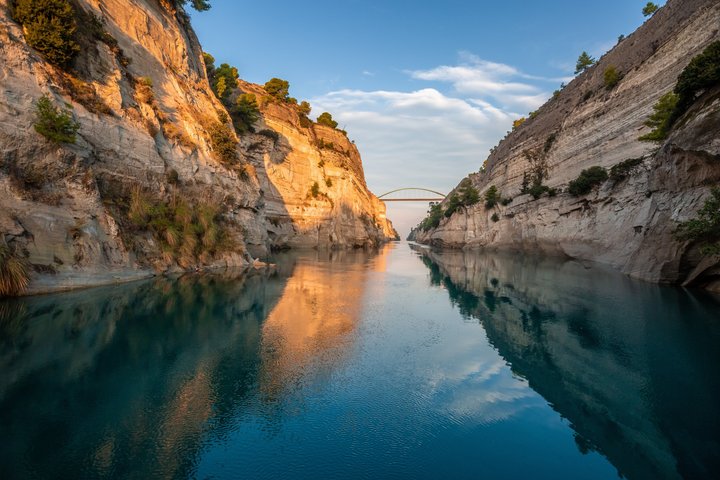
Corinth Canal
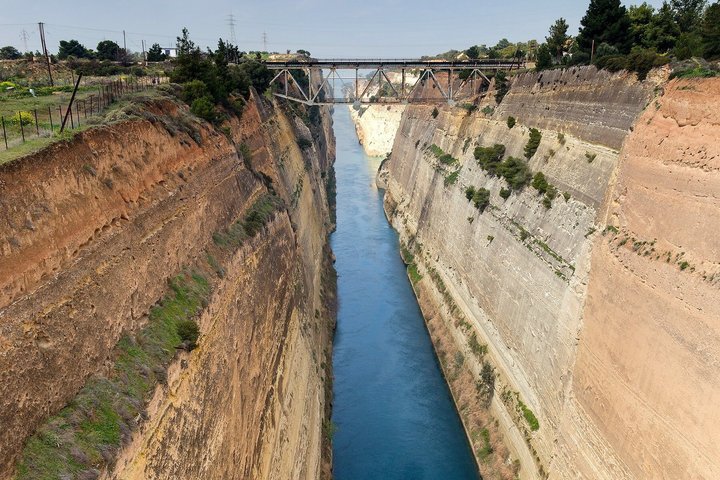
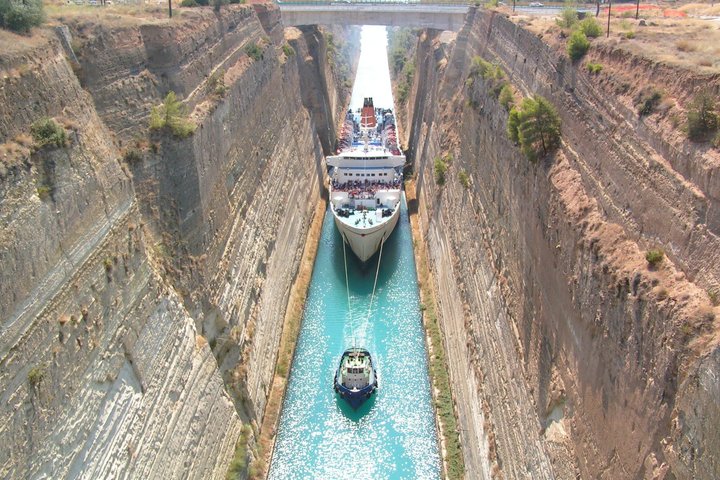
Setting off from Athens, your morning begins with the impressive feat of engineering that separates the Peloponnese from the mainland, the Corinth Canal. From high up, you can enjoy the best view of Corinth's isthmus and admire the steep limestone walls while you observe the vessels below you navigate their way through the canal.
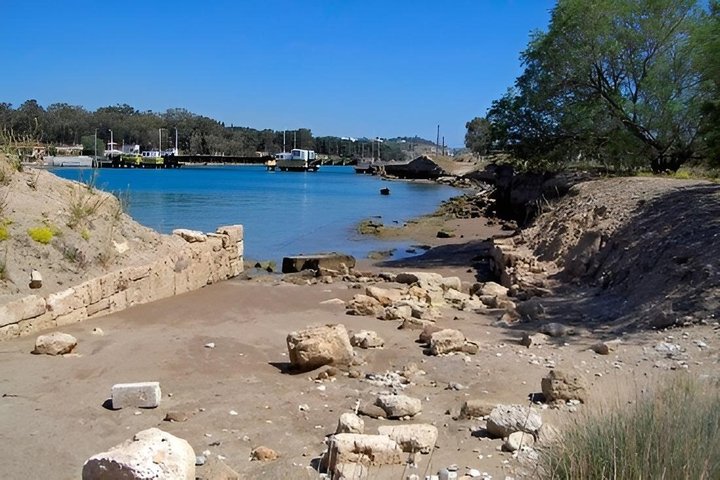
The Corinth Canal connects the Gulf of Corinth in the Ionian Sea with the Saronic Gulf in the Aegean Sea. It cuts through the narrow Isthmus of Corinth and separates the Peloponnese from the Greek mainland, arguably making the peninsula an island. The canal was dug through the isthmus at sea level and has no locks. It is 6.4 kilometers (4 mi) in length and only 21.4 meters (70 ft) wide at its base, making it impassable for many modern ships.
From high up, you can enjoy the best view of Corinth's isthmus and admire the steep limestone walls while you observe the vessels below you navigate their way through the canal.
Diolkos
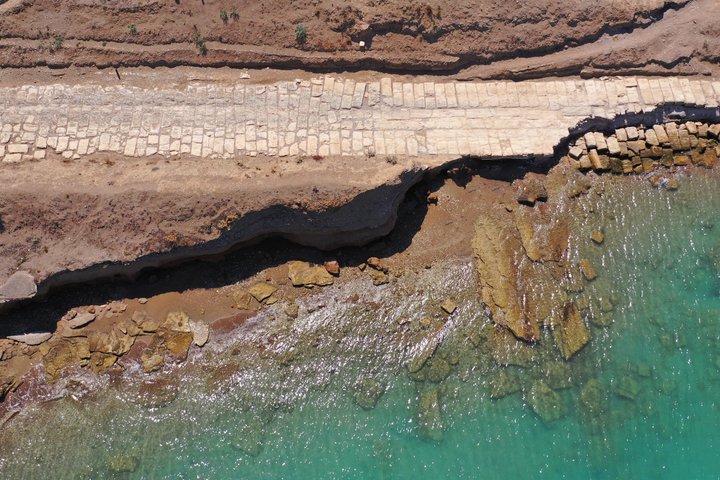
The Diolkos was a paved trackway near Corinth in Ancient Greece which enabled boats to be moved overland across the Isthmus of Corinth. The shortcut allowed ancient vessels to avoid the long and dangerous circumnavigation of the Peloponnese peninsula. The phrase "as fast as a Corinthian", penned by the comic playwright Aristophanes, indicates that the trackway was common knowledge and had acquired a reputation for swiftness.
The main function of the Diolkos was the transfer of goods, although in times of war it also became a preferred means of speeding up naval campaigns. The 6 km (3.7 mi) to 8.5 km (5.3 mi) long roadway was a rudimentary form of railway, and operated from c. 600 BC until the middle of the 1st century AD. The Diolkos combined the two principles of the railway and the overland transport of ships, on a scale that remained unique in antiquity.
Kechries
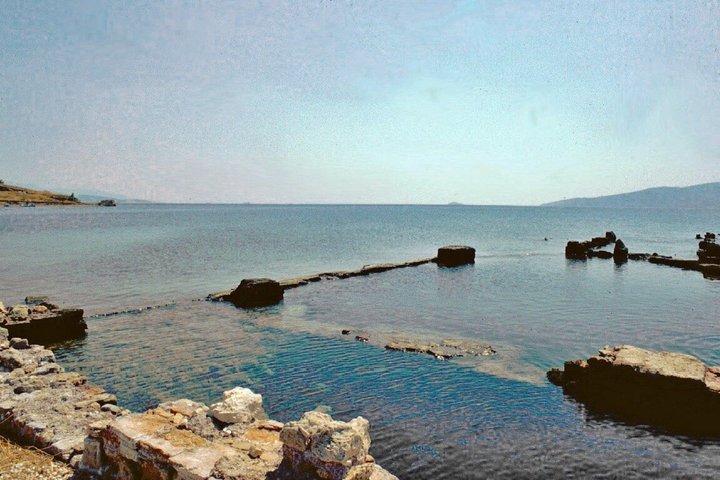
Kechries is a village in the municipality of Corinth in Corinthia in Greece, part of the community of Xylokeriza. It takes its name from the ancient port town Kenchreai or Cenchreae (as mentioned in the Bible), which was situated at the same location.
Christianity also arrived at Kenchreai early in the religion's history. According to Acts 18:18, the Apostle Paul stopped at Kenchreai during his second missionary journey, where he had his hair cut to fulfil a vow, probably a Nazirite vow. Paul mentions the place and a woman named Phoebe in the local assembly in his epistle to the Romans
“And Paul after this tarried there yet a good while, and then took his leave of the brethren, and sailed thence into Syria, and with him Priscilla and Aquila; having shorn his head in Cenchrea: for he had a vow.”
In Acts 18
“I commend unto you Phebe our sister, which is a servant of the church which is at Cenchrea:”
In Romans 16
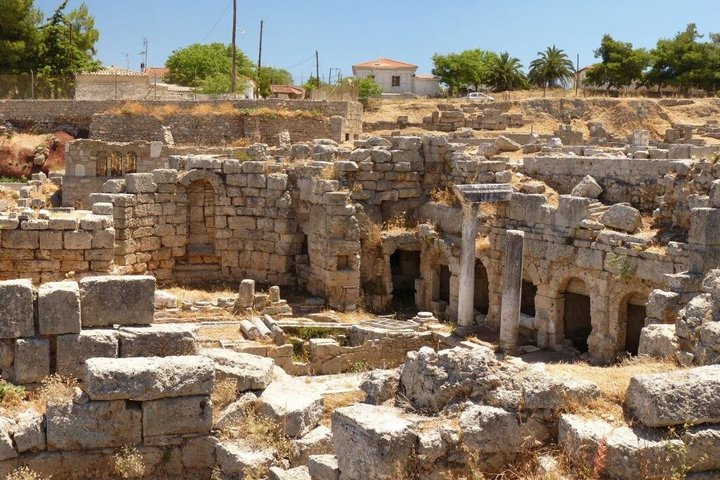
Ancient Corinth
Corinth was a city-state on the Isthmus of Corinth, the narrow stretch of land that joins the Peloponnese to the mainland of Greece, roughly halfway between Athens and Sparta.
For Christians, Corinth is well known from the two letters of Saint Paul in the New Testament, First and Second Corinthians. Corinth is also mentioned in the Acts of the Apostles as part of Paul the Apostle's missionary travels. In addition, the second book of Pausanias' Description of Greece is devoted to Corinth.
Ancient Corinth was one of the largest and most important cities of Greece, with a population of 90,000 in 400 BC. The Romans demolished Corinth in 146 BC, built a new city in its place in 44 BC, and later made it the provincial capital of Greece.
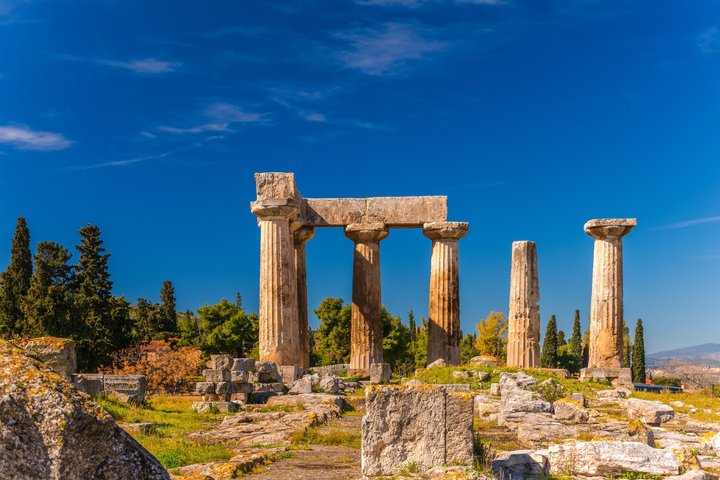
Temple of Apollo
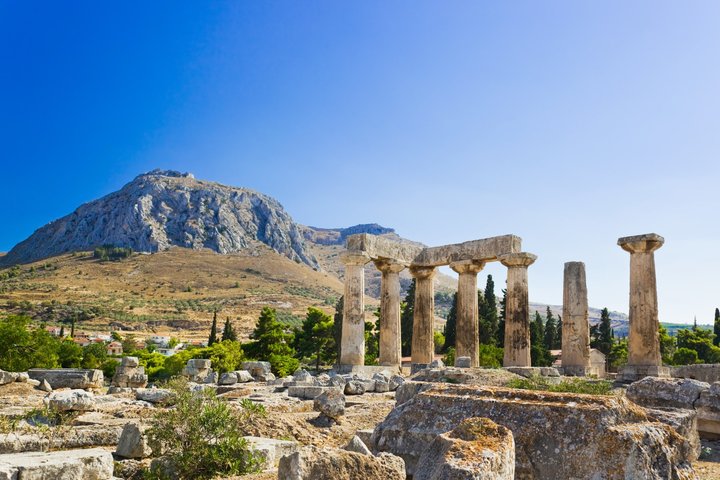
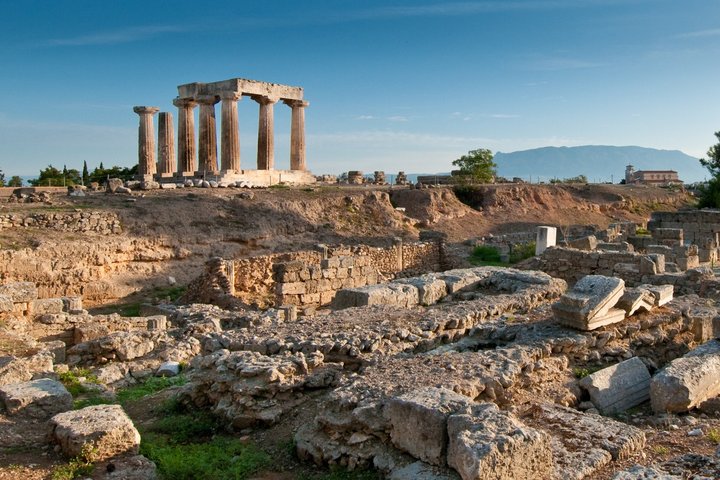
The Temple of Apollo at Corinth was constructed in 550 BC.
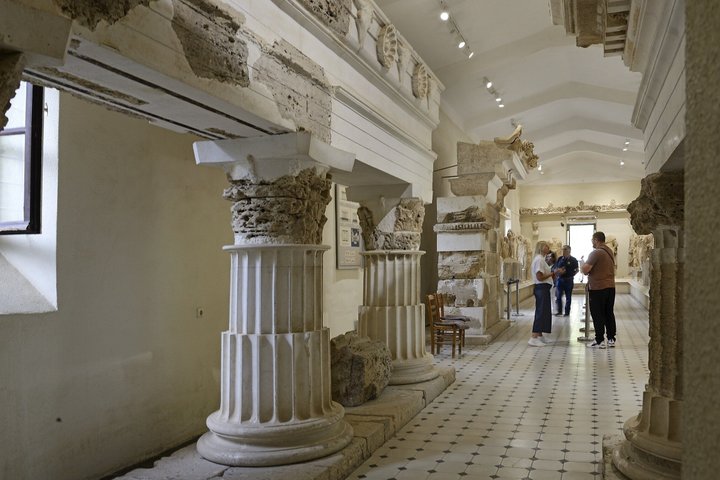
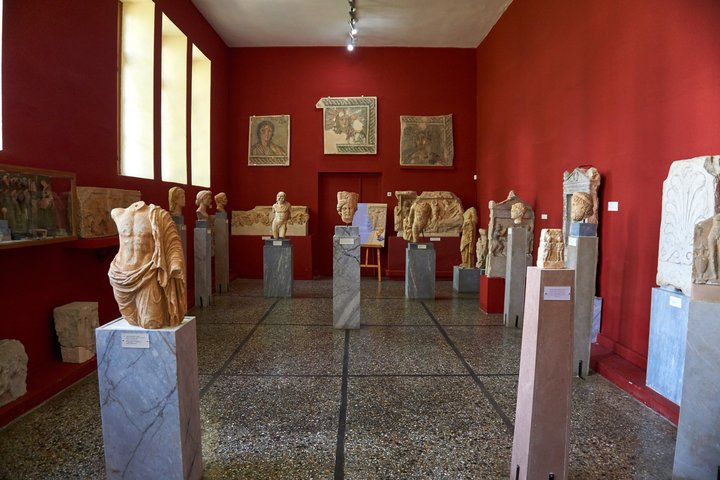
Archaeological Museum of Ancient Corinth
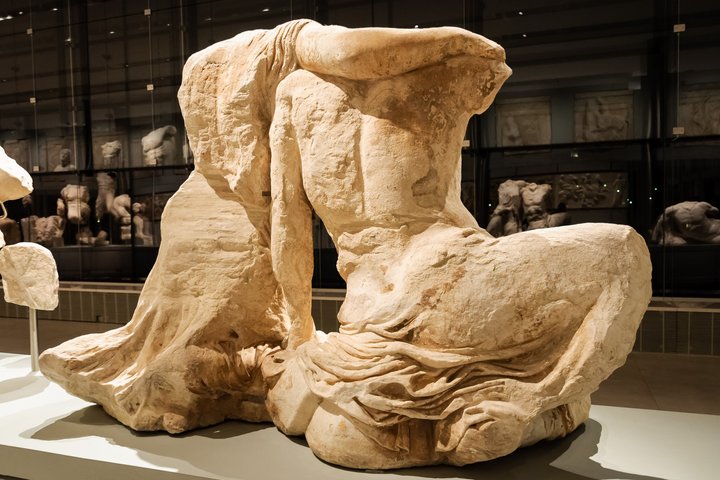
The Archaeological Museum of Ancient Corinth was constructed between 1931-1932, with intentions to display the numerous recent archaeological excavations. The museum is located within the archaeological site of Ancient Corinth, Greece, and lies under the jurisdiction of the 37th Ephoreia of the Greek Archaeological Service.
Key aspects of the Archaeological site of Ancient Corinth include:
- Lechaion Road
- Basilica
- Fountain of Peirene
- Stoa
- Agora
- Odien
- Other temples
- Theatre
Bema of Saint Paul
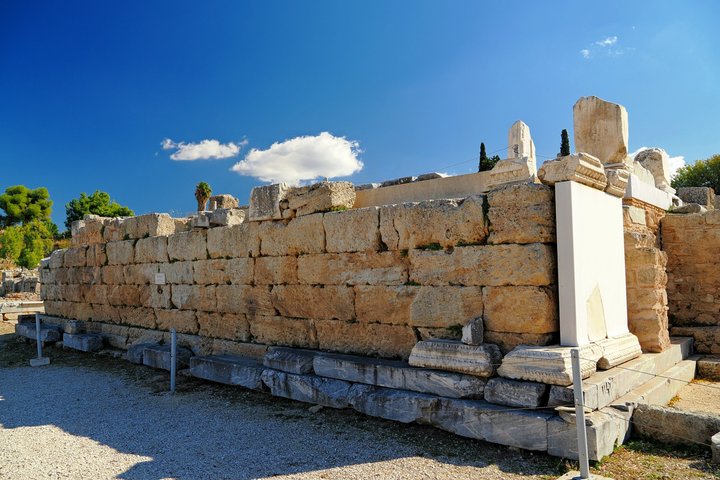
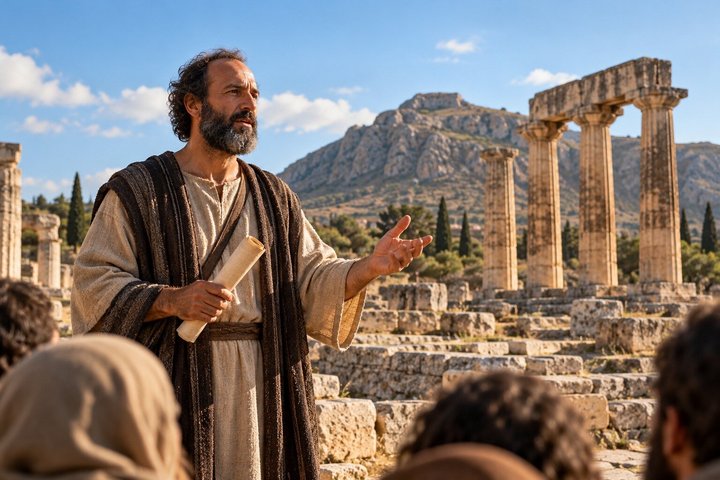
During Paul‘s stay in Corinth, he was brought for judgment before the proconsul Lucius Junius Gallio Annaeanus, also known as Gallio, on the accusation of conducting illegal teachings. Gallio, however, refused to judge what he considered to be a mere religious dispute among the Jews. According to tradition, the site of Paul s trial was the Bema, a large elevated rostrum standing prominently in the centre of the Roman Forum of ancient Corinth and from where the city’s officials addressed the public. Probably because of the monument’s connection to Saint Paul, the Bema was transformed into a Christian church during the Byzantine period.
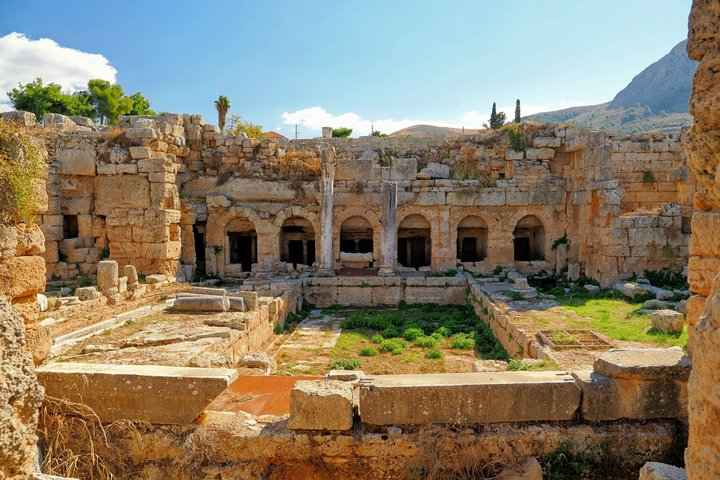
Peirene
Peirene is the name of a fountain or spring in Greek mythology, physically located in Corinth. It was said to be a favored watering-hole of Pegasus, sacred to the Muses. Poets would travel there to drink and receive inspiration.
Walk by:
- Roman Fountain
- Hadgimoustafa spring
Acrocorinth
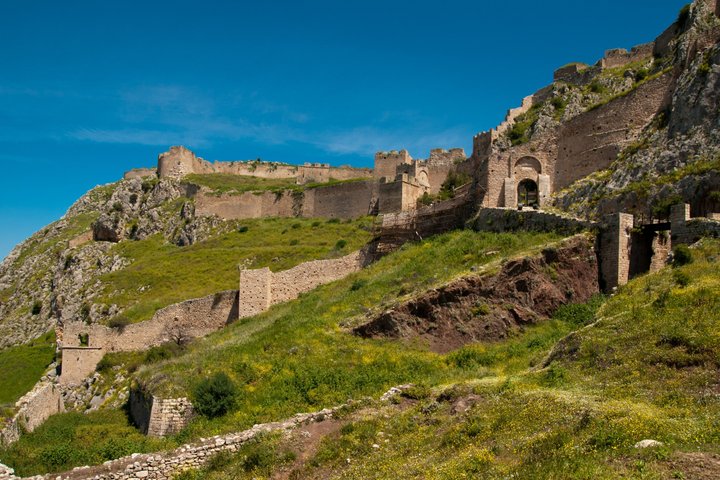
Acrocorinth, "Upper Corinth", the acropolis of ancient Corinth, is a monolithic rock overseeing the ancient city of Corinth, Greece.
With its secure water supply, Acrocorinth's fortress was repeatedly used as a last line of defense in southern Greece because it commanded the Isthmus of Corinth, repelling foes from entry by land into the Peloponnese peninsula.
Saint Paul Church
The Apostle Paul during his stay in Corinth, reached one and a half years while in 51-52 AD. founded the metropolitan church there. This church is widely known both from the Book of Acts and from the two "To Corinthians" letters of the apostle.