
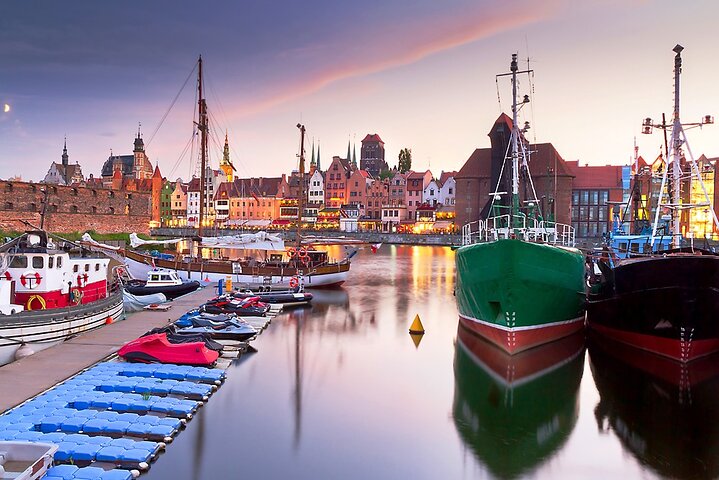
Gdansk
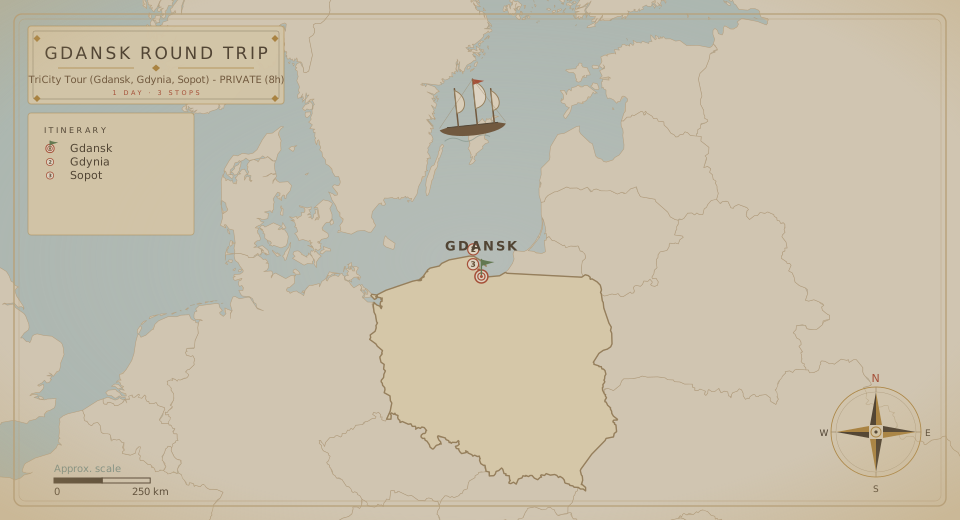
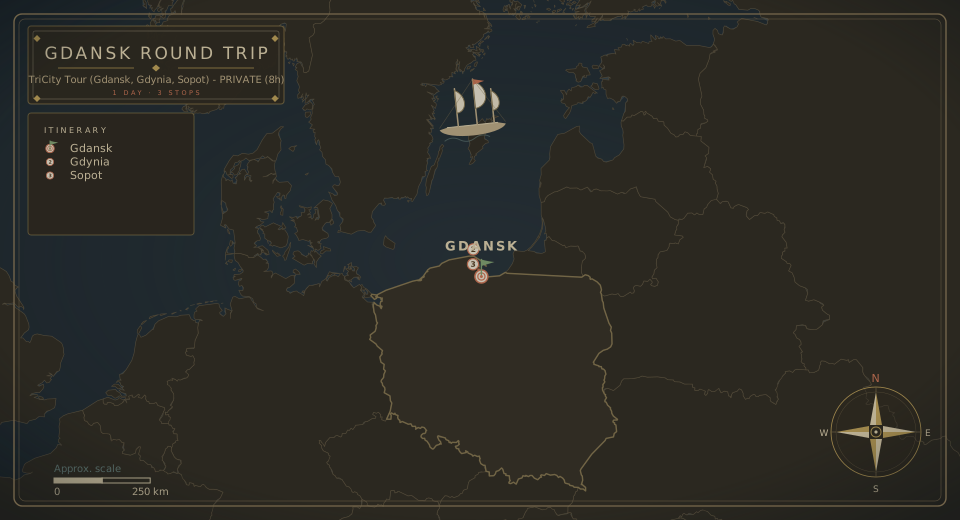
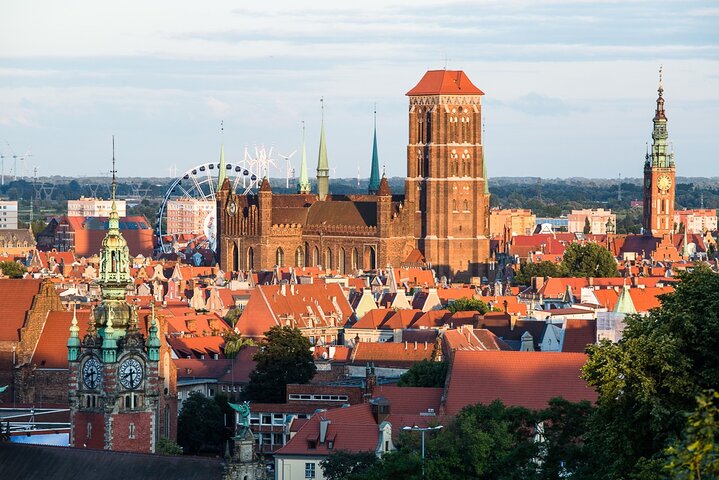
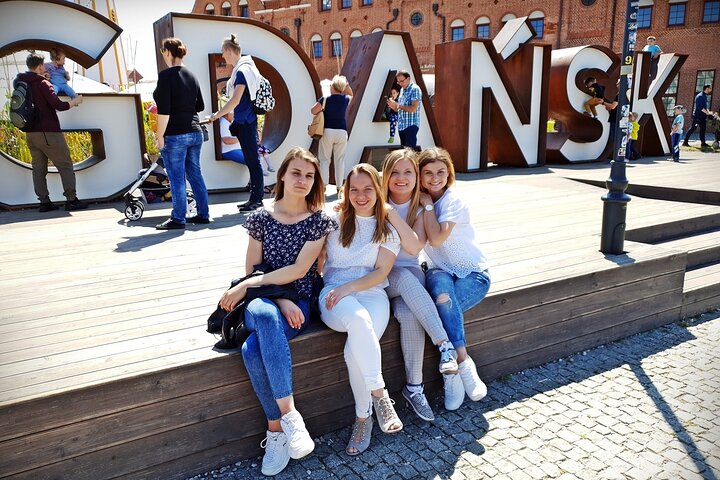
Gdansk is a city on the Baltic coast of northern Poland Gdańsk is the capital and largest city of the Pomeranian province and one of the most prominent cities within the cultural and geographical region of Kashubia. It is Poland's principal seaport and the centre of the country's fourth-largest metropolitan area together with Gdynia and Sopot, with a population approaching 1.4 million.
Old Town
The city's history is complex, with periods of Polish, Prussian and German rule, and periods of autonomy or self-rule as a free city state. In the early-modern age, Gdańsk was a royal city of Poland. It was considered the wealthiest and the largest city of Poland, before the 18th century rapid growth of Warsaw. In the late Middle Ages it was an important seaport and shipbuilding town and, in the 14th and 15th centuries, a member of the Hanseatic League. The area of Old Town is just a part of historic city centre, but still allows us to understand and appreciate the glory and importance of Gdansk as medieval city. A walk along cobblestoned streets and the historical waterfront is a chance to discover the city’s history and to see technological wonders of the 14th century.
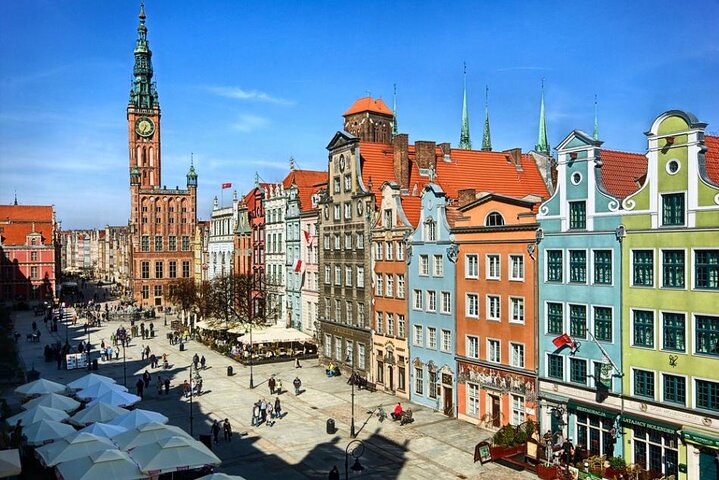
Dlugi Targ Street
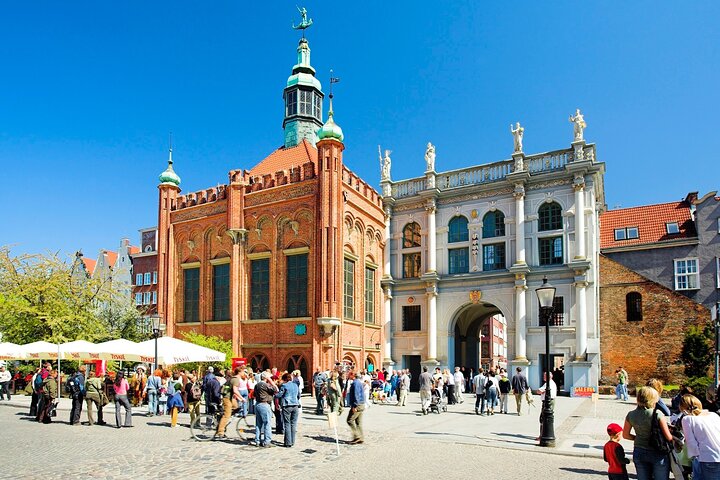
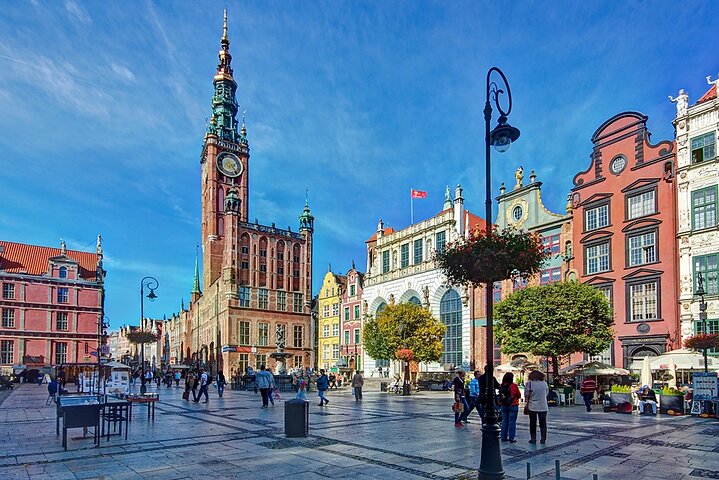
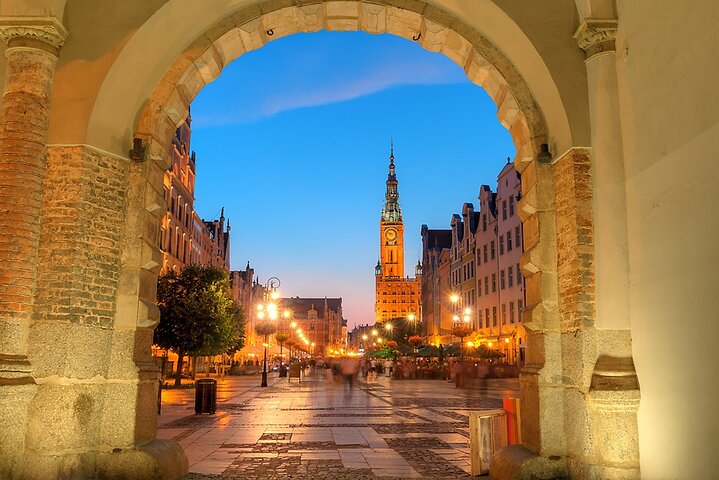
Dluga and Dlugi Targ (its extension) Streets are also known as the Royal Route, since it was once the former path of processions for visiting Kings of Poland, and rank among the most beautiful streets in Gdansk. This charming pedestrian thoroughfare is surrounded by buildings reconstructed in historical style (primarily from 17th century) and flanked at both ends by elaborate city gates. It leaves from the Golden Gate and passes by the Town Hall, Neptune fountain and Arthur's Court, the former meeting place of the city’s merchants, now a branch of the Gdansk History Museum. The street finishes by the Green Gate overlooking the Motlawa River. This area was once inhabited by patricians, which is why the houses are richly ornamented with crests, allegoric figures and images of ancient heroes.
Neptune Fountain
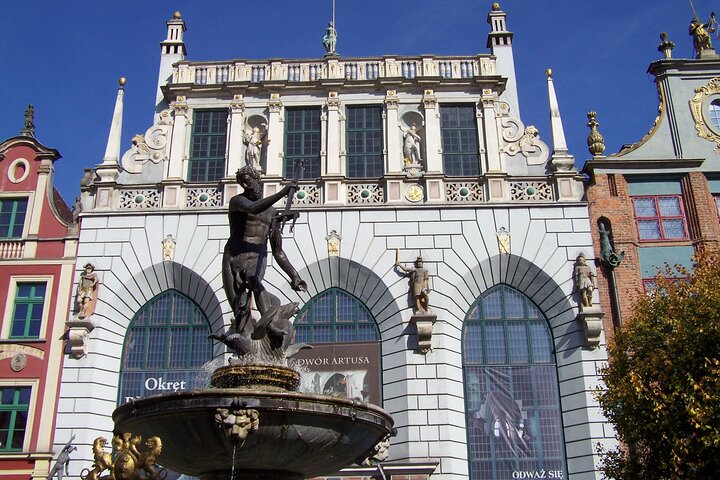
The Neptune Fountain has stood in front of the Artus Court since 1633 and is seen as a symbol of Gdansk. It was built on the initiative of Mayor Bartłomiej Schachmann, and the town council. The sculpture on which the fountain is based represents Neptune. It was designed by Abraham van den Blocke and cast in bronze in 1615 by Peter Husen and Johann Rogge in Augsburg. In the second half of the 18th century the fountain base was renovated in the rococo style and a large array of sea creatures were added. People say that tossing a coin into the fountain brings luck.
St. Mary's Basilica
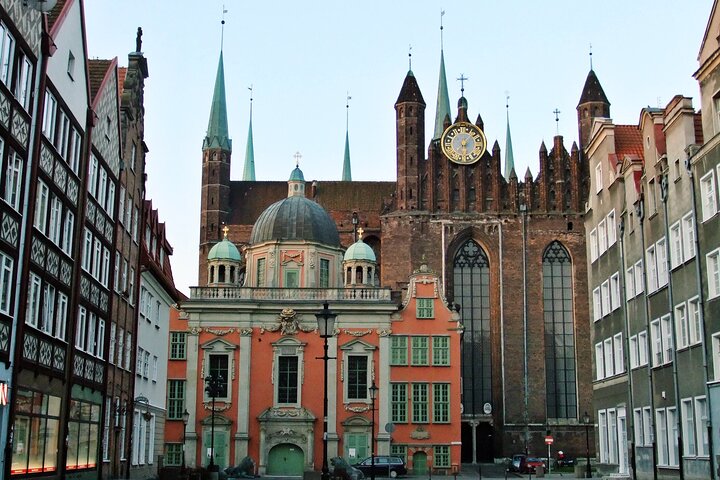
St. Mary's Basilica - the Basilica of the Assumption of the Blessed Virgin Mary is said to be the largest brick church in the world. Its construction took place in two stages, beginning in 1343 and ending in 1502. The church contains many important works of medieval and baroque art. These includes a stone Pietà (from approximately 1410), a copy of Hans Memling's The Last Judgement and an astronomical clock from the second half of the 15th century constructed by Hans Düringer over a period of 7 years. The church is 344 ft long, including the tower battlements, and the vaults soar 95 ft above floor level. The solid main tower is 255 ft high and crowned with a viewing gallery.
Crane
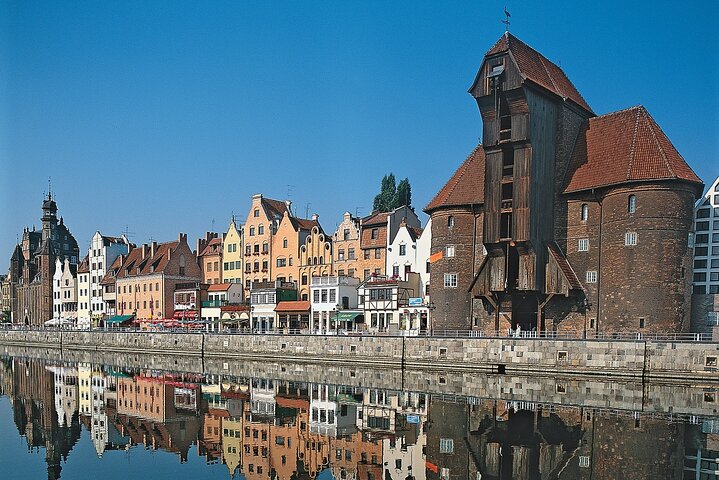
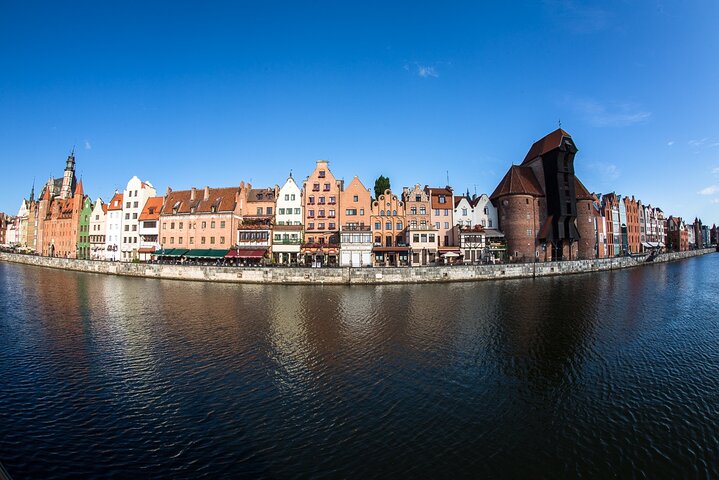
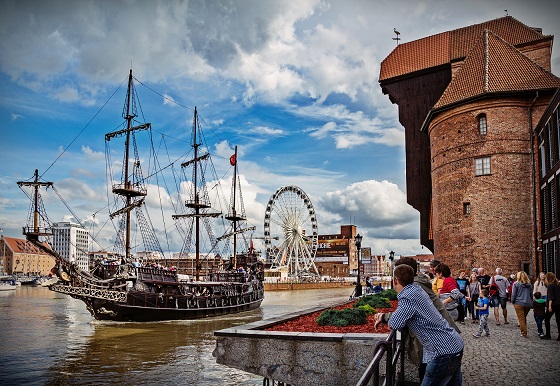
The Crane, built in the first half of the 15th century between the pylons of Brama Szeroka (the Wide Gate), became the city's symbol. In the Middle Ages it was the largest port crane in Europe, used for moving goods and raising ship masts. It was able to lift 4 tons to an altitude of 36 feet, and was powered by workers walking inside two tread wheels. The crane is currently part of the National Maritime Museum.
Gdynia
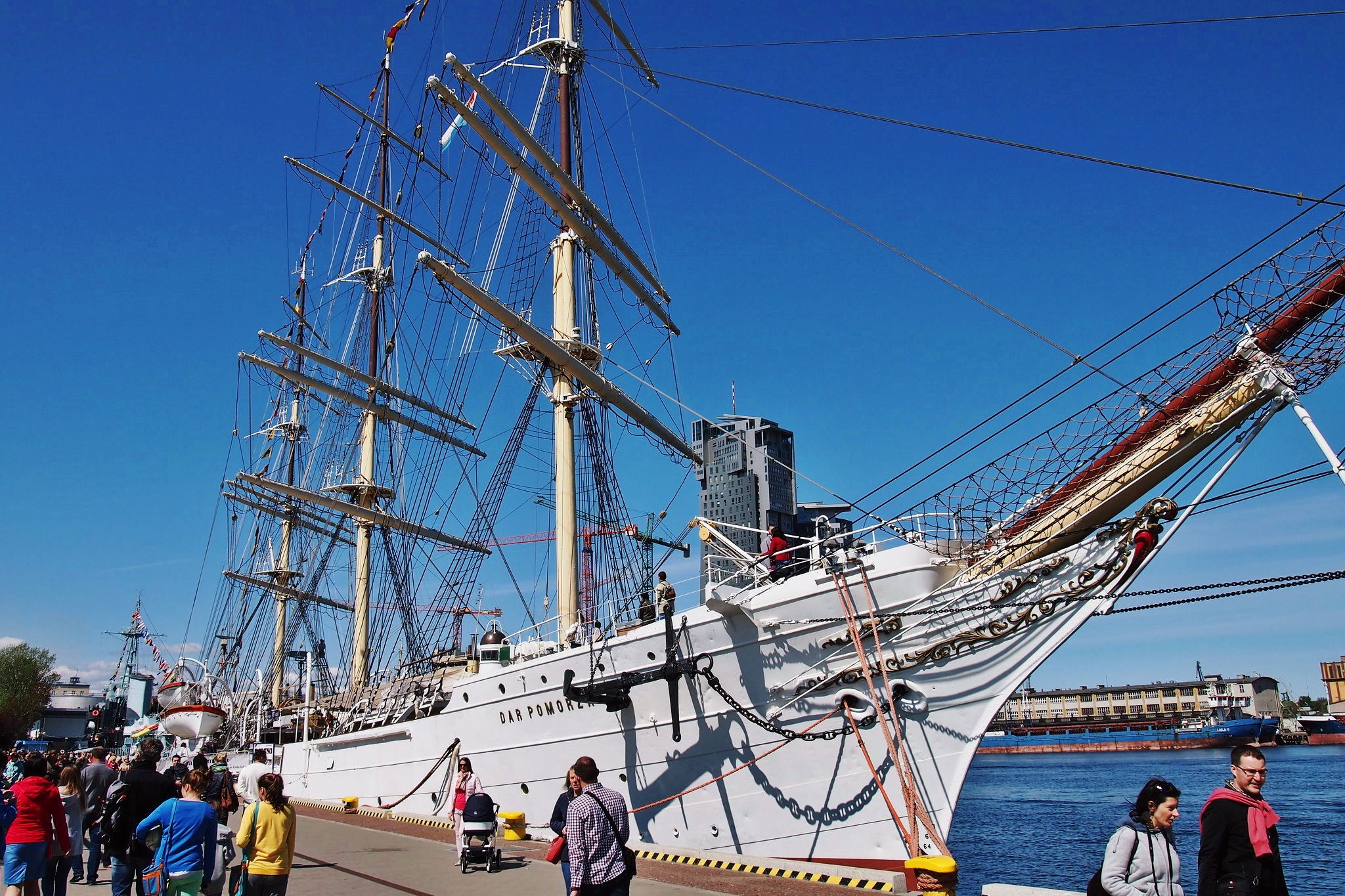
Gdynia is a distinctive, special place. Constructed in the 1920s, it was the background of a freshly built modern harbor. To this day, the harbor area with its long promenade is the most characteristic part of the city. It is here that the historical ships are docked: the ORP Blyskawica, a 1930s destroyer, which is the oldest preserved ship of this class in the world, and the famous sailing frigate Dar Pomorza. The Naval Museum proudly shows the history of the Polish navy, The Emigration Museum located in the former Maritime Station showcases 200 years of Polish emigrations, from the 19th century to modern days while the Gdynia Aquarium allows you to discover fascinating secrets of underwater life.
Sopot
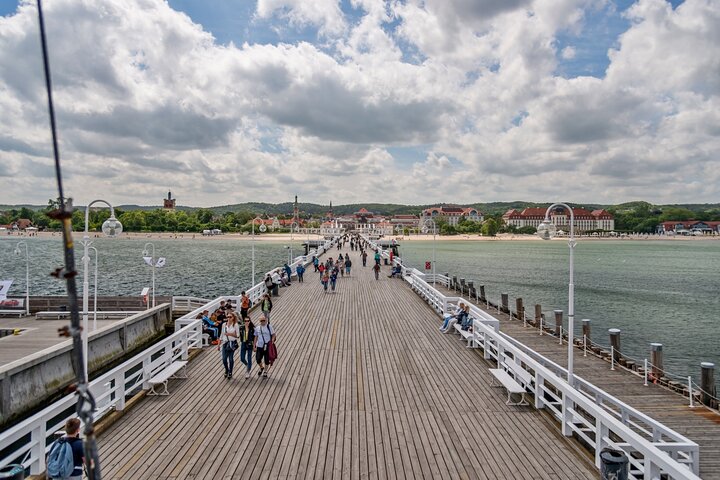
Sopot is a luxury seaside resort town, a venue for mass events and a trendy shopping area. Its most recognizable symbol is its pier. Jutting out 560 yards into the sea, it is the longest wooden pier in Europe. At its end, the concentration of iodine is twice the amount recorded on the shoreline, which means that walks along the pier are good for health. More than a hundred vessels can be moored along the pier at any given time.
Plac Zdrojowy, the town’s central square, is the extension of the pier on land. The light-house towering over the square offers a panoramic view of the area, while the nearby outdoor concert hall is alive with music all summer.