
Wroclaw
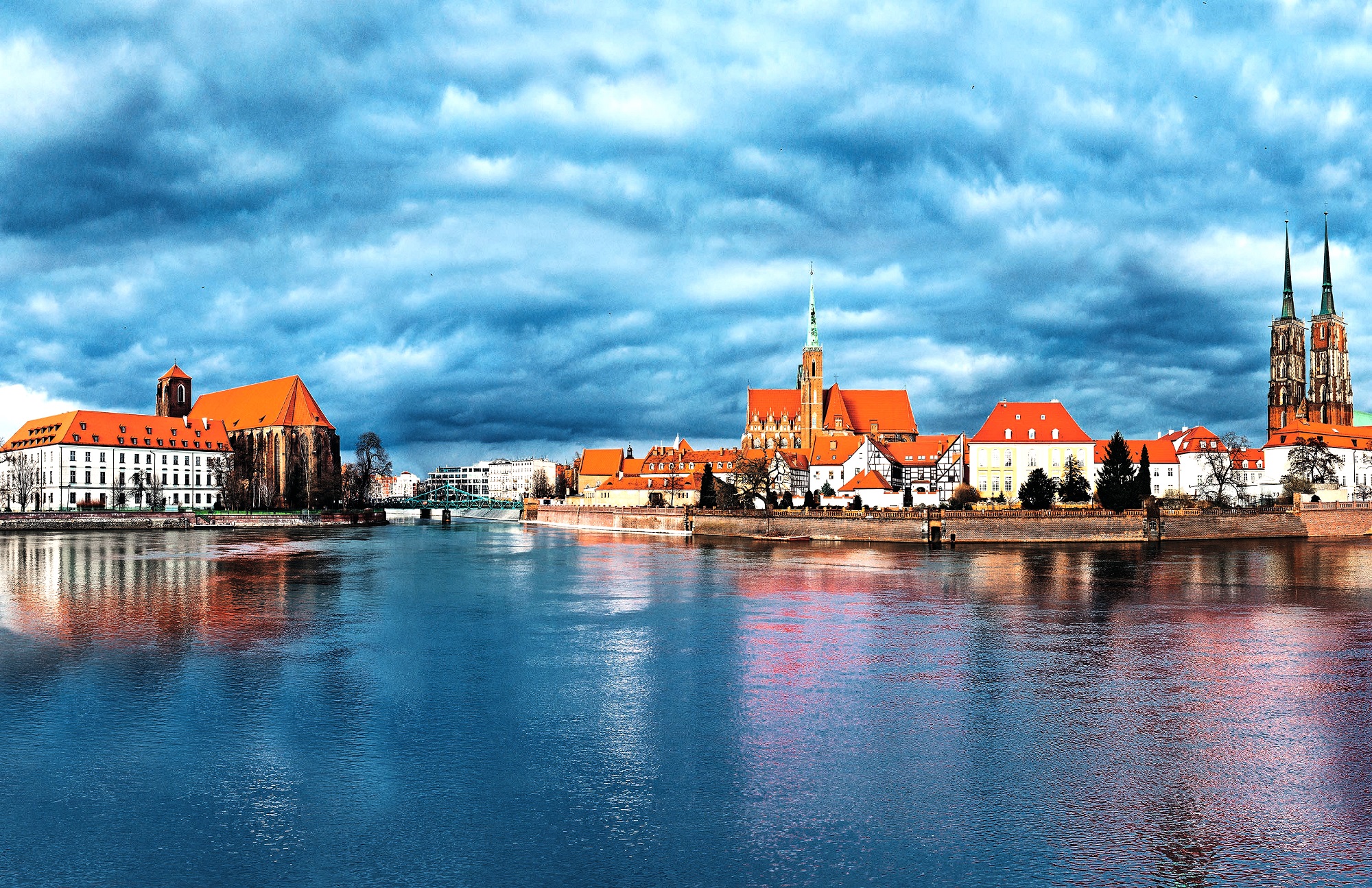
For over 1,000 years, the city has been magnificently reflected in the waters of the River Oder, the second biggest in Poland. With visible reminders of Czech, German and Polish rules, Wroclaw has become a truly modern European city, and one that you simply must experience for yourself. Being the buzzing capital of the Dolnoslaskie (Lower Silesia) province, it boasts a complex history to which the city owes its large number of historical sites. It is the most important cultural, economic, academic and tourist hub of south-west Poland, here you’ll discover a colourful city with full of attractions to suit every tourist.
City of Bridges
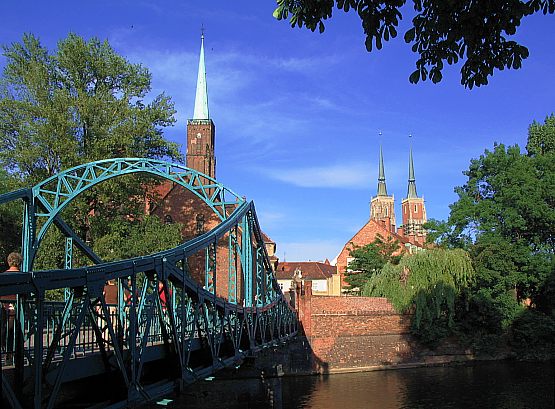
Wroclaw quite often is named the City of 100 Brigdes. In fact there are more than 100 road bridges and footbridges that span together the riverbanks in Wroclaw – the only places where you’ll find more are Venice, Amsterdam, St. Petersburg and Hamburg. The distinctive turquoise railings of the Tumski Bridge are heavily weighed down by hundreds of love padlocks – just like the Ponte Milvio in Rome. Another must-see is the Witches’ Bridge, Wroclaw’s highest at some 45 feet above ground level, which connects the towers of the Gothic Cathedral of St. Mary Magdalene and also offers incredible views of the city. But it’s the Grunwaldzki Bridge that reigns supreme in Wroclaw – it’s been a trademark of the city for over a century now. Its pioneering suspension structure is impressive both by day and night, when it is stunningly illuminated. Take a cruise on the Odra River to enjoy it fully and admire the breathtaking panorama of the Old Town and beautiful city bridges.
Ostrow Tumski Cathedral Island
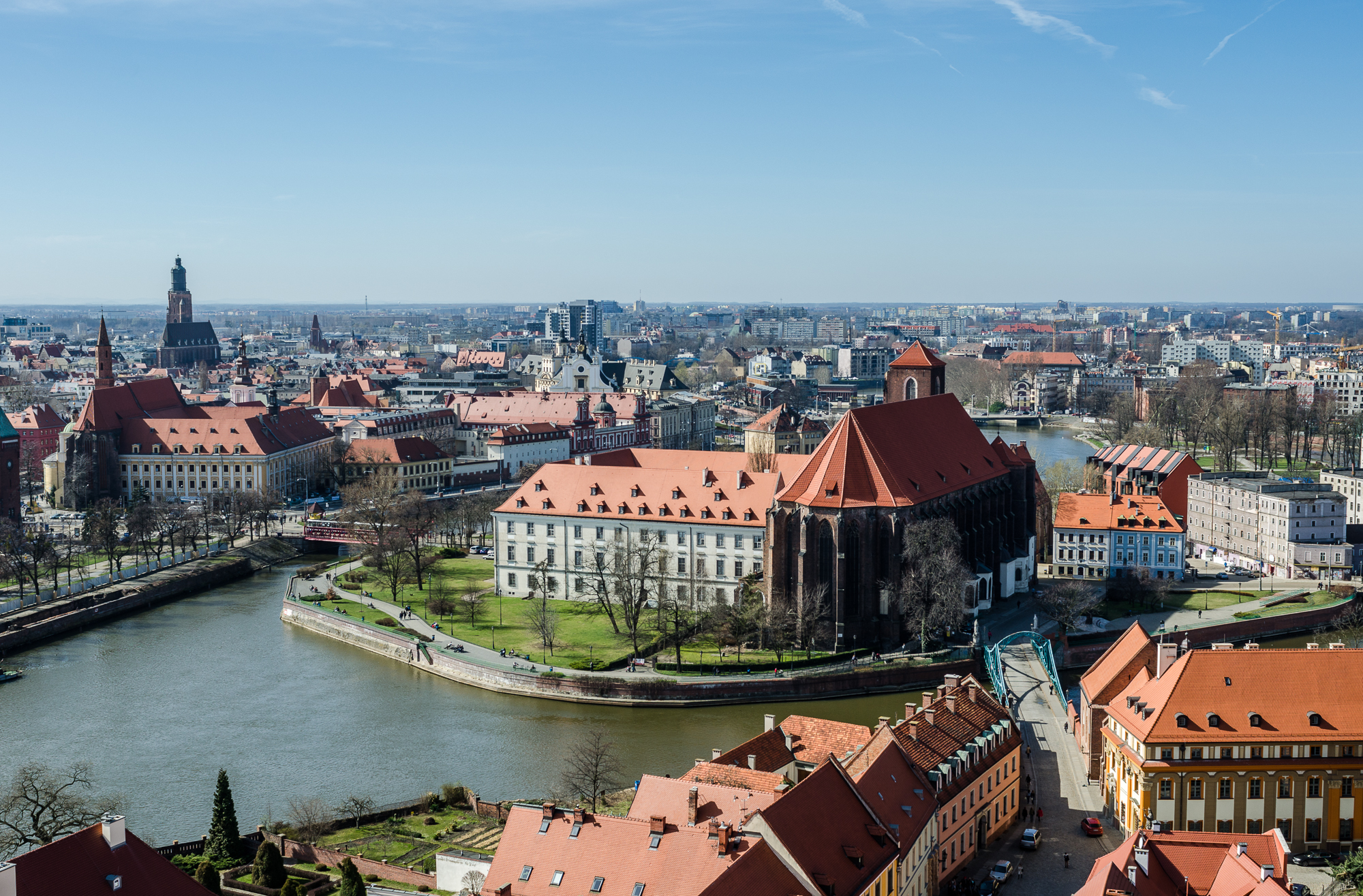
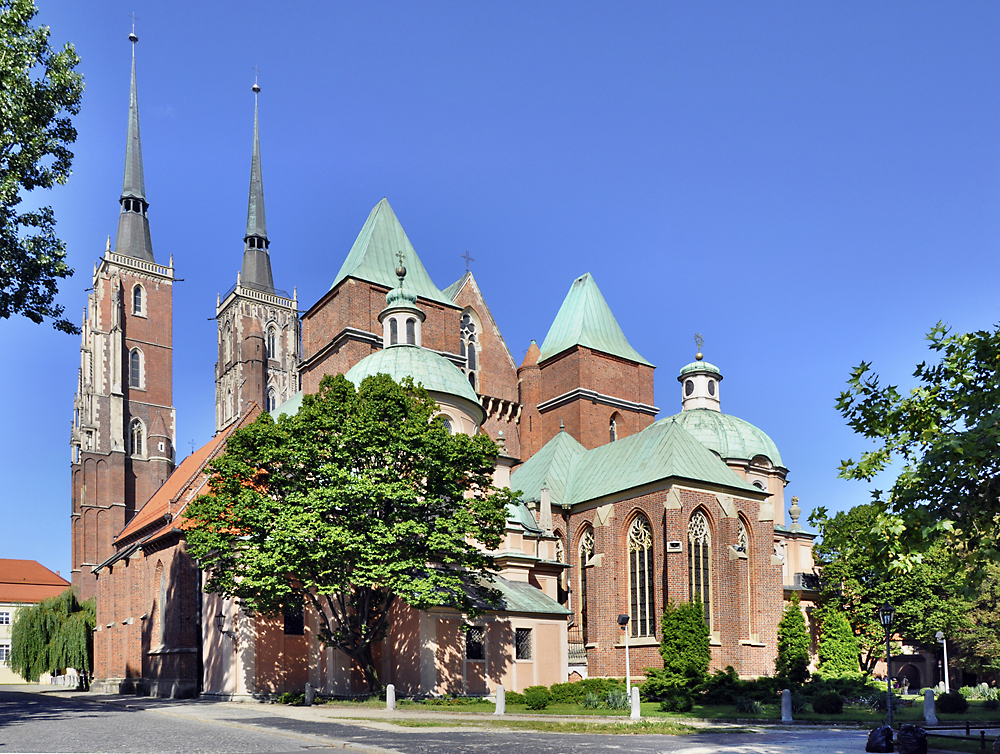
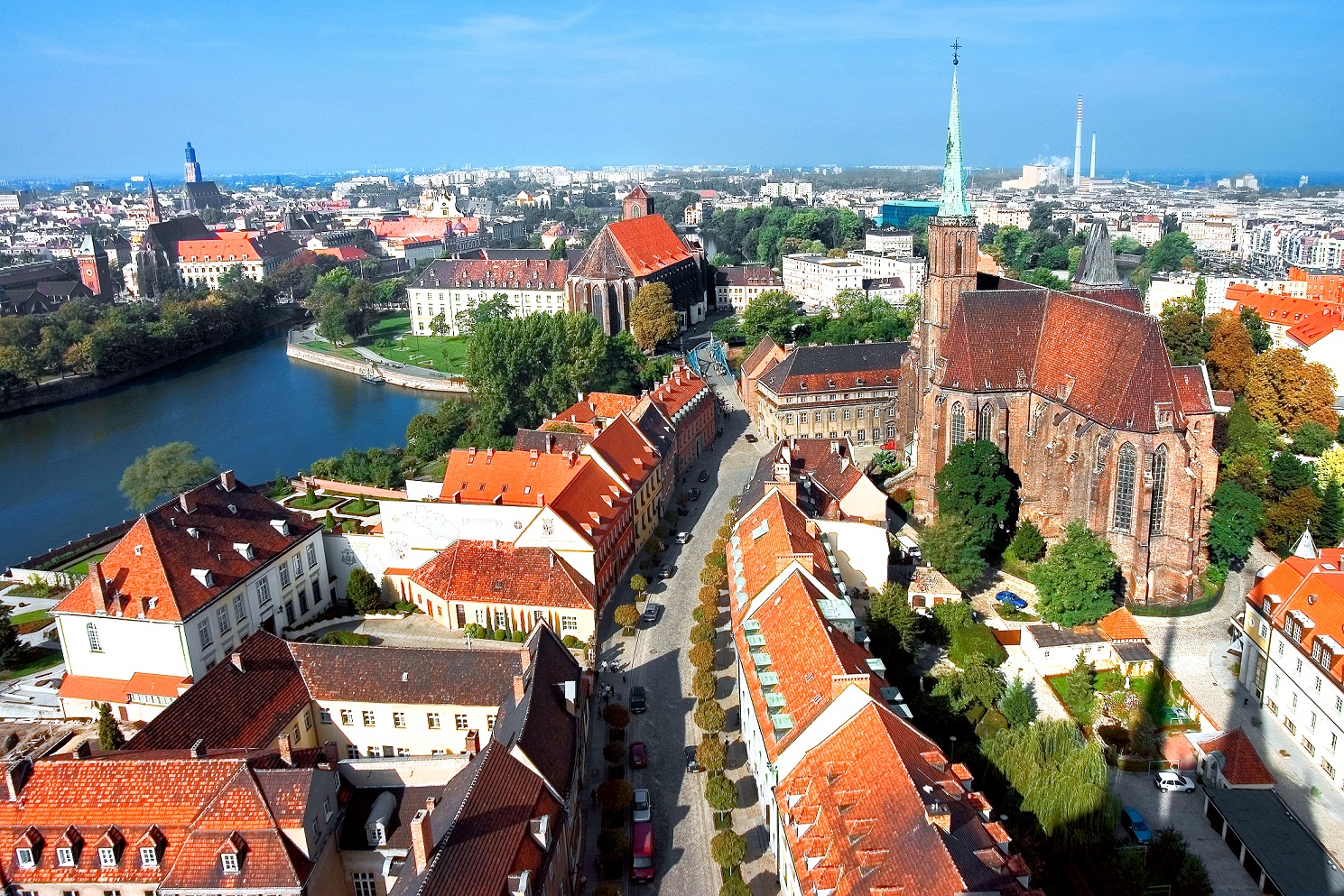
The oldest part of the city is Cathedral Island called Ostrow Tumski, originally situated in the fork of the Oder River. A fortified town built on Ostrow Tumski in the 10th Century marked the city’s beginnings. Priceless historic buildings you simply must visit here include the mammoth Gothic Cathedral of St. John the Baptist with its vertiginous twin towers, the two-storey brick Collegiate Church of the Holy Cross and St. Bartholomew and the Archdiocese Museum. The latter houses the Book of Henryków from the 13-14th Centuries, containing the first sentence ever written down in Polish, which is listed in the UNESCO Memory of the World Register. You may like to know that in 16th century Nicolaus Copernicus used to live here. Nowadays Ostow Tumski is not an island anymore, as at the beginning of 19th century one of river branches was filled. But there are still 6 smaller islands nearby you can explore. So cross Tumski bridge to Piasek Island and either go further to the Old Town or take a rest in the park on Slodowa Island or Bielarska Island.
Old Town
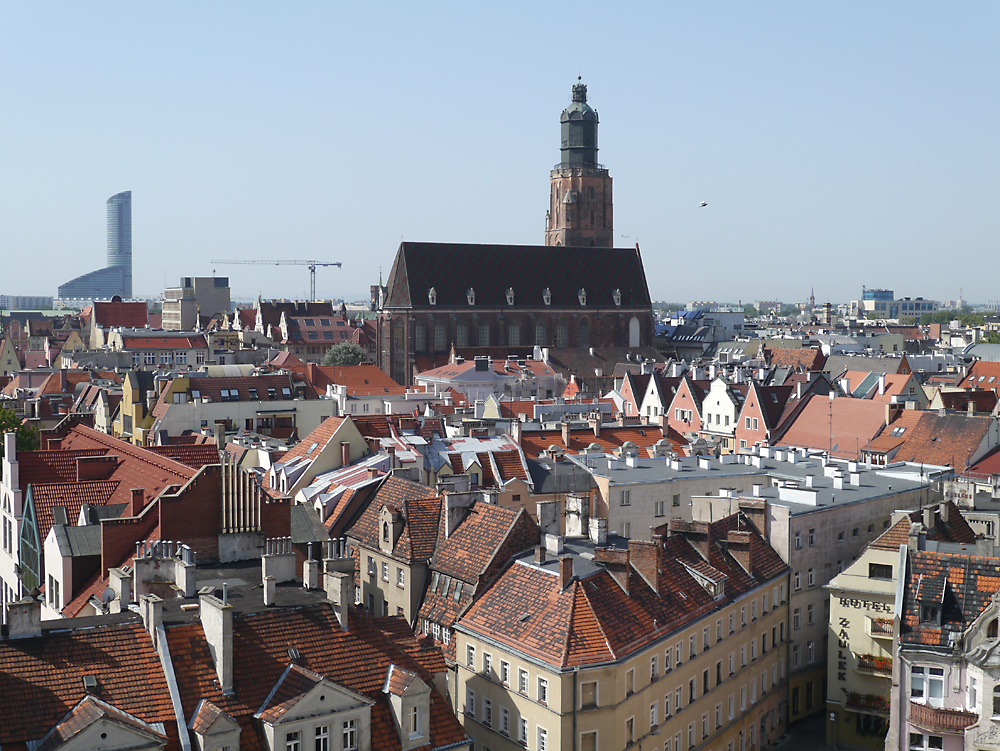
Already in the 12th century, there was a market square on the left bank of the river, just opposite Ostrow Tumski Island and some settlements nearby. During the Mongolian invasion in 1241, the settlements were destroyed and rebuilt by re-location, joining them into one city and surrounding with a defensive perimeter. Already in 1261, the city was expanded to a new, external Fosa, and in 1263 an independent New City (Nowe Miasto) was established, incorporated into the main city in 1327. This area surrounded by fortifications stayed in this shape till 1808 when fortifications were demolished and city extended. But this is what we consider the charming Old Town nowadays, as it offers a perfect blend of historical Renaissance and Mannerist tenement buildings and post-war reconstructions.
Old Town Market Square
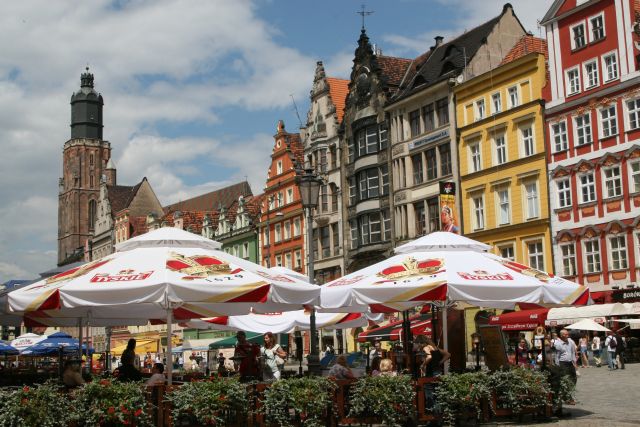
The Market Square called Rynek is one of the biggest and most beautiful in Europe, being a dynamic soul of the city where busker music plays day and night and mouth-watering smells come from inviting restaurant terraces. There are 10 streets leading to it from all parts of the city. It is lined with charming and colourful tenement buildings. The stunning Baroque “House Under the Golden Sun” (because there’s a large golden sun on the centre-top of its facade) is home to the Pan Tadeusz Museum, housing the manuscript of Adam Mickiewicz’s famous poem. After dusk, you’ll notice ladies and gentlemen in tradition costumes from the Romantic period moving behind the curtains on the first floor – enticing you to enter and visit the museum. The central part of the Market Square is occupied by a central block turned clockwise by 7 °, consisting of the Old Town Hall, the New Town Hall and tenement houses.
Old Town Hall
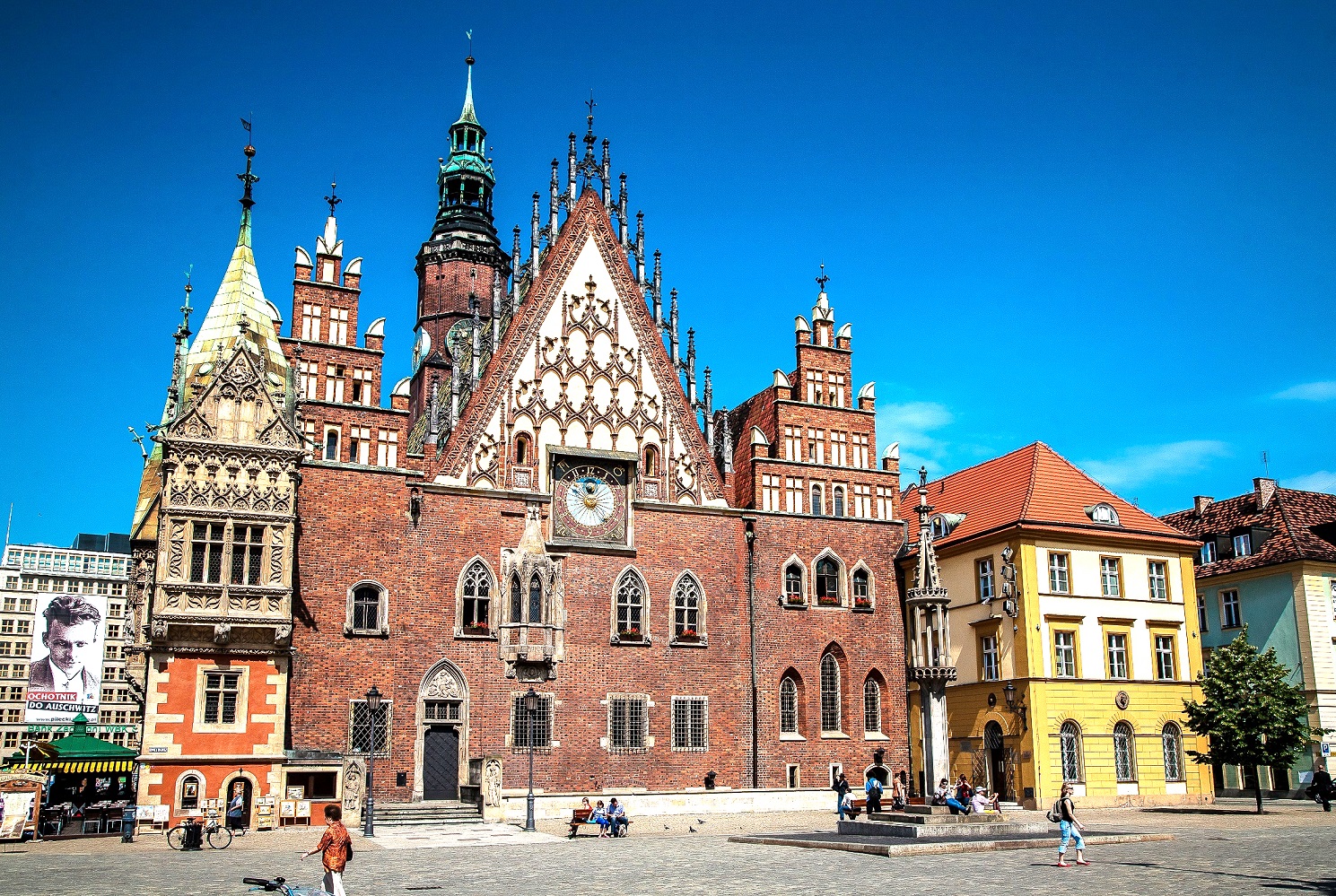
The late-Gothic Old Town Hall is quite the showstopper being one of the main landmarks of the city. Its long history reflects developments that have taken place in the city since its initial construction. The town hall serves the city of Wroclaw and is used for civic and cultural events such as concerts held in its Great Hall. In addition, it houses the Museum of Burgher Art, and in its basement, the oldest bar in Europe.
University of Wroclaw
The University of Wroclaw It is the largest institution of higher learning in the Lower Silesia province. Throughout centuries it had many noble alumni including 9 Nobel Prize winners. Present main historic campus dates back to 1728 when Jesuit Leopoldin Academy was build replacing ruins of former medieval castle of Piast dynasty. Hence to its donator Leopold I has its name. Maine building called Collegium Maximum is 171 metres long and is reflecting beautifully in the waters of Oder River. It has a parade staircase and a series of representative rooms and auditoriums with a very rich baroque décor including theatre hall Auditorium Comicum, music hall Oratorium Marianum, and areal pearl to discover is Aula Leopoldina – representative baroque hall, a masterpiece that stayed almost untouched during three centuries. In the Wroclaw University complex once can also climb the Mathematic Tower offering a splendid panoramic view over the Old Town and visit baroque university church build by Jesuits at the end of 17th century.