
The Black Madonna
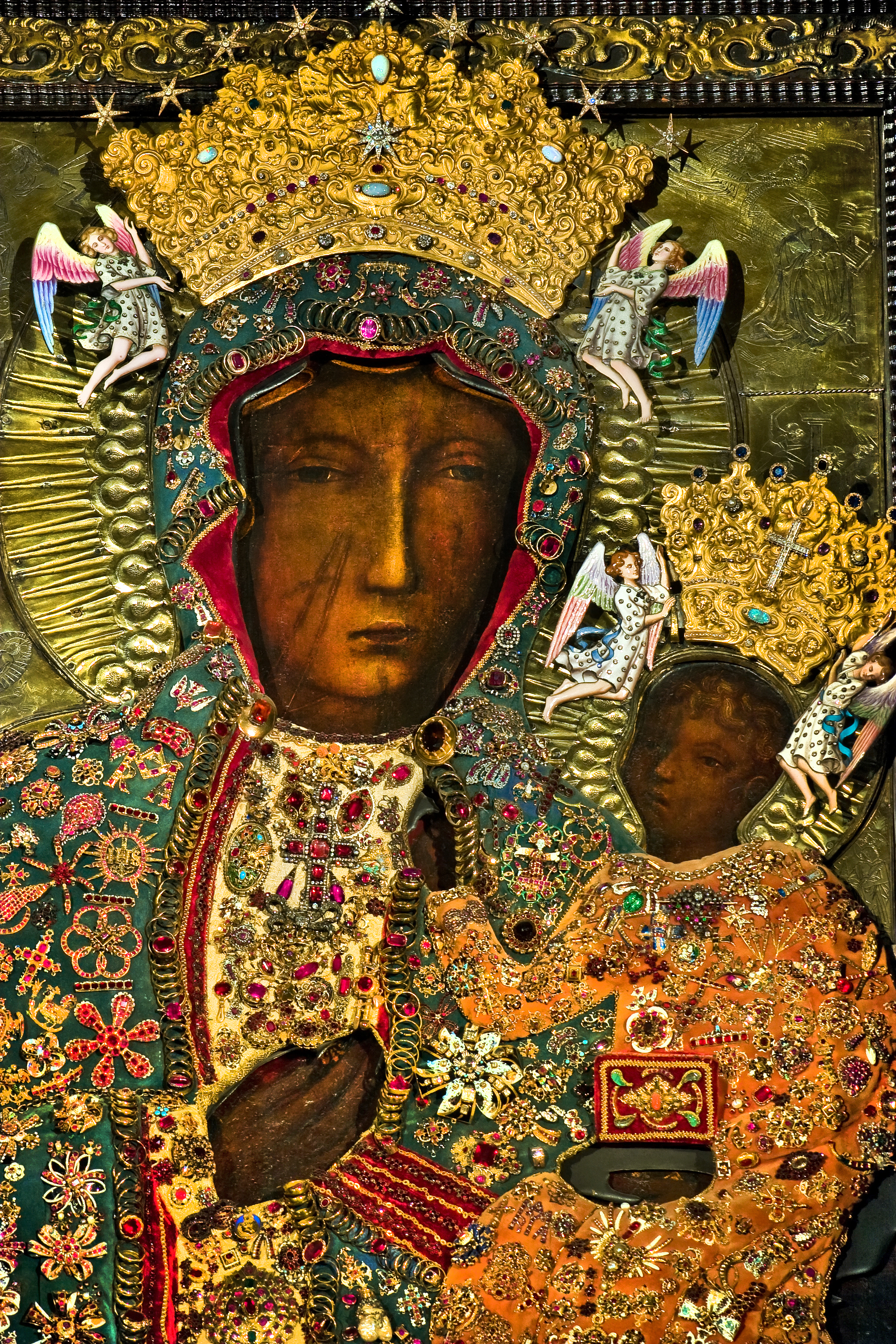
The Black Madonna painting is the focus of any visit to Jasna Góra. Said to have been painted by Luke the Evangelist, it is thought to have been painted in the 14th century. The painting has been credited with numerous military successes, including the defeat of Swedish forces at Jasna Góra in 1655 and the victory in the Battle of Vienna in 1683. Featuring the Virgin Mary holding the baby Jesus, the painting is unveiled to visitors daily, to a special musical accompaniment called the ‘royal intrada’. Check the unveiling times to make sure you don’t miss out on seeing this sacred artwork.
Basilica
The church is dedicated to the Holy Cross and to the Assumption of the Holy Mother. Designated a basilica in 1906, the church's baroque interior is richly decorated with rich stucco and paintings. The main altar in the form of late baroque marbled sculpture depicts the Assumption of the Mother of God.
The Chapel of our Lady of Czestochowa
The Chapel of Our Lady with the Image of the Mother of God and Baby Jesus, also known as the Black Madonna, is the most important goal of the pilgrims arriving in Jasna Góra. It was from the altar of Our Lady that the Polish kings set out on military expeditions and brought here their votive offerings. John Paul II also offered a Golden Rose and the belt shot through during the attempt on his life in 1981, which are now placed next to the image of the Black Madonna.
The chapel consists of three parts erected at different times. The oldest, gothic part is today’s presbytery and is decorated with an ebony and silver altar from the 17th century. The second, baroque part is decorated with votive offerings, expressing gratitude to the Mother of God for favors. The third part of the chapel dates from the beginning of the 20th century.
Visitors are welcome to attend mass, which is held daily.
Jasna Gora Tower
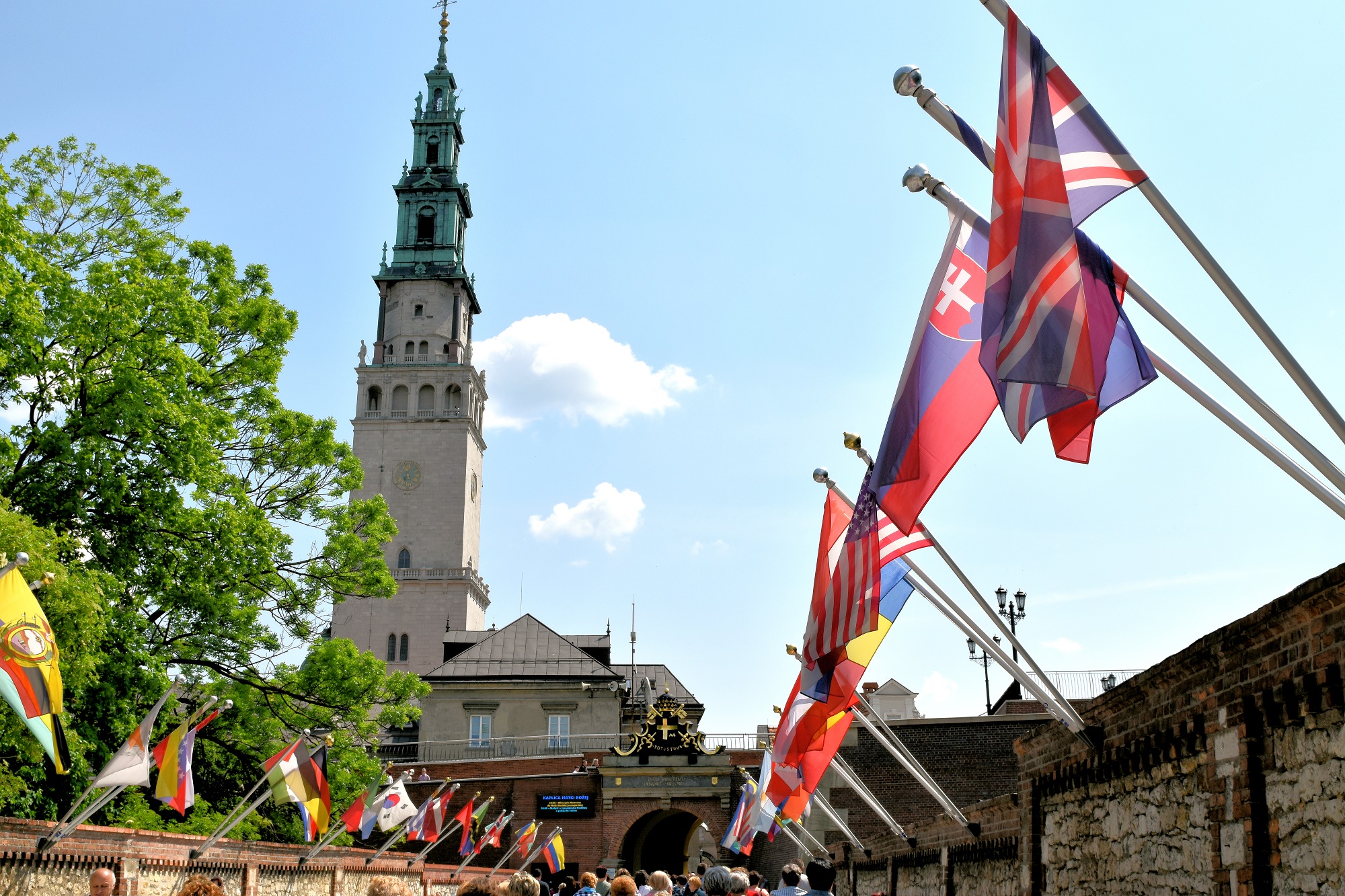
This is the highest point of Jasna Góra and currently the highest church tower in Poland (106.3 m). 519 steps lead to the fifth floor, from which one can view the whole area. Above the first floor, there is a clock with 36 bells which play the melodies of songs of St. Mary.
Library
It is divided into two parts – old and new. There are about 8000 old prints and medieval illuminated manuscripts here, including unique specimens from the royal collections of the Jagiellonians, in the old library. The library's ceiling is decorated with frescoes from the first half of the 18th century.
Knights’ Hall
The representative, early baroque hall of Jasna Góra, stands adjacent to the upper part of the Chapel of the Mother of God. Built in 1647, it was a room for debates, meetings and conventions. In 1936, the first plenary synod of the reborn Poland took place there. It also displays 17th century paintings depicting important events in the history of the monastery
Museum
You can also explore a collection of Polish national treasures in the Museum of the 600th Anniversary of Jasna Góra. The museum includes:
- three of the twelve dresses decorating the miraculous image
- a collection of instruments of the Jasna Góra Ensemble that played music during the liturgy at the shrine from the 17th century
- the monastery’s foundation deeds
Treasury
The Treasury of Jasna Gora - the oldest part of the museum of Jasna Góra. In the Treasury one can enjoy the richness and beauty of the most precious votive offerings gifts presented to Our Lady of Jasna Gora during the past centuries. The exhibits have been displayed in showcases, glass and exhibition cabinets and on the walls.
They are:
- silverware, jewellery, weave articles and armourers,
- liturgy items such as vessels, vestments, candlesticks,
- jewellery made of ivory, pearl, turquoise, different precious stones,
- votive offerings of popes, cardinals and believers from different countries of the world,
- votive offerings of Polish kings, nobles and heroes of national independence struggles.
Way of the Cross
The Way of the Cross was built in 1900-1913 according to the design of Stefan Szyller in the monastery park which is surrounded on three sides by the walls of the Sanctuary. The figures of 14 stations were cast in bronze by the Warsaw sculptor Pius Welonski. It has already become a tradition of pilgrimages in Jasna Góra to conduct the service of the Way of the Cross here.
Grounds
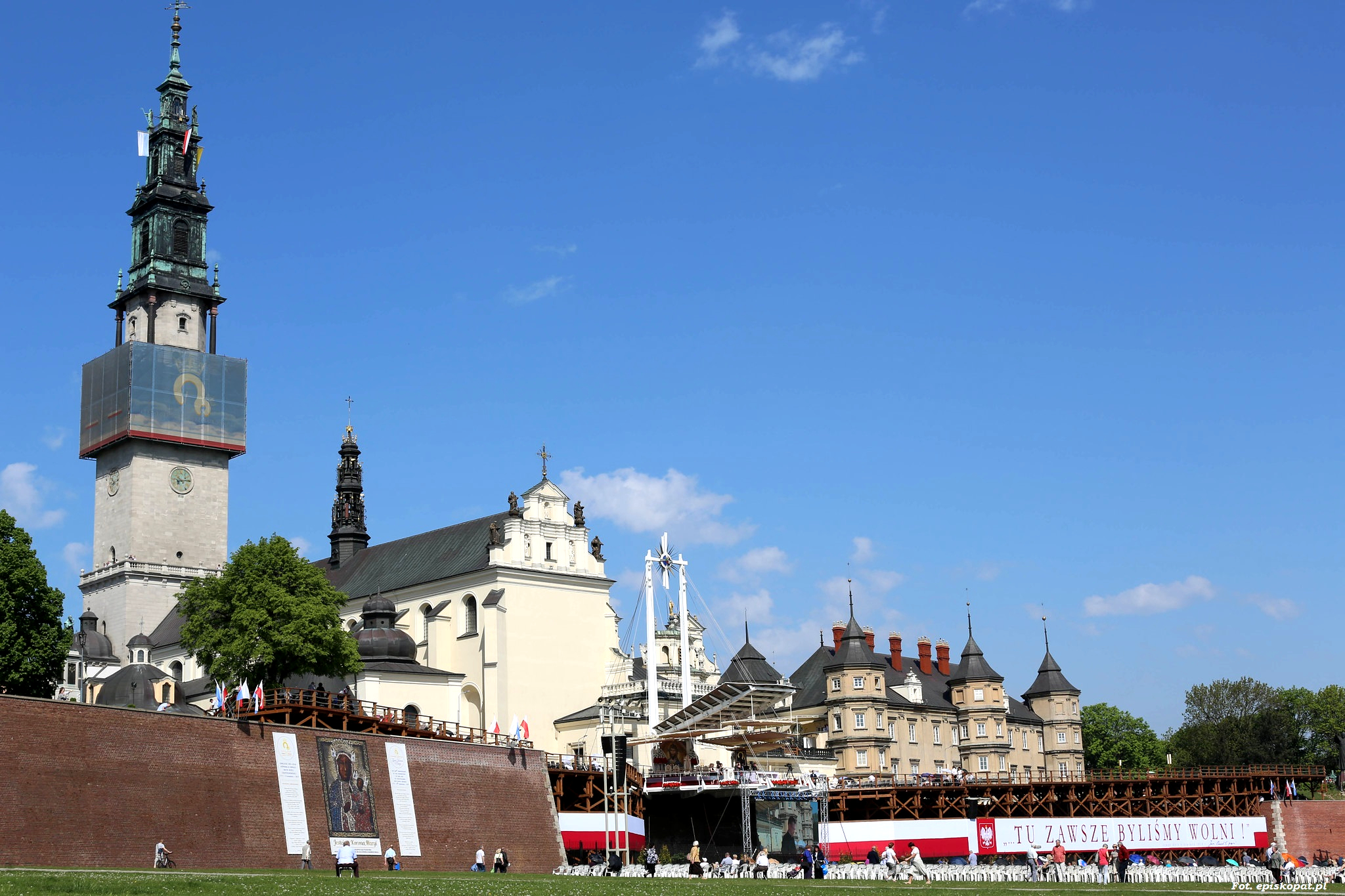
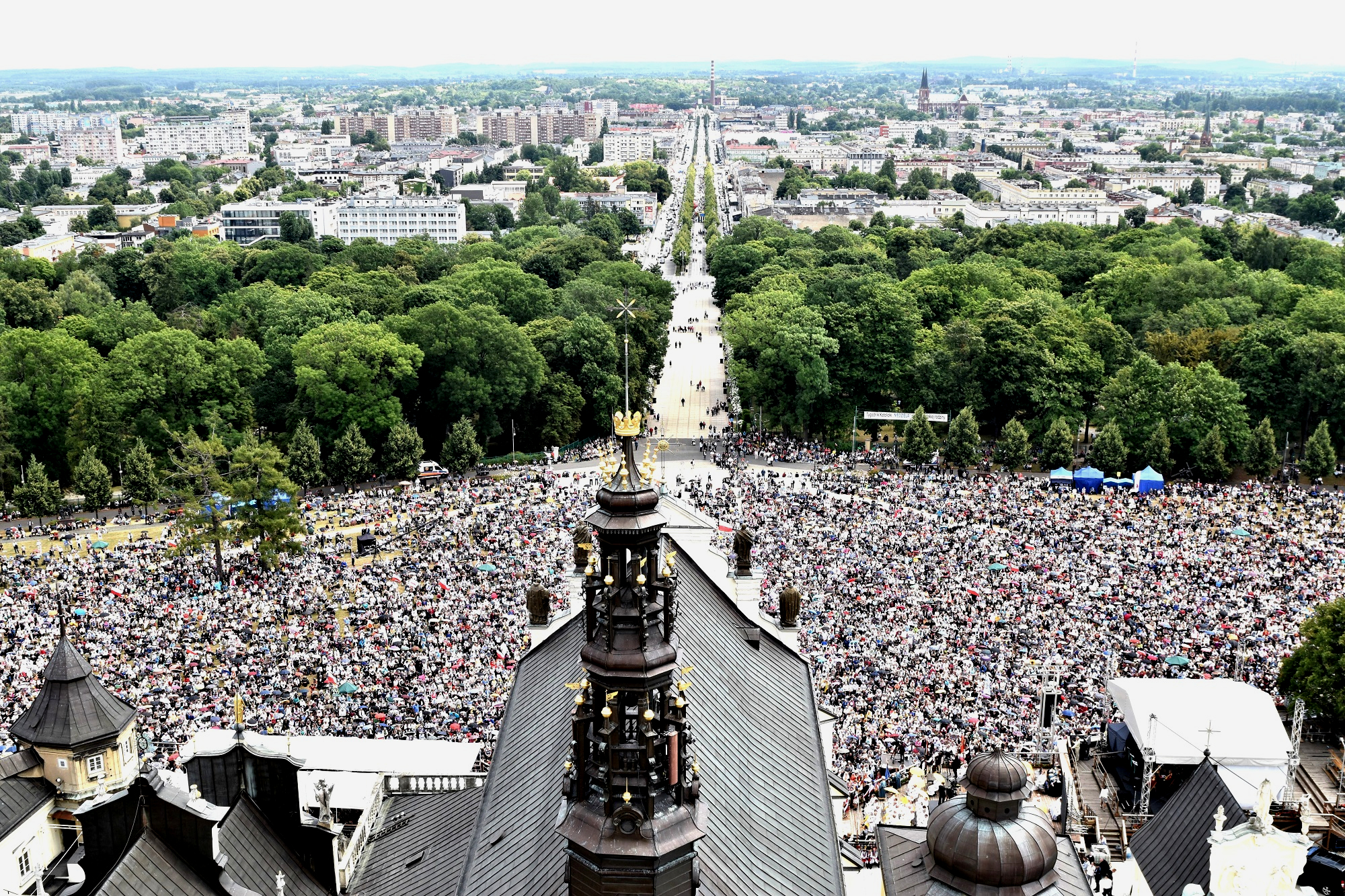
The fortified 14th century monastery complex dominates Częstochowa’s skyline from its hilltop perch at the end of Ill Aleje, a tree-lined avenue bordered by two parks.
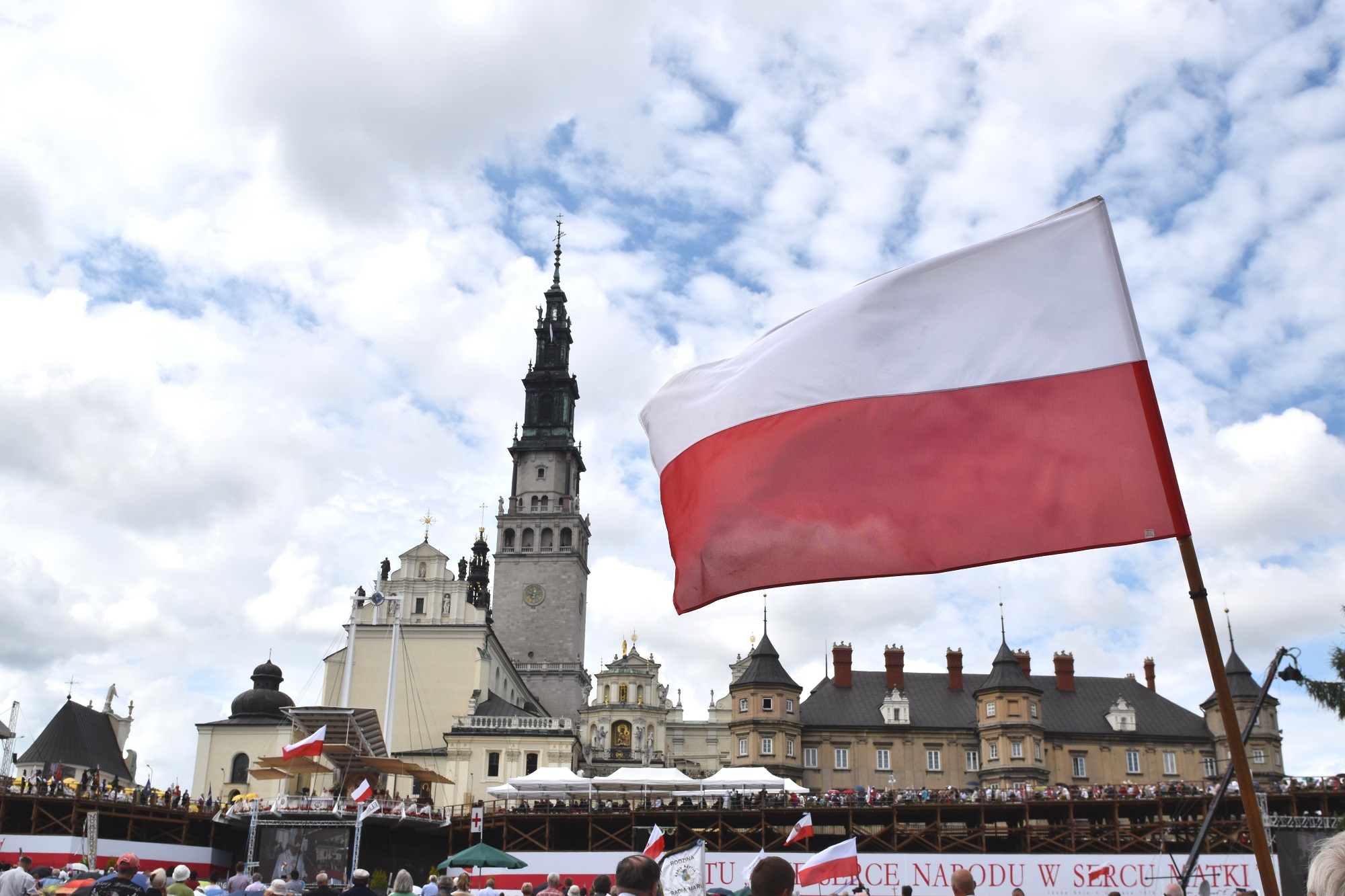
The iconic steeple – the tallest in Poland - can be seen from across the city. If you’re feeling fit, why not scale the 519 steps and check out the view from the top.
A clock tower overlooks the complex. Every 15 minutes, the 36 bells play hymns about the Blessed Virgin Mary or, depending on the season, Christmas carols and Easter songs.
Fortifications
The monastery was heavily fortified in the 17th century to protect it from attack and the ramparts, arsenal with cannons are still in place to explore today. The armoury building is a reminder that the shrine had to defend itself from enemy attacks many times in its history, including a raid by Hussites who cut the painting so badly it had to be repainted.
Oscar-nominated foreign language film
The Polish film – The Deluge – directed by Jerzy Hoffman was Oscar-nominated in 1974 and is the third highest ranking Polish film of all time. Set during the Swedish invasion of the Polish-Lithuanian Commonwealth in the 1650s, it recounts the defeat of the Swedish invaders.
Director Hoffman received special permission from the general of the Pauline Order to shoot the famous scene of the uncovering of the Black Madonna in front of the original painting, not a copy. The intrada fanfare can be heard in the background.