
Baroque Garden in Nieborów
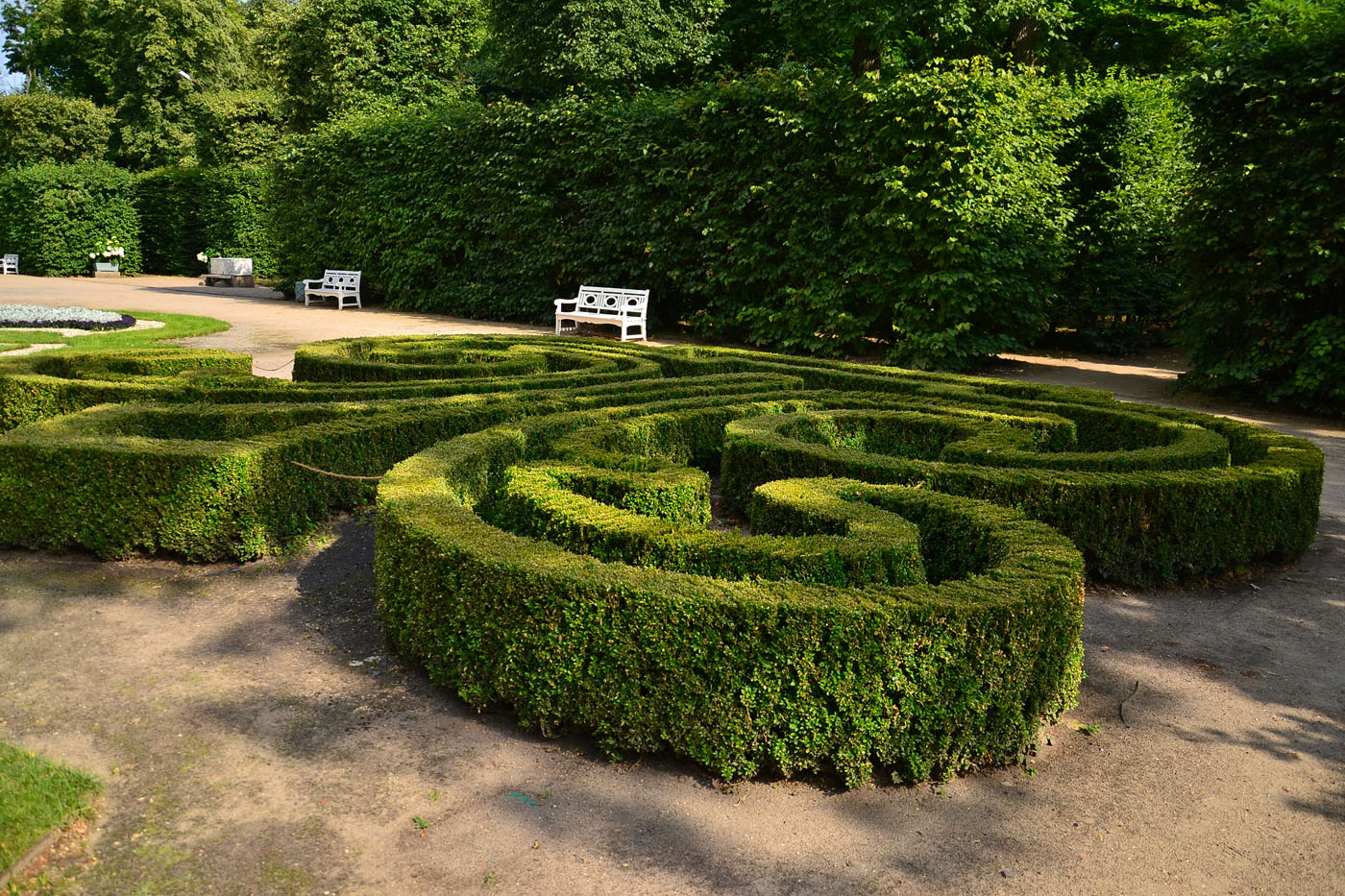
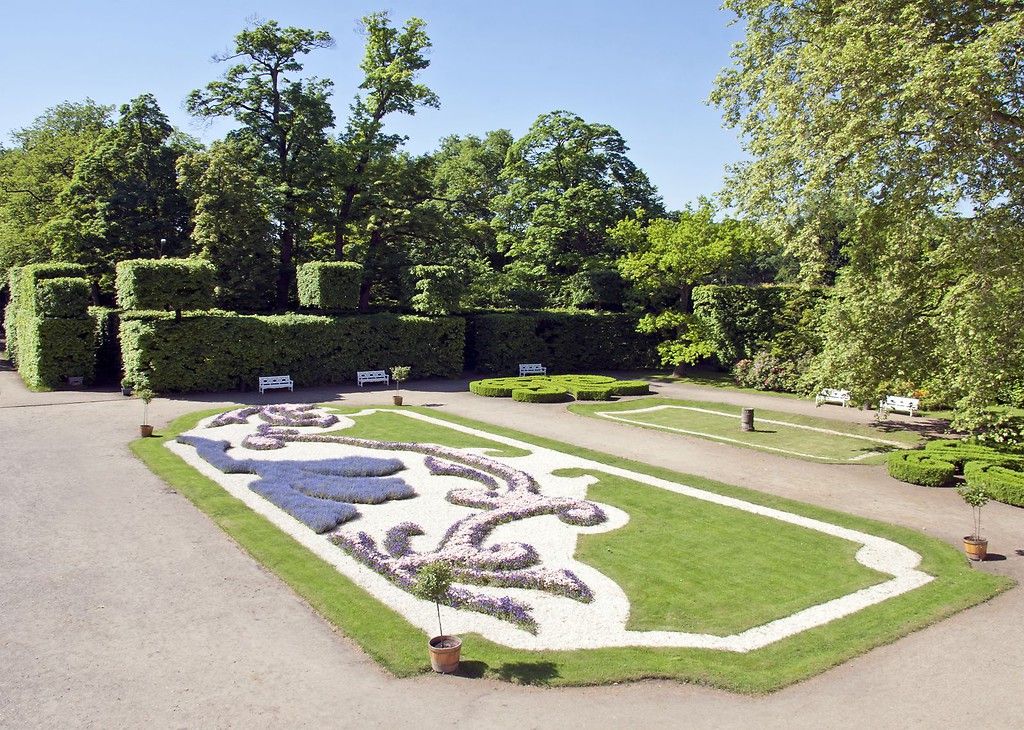
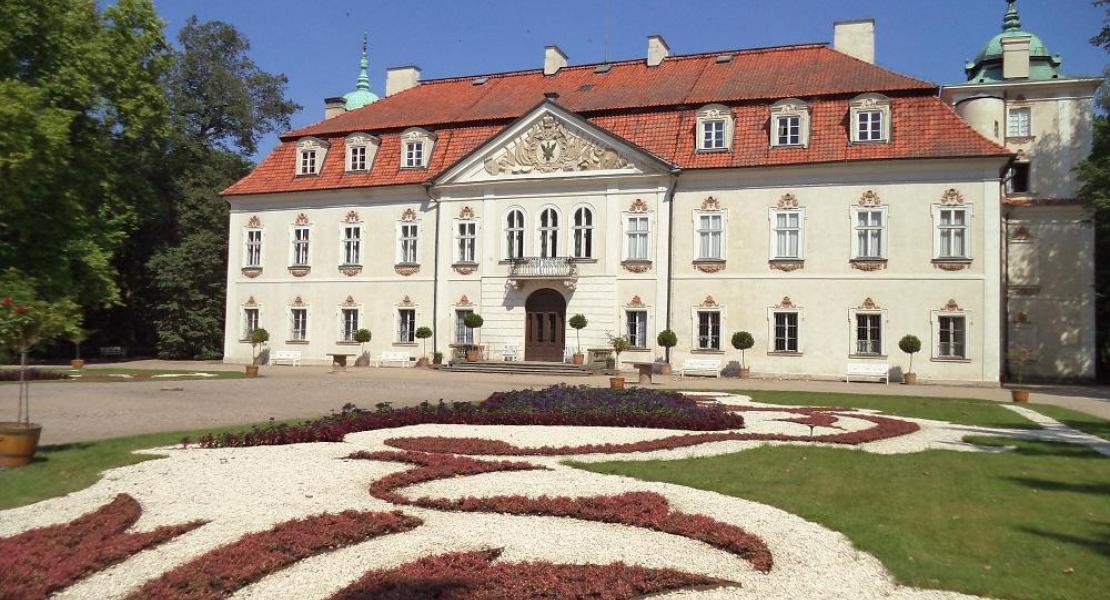
Baroque Garden in Nieborów in the regular (French) style was designed in the 60s of the 18th century by Szymon Bogumił Zug. Based on the assumptions of Le Notre’s French garden school which was popular in Poland in 1720-1760 the garden in Nieborów has boxwood mazes and flowerbeds in front of the south facade of the palace as well as wide alley planted with lime-trees with carpet lawn drawn on the axis of palace complex, surrounded by symmetrically planned cabinets and boskier formed of cut double row of lime-trees and hornbeams. From the western side the garden leans against the great canal designed in the shape of carpentry square.
Behind the canal there is a landscape park and on the eastern side there are an orangerie, a stable, a coach-house and the cottages in which the palace’s office staff lived. On the northern side of the palace, nearby courtyard, there is the Hunting Pavilion, with a number of guest rooms and closer to the gate there is the building of workshop raised by Szymon Bogumił Zug where at present the workshop of artistic ceramics and the offices of administration of the museum are.
Romantic Park in Arkadia
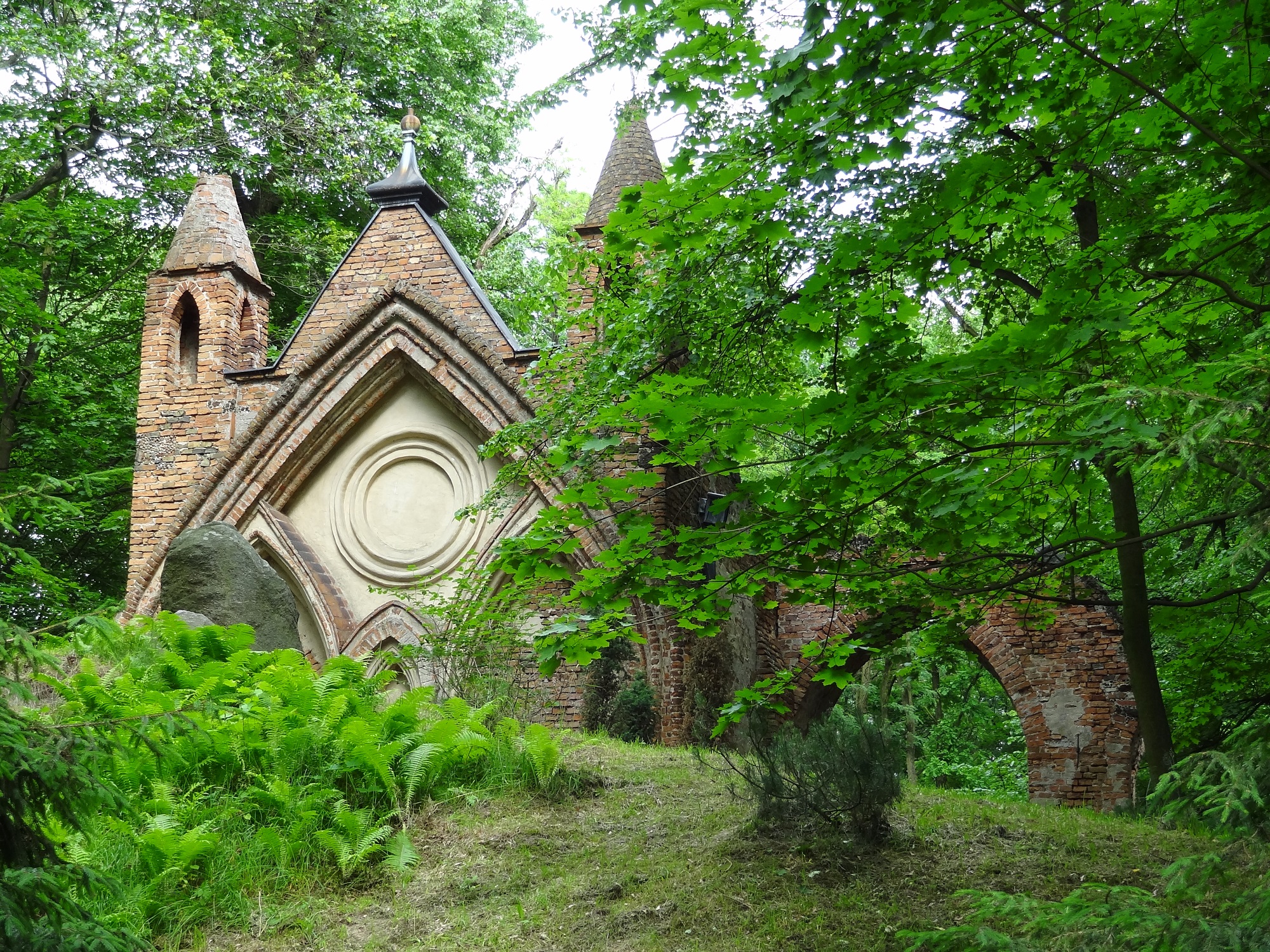
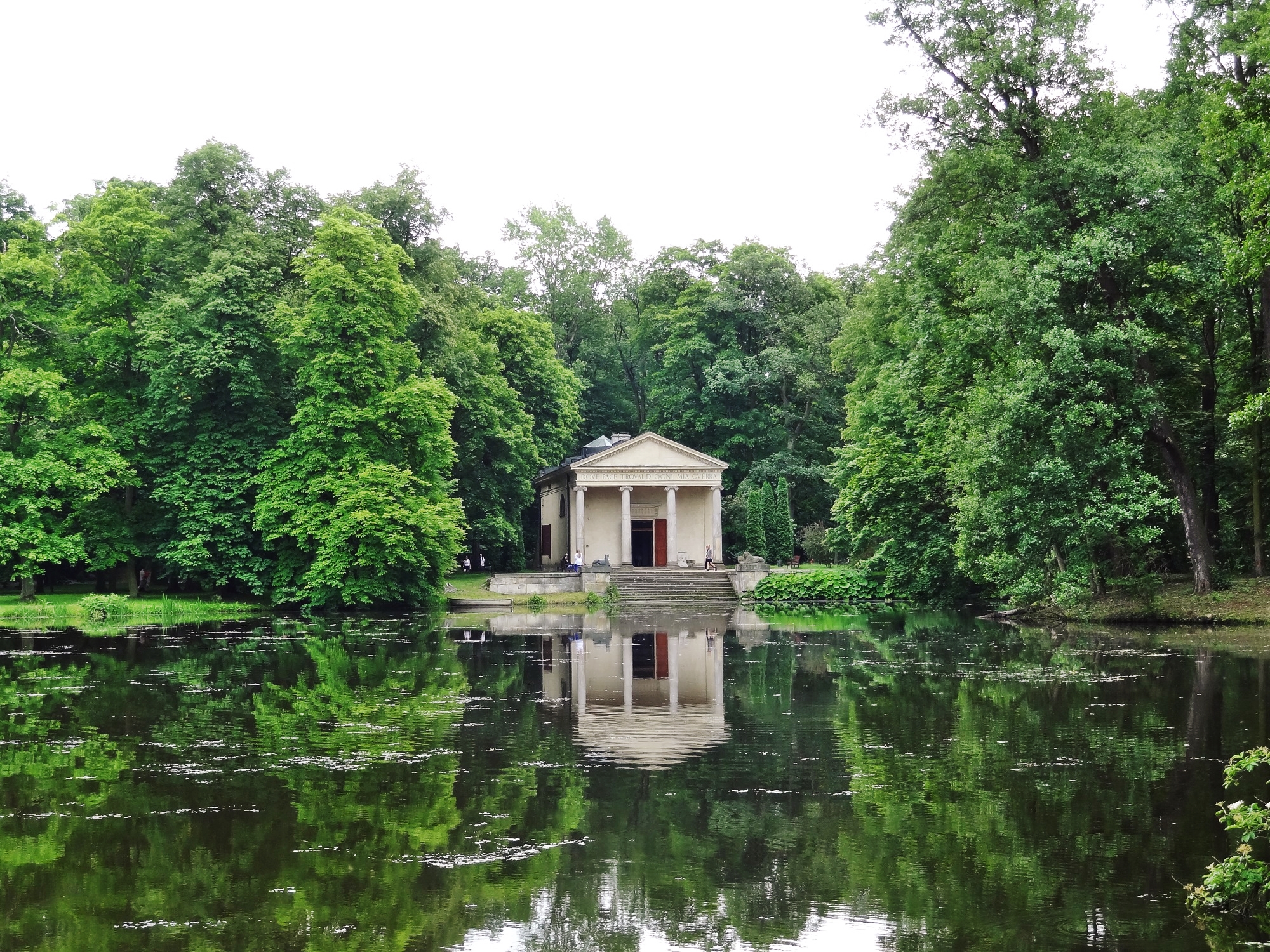
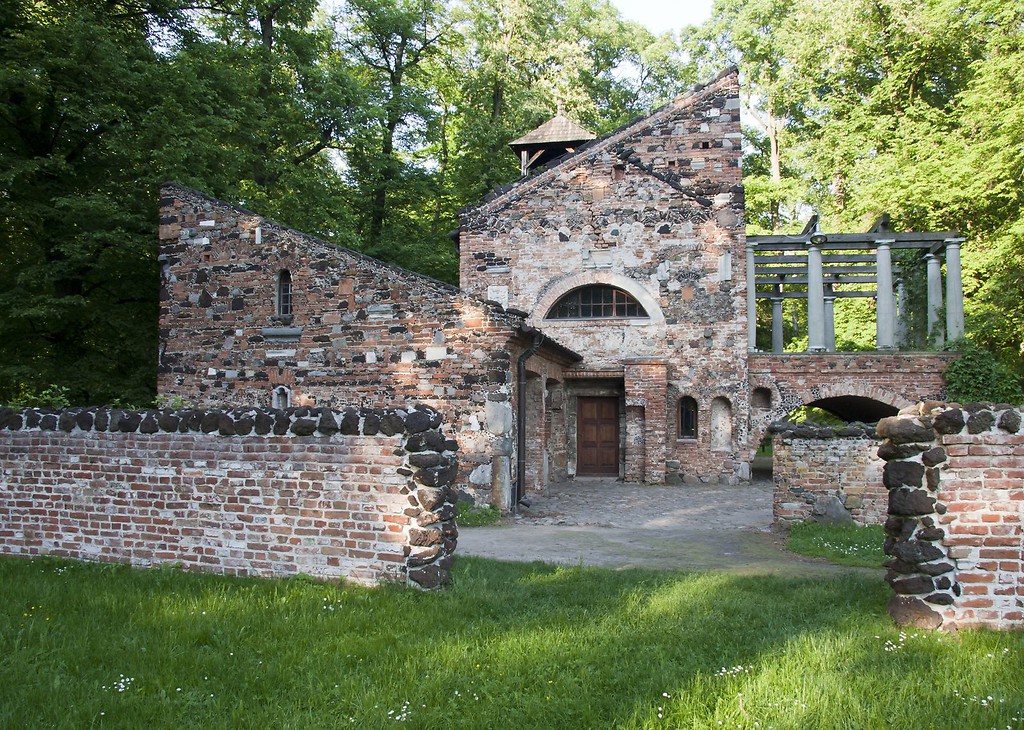
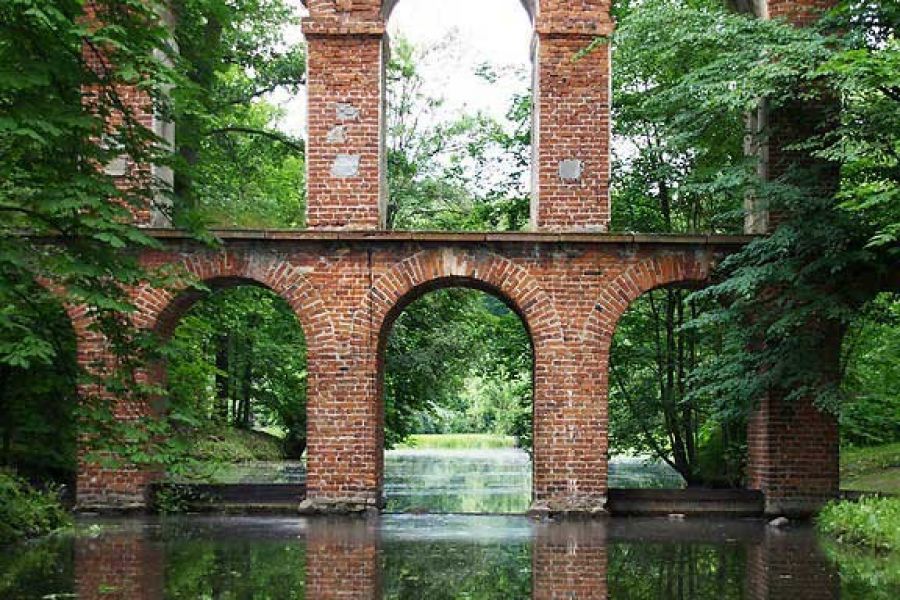
Romantic Park in Arkadia - in the 70s of the 18th century a new style in gardening called English style appeared in Poland. It originated at the beginning of the century in England and then was gradually spreading across the other European countries. The English style definitely opposed artificiality and regularity of baroque gardens. It promoted unrestricted and emotional compositions of sentimental or symbolic forms and architectural constructions referring to ancient and medieval works of arts as well as to the everyday life in the country, often also to the overseas exotic forms. The style had been transformed together with philosophic, ideological and esthetical changes of the epoch from sentimental forms to the vision of romantic garden.
Nieborów Palace
Nieborów Palace - the Museum in Nieborów and Arkadia was set up in 1945. It includes Radziwiłł's Palace and Garden in Nieborów and Romantic Garden of Helena Radziwiłł in Arkadia. Till the end of January 1945, both, the Palace in Nieborów and the Garden in Arkadia, were a part of the estate of Duke Janusz Radziwiłł, the lord of Ołyka and the owner of Nieborów–Mysłaków lands. However, in February 1945 the whole Radziwiłł family was deported by NKVD into the Soviet Union to the labour camp in Krasnogorsk. Just after that happened, Stanisław Lorentz, then the Director of National Museum in Warsaw, fullfilling earlier agreement with Radziwiłł, made the unique Palace in Nieborow together with the whole collection of its goods and the Arkadia's Garden a part of Warsaw's National Museum, which saved them from the devastation in the period of orthodox stalinism.
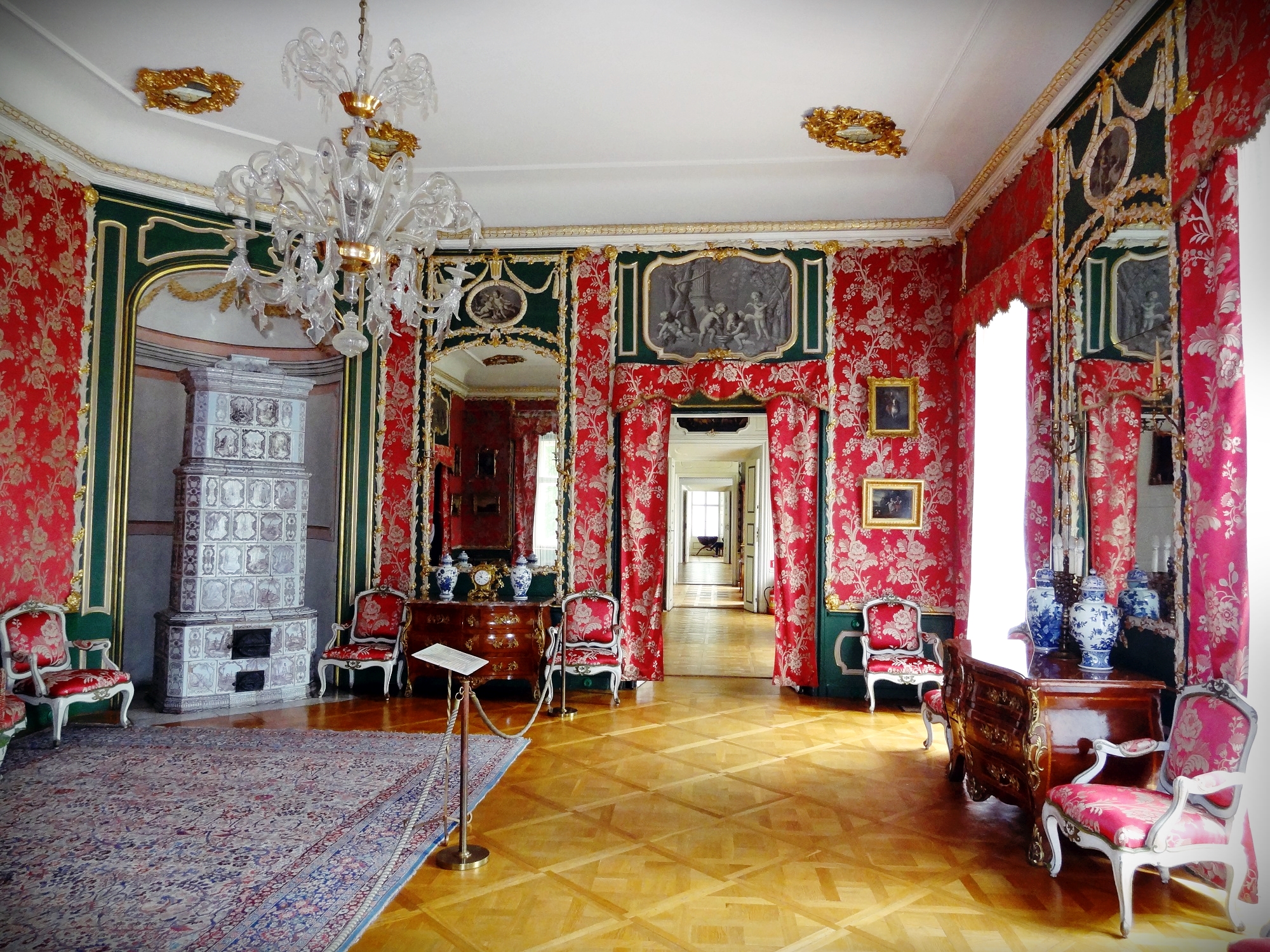
Nowadays, Nieborów is the residenital museum of interiors from the period of 17th to 19th century. The museum exhibits furnishings and collections of sculpture, paintings, bronzes, silvers, porcelain, glass, clocks and books. It was also supplemented by the works of both fine and decorative arts from collection of National Museum in Warsaw. Palace and the regular (French) Garden in Nieborów as well as English (Romantic sentimental) Garden in Arkadia were renovated and made available for visitors as Palace-Garden Residence. In 1987 Museum in Nieborów and Arkadia was awarded with Golden Medal by the Ministrer of Culture and Fine Arts and in 1994 with European Award – ‘Europa-Preis für Denkmalphlege’ by foundation FVS in Hamburg for preservation and maintenance of Nieborów–Arkadia Palace-Garden Residence.
In 1945, together with establishing museum of interiors, the Creative Works Centre for writers, artists and scientists was founded. It was situated in the rooms on the third floor of the palace and in Hunting Pavilion.
Łowicz
Łowicz is a slightly sleepy town at river Bzura. Located at the edge of Bolimowski Landscape Park and closeness to Warsaw should make this place a popular weekend destination. But it is not. It does not mean that you will be bored there if you decide for a one day trip. It just mean that you will not meet there many tourists nor find terrific infrastructure.
Museum in Łowicz
Museum in Łowicz - is one of the monuments of Łowicz’s culture – from architectural monument, and historical mementoes to folk art. It is located in the former seminary, designed by Tylman from Gemeren and erected at the end of the 17th century by the primate Michał Radziejowski (1645-1705). The museum came into existence due to the respect to the history of the city, region of Łowicz and the artistic oeuvre of the townspeople. The museum sets out to inspire the visitors and sensitize them to the past and current traditions of the region by the means of exhibitions, cultural events and educational activities
Open-air ethnographic museum in Maurzyce
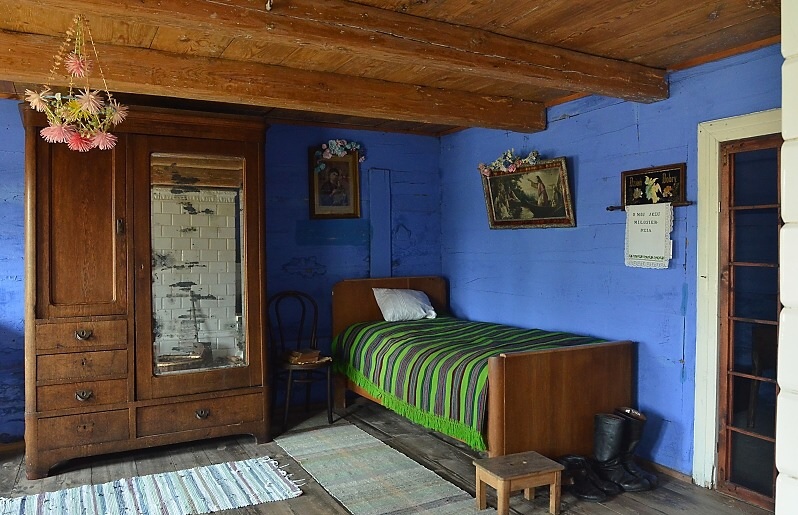
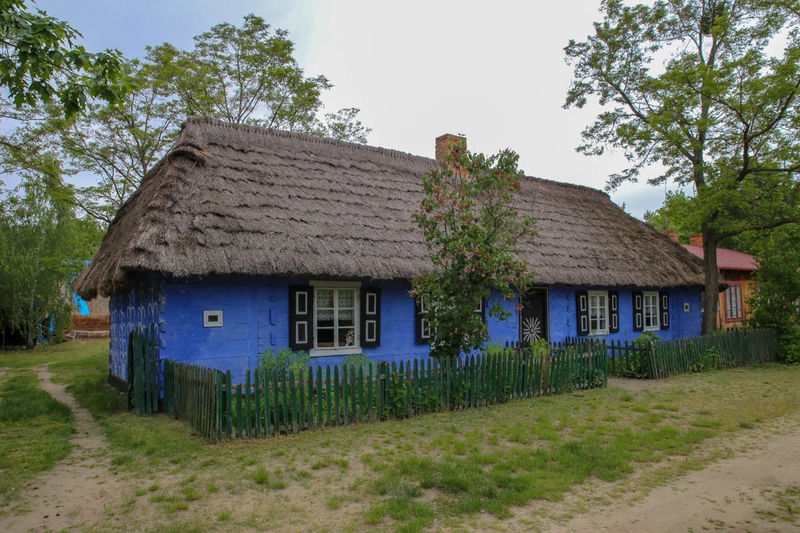
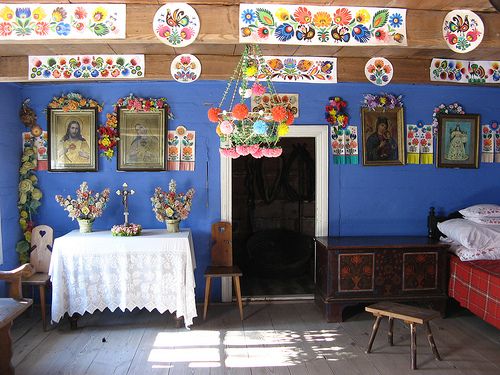
An open-air ethnographic museum in Maurzyce is situated approximately 7 km from Łowicz. It is featuring the characteristics of Łowicz village of 19th century. Discover beauty of wooden architecture of over 40 traditional buildings and houses with authentic furnished interiors and decorations. Nearby there is the first world’s welded road bridge.