

American Airborne Sector of Normandy
- Sainte-Mère-Église:
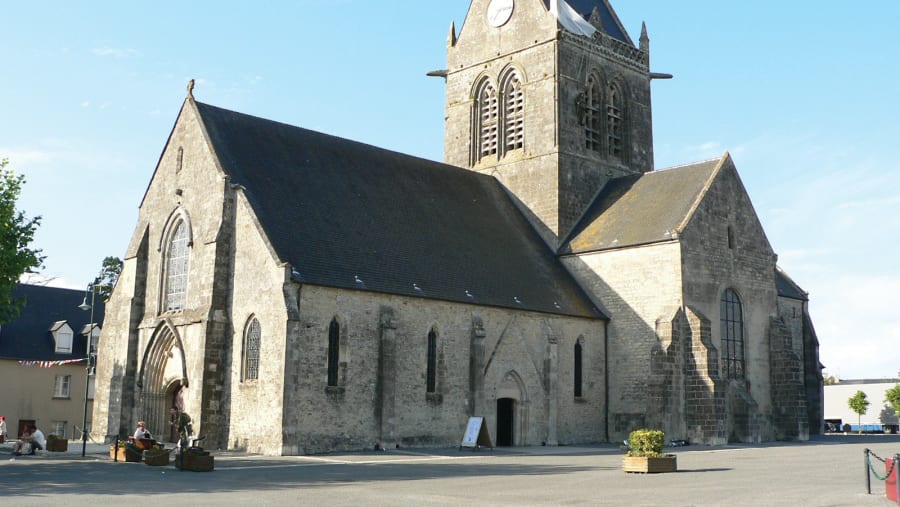
Capturing and holding the town became a major objective of the 505th Parachute Infantry Regiment, 82nd Airborne Division, on D-Day. The town, with a population of 1,200, was strategically situated on the main N13 highway to Cherbourg and only a few miles from the coast. It was a major transportation hub on the Cotentin Peninsula; no fewer than five roads ran through it, and the German telephone line along the French coast also passed through it. American planners said that whoever controlled Sainte-Mère-Église controlled the Cotentin Peninsula. Sainte-Mère-Église is considered the first town liberated by American troops in France and played an important role in the classic war movie "The Longest Day".
During a visit to the famous church and square, you will learn about the unfortunate paratroopers dropped over SME, including the famous story of John Steele, and the fierce fighting between the German garrison and the American paratroopers.
- La Fière:
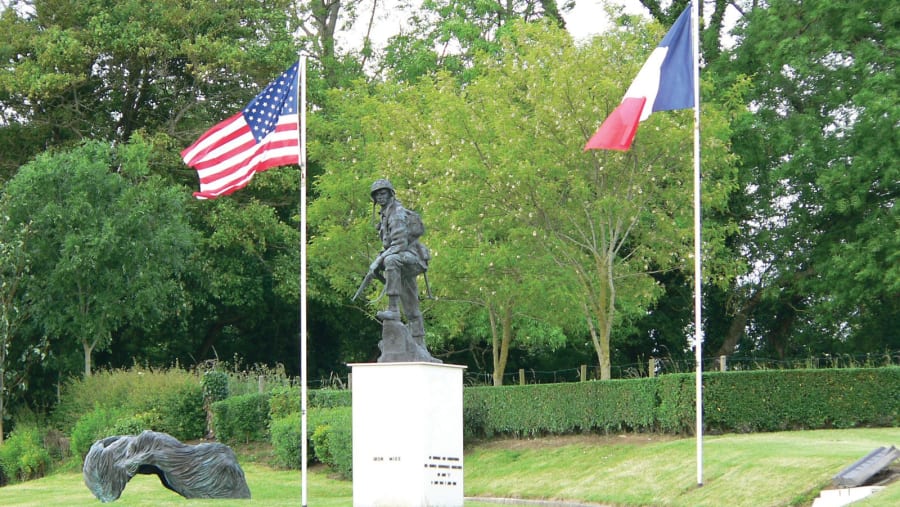
The bridge over the Merderet creek at La Fière was one of two important crossings over this small waterway that had to be taken by the 505th Parachute Infantry Regiment, along with the causeway that led through flooded terrain to the tiny hamlet of Cauquigny. This battle resulted in the award of a Medal of Honor, one of two Medals of Honor awarded to the 82nd Airborne Division in Normandy.
From our vantage point next to the famous Iron Mike monument, you will have an outstanding view of the battlefield as you hear about the three-day battle that earned its place in the historiography of the Battle of Normandy.
- Cauquigny and Medal of Honor recipient Charles DeGlopper:
Cauquigny, a small hamlet at the western end of the La Fière causeway, was the scene of fierce battles during the struggle for La Fière.
We will visit the church of Cauquigny to see the stained-glass windows commemorating the battle and pay tribute to Private Charles DeGlopper, who was posthumously awarded the Medal of Honor for his heroic self-sacrifice in saving the lives of his comrades.
- Bocage - Hedgerow Country:
The Normandy hedgerow landscape, called Bocage, was particularly prevalent in the American sectors and made the advance against the German defenders very difficult and costly.
You will see typical examples of the Norman Bocage hedgerows and hear how the Germans turned many of these hedgerows into formidable defences, as well as what solutions the Americans developed to overcome them.
- Sainte-Marie-du-Mont:
The unusually shaped bell tower of the beautiful church in Sainte-Marie-du-Mont served as a landmark for many paratroopers on D-Day. However, it was also used by the Germans as an observation post with a clear view of Utah Beach and the landing of the US 4th Infantry Division.
During a brief stop at the church square, you will hear about the fierce fighting in this small rural town, which was finally liberated on the morning of June 6, 1944.
- Brécourt Manor:
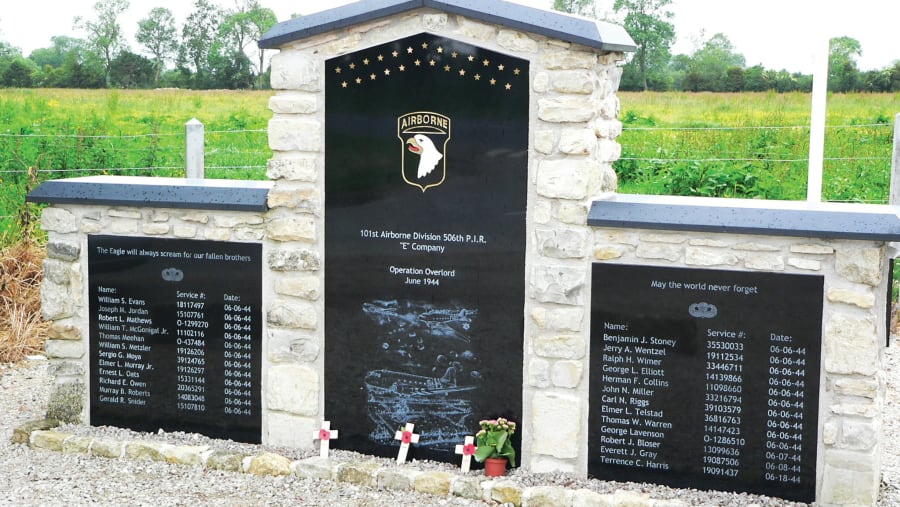
At Brécourt Manor, the famous attack by a small group of men from Easy Company, 505th Parachute Infantry Regiment, led by 1st Lieutenant Richard Winters, resulted in the destruction of a German artillery battery shelling Utah Beach.
You will hear about Dick Winters' skillfully planned and executed attack, detailed in the television miniseries Band of Brothers, which is still presented and taught at the West Point Military Academy as an example of a successful attack by vastly outnumbered troops.
- Angoville-au-Plain:
This small hamlet was the scene of fierce combat and changed hands several times. In the church of Angoville-au-Plain, one of the greatest legends of the Battle of Normandy was born.
Hear the remarkable story of two brave and committed American medics of the 101st Airborne Division who saved the lives of many of their American comrades, but also treated Germans and a 13-year-old French boy. We will visit the church to see the beautiful stained-glass windows and the traces of the battle still visible inside.
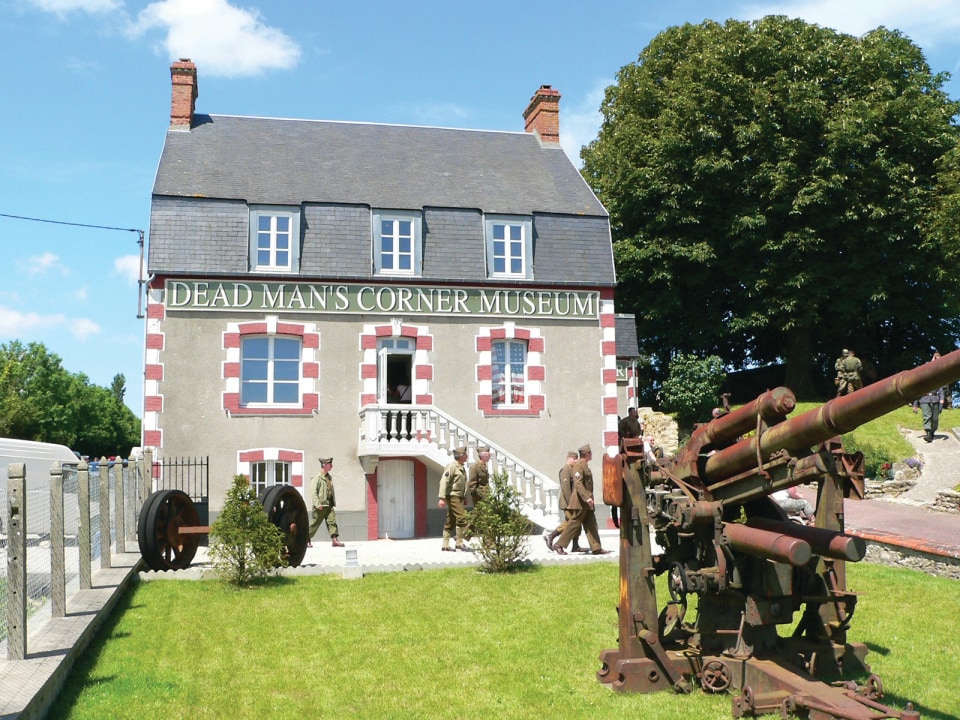
- Dead Man's Corner - Carentan Causeway:
Here, a two-story building was turned into an advanced command post and aid station of the German Fallschirmjäger-Regiment 6 (6th Parachute Regiment) on D-Day and, after its capture, was taken over by American paratroopers. From here, the men of the 502nd Parachute Infantry Regiment, 101st Airborne Division, attempted to capture the strategically important town of Carentan, but suffered enormous casualties on the causeway until they finally succeeded.
Hear the story of Dead Man's Corner, Purple Heart Lane, the bayonet charge, and the costly fighting that ultimately led to the capture of Carentan.