
Archaeological zone of Cacaxtla
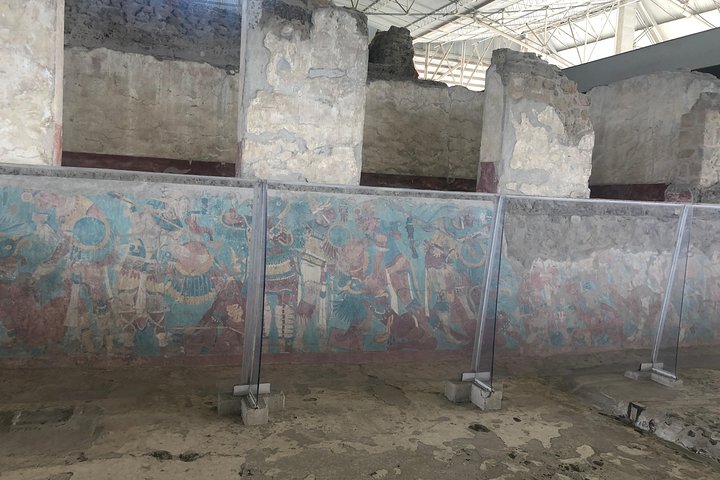
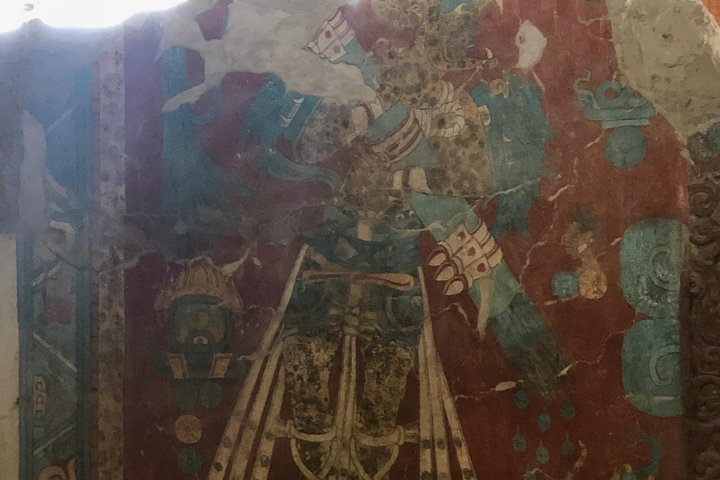
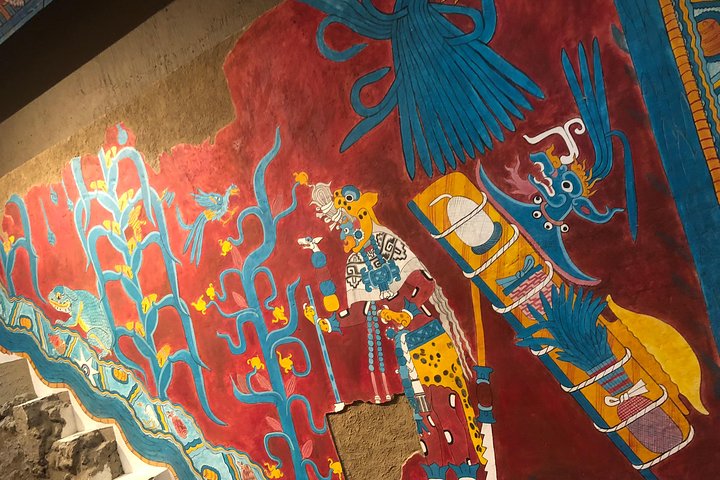
Cacaxtla is an archaeological zone in the south of the State of Tlaxcala, Mexico, with coordinates 19 ° 14′40 N 98 ° 20′23 W, in the municipality of Natívitas; its name comes from the Nahuatl word cacaxtli or cacaxtle, which refers to the travel baskets used by merchants to transport their merchandise. The site stands out for the good condition in which its murals have been preserved. The Cacaxtla murals were made with locally sourced minerals, lime for white, charcoal for black, hematite for red, and goethite for yellow. Blue is Mayan blue, a clay called paligorskite, stained with indigo ”. The basic colors used in the mural were white, black, red, brown, yellow and blue; and there are also elements in green, pink and three shades of blue, as well as “mixtures of red and black pigments to achieve skin tones of the characters that appear in the murals.
It is believed that Cacaxtla was the capital of the Olmec-Xicallanca people (the Olmec Xicallancas belief comes from historical sources but there is no archaeological trace of this group or the origin) which suggests that Cacaxtla could exist from the first settlers, possibly descendants of the Olmecs or of the Mayans who came to the central region of Mexico from the coast of the Gulf of Mexico or the Yucatan Peninsula around the year 400.
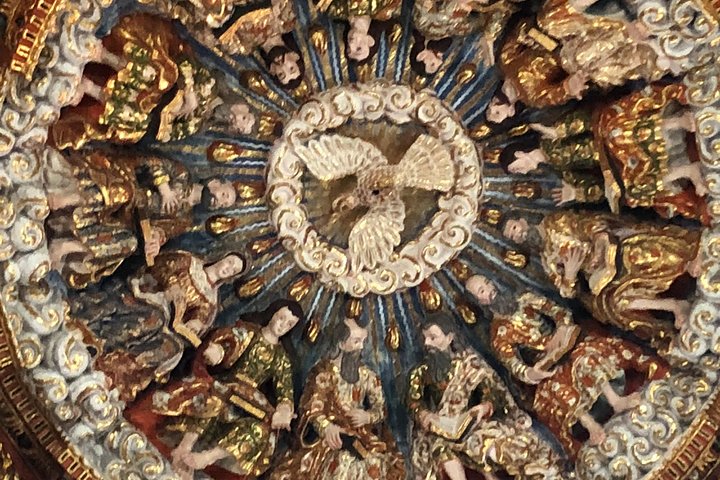
Basilica of Ocotlan
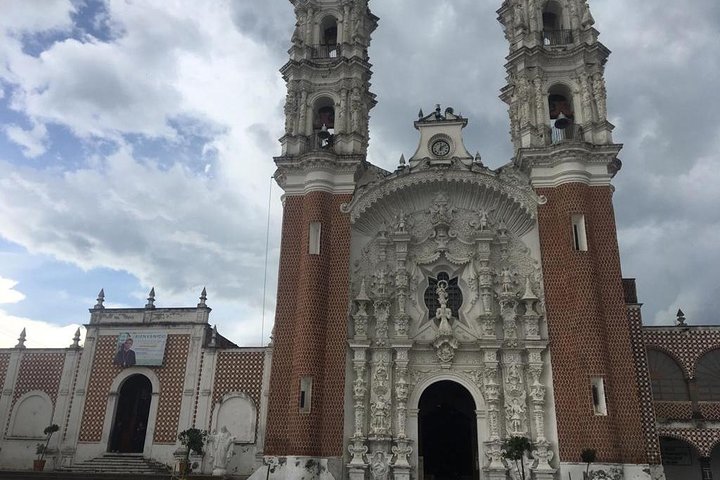
The sanctuary and basilica of Ocotlán is a religious architectural complex of Mexico that is located in the town of Ocotlán, in the municipality of Tlaxcala, located on a hill just one kilometer from the City of Tlaxcala, capital of the homonymous state of Tlaxcala. According to tradition, the town of Ocotlán tells that in the spring of 1541 a young indigenous man named Juan Diego was climbing the western slope of the San Lorenzo hill and entered the ocotes forest that at that time existed along to a ravine. There a woman met him who greeted him and asked Where are you going? It is said that the young indigenous man replied that she was going to get water for her plague patients that at that time invaded the indigenous Tlaxcalans, injuring them to death. According to the same tradition, that mysterious woman was the Virgin Mary; she herself who led him to meet healing waters in a ravine on the slope of the hill next to a ravine. Thus, the young indigenous man brought water for his sick near death who were cured immediately and reported his meeting with Zoapilzin (woman) as well as his words to warn religious of the place and time that in the place of the meeting they would find an image of she which should be placed in the chapel of San Lorenzo.
Downtown Tlaxcala
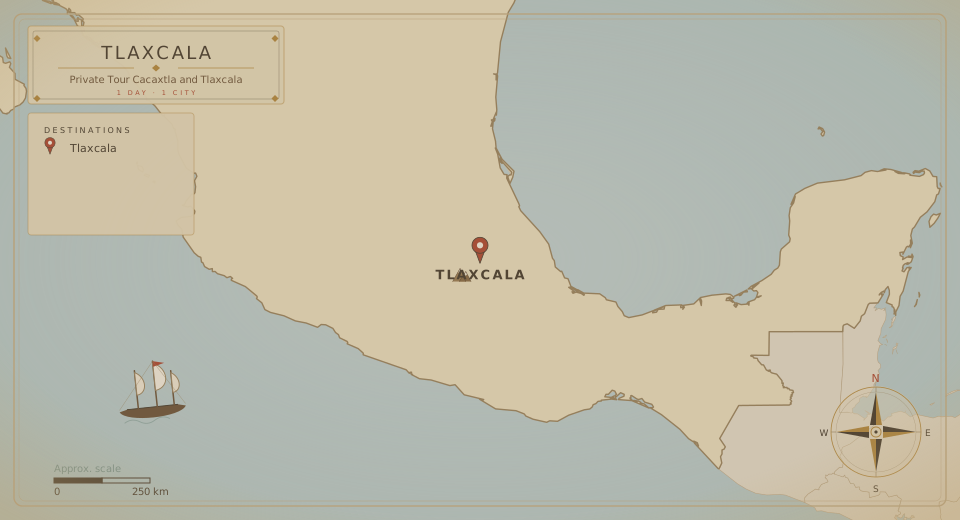
Tlaxcala, officially called the Free and Sovereign State of Tlaxcala, is one of the thirty-one states that, together with Mexico City, make up Mexico, its capital being Tlaxcala de Xicohténcatl. It is located in the eastern region of the country, bordering to the north with Hidalgo, to the north, east and south with Puebla and to the west with the State of Mexico.
It was founded on December 9, 1856. It is internally divided into 60 municipalities. The ancient Tlaxcalans allied with the Spanish to defeat the Mexica, after years of domination by them, so this alliance allowed them to remain almost intact during the 300-year colonial period. It was recognized as a federal territory of Mexico in the Constitution of 1824, under the government of Puebla. In 1857 it became the twenty-second state of the republic. Its territorial administration also changed from municipalities to parties, districts, and again to municipalities.17 18 Between August and October 1995, sixteen new municipalities were created.
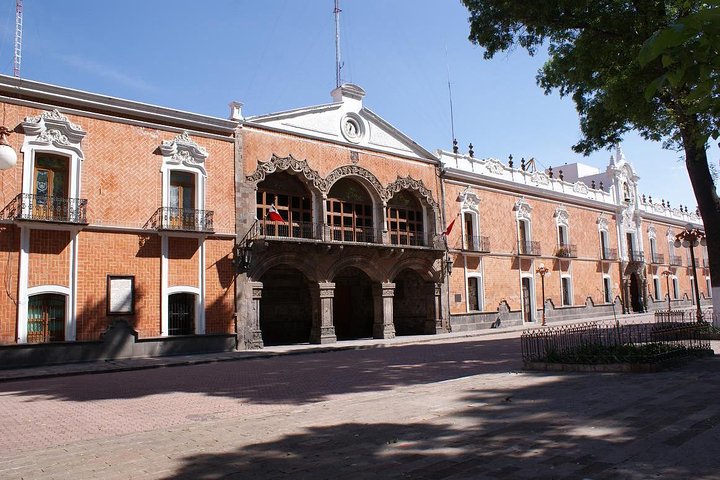
Murals of the Government Palace
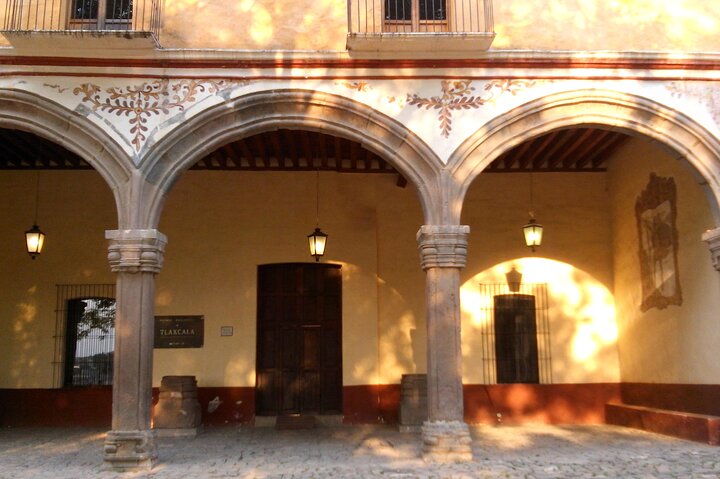
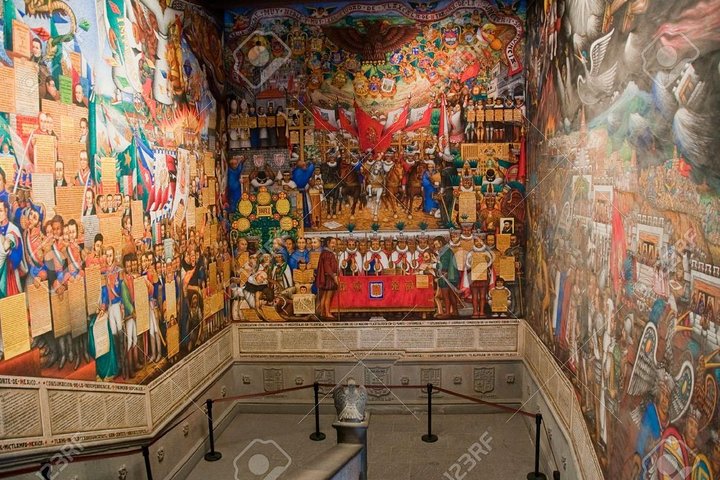
The Government Palace of the state of Tlaxcala was built in 1545; It was the residence of Luis de Moscoso, Corregidor of the Province of Tlaxcala. The original building, has been identified as a sample of Portuguese Mudejar, suffered significant damage in the 1711 earthquake and had to be rebuilt. Inside, the ground floor has lowered arches, on columns both in carved stone; the walls of the arcade and the staircase are covered with fresco murals by the Tlaxcala painter Desiderio Hernández Xochitiotzin, which represent fundamental scenes of Tlaxcalteca history. It was the house of Hernán Cortés, its construction began in 1545 and has housed the Mayor's Office , the Alhóndiga and the Royal Houses.
Constant interventions have resulted in the Tlaxcalans feeling proud to show it off, to their own and strangers.
Details of its construction are lost in the mists of time, however it is established that it was undertaken by the oidor Santillán, it has always been the place where power, government and the site from where the progress of Tlaxcala has been forged. .
When Hernán Cortés glimpsed what was the city of Tlaxcallan, he was impressed by the whiteness of his buildings, he decided to establish his apartments in the nascent city of Tlaxcala, it was the year 1520.
Former convent
The first Plaza de Toros in America
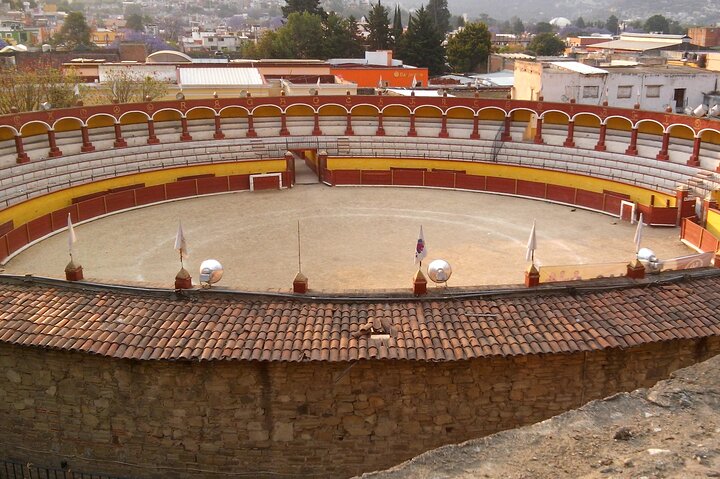
The Tlaxcala Bullring Jorge «El Ranchero» Aguilar or simply Tlaxcala Bullring is a Mexican bullring that is located in the historic center of Tlaxcala, Tlax., On Calle Independencia, Centro Histórico, a few steps from its inseparable companion from the 16th century, the bell tower of the former Franciscan convent.
It dates from the 18th century and is the oldest ring still in use in America, as well as being one of the most beautiful.
Formerly it was called the Tlaxcala Bullring or La tacita de plata for its size and beauty. In November 1981 he received the name of Jorge “El Ranchero” Aguilar, a great idol of the Tlaxcala bullfighting.
The first bullfight in Tlaxcala was held in the 1930s to commemorate the victory of the Spanish over the Moors in the reconquest of Oran and Mazalquivir (North Africa, Algeria).
In 1732 a castle in imitation of that of Almaraz was formed in the main square of Tlaxcala to stage the combat between Moors and Christians. The celebration ended with bullfights, probably in the same place where this square is currently located.