Tanzania · Trekking

7-Day Kilimanjaro Rongai Route Trek to Uhuru Peak at Sunrise

7 Days Round trip from Kilimanjaro Airport Rd Moderate pace

The journey

Trip highlights
  • 01 Conquer Uhuru Peak, Africa's highest point, on a pre-dawn summit ascent
  • 02 Trek the scenic Rongai Route through forest, moorland, and alpine desert
  • 03 Take in expansive views over the Kenyan plains and the Eastern Icefields
  • 04 Camp beneath starry skies in remote mountain wilderness
  • 05 See Kilimanjaro's diverse flora and fauna, including Colobus monkeys and giant senecios

Embark on a thrilling Kilimanjaro trek via the Rongai Route, approaching Africa's highest mountain through scenic forest, moorland, and alpine desert landscapes. Along the way, enjoy expansive views over the Kenyan plains, camp beneath starry skies, and pass diverse flora and fauna as you ascend toward the summit. The climb culminates in a demanding pre-dawn push to Uhuru Peak, with spectacular sunrise views over Mawenzi and the summit glaciers and ice cliffs. This route also includes valuable acclimatization time before the final ascent.

Embark on a thrilling Kilimanjaro trek via the Rongai Route, approaching Africa's highest mountain through scenic forest, moorland, and alpine desert landscapes.

From the itinerary

At a glance

What this trip includes

Duration 7 Days
Tour type Shared
Activity level Moderate
Accommodation Included · Budget
Transport Included
Wheelchair access Not applicable
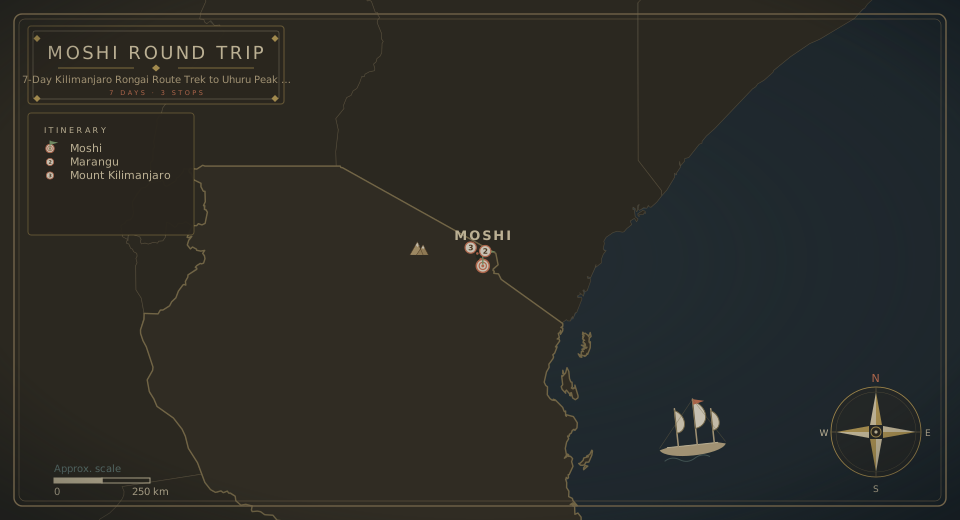
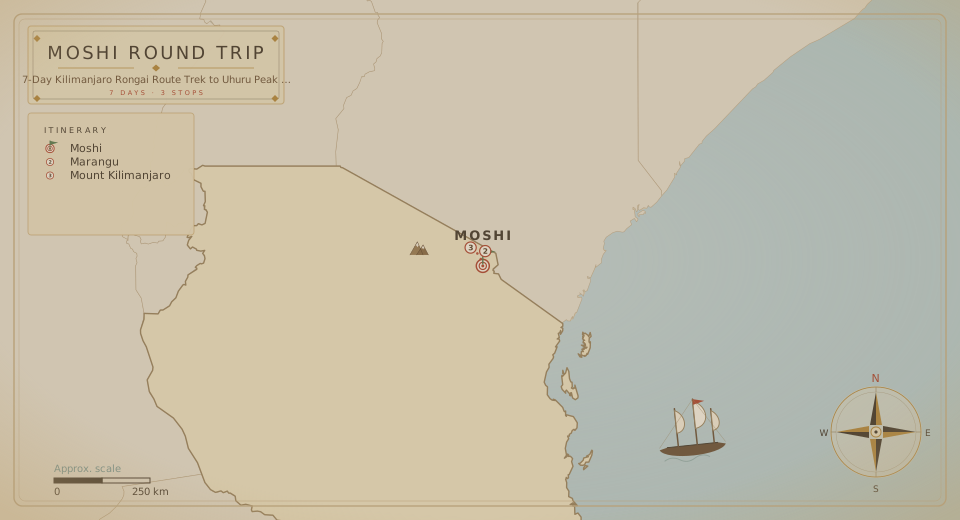
Cities Moshi, Mount Kilimanjaro, Marangu
Languages English

Day by day

The itinerary

1
Day 01

Arrival in Moshi and Climb Briefing

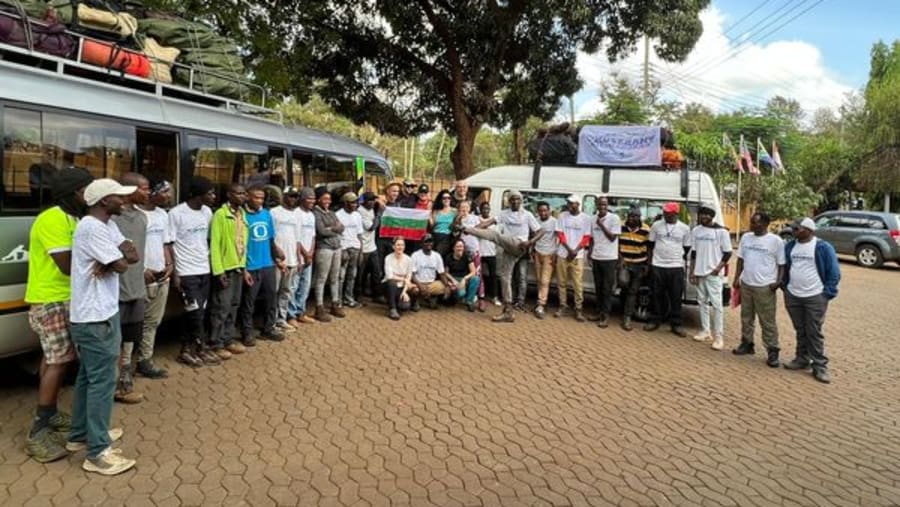
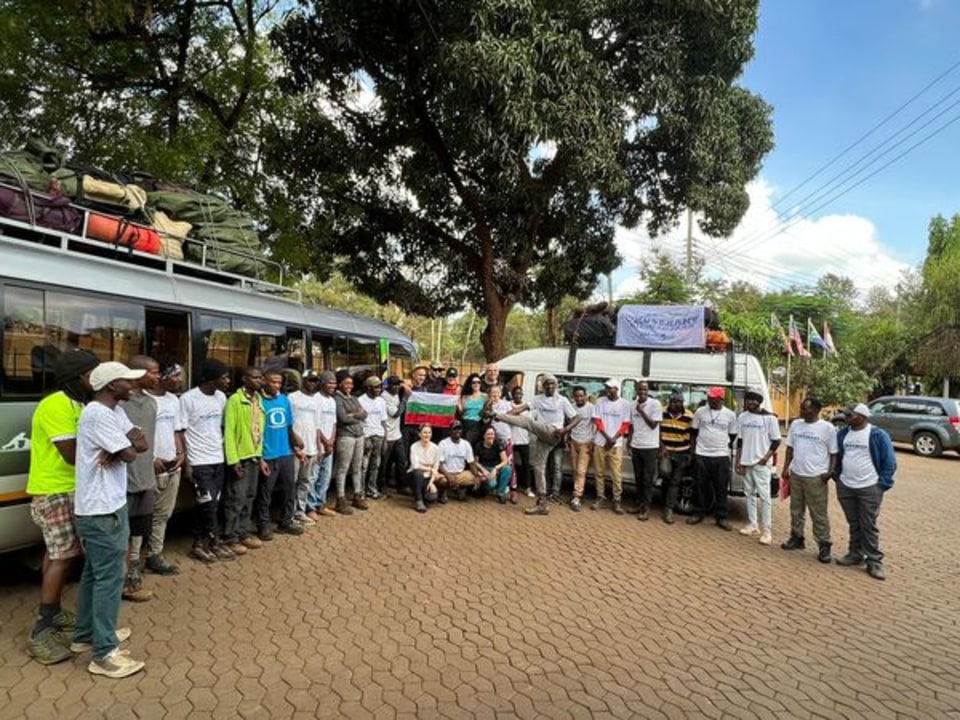
Arrive at Kilimanjaro International Airport, where you will be met by an Exuberant Kilimanjaro Safaris representative and transferred to your hotel in Moshi. In the evening, attend a hotel briefing to prepare for the climb ahead, followed by a group dinner - a great opportunity for everyone to get to know each other before the trek.
2
Day 02

Rongai Gate to Rongai Cave Camp

We drive to Marangu to complete the necessary registration formalities before continuing to Rongai. The climb begins from Nale Moru (6,400 ft) on a small path that winds through fields of maize and potatoes before entering a pine forest.

The trail then climbs consistently but gently through an attractive forest that shelters various wildlife, including the Colobus monkey. These monkeys are black with a long 'cape' of white hair and a flowing white tail.

The forest begins to thin out at the edge of the moorland zone. We then take in expansive views over the Kenyan plains as we arrive at our first campsite at Rongai One (8,500 ft). Dinner and overnight at camp. [3-4 hours walking]

3
Day 03

Second Cave and Kikelewa Caves

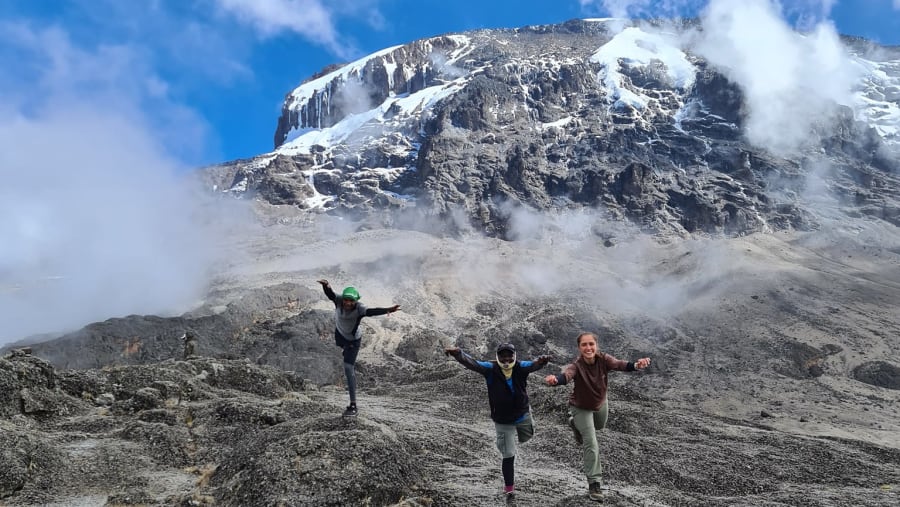
The morning walk is a steady ascent up to the Second Cave (11,300 ft), with superb views of Kibo and the Eastern Icefields on the crater rim.

After lunch, we leave the main trail and head southeast across the moorland on a smaller path toward the jagged peaks of Mawenzi. Our campsite is in a sheltered valley decorated with giant senesces near Kikelewa Caves (11,800 ft). Dinner and overnight at Rongai Two Camp. [6-7 hours walking]

4
Day 04

Climb to Mawenzi Tarn

Superb all-around views and a tangible sense of wilderness reward this short but steep climb. We leave the vegetation behind shortly before reaching the next camp at Mawenzi Tarn Hut (14,200 ft), spectacularly situated in a cirque directly beneath the towering spires of Mawenzi.

The afternoon will be free to rest or explore the surrounding area to aid acclimatization. Dinner and overnight at Kikelelwa Camp. [3-4 hours walking]

5
Day 05

Across the Saddle to Kibo Hut

We cross the lunar desert of the saddle between Mawenzi and Kibo to reach Kibo Hut (15,400 ft) at the bottom of the crater wall.

The remainder of the day is spent resting in preparation for the early morning final ascent. Dinner and overnight at Kibo Hut. [5-6 hours walking]

6
Day 06

Summit Attempt to Uhuru Peak and Descent to Horombo Hut

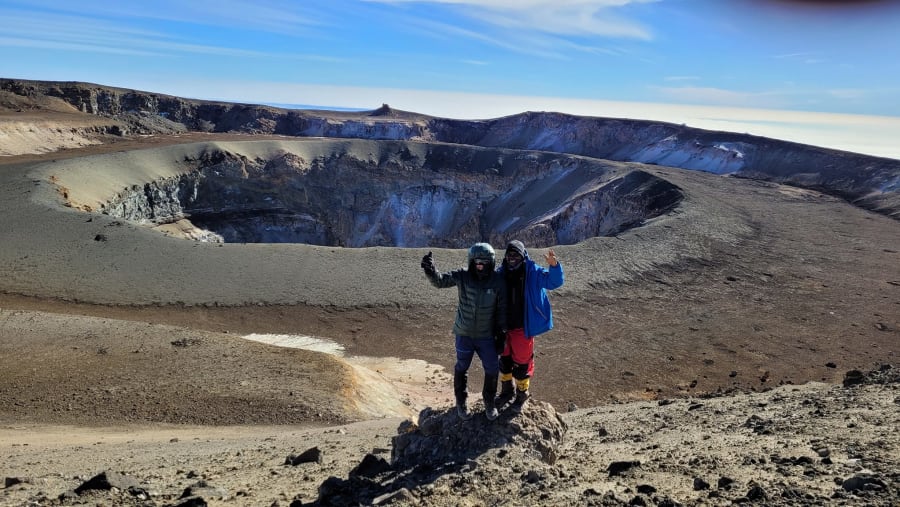
We start the final and most demanding climb by torchlight at around 1 a.m. We slowly trek in the darkness on a switchback trail through loose volcanic scree to reach the crater rim at Gillman's Point (18,600 ft).

We rest here briefly to enjoy the spectacular sunrise over Mawenzi. Those still feeling strong can make the three-hour round trip to Uhuru Peak (19,345 ft), passing close to the spectacular glaciers and ice cliffs that still occupy most of the summit area.

The descent to Kibo Hut (15,400 ft) is surprisingly fast, and after some refreshments, we continue descending to Horombo Hut for dinner and overnight (12,200 ft). [11-15 hours walking]

7
Day 07

Descent to Marangu Gate

A steady descent takes us through moorland to Mandara Huts (8,900 ft). We then continue descending through a lovely lush forest on a good path to the Kilimanjaro National Park gate at Marangu (6,000 ft), where we are transferred back to the hotel in Moshi. [5-6 hours walking]

Rongai One, Kikelewa Caves, Mawenzi Tarn Hut, Uhuru Peak

Where this trip takes you

Rongai One, Kikelewa Caves, Mawenzi Tarn Hut, Uhuru Peak

The route

Where you'll travel

Tour route map
Round trip from Kilimanjaro Airport Rd 3 cities · 7 Days

The fine print

Trip details

What's Included

  • Private transfer from/to Kilimanjaro International Airport
  • Hut or camping fees
  • All park fees
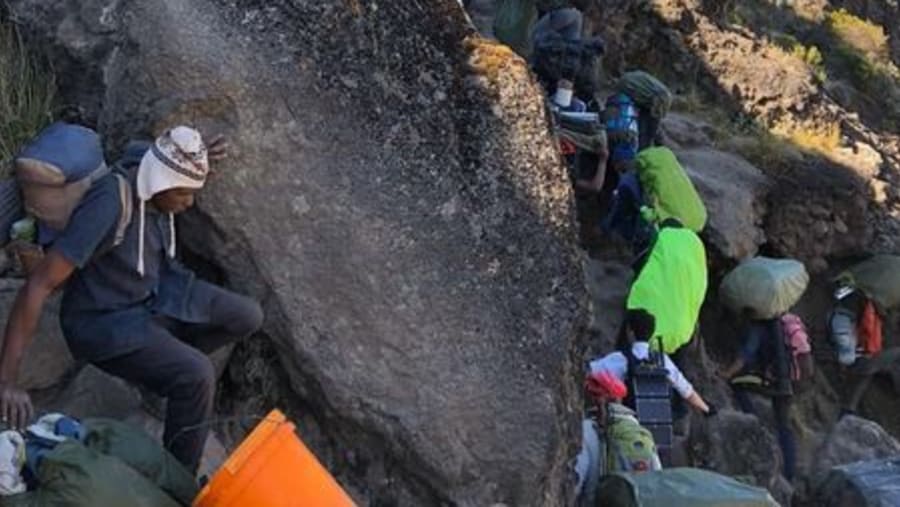
  • Salary for crew (guide, porter, and cook)
  • Rescue fee
  • Three meals per day (breakfast, lunch, dinner, and mineral water), containing an appetizer, main dish, and dessert. This is also known as a three-course meal or a standard course meal. We also provide vegetarian meals.
  • Tent, foam sleeping pads, cooking equipment, and eating utensils (Mountain Hardware tents). Climbers will sleep in state-of-the-art, four-season mountain tents during the trek.
  • Oxygen cylinder and oximeter
  • All government tax (VAT)
  • Two nights' accommodation (one night before the climb and one night after the climb) on B/B basis

What's Not Included

  • Tipping for the crew (guide, porters, and cook) is obligatory, ranging from $500 to $600, depending on the group size.
  • Equipment rental is available.
  • Lunch and dinner will be provided at the hotel.
  • Extra personal needs such as cigarettes and alcoholic drinks are not included.
  • Private toilets are provided.
  • Two nights of accommodation (one night before and one night after the climb) with bed and breakfast.
  • Additional nights of accommodation can be arranged.
  • Local flights are not included.

What to bring

  • Things to bring: Materuni Waterfalls and Coffee Farm Tour & Kikuletwa (Chemka) Hotsprings
    • Swimsuit
    • Towel
    • Sunscreen
    • Dry clothes
    • Camera
  • Personal climbing gear required:
    • Bags required:
      • 1 duffel bag or backpack to keep climbing items in (to be carried by your porter)
      • 1 day pack to keep items you will need on a day-to-day basis
      • 1 sleeping bag for extreme cold weather (-7 to -10 Celsius)
      • 1 sleeping bag liner
      • 1 over bag to keep the bag dry
      • 1 pair of walking/trekking poles
    • Toiletries required:
      • 1 toothbrush, toothpaste, razor, soap, and other personal items
      • 1 lip balm
      • 1 roll of toilet paper
      • 1 camp towel
      • 1 small mirror
      • 1 sewing kit
    • Personal snacks:
      • Biscuits, chocolate, sweets, nuts, and dried fruits
      • Glucose powder and other energy-rich packs
      • Multi-vitamins (B, C, E, iron, and zinc)
    • Clothes required:
      • 3 pairs of socks
      • 3 liner socks
      • 3 short-sleeve shirts or T-shirts (made from wicking material to keep you dry)
      • 1 pair of gaiters
      • 1 light wool/warm hat
      • 1 fleece jacket
      • 1 Gore-Tex shell jacket/windproof jacket
      • 1 pair of fleece or leather gloves
      • 1 pair of Gore-Tex mitten shell/gloves
      • 1 heavy trekking pants
      • 1 balaclava
      • 1 scarf
      • 1 sun hat with a wide brim for sun protection
      • 1 pair of tennis shoes/trainers to wear in camp
      • 1 pair of mountaineering boots - please break your shoes in well before you come to Kilimanjaro
      • 1 waterproof jacket (with a hood or rain hat) and trousers
      • 2 quick-dry pants (preferably with zipper legs)
      • 2 long-sleeved quick-dry shirts
  • The items can also be rented, as it is not possible to buy mountain equipment and gear in Moshi/Kilimanjaro.
  • Optional equipment:
    • Portable toilet: Our toilets are essential due to the horrendous and overcrowded public long-drop toilets on Kilimanjaro. Our porters empty the holding tanks at the nearest public toilets at every camp. Please note that at Crater Camp, there are no public toilets, so we use Clean-Waste toilet kits to bag the waste and carry it down.
    • Portable shower: Showers are optional. We generally set up showers at the halfway camp on the way to the summit and at Mweka Camp after you reach the summit. Warm water bowls are provided by all outfitters for washing. The same amount of water can be used in a sunshower for a refreshing rinse. Showers can help prevent painful chafing caused by perspiration.
    • Gamow-bags: Available for sleeping in the Crater. If you overnight in the Crater on Kilimanjaro, evacuations can be be challenging. A Gamow bag can stabilize you by simulating a lower elevation, buying time for evacuation over Stella Point to safety.
    • Automated External Defibrillator (AED): Offered as an upgrade option. Note that AEDs are unproven at high altitude in cold/wet weather and may malfunction. Immediate CPR remains the most important life-saving technique. An AED shock is a last-ditch attempt if CPR fails.
  • Please let us know if you require any further assistance.

Know before you go

  • Climbing Kilimanjaro is a challenging endeavor that requires physical fitness and mental determination, but no technical skills or special equipment.
  • The weather on Mount Kilimanjaro varies from hot to bitter cold, and climbers pass through several distinct climate zones during the ascent.
  • Moshi, the gateway town to Kilimanjaro, experiences warm temperatures in January and February, heavy rainfall in April and May, cool temperatures in June and July, and dry conditions in August and September.
  • Mount Kilimanjaro's temperatures are primarily influenced by altitude and time of day, rather than seasonal changes.
  • The average temperature at the base of the mountain is around 70 to 80 degrees Fahrenheit (21 to 27 degrees Celsius), while at the summit, Uhuru Point, night temperatures can range from 20 to -20 degrees Fahrenheit (-7 to -29 degrees Celsius).
  • Mount Kilimanjaro has five ecological zones: bushland/cultivated zone, rainforest zone, heath/moorland zone, alpine desert zone, and arctic zone.
  • Each zone is characterized by specific altitude ranges, precipitation levels, and flora/fauna adaptations.
  • Moshi is located in the bushland/cultivated zone, which features fertile volcanic soil, agricultural activities, and limited wildlife.
  • The rainforest zone experiences high rainfall, high humidity, and dense forest vegetation, offering opportunities to observe diverse flora and fauna.
  • The heath/moorland zone is characterized by heath-like vegetation, wildflowers, and the presence of unique Senecios and Giant Lobelias.
  • The alpine desert zone has minimal vegetation and extreme temperature fluctuations, with hot days and freezing nights.
  • The arctic zone at the summit is characterized by ice, rock, and harsh weather conditions, with virtually no plant or animal life.
  • Climbers should be prepared for a wide range of weather conditions, including rain, wind, cold temperatures, and strong sun exposure.
  • The gear required for a day pack on Kilimanjaro includes clothing layers for variable weather, waterproof jacket and pants, personal first aid kit, hand sanitiser, sunscreen, sunglasses, hiking poles, hat, scarf or bandanna, camera or electronic devices, hydration system, passport and credit card in a waterproof container, personal snacks, and clean socks for the summit attempt.
  • Efficient packing involves using plastic bags, dry bags, or stuff sacks to organize and separate items, placing heavier items close to the midpoint of the backpack, tightening compression straps, and maintaining consistency in item placement for easy access.
  • The remaining gear is packed in a duffel bag, which is carried by porters between campsites. The weight limit for the duffel bag is 15 kilograms, and it is recommended to use plastic bags or dry bags to separate and waterproof the gear.

Logistics

Meeting & route

Meeting point
Kilimanjaro Airport Rd, Tanzania
Tour start
Kilimanjaro Airport Rd, Tanzania
Tour ends at the same location as the start point.
End of the journey

Your 7 days finish where they began, in Kilimanjaro Airport Rd.

Watch the tourHQ film Watch the film

Create your own adventure

Can't find the perfect tour? Tailor your dream trip.

  • Tell us your destination, dates and group size.
  • Our travel experts and local guides design a tailored itinerary, just for you.
  • Enjoy your trip with peace of mind, knowing everything is taken care of.
Plan my holiday

Say goodbye to travel stress.

Starting from

USD 2,532.80 /person
Book This Tour

When

Travellers

Total