Tanzania · Trekking

7-Day Mount Kilimanjaro Trek via Rongai Route to Uhuru Peak

7 Days Round trip from Marangu Gate Moderate pace

The journey

Trip highlights
  • 01 Take on the challenge of trekking Mt. Kilimanjaro, the highest peak in Africa
  • 02 Spot black and white colobus monkeys along the Rongai trail
  • 03 Experience the dramatic beauty of Kilimanjaro's Alpine Desert zone
  • 04 Enjoy a beautiful sunrise from Gilman's Point
  • 05 Reach Uhuru Peak, the highest point on Mount Kilimanjaro and in Africa

Embark on this fun and exciting journey to trek the highest mountain in Africa, Mt. Kilimanjaro, from Moshi via the Rongai Route. Starting at Rongai Gate, you will pass Second Cave, Kikelelwa Cave, and Mawenzi Tarn before reaching Uhuru Peak, the highest point on the continent. Along the way, experience the changing landscapes of rainforest, heath, and Alpine Desert, with the chance to spot black and white colobus monkeys on the trail. The trek's unforgettable highlight is a beautiful sunrise from Gilman's Point before your final push to the summit.

The trek's unforgettable highlight is a beautiful sunrise from Gilman's Point before your final push to the summit.

From the itinerary

At a glance

What this trip includes

Duration 7 Days
Tour type Private
Activity level Moderate
Accommodation Included · Standard
Transport Included
Wheelchair access No
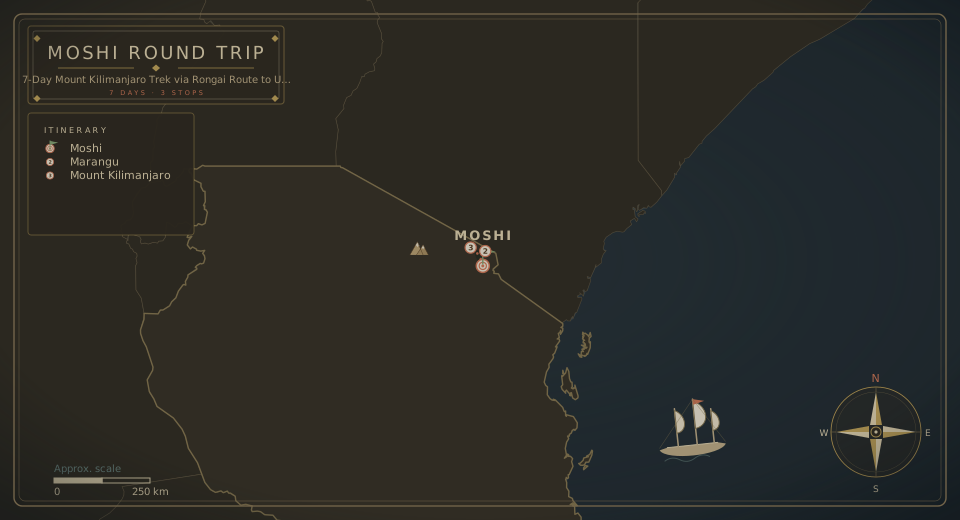
Cities Moshi, Mount Kilimanjaro, Marangu
Languages English

Day by day

The itinerary

1
Day 01

Rongai Gate to Simba Camp Through Rainforest

  • Meet your tour guide and drive from Moshi to Marangu Gate for permits before taking a short transfer to the Rongai Gate trailhead. The path winds through corn and potato fields and then climbs gently through the forest, which is home to a variety of wildlife, including the black and white colobus monkey.

Elevation: 6,398 ft to 9,300 ft
Distance: 8 km/5 miles
Hiking time: 3-4 hours
Habitat: Rainforest
2
Day 02

Second Cave and Kikelelwa Camp Trek

  • Begin this morning with a steady incline up to Second Cave.
  • Continue trekking through the moorland, leaving the main trail for a smaller path towards the jagged peaks of Mawenzi before finally arriving at Kikelelwa Cave for the night.

Elevation: 9,300 ft to 11,300 ft to 11,811 ft
Distance: 12 km/8 miles
Hiking time: 8-9 hours
Habitat: Heath

3
Day 03

Climb to Mawenzi Tarn

  • Take today's hike, which is short and steep up a grassy slope. Views of the wilderness area are stunning. The landscape changes dramatically as you exit the heath zone and emerge into the Alpine Desert zone. Your camp is situated beneath the jagged spires of Mawenzi, at Mawenzi Tarn.
  • Spend the remaining day relaxing or exploring the area.

Elevation: 11,811 ft to 14,160 ft
Distance: 5 km/3 miles
Hiking time: 3-4 hours
Habitat: Alpine Desert

4
Day 04

Acclimatization Hike on Mawenzi Ridge

  • Spend the extra day meant for acclimatization or hiking on Mawenzi Ridge. The unique landscape offers motivating views of Kibo and Mawenzi. After spending some time exploring the area, head back to Mawenzi Tarn for camp.

Elevation (ft): 14,160 ft -14,400 ft
Distance: 2 km/1 mile
Hiking time: 2 hours
Habitat: Alpine Desert

5
Day 05

Cross the Saddle to Kibo Hut

  • Climb gradually, then cross the lunar desert of the "Saddle" between Mawenzi and Kibo. Your camp, Kibo Hut, sits at the bottom of the Kibo crater wall.
  • Rest, enjoy the surroundings, and have an early dinner to prepare for summit day.

Elevation (ft): 14,160 ft to 15,430 ft
Distance: 8 km/5 miles
Hiking time: 5-6 hours
Habitat: Alpine Desert

6
Day 06

Summit Uhuru Peak and Descend to Horombo Hut

  • Begin your push to the summit early in the morning at midnight. This is the most mentally and physically challenging portion of the trek. The wind and cold at this elevation and time of day can be extreme.
  • Ascend in the darkness for several hours while taking frequent but short breaks. At Gilman's Point (18,600 ft), you will be rewarded with the most magnificent sunrise you are ever likely to see coming over Mawenzi Peak.
  • Arrive at Uhuru Peak, the highest point on Mount Kilimanjaro and the continent of Africa.
  • Spend a few moments taking in the plains of Africa and your accomplishment, and then descend to Horombo Hut. Later in the evening, enjoy your last dinner on the mountain and a well-earned sleep.

Elevation (ft): 15,430 ft to 19,341 ft
Distance: 19 km
Hiking time: 9-10 hours
Habitat: Arctic

7
Day 07

Descend to Marangu Gate

  • Go for a long trek, mostly downhill, through the tropical rainforest. Once at the park headquarters at Marangu Gate, collect your summit certificates. A vehicle will meet you here and drive you back to the hotel in Moshi.

Elevation (ft): 12,205 ft to 6,046 ft
Distance: 20 km/12 miles
Hiking time: 5-7 hours

Habitat: Rainforest

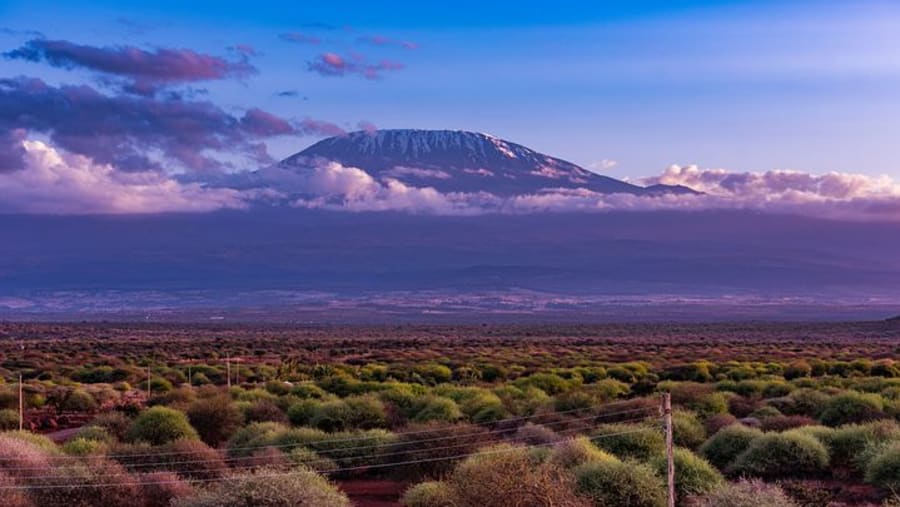
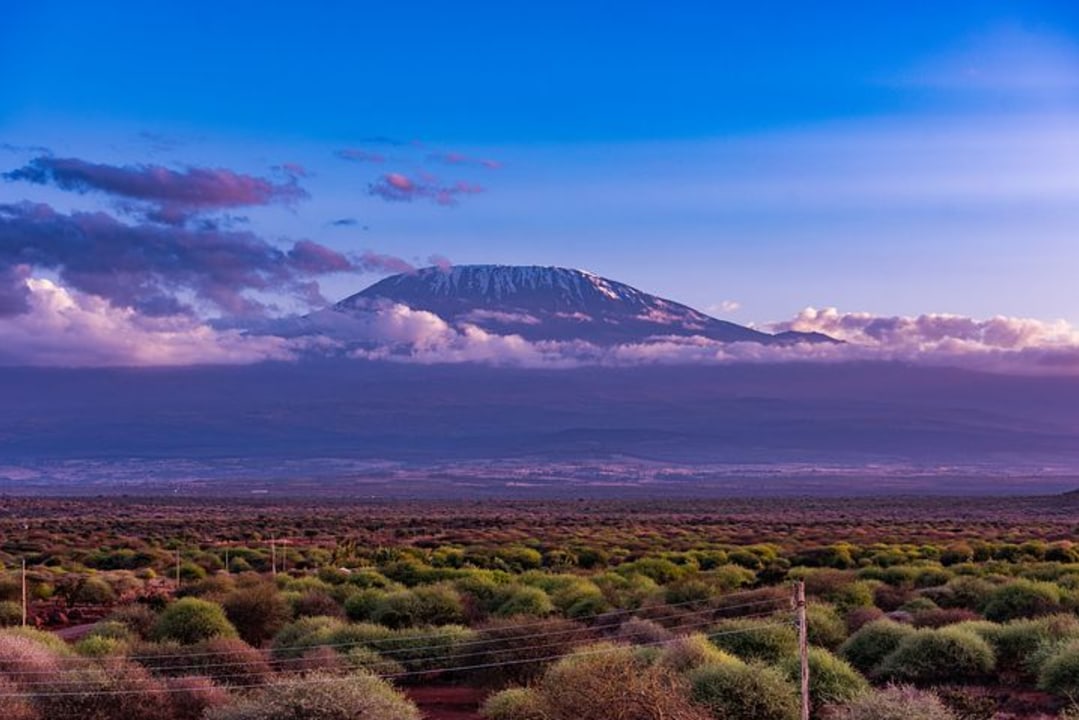
Rongai Gate rainforest, Mawenzi Tarn beneath jagged spires, Gilman's Point sunrise, Uhuru Peak summit

Where this trip takes you

Rongai Gate rainforest, Mawenzi Tarn beneath jagged spires, Gilman's Point sunrise, Uhuru Peak summit

The route

Where you'll travel

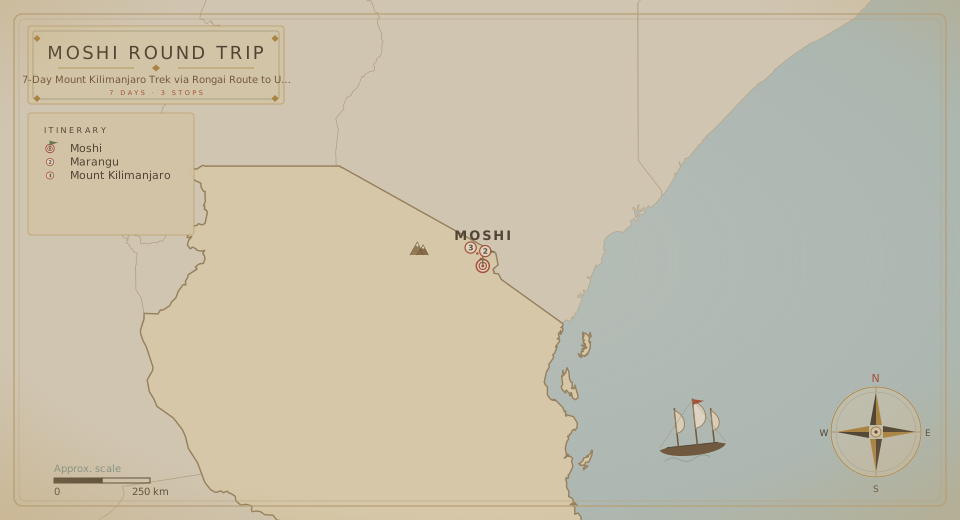
Tour route map
Round trip from Marangu Gate 3 cities · 7 Days

The fine print

Trip details

What's Included

  • Oxygen cylinder
  • Medically qualified guides
  • Twice-daily medical health check-ups, monitored with a pulse oximeter and stethoscope
  • 2 nights at a hotel in Moshi (before and after the climb)
  • Orientation meeting in Moshi and gear check as well
  • Pick-up and drop-off at the airport
  • Kilimanjaro National Park permits, camping/hut fees, and rescue fees
  • 3-4 porters per climber, including porters to carry up to 30 lbs of your personal gear
  • 4-season mountain tents, double occupancy
  • Mess tent, tables, chairs, a 2.5-inch-thick sleeping pad, and trekking poles
  • All meals while on the climb, plus evening tea with popcorn or peanuts
  • As much treated water as you can drink while climbing
  • Hot water for washing up daily

What's Not Included

  • Airfares and taxes
  • Tips for your guides, porters, and cook
  • Lunch, dinner, and drinks at the hotel
  • Health requirements (Yellow Fever - compulsory depending on how you travel to Tanzania; Meningitis and Hepatitis A are optional but recommended)
  • Personal travel insurance
  • Laundry (available at the hotel)
  • Items of a personal nature
  • Optional travel insurance
  • Personal hiking/trekking gear (some gear is available for rent)
  • Snacks and personal medicine

What to bring

  • Gears for climbing
  • Packing list of items you will be responsible for during your trip
    • Upper Body
      • 2 - Long sleeves shirts, lightweight fabric (e.g., SmartWool or moisture-wicking fabric)
      • 1 - Short sleeve shirt, lightweight fabric
      • 1 - Very light fleece/microfleece or power stretch fleece
      • 1 - Softshell jacket, heavier fleece or synthetic sweater
      • 1 - Belay jacket (preferably down)
      • 1 - Poncho (optional in case of rain)
    • Lower Body
      • 2 - Hiking pants
      • 1 - Fleece pants
      • 1 - Waterproof pants
      • 2 - Long underwear, lightweight fabric (e.g., SmartWool or moisture-wicking fabric)
      • (Underwear and bras as needed)
    • Hands
      • 1 - Lightweight or soft shell pair of gloves
      • 1 - Thick pair of waterproof gloves, preferably with Gore-Tex
      • 1 - Thick pair of mittens (optional for those whose hands get really cold)
    • Feet
      • 1 - Hiking boots, insulated and waterproof
      • 1 - Tennis or sports shoes to wear at camp
      • 3 - Hiking socks, preferably wool
      • 3 - Lightweight sock liners
      • 1 - Gaiters (optional but recommended)
    • Headwear
      • 1 - Sun hat (wide-brimmed)
      • 1 - Lightweight wool liner hat (optional)
      • 1 - Thick wool or fleece hat
      • 1 - Balaclava or ski mask
    • Accessories and Toiletries
    • Sunglasses
    • 32 oz water bottle (recommend 1 or 2 Nalgene bottles)
    • Water bladder for your backpack, at least 2 litres
    • Camping towel, microfiber or lightweight
    • Stuff bags or plastic bags to help organise your clothes and keep things dry
    • Sunscreen
    • Lip balm
    • Hand sanitiser and/or wet wipes
    • Toilet paper
    • Hiker's first-aid kit
    • Prescription medication
    • Extra contacts (if you wear them, or an extra pair of glasses)
    • Camera
    • Extra batteries for electronics you bring with you
    • Snacks such as energy bars (1 to 2 per day)
    • Equipment (we can arrange to hire any of these also in Moshi)
    • Sleeping bag
    • Sleeping bag liner
    • Trekking poles
    • Waterproof duffle bag (this is the bag with the majority of your belongings that the porters will carry while you hike)
    • Day pack (this is the bag you will carry for the day's hike)

Know before you go

  • The Rongai route is the only route that approaches Kilimanjaro from the north, close to the Kenyan border. Though gaining popularity amongst climbers, this route still experiences low crowds. Rongai has a more gradual slope than the mountain's other routes. It is the preferred route for those looking for an alternative to the popular Marangu route, for those who would like a more remote hike, and for those who are climbing during the rainy season, as the north side receives less precipitation. Rongai is a moderately difficult route and is highly recommended, especially for those with less backpacking experience.

Logistics

Meeting & route

Meeting point
Moshi, Tanzania
Tour start
Marangu Gate, Marangu, Tanzania
Tour ends at the same location as the start point.
End of the journey

Your 7 days finish where they began, in Marangu Gate.

Watch the tourHQ film Watch the film

Create your own adventure

Can't find the perfect tour? Tailor your dream trip.

  • Tell us your destination, dates and group size.
  • Our travel experts and local guides design a tailored itinerary, just for you.
  • Enjoy your trip with peace of mind, knowing everything is taken care of.
Plan my holiday

Say goodbye to travel stress.

Starting from

USD 2,050 /person
Book This Tour

When

Travellers

Total