

18-Day Mustang Tiji Festival Trek from Kathmandu
Highlights
Kathmandu, Pokhara
nature, trekking, cultural
Group Tour
18 Days
Medium
English
Description
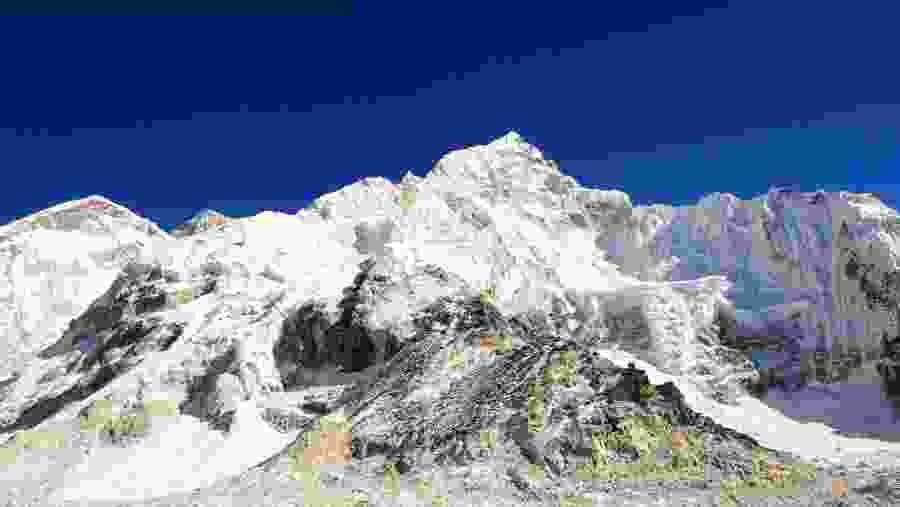
Embark on this Mustang Tiji Festival Trek, which takes you on a 3-day annual Tiji festival in Upper Mustang, a secluded Himalayan kingdom. The excursion brings you through a barren desert landscape inhabited by Thakalai and Tibetan Buddhist ethnic tribes, each with their own Buddhist culture and traditions. You will see panoramic views of Nepal’s biggest mountains, such as Dhaulagiri, Annapurna, and Nilgiri.
Itinerary
-
Day 1- Arrival in Kathmandu (1,400m/4,592ft)
- A representative will meet you at Tribhuvan International Airport and drive you to your accommodation.
-
Day 2- Kathmandu: Sightseeing and trek Preparation
- Tour the world heritage sites of Durbar Square, Pashupatinath Temple, Swayambhunath Stupa, and Bouddhanath Stupa. The Durbar Square provides insight into the perceptions of ancient royals. For all Hindus, Pashupatinath Temple is one of the most important pilgrimage sites. The Monkey Temple is also known as Swayambhunath, and the Bouddhanath Stupa is one of the world's biggest stupas.
- Later in the evening, meet up with your trekking guide and prepare for your trek.
-
Day 3- Drive from Kathmandu to Pokhara (800m/2,625ft, 200km, 6 to 7 hours) / Optional: flight (35 minutes)
- The Prithvi Highway will take you from Kathmandu to Pokhara. Views of the hillsides, valley lowlands, green rice fields, and stunning rivers Trishuli and Marsyangdi can be seen from the highway.
- You'll stop for lunch at a local restaurant in the middle of the journey. If you prefer the comfort of travel, you may take a flight to Pokhara instead of driving.
- After checking into your accommodation, you may relax and enjoy the evening at the surrounding Fewa Lakeside.
-
Day 4- Flight to Jomsom (2,700m/8,856ft, 25 minutes) and trek to Kagbeni (2,810m/92,17ft, 3 to 4 hours)
- After breakfast, you will board a flight to Jomsom, located in the Mustang District in Nepal's western area. The flight to Jomsom is exceptional, with breathtaking views of snowy mountains and hills, eventually landing on barren, parched terrain. The economic heart of the Kali Gandaki valley is Jomsom village, from where dirt roads link to several settlements and where locals may be seen selling locally cultivated delicious apples.
- You'll begin your climb to Kagbeni after you arrive at the domestic airport.
- You'll pass the entrance of the lower Mustang, Kagbeni village. Dhaulagiri Mountain can be seen from the settlement with brick-laden buildings and historical monasteries.
-
Day 5- Trek from Kagbeni to Chele (3,050m/10,004ft, 5 to 6 hours)
- You'll set out on a lengthy trek to Chele. After leaving the mystical Tibetan settlement of Kagbeni, you will travel deeper into Upper Mustang's restricted territory, where you'll be requested to present your Restricted Area Permit at the checkpoint. After that, walk beside the Kali Gandaki River basin along the route.
- You'll be treated to panoramas of the Nilgiri mountains from here. Tangbe village will finally be reached.
- Then it's a short climb to Chhusang village, the crossing of the Kali Gandaki to Chele village. One of the kingdoms of Mustang's oldest Buddhist communities.
-
Day 6- Trek from Chele to Shyanbochen (3,475m/11,398ft, 6 to 7 hours)
- By ascending the steep canyon and crossing the Taklam La pass at an elevation of 3,624m/11,889ft, you will complete a lengthy walk from Chele to Shyanbochen settlement, eventually arriving at Dajori La pass, the day's highest pass at 3,735m/12,253ft walking by the Ramchung Cave and the Chungsi Cave, which are prehistoric settlers' testaments.
The vistas of the Nilgiri peak, Damodar Danda, Yakawa Kang, Annapurna, and Tilicho peak will astound you along the path. - You'll see the Syangboche Khola and ascend steeply from Chungsi cave to Samar town, passing through meadows and hillsides on your way to Syangboche village.
- By ascending the steep canyon and crossing the Taklam La pass at an elevation of 3,624m/11,889ft, you will complete a lengthy walk from Chele to Shyanbochen settlement, eventually arriving at Dajori La pass, the day's highest pass at 3,735m/12,253ft walking by the Ramchung Cave and the Chungsi Cave, which are prehistoric settlers' testaments.
-
Day 7- Trek from Shyanbochen to Tsarang (3,620m/11,874ft, 7- 8 hours)
- It will be a long and tiring trek, but you'll be rewarded with magnificent landscapes of ethnic settlements, rock formations, and snowcapped mountains.
- You'll cross via the Yamada La pass (3,850m/12,631ft) and the Nyi Pass (4,010m/13,156ft) on your route to the Ghami settlement. Ghami is one of the most populous settlements in Mustang's Lo area.
- Then at an elevation of 3,870m/12,696ft, you'll cross a suspension bridge over the Ghami Khola River to the Tsarang La Pass and continue to Tsarang village after passing via Drakmar settlement.
-
Day 8- Trek from Tsarang to Lo Manthang (3,730m/12,235ft, 3 to 4 hours)
- Go to Lo Manthang, the Kingdom of Mustang's ancient capital.
- After breakfast, start the hike early morning. Along the way, pass by the Ghar Goempa, one of Mustang's oldest monasteries, accessed by climbing alongside the Tsarang river. In the monastery, you'll get the opportunity to see Guru Rimpoche's scriptures. Then, at 3,950m/12,959ft, descend through the gorge to Lo La Pass. The high-standing Nilgiri, Annapurna I, Bhrikuti Peak, Tilicho Peak, and Damodar Kunda will be visible throughout the walk.
- You'll reach Lo Manthang, Mustang's northernmost point, in a brief duration.
Since the trek is short, you'll have plenty of time to explore Lo Manthang, the mud-brick dwellings, and Gompas. You may also visit one of Lo's four major monasteries. Jampa Lhakhang also referred to as the God House, is one of the oldest monasteries, dating back to the 15th century. The Tubchen Goempa, erected in the 15th century and has a large assembly hall for pilgrims. - Also, go to the Chode Goempa, the city's most important monastery.
-
Day 9- The first day of the Tiji Festival in Lo-Manthang
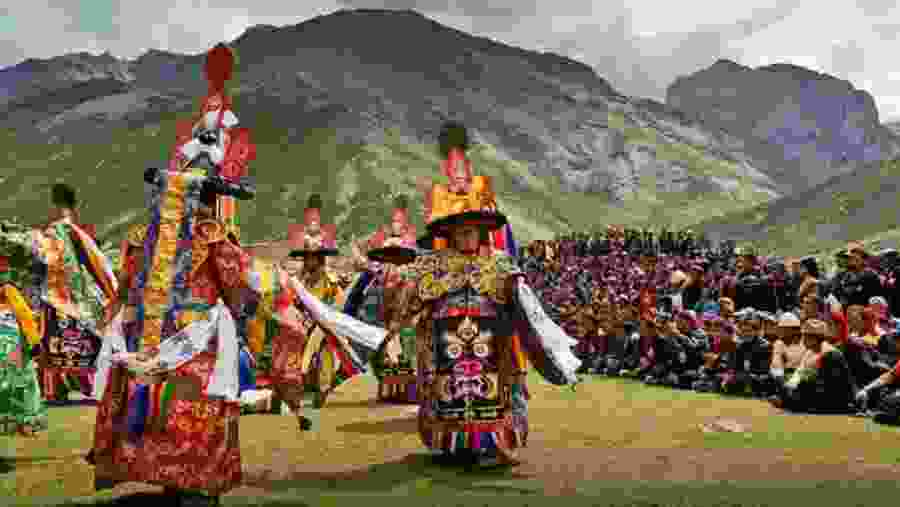
- Today you'll be attending the Tiji Festival's first day. Tiji is a Japanese word that means "global peace and prosperity." The Vajrayana Buddhist religion's Tiji Festival has indeed been practised for centuries. Its origins may be traced back to King Samdup Rabten, who executed the Vajrakila ceremony to purify malevolent spirits in Mustang in the 17th century. Monks have since contributed to this tradition by performing various rituals and displays. The celebration lasts three days on the lunar calendar, which usually falls in May. The celebration involves a pilgrimage to the Lo-Manthang Royal Palace, which was constructed 600 years ago, the monks of Chhode Monastery will conduct different performances on the first day of the festival to explain to visitors the origin of the Tiji festival. The enormous thangka painting portraying Buddhist relics and Guru Rimpoche displayed on the white walls of the Royal Palace is noticeable at a glance.
- You'll also have the chance to meet Lo Manthang's Monarch. Tsa Chham's traditional dance performance reflects one-third of Tiji's story. Tiji celebrates the triumph of Dorjee Sonam, a reincarnation of Lord Buddha, over a demon who is said to have wreaked devastation on the inhabitants, the extravagant headgear and colorful dresses worn by the performers will dazzle, you may also chat with locals who have assembled from nearby villages to witness the wonder.
-
Day 10- Attend the second day of the Tiji Festival
- Today, after breakfast, you will head to the Royal Palace to witness the second day of the Tiji festival. The courtyard is once again bustling with residents and members of the royal family. The tale of Dorjee Sonam will be continued through the Nga Chham dance on this day. Dorjee Sonam is shown releasing the demon to the Buddha's realm in the second segment. During the dance performance, various movements and gestures symbolize various deeper significance. The dancing performance, which is said to eliminate all obstacles in life, captivates the villagers' curiosity, the thrashing of the cymbals and the hammering of the drums are energizing.
- After you've had your fill of the festivities, you may interact with the residents and then go on short hikes to overlooks and religious sites.
-
Day 11- Attend the final day of the Tiji Festival
- The most remarkable festival in Upper Mustang draws to a close on this day.
- After breakfast, you will travel to the Royal Palace to see the final dance depicting the conclusion of Dorjee Sonam's three-part victory story. The Rha Chham dance will be performed, in which a monk portraying Dorjee Sonam throws an effigy of the demon. Tsampa crafts the effigy, made of barley, which portrays the demon's expulsion from Mustang. The finale is magnificent and awe-inspiring. The Tiji festival concludes on a bright note, with the theme of spreading peace and prosperity across the world. It's intriguing to be a part of the hidden kingdom of Lo's most treasured and prestigious festival, alongside the monarchs and inhabitants. The festival evokes respect for the residents' deeply rooted customs and traditions.
-
Day 12- Trek from Lo-Manthang to Dhakmar (3,810m/12,500ft, 7-8 hours)
- You'll bid your goodbyes to the charming people of Lo-Manthang and return to Dhakmar. You can stop along the route if you have not visited the Ghar Goempa earlier in the trek. More than 160 nuns lived at the convent, also known as Gargen Chyoling Nunnery. Guru Rimpoche is linked to the monastery, and his paintings may be found inside. A monster is said to have wrecked the Samye monastery in Tibet during the night as it was being built. As a result, Guru Rimpoche was summoned to assist. Guru Rimpoche told the monks that Samye could not be finished unless a monastery was established at Lo Gekar. Hence the monastery was built here between Lo Manthang and Dhakmar. The imperial red cliffs of the Dhakmar village and the yaks grazing in the green pastures below are a sight to see.
-
Day 13- Trek from Dhakmar to Shyanbochen (3,500m/11,482ft, 6-7 hours)
- The trip begins at Dhakmar and continues via Syangboche village.
- You'll ascend a hilltop before descending to Akaima. To get to Ghiling village, you'll have to cross a narrow dry plateau and pass through verdant fields. In the afternoon, there will be high winds, so make an early start.
- You'll cross the Yamada La pass (3,850m/12,631ft) and the Nyi Pass (4,010m/13,126ft) after passing through the Ghami hamlet. To get to Syangboche, follow the Tama Gaon route past the barley fields and little streams.
-
Day 14- Trek from Syangbochen to Chhusang (2,980m/9,776ft, 6-7 hours)
- Trek from Syangbochen to Chhusang, retracing your steps for the first section of your trek by following the Syangbochen stream. Mustang Khola will thereafter be your guide to follow the river. Chhusang is located at the confluence of the Narshing and Kali Gandaki rivers, and the cliffs are a combination of red-orange and silver-grey in hue. Thagsing Grangma refers to the caves in the towering cliffs.
- You may visit the historic Gompa Gang nunnery when you arrive at Chhusang. Observe the community's busily farms and settlements as it's a wonderful site.
-
Day 15- Trek from Chhusang to Jomsom (2,720m/8,923ft, 6-7 hours)
- You may reach Jomsom, Mustang's vibrant commercial hub, by trekking down the Kali Gandaki River's riverbank. You might be lucky enough to come across the black fossilized stones known as Shaligram along the banks of the Kali Gandaki, which have tremendous spiritual and therapeutic importance.
- Stop for lunch in the enigmatic Kagbeni village along the trail. Dhaulagiri and Nilgiri mountain views will captivate you. Jomsom is a hub for all tourism activities and is home to Mustang's only airport. It is home to Tibetan Buddhists and also Thakali inhabitants. The village of Marpha is a great representation of Jomsom's distinct customs and cultures. In the evening, you may try some local beverages, cuisine, and dried apples, a regional delicacy.
-
Day 16- Flight to Pokhara (800m/2,625ft, 25 minutes) and sightseeing tour
- By flying from Jomsom Domestic Airport to Pokhara, you will bid farewell to the mythical Kingdom of Mustang, the flight is picturesque, offering views of the famous Dhaulagiri, Nilgiri, and Annapurna ranges, and you'll be transferred to your accommodation in Pokhara once you arrive.
- After recharging your batteries and resting for a while, you may head on a sightseeing trip to Pokhara. An excellent Thakali dinner in a local restaurant, boating in the Fewa Lake, hike to Peace Pagoda are a few of the local attractions.
-
Day 17- Drive from Pokhara to Kathmandu (1,400m/4,592ft, 6 to 7 hours)/ Optional: flight (35 minutes)
- Return to Kathmandu via the Prithvi Highway, which is a lengthy trip. You'll get to see vistas of hills, verdant farmland, and rivers along the trip, you can also fly to Kathmandu for a more convenient and faster route.
- In Kathmandu, you will be driven to your accommodation after arriving, you'll have spare time to go around the city. Later in the evening, you'll have a farewell dinner with your guide and our staff marking an end to a great adventure.
-
Day 18- Final Departure
- Our staff will drop you off at the airport.
Trip ends.
What's Included
What's Excluded
Know Before You Go
What To Bring
Meeting Point
Cancellation Policy
-
For cancellations within 24 hours before the tour -
Refund of 50% of the tour price.
Price
| Adult | |
|---|---|
| 1 to 4 | /person |
| Child | |
| 1 to 4 | /person |
|
This is a group tour |
|