
Day 01
Luxor's Ancient Treasures on the West and East Banks
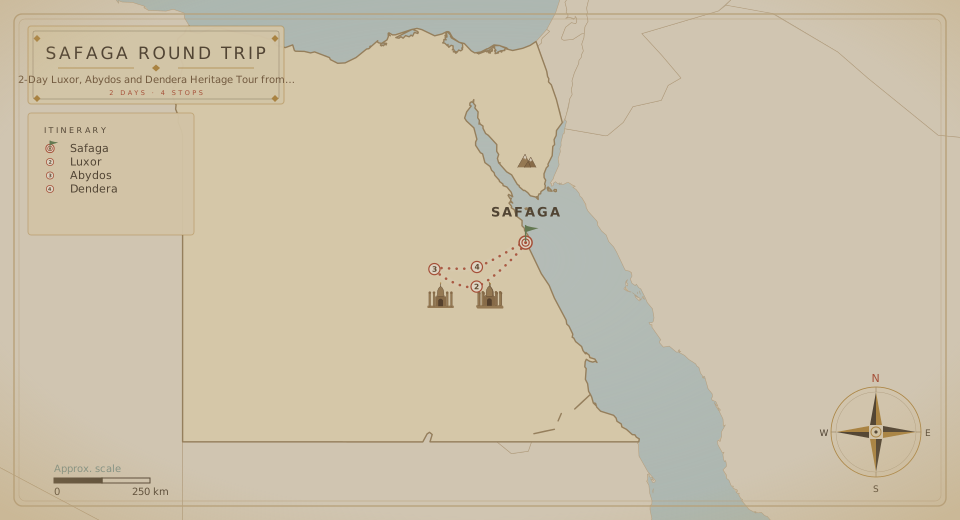
- Meet your tour guide, who will pick you up from Safaga Port and drive to Luxor. We can take a break on the way.
- Visit the Valley of the Kings. It was created and used from approximately 1539 BC to 1075 BC. It contains some 60 tombs, starting with Thutmose I and ending with Ramses X or XI. The site's official name was The Great and Majestic Necropolis of the Millions of Years of the Pharaoh, Life, Strength, Health in The West of Thebes, or the Great Field. The most famous tomb is KV62, the Tomb of King Tutankhamun. Howard Carter discovered King Tut's tomb in 1922, and it was the first royal tomb to be found still largely intact.
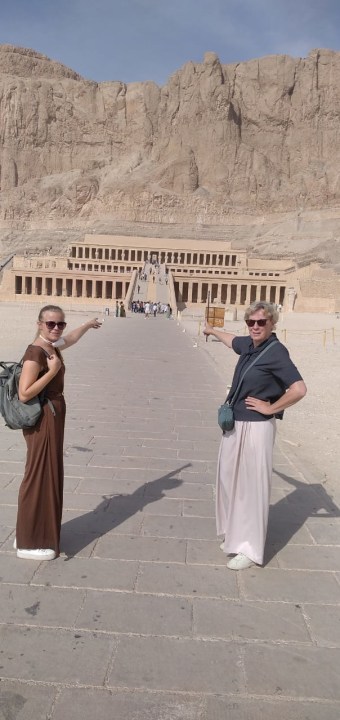
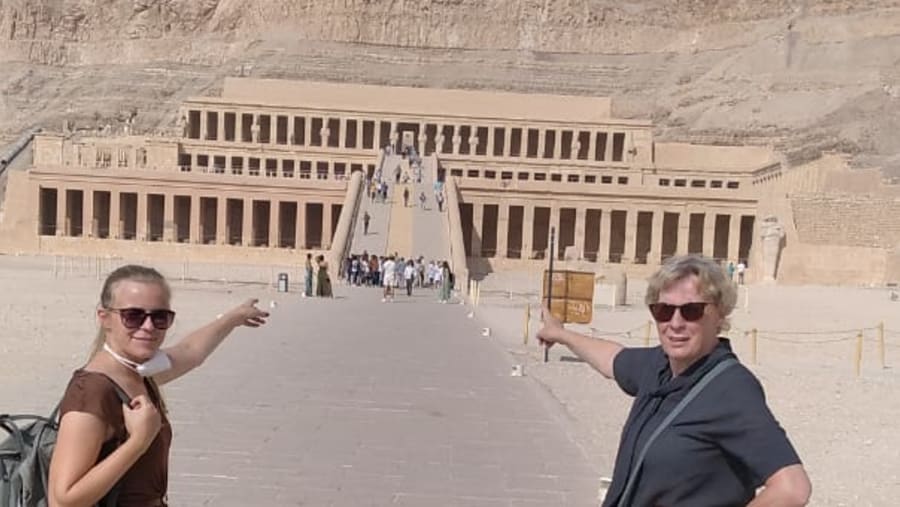
- Continue the tour to visit the Hatshepsut Temple at El Deir El Bahary. This impressive temple was dedicated to Queen Hatshepsut, the only female pharaoh. It rises out of the desert in a series of terraces and merges with the sheer limestone cliffs surrounding it.
- Proceed to the two colossal statues of Amenhotep III. The Colossi of Memnon are two massive stone statues of Pharaoh Amenhotep III. For 3,400 years, they have stood in the Theban necropolis across the River Nile from the city of Luxor. Their original function was to stand guard at the entrance to Amenhotep's memorial or mortuary temple.
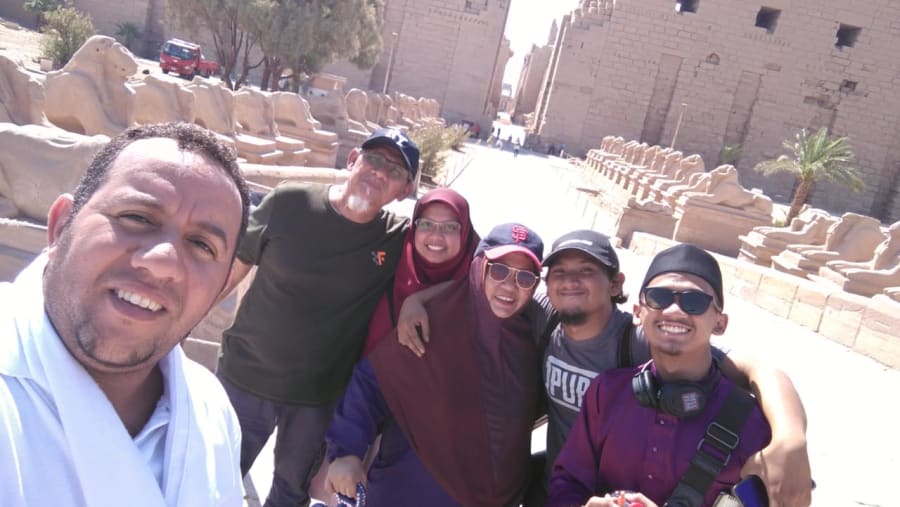
- Head to the East Bank and explore Karnak Temple, the largest place of worship ever built. In ancient Egypt, the power of the god Amun of Thebes gradually increased during the early New Kingdom, and after the short persecution led by Akhenaten, it rose to its apex. In the reign of Ramesses III, more than two-thirds of the property owned by the temples belonged to Amun, as evidenced by the stupendous buildings at Karnak. Although badly ruined, no site in Egypt is more impressive than Karnak. It is the largest temple complex ever built by man and represents the combined achievement of many generations of ancient builders. The Temple of Karnak consists of three main temples, smaller enclosed temples, and several outer temples located about three kilometres north of Luxor on 100 ha (247 acres) of land. Karnak is actually the site's modern name. Its ancient name was Ipet-isut, meaning "The Most Select (or Sacred) of Places."
- Move to Luxor Temple. Amenhotep III built it in the 18th Dynasty in the New Kingdom, and Ramesses II completed it during the 19th Dynasty. King Ramesses II was the most famous king of the 19th Dynasty and ruled Egypt for about 67 years. The temple was dedicated to the great god Amun-Ra, his wife Mut, and their son Khonsu, representing the Theban triad. Enjoy visiting the Obelisk of Ramesses II in front of the 1st Pylon. It was called "Ipet resyt," the Southern Opet or the Place of the Seclusion of Amun-Re. It was directly connected to the Temple of Karnak, the main cult centre of Amun-Re or Amun-Min, the sky god or the ithyphallic fertility god. Since its inception, Luxor Temple has always been a sacred site. After Egypt's pagan period, a Christian church and monastery were located here, and later the 13th-century Mosque of Abu el-Haggag was built and continues to be used today.
- You can book an evening trip to the fabulous sound and light show at El Karnak Temple. (Optional)
Overnight in Luxor.
(Meal: Lunch)