
Day 01
Edfu Temple of Horus and Kom Ombo Temple
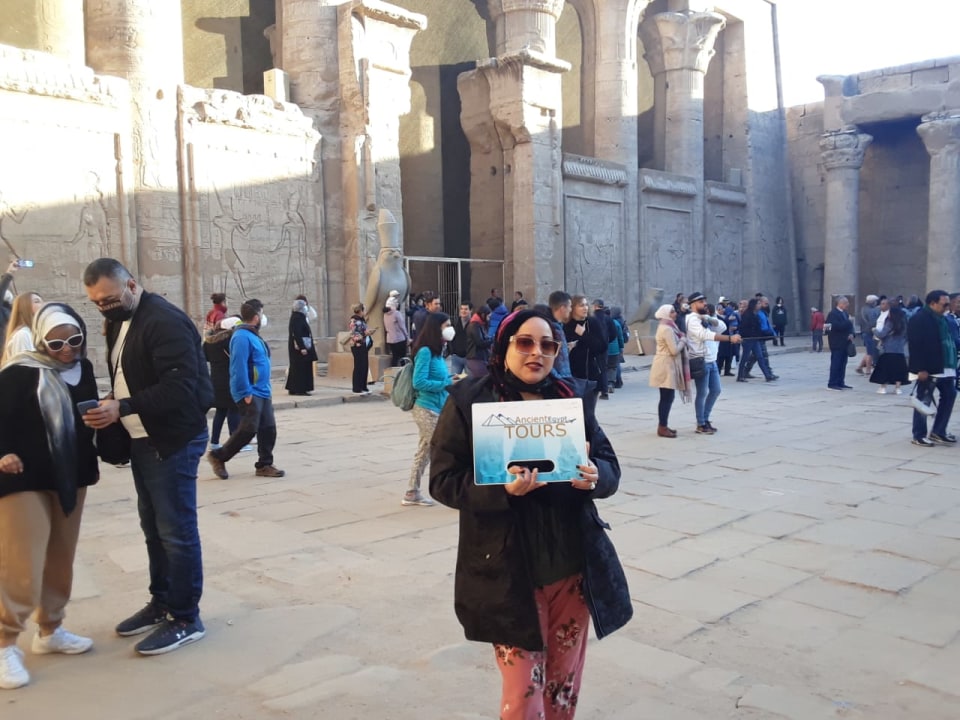
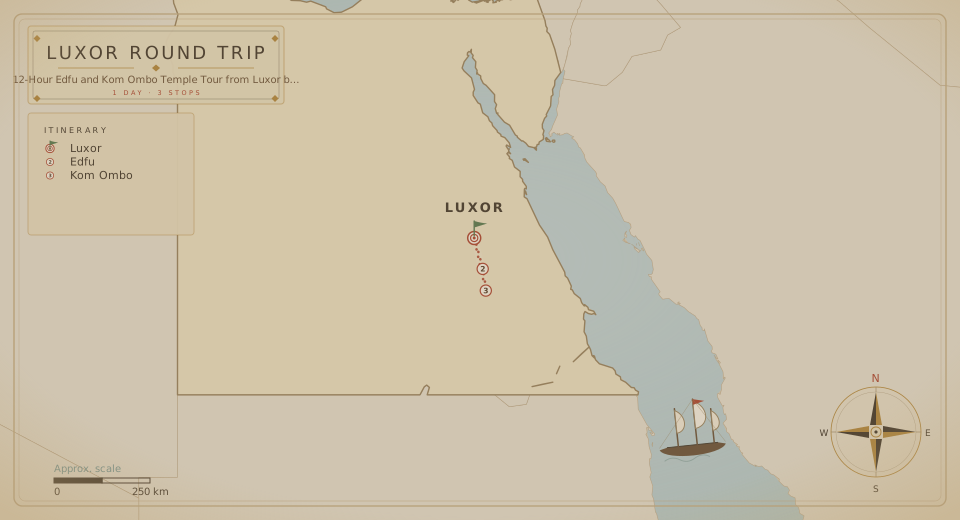
- A representative will pick you up from your Luxor hotel to enjoy a tour to Edfu. Upon arrival in Edfu, you will be transferred to visit the majestic temple dedicated to Horus. Edfu Temple is the second largest temple after Karnak and was known in Greco-Roman times as Apollonopolis Magna. The temple was dedicated to the falcon god Horus and was built during the Ptolemaic period. It was originally oriented east-west instead of the current north-south configuration. The oldest part of the temple is the section from the Festival Hall to the Sanctuary; this was begun by Ptolemy III in 237 BC and completed by his son, Ptolemy IV Philopator. The Hypostyle Hall was added by Ptolemy VII (145-116 BC), and the pylon was erected by Ptolemy IX (88-81 BC). The final touches to the temple were added under Ptolemy XII in 57 BC. The falcon-headed Horus was originally the sky god, whose eyes were the sun and moon.
- Then transfer to see the Temple of Kom Ombo, standing on high ground overlooking the Nile. The Temple of Sobek and Haroeris in Kom Ombo, also known simply as Kom Ombo Temple, dates from about 180 BC during the Ptolemaic era, with additions made in Roman times. It stands right on the bank of the Nile between Edfu and Aswan, making it a convenient stop for river cruises.
- The temple at Kom Ombo was also built under Ptolemy VI. Since this bend in the Nile was a favoured spot for crocodiles to bask in the sun and threaten locals, it is natural that the temple would be dedicated to Sobek, the crocodile god. However, it is unusual to have a double dedication, as it also honours Haroeris, a form of the falcon-headed god Horus. The hypostyle halls were added under Ptolemy XIII (51-47 BC), and the Roman emperor Trajan (53-117 AD) added the forecourt and outer enclosure walls. Then, you will be transferred back to your hotel or cruise in Luxor.