
Day 01
Valley of the Kings, Hatshepsut Temple, and Colossi of Memnon
- A representative will pick you up from your hotel in Luxor.
- Start your visit to the West Bank, where you can see the Valley of the Kings, which was created and used from approximately 1539 BC to 1075 BC. It contains some 60 tombs, starting with Thutmose I and ending with Ramses X or XI. The official name of the site was The Great and Majestic Necropolis of the Millions of Years of the Pharaoh, Life, Strength, Health in The West of Thebes, or, more usually, the Great Field. The most famous tomb is KV62, the Tomb of King Tutankhamun. The discovery of King Tut's tomb was made by Howard Carter in 1922, and Tutankhamun's tomb was the first royal tomb to be discovered that was still largely intact.
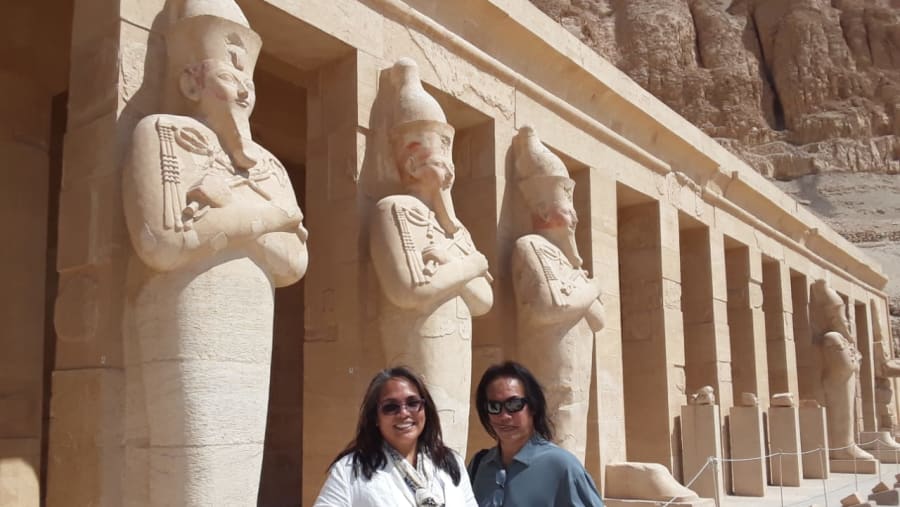
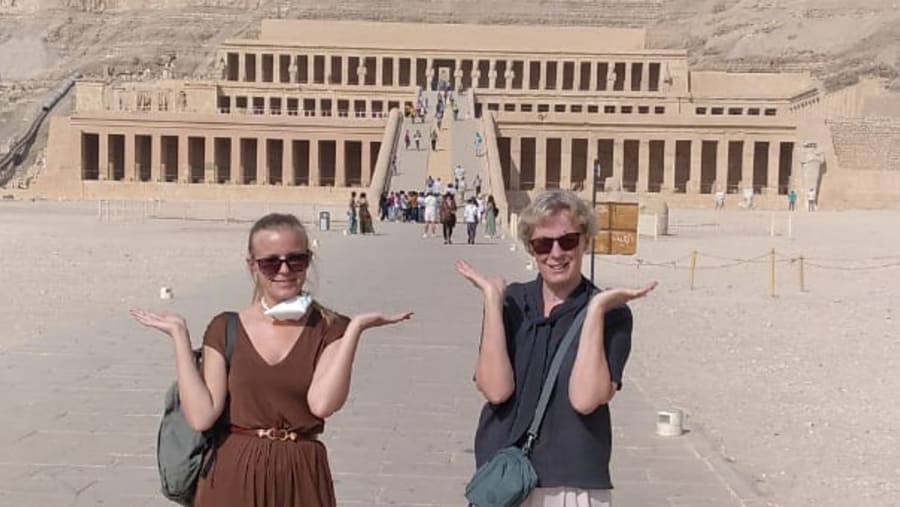
- Then continue the tour to visit the Hatshepsut Temple at El Deir El Bahary. This impressive temple was dedicated to Queen Hatshepsut, the only female pharaoh. It rises out of the desert in a series of terraces and merges with the sheer limestone cliffs surrounding it.
- Proceed to the two colossal statues of Amenhotep III. The Colossi of Memnon are two massive stone statues of Pharaoh Amenhotep III. For 3,400 years, they have stood in the Theban necropolis across the River Nile from the city of Luxor. The original function of the Colossi was to stand guard at the entrance to Amenhotep's memorial, or mortuary, temple.
- Return to your hotel.