Day 01
Alexandria's Ancient Landmarks and Coastal Icons
- A tour representative will pick you up from your hotel in Alexandria.
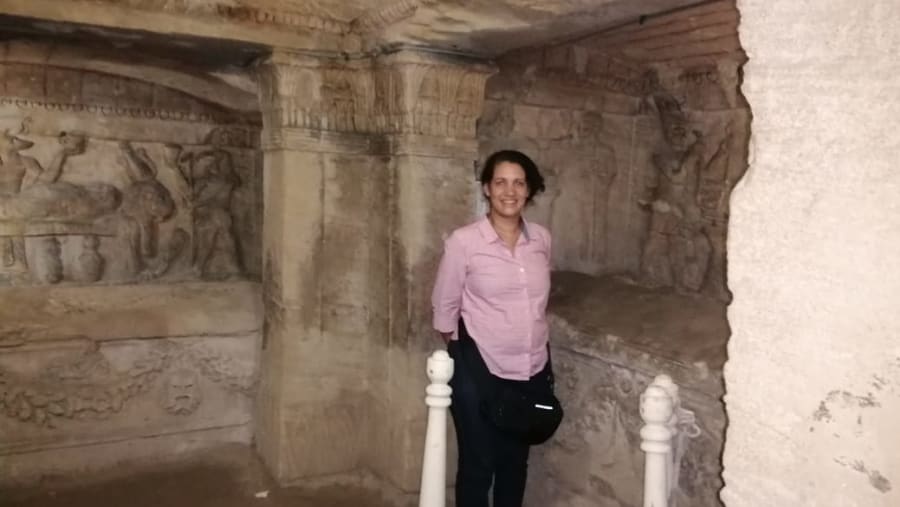
- Transfer to discover the Catacombs of Kom El Shoqafa, also known as the Hill of Treasure, regarded as a huge necropolis and royal cemetery dating back to the second century A.D. The necropolis has a unique mixture of Roman, Hellenistic, and pharaonic art elements reflected in the wall paintings and the style of the statues, funeral objects, and tombs. This archaeological site was considered one of the seven wonders of the Middle Ages.
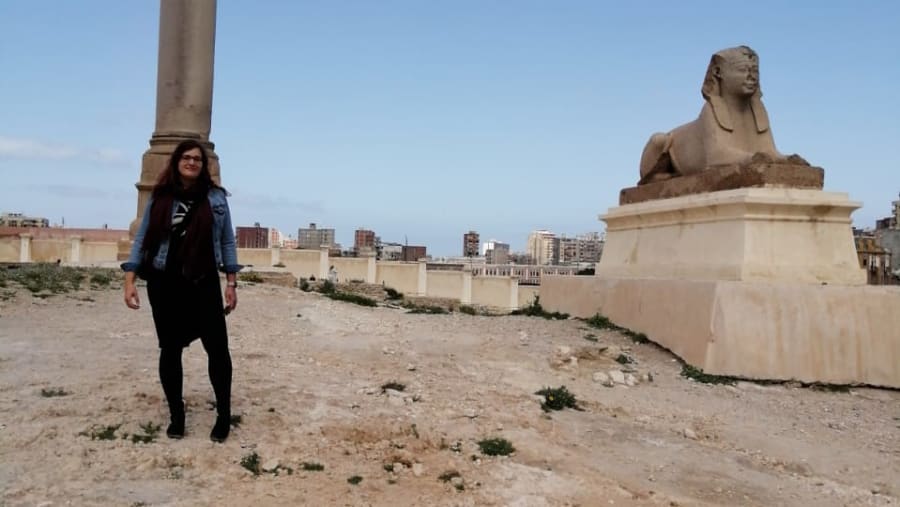
- Then move to one of the remarkable structures built during the reign of Emperor Diocletian in Egypt - Pompey's Pillar. The column now stands in the heart of Alexandria on top of a temple ruin built during the Ptolemaic Kingdom in 297 AD. The pillar's base diameter is 2.71 meters and it was carved out of red granite from Aswan. The net weight of the pillar is 285 tons, and it reaches 26 meters high including the base. This prime sight was built to commemorate the victory of Emperor Diocletian over an Alexandrian revolt.
- Then move to the Roman theatre. What we see today in Alexandria is a typical form of Roman theatre, consisting of an audience section made of marble, granite columns, five compartments, and thick limestone walls. The theatre used to host huge ceremonies and events with a capacity of 600 spectators. The audience section consisted of 13 rows made of white marble, and the supporting columns were made of granite exported from Aswan in southern Egypt. The five compartments at the top of the audience section were probably used to host royals or public figures during performances and were covered by dome-shaped ceilings supported by granite columns to protect the audience from the sun and rain. In the 6th century A.D., an earthquake hit Alexandria and destroyed most of these structures, leaving only some ruins that still stand today and reflect the Romans' beautiful architectural skills.
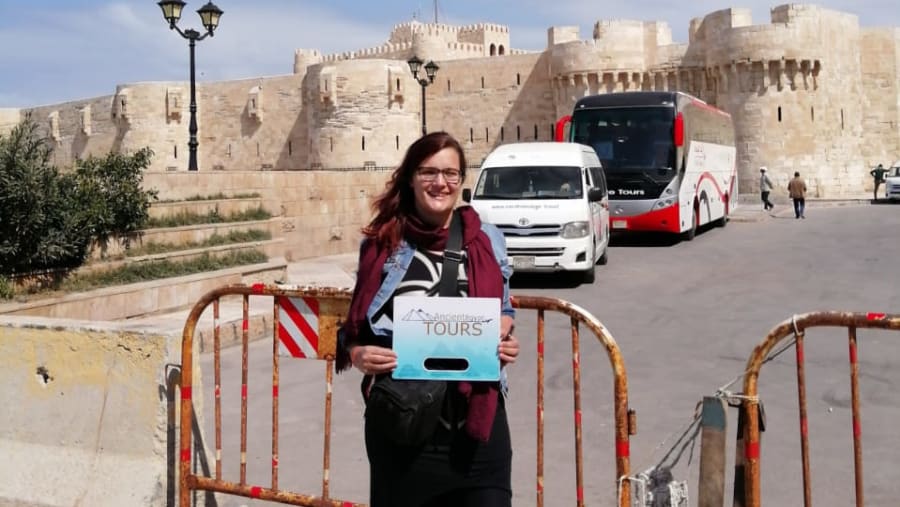
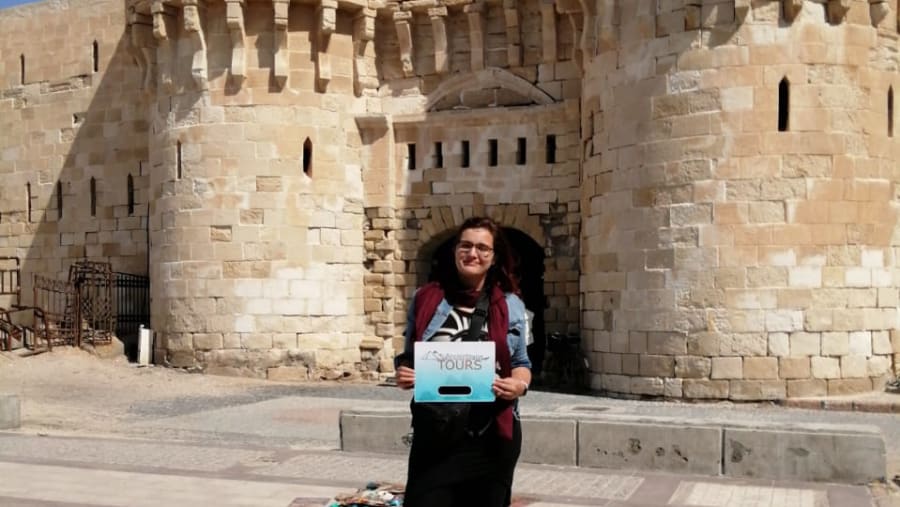
- Move to the square-shaped castle with a 150-meter area, surrounded by the Mediterranean Sea on each side. The first floor contains a mosque and a defence hall that allowed soldiers to pass quickly and defend the walls during wars. The second floor contains chambers and halls, while the third floor consists of a vast throne chamber where Sultan Qaitbay watched the sailing ships approaching Alexandria's shores. It also has an oven for making wheat bread for the soldiers living in the citadel.
- Lighthouse of Alexandria: it was replaced by the citadel. The lighthouse was almost 150 meters high and was dedicated to Poseidon, the Greek god of the sea, and decorated with marble statues. It was considered one of the seven wonders of the ancient world and was mainly designed to guide mariners and sailors. Unfortunately, it was destroyed by an earthquake in 1477. Sultan Qaitbay built his military castle on the ruins of the old lighthouse, and some say that the citadel was built from the ruined stones left from the lighthouse.
- Then move to Bibliotheca Alexandrina, the Alexandria library, which presented knowledge for over 600 years until it was burned in the third century. It once had a religious purpose and was mainly designed as a temple that held many rare manuscripts. The new Library of Alexandria was renovated in 2002 at a cost of about 200 million dollars and was designed by a Norwegian architect.
- Then move to the extensive Montazah Palace grounds, where the Salamlek Palace was first built in 1892 by Khedive Abbas II, followed by the larger Al-Haramlik Palace and Salamlek Palace.
- Visit Stanley Bridge, a bridge built to improve traffic flow on the Alexandria Corniche.
- See the Monument to the Unknown Marine Soldier in the Mansheya area of Alexandria. It was built by the Italian community in Alexandria in 1933 AD to honour Khedive Ismail, and a statue of him was placed at the top of the monument. It was then turned into the Monument of the Unknown Soldier in 1965 AD, and the statue of Khedive Ismail was removed from the monument.